In This Guide
- 1.Parque de Santa Ana and the trova that won't quit
- 2.Where to eat salbutes (and where not to)
- 3.The Iglesia de Santa Ana isn't the main attraction (but go anyway)
- 4.Walking Calle 60 north toward Paseo de Montejo
- 5.Cantinas worth your evening
- 6.Getting there and getting around
- 7.Sunday mornings at the market
The first time I walked into Barrio de Santa Ana, a trio of trovadores was tuning up under the ceiba trees in the park, and an older woman was frying salbutes in a doorway on Calle 47. No one was trying to sell me anything. No one was performing for a camera. That's still the draw.
Santa Ana sits in the northwest quadrant of Mérida's centro histórico, roughly bounded by Calles 45 and 49 running east-west, and Calles 60 and 66 north-south. It's about a twelve-minute walk from the Plaza Grande, which means most day-trippers never bother. Good. The barrio runs on its own clock — trova music on weekend evenings, market stalls that close by 1 p.m., cantinas that don't really wake up until nine. If you're the kind of traveler who checks weather before packing: Mérida is hot. Relentlessly hot. Even in January, you're looking at highs around 32°C. April through June is the worst of it. Bring a hat that actually shades your neck, not a fashion accessory.
1. Parque de Santa Ana and the trova that won't quit
Parque de Santa Ana is the neighborhood's living room. On Friday and Saturday nights, starting around 8:30 p.m., trovadores set up under the trees and play romantic Yucatecan serenades — boleros, mostly, sometimes a bambuco — to crowds of maybe forty or fifty people sitting in plastic chairs. It's free. The musicians pass a hat at the end.
I've seen travel blogs call this "touristy." I disagree. Last time I was there in November, I counted maybe six foreigners in the crowd, and three of them lived in the neighborhood. The audience is overwhelmingly local — couples in their sixties who know the words, teenagers on dates trying to look unimpressed. The ceiba trees are massive, old enough that their roots buckle the sidewalk. When the breeze comes through, the canopy moves like something breathing.
Get there by 8 p.m. if you want a chair. By 8:45, you're standing.
Pro tip:The OXXO on the corner of Calle 47 and Calle 60 sells cheap cold Montejo tallboys. Grab one before the music starts — there's no drink vendor in the park itself.
2. Where to eat salbutes (and where not to)
Salbutes are the move here. A puffed tortilla, fried so it balloons, then topped with shredded turkey or chicken, pickled onion, avocado, and habanero. The best ones in Santa Ana come from the women running informal stalls near the park in the mornings and around lunchtime. Look for the setup on Calle 47 between 60 and 62 — no sign, just a folding table and a comal. Three salbutes for about 45 pesos.
Skip the restaurant on the south side of the park that has an English-language menu propped on the sidewalk. Overpriced, underseasoned, and the salbutes arrive flat as sad pancakes. The tortilla should be puffy. That's the whole point.
For a sit-down meal, La Socio on Calle 49 does solid poc chuc and panuchos. Nothing revolutionary, but the portions are honest and a plate with rice and beans runs about 95 pesos. They close at 5 p.m., which catches people off guard.
Pro tip:If you want heat, ask for the habanero salsa on the side — it's usually in a small molcajete on the table, but at the street stalls you sometimes have to request it.
3. The Iglesia de Santa Ana isn't the main attraction (but go anyway)
The church anchoring the park dates to the late 1700s. It's modest — no gilded altarpieces, no soaring nave. Just thick stone walls and quiet.
I mention it because most neighborhood guides either oversell churches or ignore them entirely. This one is worth ten minutes. Step inside around midday when it's 37°C outside and the interior drops to something livable. The stone floor is cool enough to feel through your shoes. There's a painted wooden crucifix above the altar that has a roughness to it, folk-art rather than fine-art, that I find more affecting than anything in the Catedral de San Ildefonso.
Open daily, no entrance fee. Dress code is loose — just cover your shoulders.
4. Walking Calle 60 north toward Paseo de Montejo
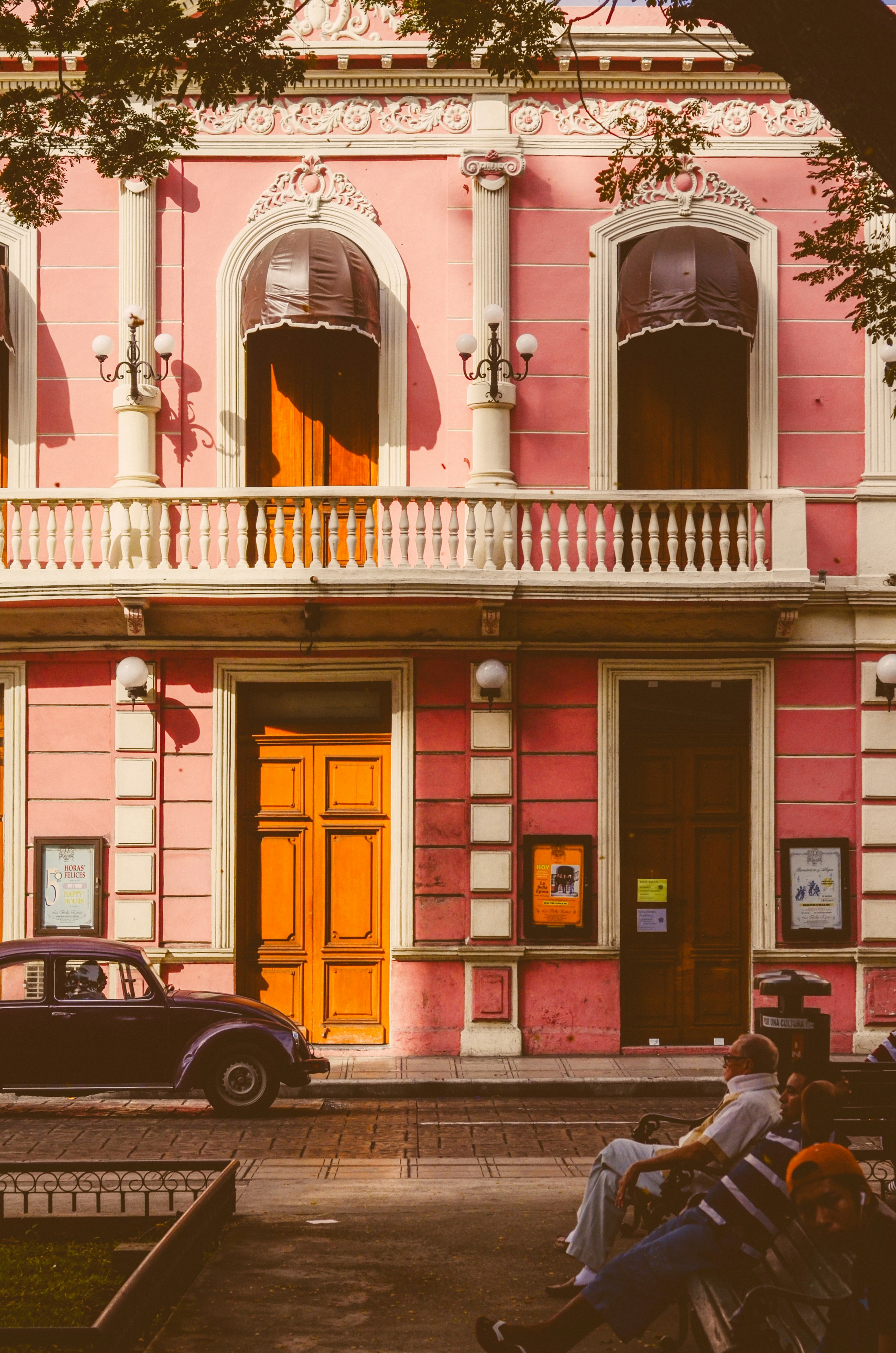
Calle 60 runs straight north from the Plaza Grande through Santa Ana and eventually hits Paseo de Montejo, Mérida's grand boulevard. The stretch through the barrio is the interesting part — faded colonial facades in pale yellow and terracotta, iron window grates, bougainvillea spilling over walls.
The walk from Parque de Santa Ana to the Monumento a la Patria on Paseo de Montejo takes about twenty minutes at a slow pace. Do it before 9 a.m. or after 5 p.m. Midday, you will be cooked. No shade for long stretches once you leave the barrio.
Along the way, watch for the small galleries and workshops that have moved into old houses on the blocks between Calles 47 and 43. Most don't have regular hours — they're open when they're open. One ceramics workshop near the corner of Calle 60 and Calle 45 sells hand-painted tiles for 80–120 pesos each.
Pro tip:If you're walking to Paseo de Montejo, carry water. Not a sip bottle — a full liter. The convenience stores thin out once you pass Calle 43.
Stay in Mérida
Top-rated hotels near Mérida
Best locations · Verified reviews · Free cancellation
View deals
Expedia →5. Cantinas worth your evening
La Negrita on Calle 62, just south of the Santa Ana zone, gets all the press. It's fine. Good mezcal list, decent botanas. But it's become a scene, and the prices have crept up — a mezcal pour that was 60 pesos in 2019 is now closer to 100.
I'd rather drink at El Cardenal, a few blocks east on Calle 62 near the corner of 57. It's a proper cantina — dim, a little sticky, older men watching fútbol on a mounted TV. Draft beer for 30 pesos. They bring out small plates of food with each round, the old cantina tradition that most places in the centro have abandoned. The ceviche plate that appeared after my third beer was better than anything I'd paid for that day.
Both places get going around 9 p.m. and run late.
Pro tip:El Cardenal doesn't have a sign out front. Look for the swinging doors and the blue paint. If you hit the pharmacy, you've gone too far.
6. Getting there and getting around
If you're flying in, Mérida's airport (MID) is about twenty minutes south of the centro by taxi — expect to pay 250–350 pesos depending on time of day and your negotiating stamina. Uber works in Mérida and is usually cheaper, around 150–200 pesos for the same trip.
From the Plaza Grande, Santa Ana is a flat, walkable fifteen minutes northwest. No bus needed.
Driving in the centro is technically possible but genuinely miserable. One-way streets follow a confusing grid, parking is scarce, and the calles are narrow enough that two cars passing each other requires faith. Leave the rental at your hotel if you have one. You won't need it inside the barrio.
The walk from Santa Ana back to the Plaza Grande at night is safe and pleasant. Streets are well-lit, there are always people out. I've done it alone at 11 p.m. without a second thought.
Pro tip:Taxis in Mérida don't use meters. Agree on the price before you get in. From the centro to the airport, don't pay more than 300 pesos.
Stay in Mérida
Top-rated hotels near Mérida
Best locations · Verified reviews · Free cancellation
View deals
Expedia →7. Sunday mornings at the market
The small market near Parque de Santa Ana operates daily but peaks on Sundays, when vendors bring in fruit, flowers, and prepared food. It's not the Lucas de Gálvez market — it's a fraction of that size, and you can actually move.
Papaya and mamey sapote are usually the cheapest fruit in season. A kilo of papaya runs about 25–30 pesos. The flower vendors sell bundles of nardos (tuberoses) that will scent a hotel room for three days.
The market wraps up early. By noon, most stalls are breaking down. By 1 p.m., just empty tables and swept concrete.
Essential tips
Mérida averages 33–36°C from March through September. January and February are the most comfortable months, with highs around 30–32°C and lower humidity. Plan outdoor time before 10 a.m. or after 4 p.m.
Most street food stalls and small cantinas in Santa Ana are cash-only. ATMs on Calle 60 near the Plaza Grande dispense pesos — avoid the ones that offer to convert to your home currency, the exchange rate is terrible.
Mosquitoes are aggressive at dusk in the park, especially during rainy season (June–October). Bring repellent with DEET — the natural stuff doesn't cut it here.
Trova performances in Parque de Santa Ana happen most reliably on Friday and Saturday nights. Occasionally they're canceled for holidays or municipal events with no advance notice. Ask at your hotel that afternoon to confirm.
Ready to visit Mérida?
Book your hotel, flights, and activities through our Expedia-powered search.


