In This Guide
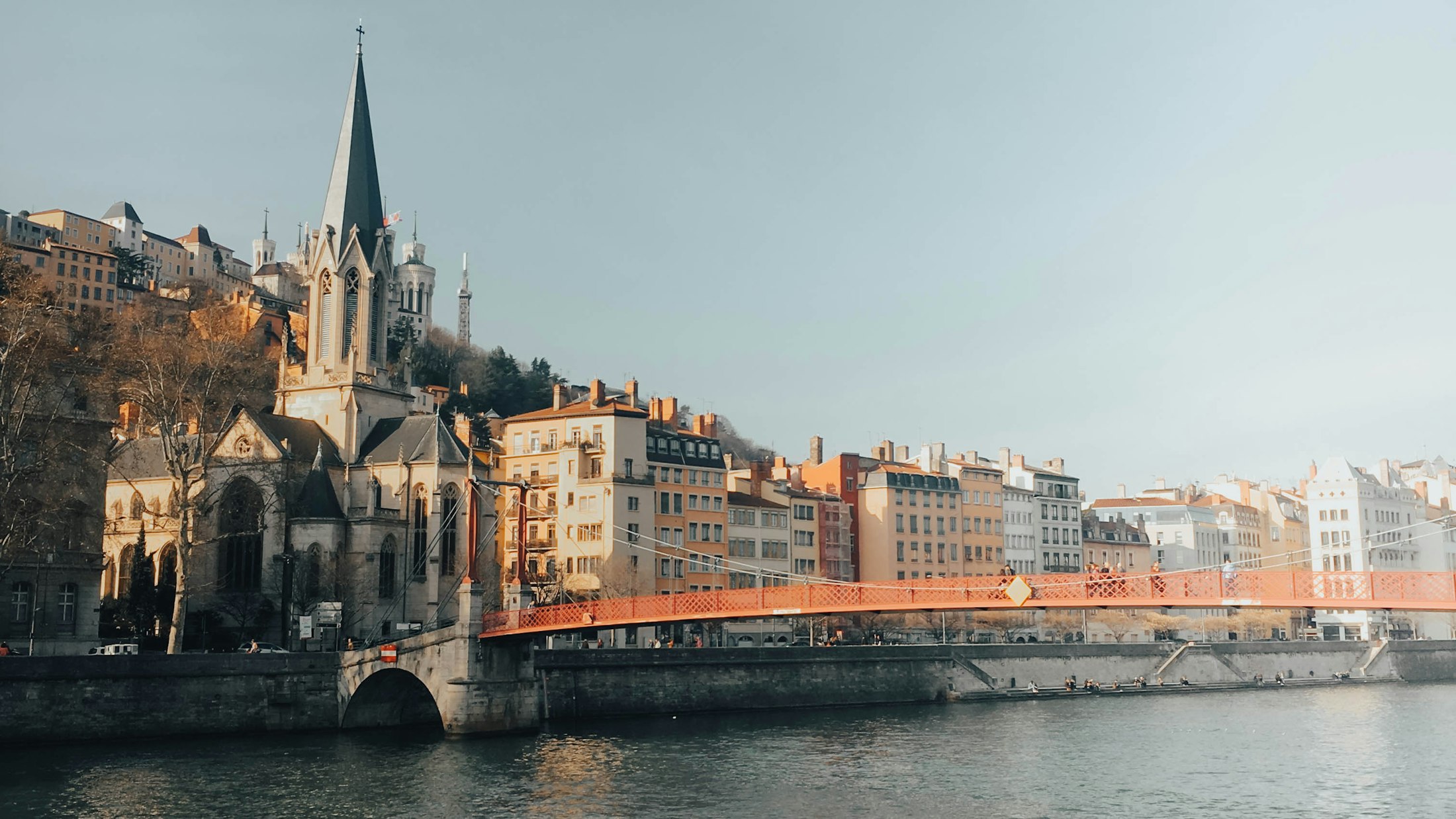
The first time I climbed the Montée de la Grande Côte in late May, a woman on a second-floor balcony was pitting cherries into a colander and dropping the stones into the street below, and I thought: this is the neighborhood I will keep coming back to. Croix-Rousse sits on its hill above the Presqu'île like it hasn't quite decided whether it belongs to Lyon or to itself, and in cherry season — roughly the last week of May through the end of June — it leans hard toward itself. The Burlat cherries arrive first, fat and dark and almost embarrassingly soft, and the market vendors on the Boulevard de la Croix-Rousse will let you taste before you buy, which is how you end up with a kilo you didn't plan on and sticky fingers for the rest of the morning.
1. The boulevard market, Tuesday through Sunday
The open-air market runs along the Boulevard de la Croix-Rousse from roughly Place de la Croix-Rousse down to the Gros Caillou. It operates Tuesday through Sunday, but Saturday is the real day — the one where the producers from Monts du Lyonnais actually show up with fruit they picked that morning. Get there by 8:30 or you'll be shuffling behind strollers.
Cherry season means you'll see Burlats, then Summits, then the pale-gold Napoléons if you're lucky and the rain held off. The Napoléons are the ones worth going out of your way for; they taste like a cherry decided to also be an apricot. I've bought them from a farmer who sets up near the Rue Dumenge end of the boulevard, no sign on his table, just crates. Around €5–6 per kilo for Burlats, sometimes €8 for the Napoléons.
Skip the covered Halles de la Martinière down the hill. People will tell you it's the "real" food market. It's a renovated hall with expensive cheese shops and a craft beer counter, and it has about as much soul as an airport lounge. The boulevard is where the actual cooking happens.
Pro tip: Bring your own bag. The vendors have thin plastic ones that will split before you reach the Métro.
2. The traboules are not a museum
Everyone talks about the traboules in Vieux Lyon, the Renaissance passageways cut through buildings so silk merchants could move goods downhill without getting rained on. Those ones are full of tour groups. The Croix-Rousse traboules are different — they were built for the canuts, the silk workers, and they're taller, starker, and often just open. You walk in through a street door and come out two blocks away, having passed through three courtyards and a staircase that smells like cold stone and someone's lunch.
The Cour des Voraces at 9 Place Colbert is the famous one, a monumental exterior staircase inside a residential courtyard, and it genuinely earns its reputation. The passage from 20 Rue Imbert-Colomès through to 14bis Montée Saint-Sébastien is longer, quieter, and better.
Don't barge in with a selfie stick. People live here. I watched a man close his shutters on a group of tourists last June, and honestly, I was on his side.
Pro tip: The traboules on Croix-Rousse are generally open from about 7 a.m. to 7 p.m. After that, residents lock the street doors.
Stay in Lyon
Top-rated hotels near Lyon
Best locations · Verified reviews · Free cancellation
View deals
Expedia →3. Bouchon suppers: where to eat, what to order
A bouchon is not a bistro and it is not a brasserie, and I will argue with anyone who conflates them. A bouchon is a Lyon-specific institution where the tablecloths are checkered or nonexistent, the menu is a single laminated page, and the quenelle de brochet arrives in a gratin dish that could double as a weapon. The food is heavy, the portions are irrational, and that is the point.
Chez Hugon at 12 Rue Pizay is technically in the 1er arrondissement, just below the slopes of Croix-Rousse, but it belongs to the hill in spirit. The tablier de sapeur — breaded tripe — is the test. If you eat it and want more, you understand Lyon. If you don't, order the cervelle de canut instead, which is herbed fromage blanc and much less confrontational. Menus run about €25–30 for a full three courses at lunch.
Up on the hill proper, Le Café du Gros Caillou on Place Bellevue does a solid pot-au-feu on cooler evenings.
One contrarian note: most food writers will send you to Daniel et Denise for the "definitive" bouchon experience. It's good. It's also become a place where people go to say they've been, and the prices have climbed past what the genre was built for. I'd rather eat at Hugon for €10 less and hear the owner yell at someone.
Pro tip:Bouchons serve lunch from noon to about 1:45 p.m. and dinner from 7:30 p.m. Arrive right at opening — no reservations at most of them, and they're small.
4. The Mur des Canuts and the rest of the afternoon
The Mur des Canuts on Boulevard des Canuts is a trompe-l'oeil mural the size of a building — reportedly the largest in Europe — depicting the Croix-Rousse neighborhood itself, complete with painted residents who've been updated over the years to age alongside the real ones. Strange and sort of wonderful, and it takes about four minutes to look at, which is exactly the right amount of time for a mural.
Afterward, walk south along the Rue des Pierres Plantées toward the Jardin de la Grande Côte, a terraced park that drops down toward the Presqu'île. Cherries from the morning market, a bench, the whole city below you.
5. Getting up the hill and staying on it
Métro Line C runs from Hôtel de Ville up to Croix-Rousse station. It's a funicular disguised as a Métro, and the ride takes about two minutes. A single TCL ticket costs €1.90 and is valid for transfers within an hour. You can also walk up the Montée de la Grande Côte, which is steep, free, and better exercise than you planned on.
If you want to sleep up here — and I'd recommend it over the Presqu'île, which empties out at night while Croix-Rousse stays noisy in a good way — look for apartments on the streets around the Place de la Croix-Rousse. Hotels are scarce on the hill itself; most visitors stay below near Hôtel de Ville or along the Rhône and commute up. That's fine, but you'll miss the market at 8 a.m. without a very compelling alarm.
Cherry season ends when it ends. Some years it stretches into early July; some years a June hailstorm cuts it short. You don't plan around it so much as you arrive and find out what's left on the table.
Pro tip: The TCL app lets you buy tickets on your phone. Faster than the machines at Hôtel de Ville station, which always have a line.
Stay in Lyon
Top-rated hotels near Lyon
Best locations · Verified reviews · Free cancellation
View deals
Expedia →Essential tips
Burlat cherries bruise if you look at them wrong. Eat them the day you buy them, or they'll turn to mush in your bag by evening.
Croix-Rousse is almost entirely uphill. Leave the sandals at the hotel — the montées are cobbled and uneven, especially the Montée Saint-Sébastien.
Saturday market on the boulevard wraps up by 1 p.m. The best produce goes by 10 a.m. Plan brunch after, not before.
Métro C closes around midnight. If you're eating a late bouchon dinner below the hill, check the last departure or resign yourself to climbing home.
Ready to visit Lyon?
Book your hotel, flights, and activities through our Expedia-powered search.