In This Guide
The sour cherry trees along Balat's back streets start dropping fruit in mid-June, and by early July the sidewalks are stained red. That's the window. You'll see grandmothers in headscarves filling plastic buckets outside the Greek Orthodox patriarchate, and you'll smell the cherries before you see them — tart, almost aggressive, nothing like the sweet Bing variety Americans default to. I walked through Balat last July with cherry juice on my sneakers and simit crumbs on my shirt, and the neighborhood felt like it was operating on a frequency the rest of Istanbul had tuned out.
Balat sits on the western shore of the Golden Horn, roughly 4 kilometers northwest of the Galata Bridge. It climbs steeply from the waterfront — some streets hit a 15% grade — through layers of Ottoman-era row houses, synagogues, Armenian churches, and Greek schools. The fırın bakeries fire up before dawn. The tourists arrive around 11. The light gets interesting after 6 p.m.
1. The fırın bakeries open before you do
A fırın is a wood-fired neighborhood oven, and Balat still has several operating ones — not artisan-branded revival projects, just bakeries that never stopped. The one I keep returning to is Balat Tarihi Fırın on Vodina Caddesi, which starts pulling out flatbreads and simit around 5:30 a.m. The smell reaches you two streets away if the wind cooperates.
What you want here is the tahinli çörek — a coiled pastry with tahini and grape molasses, sold warm for about 25-30 TL depending on size. They don't have a menu posted. You point, you pay, you eat it on the curb. The bread cools fast, and the tahini goes from liquid to paste within twenty minutes, so don't buy one and walk around with it for an hour.
Most of these fırın bakeries close by early afternoon. By 2 p.m. the ovens are cooling and the baker is gone.
Pro tip:Bring exact change in small bills. Most fırın bakeries won't break a 200 TL note at 6 a.m., and card readers are rare.
2. Vişne suyu and why the bottled stuff is wrong
Sour cherry juice — vişne suyu — is everywhere in Istanbul, but the commercial bottled versions are syrupy and oversweet. The Balat version, made in home kitchens and sold in recycled water bottles on folding tables, is sharper, almost like a shrub. You'll find these informal vendors on Küçük Mustafa Paşa Caddesi and around Fener, usually between 10 a.m. and early evening during cherry season. Expect to pay 20-30 TL for a half-liter.
I've heard tourists say the store-bought Uludağ brand vişne suyu is "just as good." It is not. The difference is the same as between fresh-squeezed orange juice and Tropicana — technically the same fruit, functionally a different drink.
3. The color wall problem
Let's get this out of the way. The rainbow-painted houses on Kiremit Caddesi and the surrounding streets are the reason most people have heard of Balat at all. Instagram did this. The paint jobs are real — the municipality sponsored a beautification project years ago — but the experience of standing there while thirty people jostle for the same angle is not worth your morning.
Skip the color wall cluster between 10 a.m. and 4 p.m. If you genuinely want photos, come at 7 a.m. on a weekday when the light is side-lit and the street is empty. Otherwise, walk three blocks in any direction and you'll find facades just as interesting — peeling paint, iron balconies, laundry lines — without performing for anyone's feed.
The actual architectural interest in Balat is higher up the hill, where the houses haven't been repainted and the Ottoman-era wooden bay windows still cantilever over the street at head-cracking height.
Pro tip: Walk uphill past Tahta Minare Sokak. The street narrows, the tourists vanish, and the timber houses look the way they did forty years ago.
4. Fener Greek Patriarchate and the iron gate
The Ecumenical Patriarchate of Constantinople sits at Sadrazam Ali Paşa Caddesi 35, in Fener, about a 7-minute walk north from central Balat. The main gate has been welded shut since 1821. You enter through a side door.
Inside, the Church of St. George is small — roughly 25 meters long — and dark. The iconostasis is 18th-century, heavy with gold leaf, and the air smells like beeswax and old wood. Services are held in Greek. Visiting hours are generally 8:30 a.m. to 4:30 p.m. daily, but the compound can close without notice for patriarchal events, so don't build your entire day around it.
The courtyard silence is what got me last time. Two hundred meters from a main road, and behind those walls it drops to nothing.
Pro tip:Dress modestly — covered shoulders, long pants or skirt. They will turn you away otherwise, and there's no loaner-shawl system like at the Blue Mosque.
Stay in Istanbul
Top-rated hotels near Istanbul
Best locations · Verified reviews · Free cancellation
View deals
Expedia →5. Café culture, such as it is
Balat's café scene has exploded in the last five years, and most of it is forgettable. A dozen third-wave coffee spots have opened along Yıldırım Caddesi and the surrounding streets, all serving flat whites for 90-120 TL in interiors that look like they were designed by the same Pinterest board. Skip most of them.
The exception is Coffee Department, on Yıldırım Caddesi near the intersection with Leblebiciler Sokak, which actually bothers to source well and pulls a clean espresso. Their filter coffee is better than their milk drinks. Forno Balat, a few doors down, does decent pastries and has a courtyard that catches afternoon shade.
For çay — proper Turkish tea — forget the cafés entirely and sit at one of the tiny çay bahçesi spots along the waterfront park near the Balat ferry pier. Tea is 15-20 TL, the Golden Horn is right there, and nobody is going to judge you for not ordering avocado toast.
6. Golden Horn light after 6 p.m.
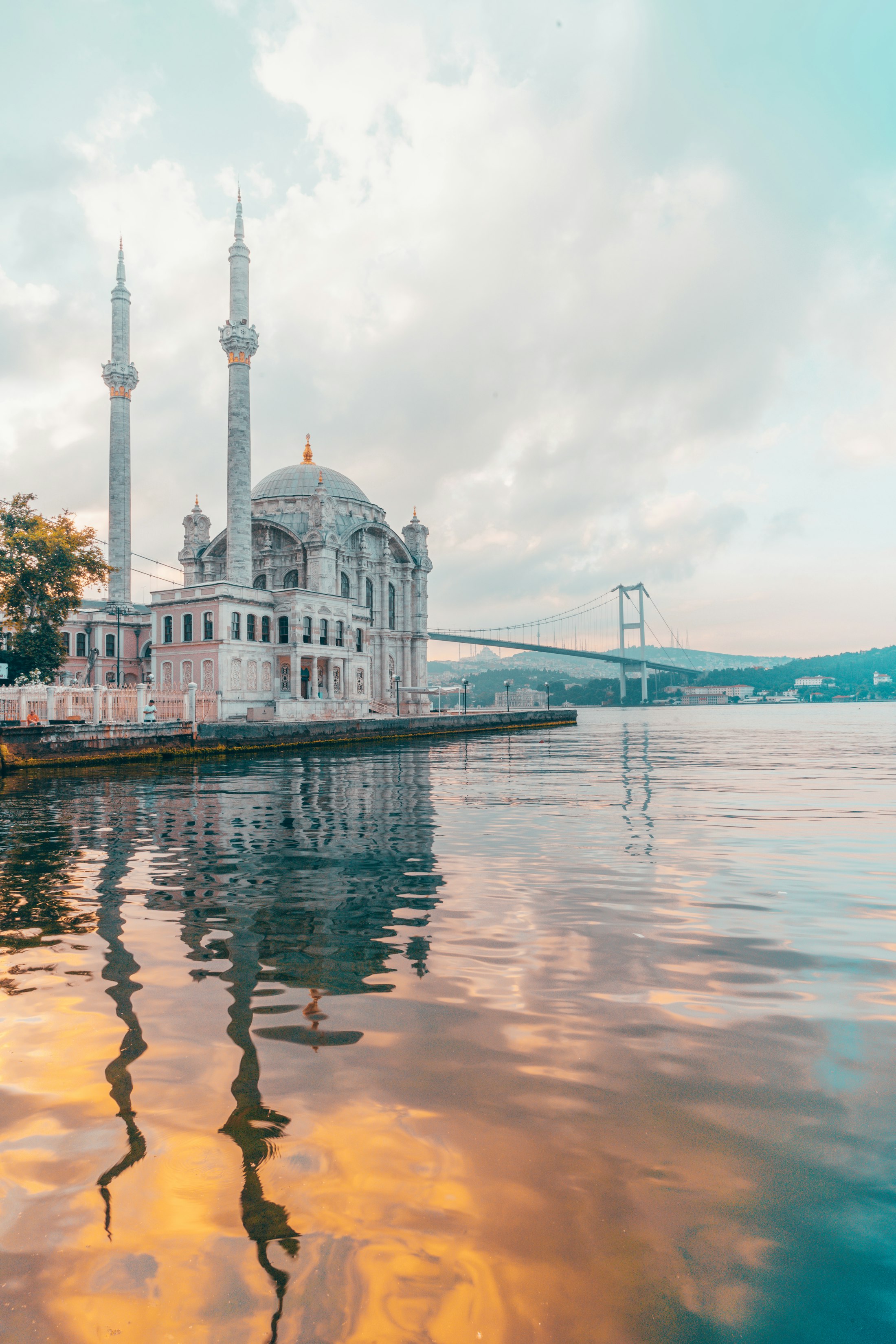
The Golden Horn runs roughly northeast-to-southwest through this part of the city, which means the western shore — Balat's shore — catches direct late-afternoon sun. Between about 6:30 and 8 p.m. in July, the light turns the water copper-colored and hits the opposite hillside where Eyüp's mosque and Pierre Loti café sit.
The best spot to watch this is the waterfront promenade between the Balat ferry pier and the Fener ferry pier, a flat 600-meter stretch with benches every 30 meters or so. Bring your own çay or buy one from the vendor cart that parks near the Fener end most evenings.
Most people photograph Sultanahmet at sunset. The Golden Horn at dusk is less famous and more interesting — the scale is smaller, the water is calmer, and the muezzin calls echo across the inlet from multiple minarets with a slight delay between them. That staggered call is something you can't replicate at a single mosque.
Pro tip: The Balat-Eyüp ferry runs until about 9:30 p.m. in summer. You can cross the Golden Horn for under 20 TL on an Istanbulkart and watch the same sunset from the opposite bank if the Balat side is too crowded.
Stay in Istanbul
Top-rated hotels near Istanbul
Best locations · Verified reviews · Free cancellation
View deals
Expedia →7. Getting there and getting out
Balat has no metro station. The nearest is Ayvansaray on the M7 line, about a 10-minute walk downhill to the neighborhood's center. From Sultanahmet or Eminönü, the 99A bus runs along the Golden Horn shore road and stops at Balat — ride takes 15-20 minutes depending on traffic.
The Balat ferry pier connects to Eyüp and Karaköy via the Haliç Hattı (Golden Horn ferry line). Boats run roughly every 30 minutes during peak hours, less frequently in the evening. An Istanbulkart tap is the cheapest option — currently around 17 TL per ride.
Leaving: if you've done Balat and Fener and still have energy, walk 1.2 km northwest along the shore to Ayvansaray, where the Theodosian land walls meet the water. The Anemas Dungeons are right there — a Byzantine-era prison complex that's free to enter and almost always empty. From Ayvansaray you can pick up the M7 metro toward Kabataş or back toward the airport.
Essential tips
Wear shoes with grip. Balat's cobblestone streets are polished smooth by centuries of foot traffic, and in cherry season the sidewalks get slick with dropped fruit.
Load your Istanbulkart before you arrive — the yellow machines at Eminönü accept cash and cards. Balat itself has no Istanbulkart kiosks and limited ATMs.
Come on a weekday. Saturday and Sunday between 11 a.m. and 3 p.m. the main streets hit capacity, and the narrow sidewalks make it slow going.
July afternoons hit 33-36°C with high humidity off the Golden Horn. The steep uphill streets have zero shade. Carry water and plan your climbing for morning.
Ready to visit Istanbul?
Book your hotel, flights, and activities through our Expedia-powered search.


