In This Guide
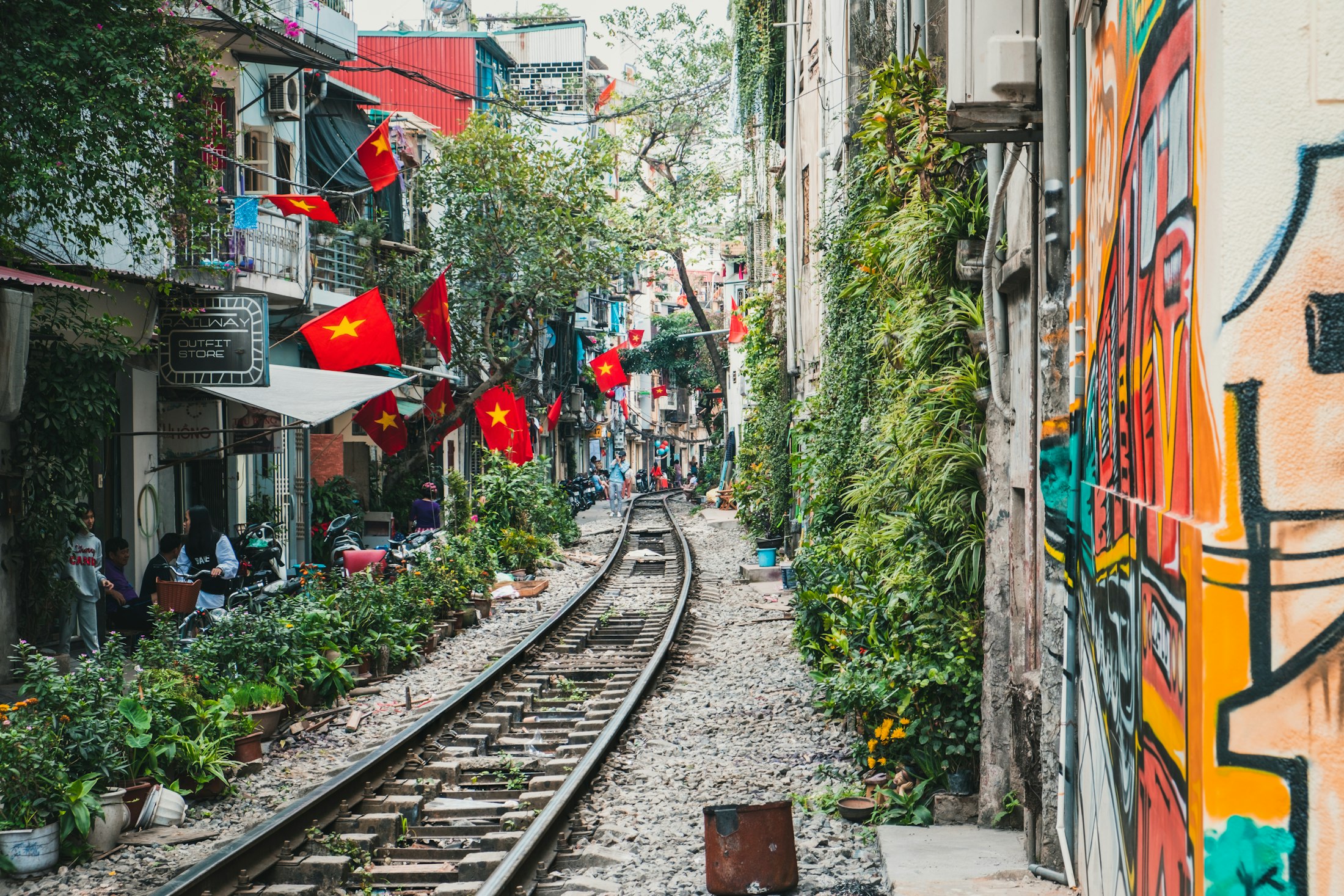
The rain started at 4:40 a.m. and didn't care about my plans. I crossed Long Biên Bridge on foot anyway, because a phở cuốn vendor on the other side opens at 5 and closes when her rice paper runs out, usually by 7. That's the deal with this part of Hanoi — the food doesn't wait for you to finish sleeping.
Long Biên District sits across the Red River from the Old Quarter. Most tourists never cross the bridge. That's fine. More phở cuốn for the rest of us.
1. What phở cuốn actually is (and isn't)
Phở cuốn is not phở. I need to say this because every English-language food blog treats it like some derivative side quest. It's a rolled rice noodle sheet — the same bánh phở you'd find in soup — filled with stir-fried beef and herbs, served at room temperature with a bowl of nước chấm for dipping. No broth. No heat. It's closer in spirit to a fresh spring roll than to a bowl of phở.
The dish reportedly originated on Ngũ Xã street in Ba Đình District, where a handful of restaurants still serve it as a sit-down lunch item for 50,000–65,000 VND a plate. That version is fine. But the Long Biên dawn version — sold from carts and plastic-stool setups near the market — costs 25,000–35,000 VND and comes with the specific pleasure of eating something delicate while standing in light rain next to a woman hauling crates of rambutan.
Pro tip: If the rice sheet is thick and chewy rather than thin and silky, move on to the next cart. Thickness means the batter was mixed hours ago.
2. Crossing the bridge at dark o'clock
Long Biên Bridge is 1.68 kilometers of French-colonial steel that trains still use. You walk on the outer lane. Motorbikes share this lane with you, which sounds worse than it is — at 4:45 a.m., traffic is light and everyone's too tired to honk.
Last time I was there in March, I made the mistake of taking a Grab bike across. The driver dropped me at the wrong end of the market, and I spent twenty minutes walking past wholesale banana sellers in the dark trying to find the food carts. Just walk the bridge from the Old Quarter side. You'll arrive at the south entrance of Long Biên Market, which is where you want to be.
Bring a headlamp or use your phone flashlight. The bridge deck has uneven metal plates and actual gaps in places.
3. The market before the market
Long Biên wholesale market runs roughly from 1 a.m. to 6 a.m. By the time you arrive at 5, the heaviest commerce — the truck unloading, the shouting — is winding down, and the food vendors along the market's southern fringe are hitting their stride. This is the window.
Three or four phở cuốn carts set up along the alley that runs parallel to Trần Nhật Duật street, just south of the market's main structure. They don't have names. One woman uses a blue tarp; another has a glass-fronted cart with a propane burner. The blue-tarp vendor's beef had more wok char when I tried both. Your results may vary by exactly one day.
Pro tip:The alley gets slippery with vegetable runoff from the wholesale stalls. Sandals are a bad idea. Wear shoes you don't love.
4. Skip the Ngũ Xã lunch circuit
Every guide sends you to Ngũ Xã street for phở cuốn, and yes, the restaurants there are the "original" source. But the experience is sitting in a fluorescent-lit room eating rolls that were assembled ten minutes ago and left under a mesh cover. Not worth a dedicated trip.
The Long Biên cart vendors make each roll to order. You watch the rice sheet come off the steamer, watch the beef go in, watch the herbs get tucked. It takes ninety seconds. The sheet is still warm and pliable, not room-temperature and stiffening. If you only have one morning in Hanoi, spend it at the bridge, not on Ngũ Xã.
5. What else to eat while you're already wet
Within a hundred meters of the phở cuốn carts, you'll find xôi (sticky rice) vendors and at least one bà selling bánh cuốn — steamed rice rolls with minced pork and wood ear mushroom. The bánh cuốn goes for about 20,000 VND and comes with a small bowl of diluted fish sauce and a plate of chả lụa (pork sausage) on the side.
There's also cháo (rice porridge) if you need something hot. I am not a cháo person. It tastes like giving up.
Pro tip:If you want cà phê after eating, don't buy it at the market. Walk back across the bridge to the Old Quarter side — there's a Cộng Cà Phê at 27 Hàng Điếu that opens at 7 a.m.
6. Where to stay if you want to do this without hating yourself
You need to be awake at 4:30 a.m. That means you need to be in bed by 9 p.m. the night before, which rules out the Old Quarter party-hostel strip on Tạ Hiện street unless you own industrial earplugs.
Stay somewhere on the east side of Hoàn Kiếm, close to the bridge approach. Anything on or near Hàng Chiếu street puts you within a ten-minute walk of the bridge entrance. The guesthouses along Hàng Mã are slightly cheaper and only marginally farther.
Don't overthink the hotel. You need a bed and an alarm clock, not a rooftop pool.
Pro tip: Set two alarms. The temptation to skip a 4:30 a.m. wake-up call in favor of sleeping until a civilized hour is enormous and must be resisted.
Stay in Hanoi
Top-rated hotels near Hanoi
Best locations · Verified reviews · Free cancellation
View deals
Expedia →7. Rain and when to go anyway
Hanoi's drizzle season runs roughly October through March. Some mornings the rain is mist; some mornings it's a committed downpour. The phở cuốn vendors set up either way. I've seen the blue-tarp woman working in rain heavy enough to blur the bridge lights.
November and December are best — cool enough that the walk is pleasant, wet enough that the bridge feels cinematic without being miserable. April and May get hot fast, and standing over a steam tray at 5 a.m. in 80% humidity is less romantic than it sounds.
Pro tip: A 10,000 VND plastic poncho from any convenience store works better than an umbrella. You need both hands free for eating and for not falling off the bridge.
Stay in Hanoi
Top-rated hotels near Hanoi
Best locations · Verified reviews · Free cancellation
View deals
Expedia →8. The walk back
By 6:30, the light changes. The Red River goes from black to brown to something almost copper if the clouds break. The bridge fills with motorbikes and the occasional train — you'll hear it before you see it, and you'll press yourself against the railing with everyone else while it passes close enough to touch.
The bridge is a commute. You use it to get to food, and then you use it to get back. That it happens to be beautiful is a side effect, not the point.
Somewhere around the midpoint of the return crossing, sticky rice settling in your stomach, rain on your glasses, a train horn sounding behind you — that's the moment. Not a view. A commute.
Essential tips
Bring a cheap plastic poncho (10,000 VND at any Circle K or Family Mart). Umbrellas are useless on the bridge — wind funnels across the river.
Wear closed-toe shoes with grip. The bridge deck is metal, the market alleys are slick with produce runoff, and sandals will betray you.
Carry small bills — 10,000 and 20,000 VND notes. Cart vendors at 5 a.m. rarely have change for 500,000 VND, and asking them to break one is rude at that hour.
Arrive at the south end of Long Biên Market by 5:00–5:15 a.m. The phở cuốn carts are usually packed up by 7:00. No late-morning version of this.
Ready to visit Hanoi?
Book your hotel, flights, and activities through our Expedia-powered search.


