In This Guide
I walked into Nordhavn at eleven on a Thursday night in June, and the sky was the color of a peach somebody had left on a windowsill — not quite dark, not quite light, just holding there, refusing to commit. Three restaurants still had full kitchens running. A woman was eating oysters on a concrete ledge overlooking the harbour basin, her bike leaning against a bollard, and I thought: this is the neighbourhood Copenhagen has been building toward for a decade, and it's finally arrived with an appetite.
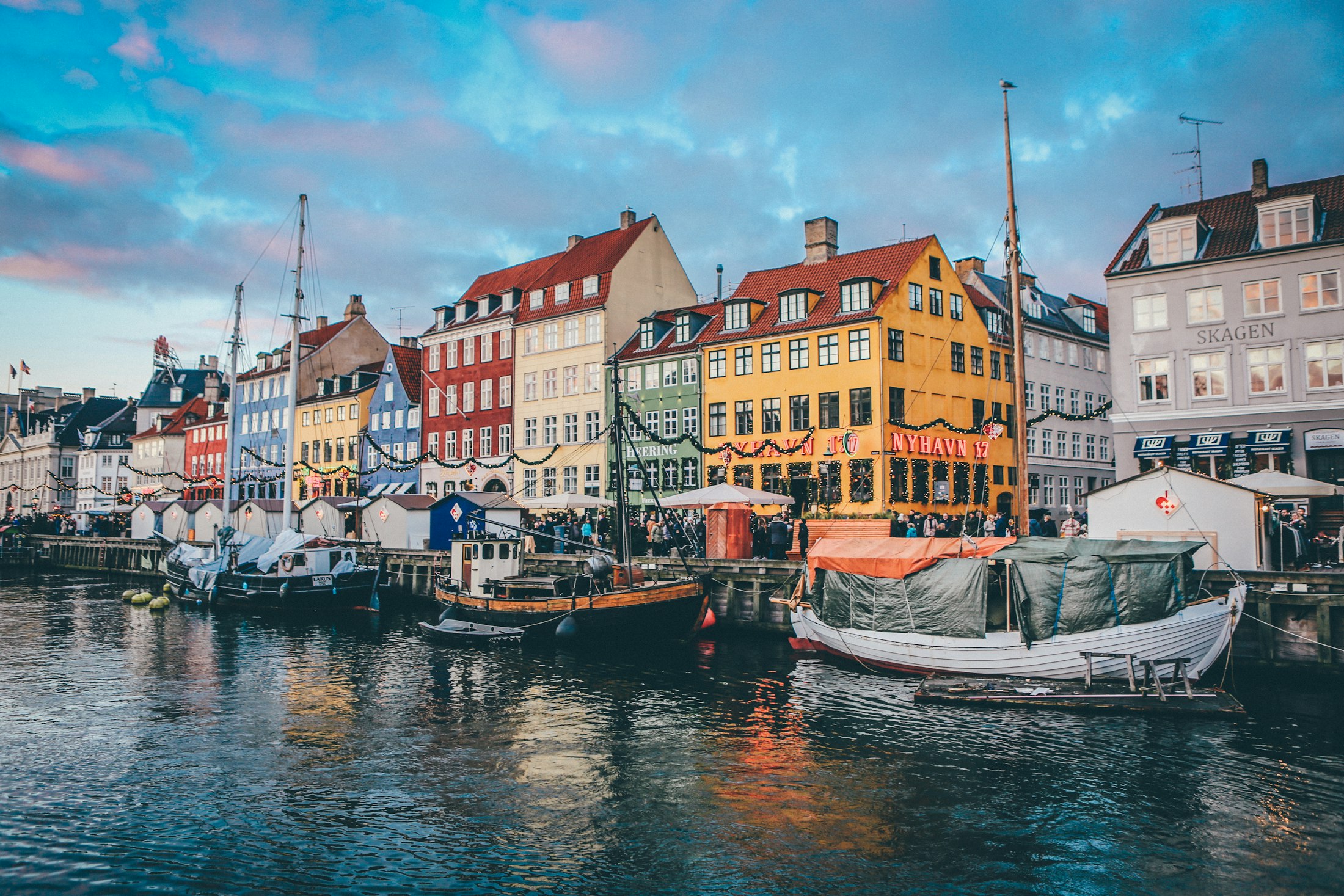
Nordhavn is Copenhagen's repurposed industrial harbour district, northeast of the old city, where grain silos and container depots have given way to angular apartment blocks, a swimming pier, and — critically — a food scene that doesn't rely on Nyhavn's tourist markup or Vesterbro's self-conscious cool. The cooks here are younger, the rents are slightly less catastrophic, and the menus lean hard into the water that surrounds everything.
1. Start at Sticks'n'Sushi, then leave
I know, I know. Sticks'n'Sushi is a chain. But the Nordhavn outpost on Århusgade 130 has a harbour-facing terrace that earns its keep as an orientation point — order one round of the ebi katsu maki (around 89 DKK) and a cold Asahi, get your bearings, watch the light do that endless Nordic thing across the water.
Then leave. Seriously. The food is fine, but "fine" is not why you came to this district. Walk north along the waterfront promenade toward the Redmolen peninsula, where the residential towers thin out and the restaurants get more interesting. The walk takes eight minutes and the wind off the Øresund will wake you up better than any espresso.
Pro tip: Århusgade is the main commercial spine of Nordhavn. Almost everything worth eating is either on it or within a two-minute walk of it.
2. Somebody put a brilliant wine bar inside a former silo
Kølster on Redmolen is the place I keep thinking about weeks later. It operates out of a raw concrete space with huge windows facing the inner harbour basin, and the natural wine list is long enough to be dangerous but short enough that the staff clearly tasted everything on it. I had a glass of Gut Oggau Theodora — skin-contact, Austrian, somewhere around 145 DKK — paired with their smoked cod brandade, and I would have happily stayed until the sun pretended to set around 11:30 p.m.
The food menu is small and rotates, which I prefer to the 40-item laminated nightmares you find in tourist zones. On my visit: brandade, a plate of burrata with grilled stone fruit, house-baked sourdough with cultured butter. Nothing over 165 DKK.
Skip the weekend brunch crowd here. I watched the line form on a Saturday morning from across the street and it looked like a hostage situation. Go on a weeknight, after 7.
Pro tip:They don't take reservations for groups under four. Arrive by 7:15 on weekdays or prepare to wait at the bar, which honestly isn't the worst outcome.
Stay in Copenhagen
Top-rated hotels near Copenhagen
Best locations · Verified reviews · Free cancellation
View deals
Expedia →3. The harbour pool at midnight is not a metaphor
Nordhavn's Havnebadet — the public harbour bath at Sandkaj — stays open until late in summer, and Copenhageners actually use it. I saw people swimming at 10:45 p.m., silhouetted against that absurd lavender sky, with the towers of the Århusgade quarter lit up behind them.
Free to use. No ticket, no app, no booking window.
I'll be honest: a lot of travel writing about Copenhagen's harbour baths reads like a press release from the city planning office. Most visitors go, take a photo, leave. But if you actually get in the water after a long dinner, slightly wine-brave, when the air temperature is 18°C and the water is somehow warmer — that changes things.
4. Late plates and the case for not going to bed
Copenhagen's restaurant culture historically shuts down early. Kitchens close at 9:30, maybe 10, and you're left scrounging for shawarma on Strøget like a student. Nordhavn is different — not radically, but enough. Several places along Århusgade keep serving small plates and wine until 11 p.m. or later on Thursdays through Saturdays in summer, including Kølster and the newer Baja, a taqueria-inflected spot at Århusgade 88 where the fish tacos use whatever came off the boats that day (around 75 DKK for two).
I think Nordhavn at night, specifically between June and August, is a better version of Copenhagen than the one most visitors experience. The consensus says you go to Nørrebro or Vesterbro for nightlife, Nyhavn for the postcard, Refshaleøen for the food stalls. I disagree. Those neighbourhoods have peaked in self-awareness. Nordhavn hasn't yet figured out what it's performing, and that unselfconsciousness makes the food taste better and the conversations last longer.
Or maybe it's just the light. That weird, endless, peachy light that won't go away.
Pro tip:The M3 metro line (Nordhavn station) runs all night on weekends. You don't need a taxi back to the city center, and you shouldn't pay for one.
Stay in Copenhagen
Top-rated hotels near Copenhagen
Best locations · Verified reviews · Free cancellation
View deals
Expedia →Essential tips
Take the M3 metro to Nordhavn station. It's 6 minutes from Kongens Nytorv. Trains run every 3-4 minutes during peak hours and all night Friday-Saturday.
In June, Copenhagen's sun sets around 10 p.m. and never drops far below the horizon. Plan your Nordhavn evening to start at 8 and stretch past 11 — the light rewards you for staying.
Cash is functionally extinct in Nordhavn. Every restaurant, bar, and even the street food stalls take card or MobilePay. Don't bother with a currency exchange.
Harbour wind is real even in summer. Bring a layer you can actually zip up, not a decorative jacket. By 10:30 p.m. in June, waterfront temperatures drop to 13-15°C.
Ready to visit Copenhagen?
Book your hotel, flights, and activities through our Expedia-powered search.


