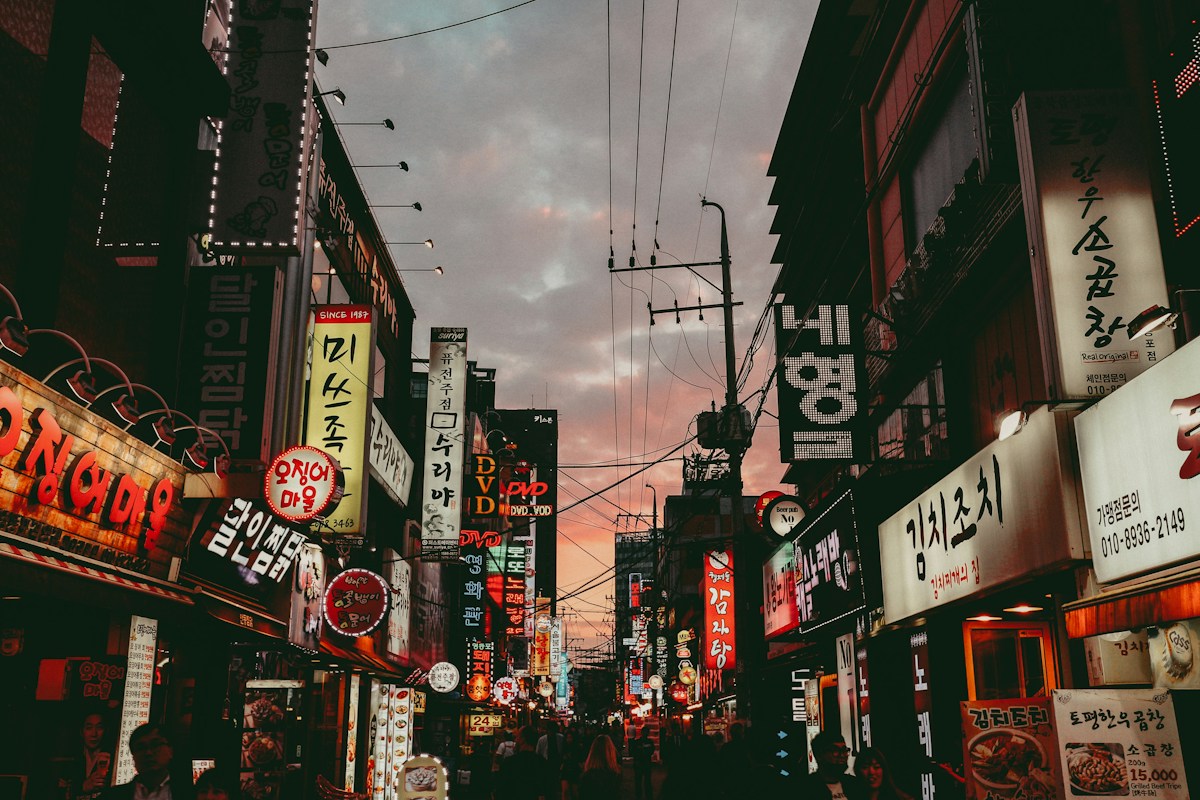
Seoul keeps two clocks running and never apologizes for either
A city that renovates its palaces and its noodle shops with the same patient, exacting hand.
Advertisement
The seam between old and new is load-bearing
At Jongmyo Shrine, the Confucian spirit tablets of the Joseon dynasty sit in buildings so plain they read almost as warehouses, and that plainness is the point: the wood columns are unpainted, left to silver and crack in the weather, because the shrine was designed to age rather than to be preserved in amber. Walk twenty minutes south and you're in Euljiro, where machine shops that have sharpened the same lathes since the 1960s now share stairwells with listening bars that open at 9 p.m. Nobody treats this as ironic. The welders on the ground floor and the bartenders upstairs use the same stairwell, the same dented elevator, and neither seems in a hurry to explain themselves to the other.
Namdaemun Market runs on sound, not signage
You could navigate the market blind, almost, by ear alone. Vendors near the knife alley rap the flat of a cleaver against a cutting board to call customers over; a woman selling dried anchovies near Gate 4 keeps a transistor radio tuned to a trot station turned up just loud enough to cut through the diesel generators powering the food carts. The smell is briny and a little scorched — grilling mackerel, hot oil, the mineral tang of ice melting under stacked croakers. What's remarkable isn't the chaos but the precision inside it: every vendor knows exactly which three seconds of your hesitation mean you're actually going to buy the knife, not just hold it.
Coffee culture here is an argument about attention
Seoul has more cafés per block than almost any city we've worked in, and the temptation is to call this trendiness, but spend an afternoon at Anthracite in Hapjeong — a converted shoe factory with its original conveyor-belt tracks still bolted into the concrete floor — and you notice something else. The baristas weigh beans to the tenth of a gram and then wait, saying nothing, while the pour-over blooms. Nobody on a laptop looks up. The quiet isn't aesthetic performance; it's the same discipline you find in a tailor's shop or a tea ceremony, the belief that doing one thing precisely is worth the silence it demands.
The quiet isn't aesthetic performance; it's the belief that doing one thing precisely is worth the silence it demands.
Han River nights belong to no one age group
At Ttukseom, somewhere past ten on a weeknight, you'll find retirees doing synchronized stretches under the bridge lights a hundred meters from college students sharing a single order of fried chicken over a blue tarp. Someone always has a Bluetooth speaker playing something different from their neighbor's, and the two songs overlap without quite becoming noise — just a kind of ambient friction, river water slapping the concrete embankment underneath it all. Seoul's parks don't segregate by purpose the way many Western ones do; the same stretch of grass is a gym, a dining room, and a bedroom for someone's nap, often within the same hour.
Bukchon survives by being lived in, not looked at
The hanok village gets photographed to exhaustion, but turn off the main tourist lane onto Gahoe-dong's side alleys and you find laundry actually drying on actual lines above actual doorways, not props. An elderly man we passed twice in one afternoon was re-tarring the eaves of his own roof, unbothered by the tour groups photographing the house two doors down. The tile roofs curve the way they've curved since the fifteenth century, but the satellite dishes bolted beside the chimneys are the real story: nobody here asked the neighborhood to stay quaint for anyone's camera roll.
What the DMZ day trips leave out
Most itineraries treat the DMZ as a grim bookend, a few somber hours before the bus returns you to barbecue. But at the Dora Observatory, the thing that stays with you isn't the binoculars trained on North Korean farmland — it's the gift shop next door selling unification-themed socks and chocolate, cheerful and strange in equal measure. That tonal collision, grief and kitsch stacked on the same shelf, tells you more about how Seoul has learned to carry its history than any plaque does.
Advertisement