US Air Force KC-135 Fleet Nears 70 Years As KC-46 Struggles Mount
The Air Force faces a critical dilemma as its Eisenhower-era tanker fleet deteriorates while its troubled replacement continues battling design flaws and safety concerns.
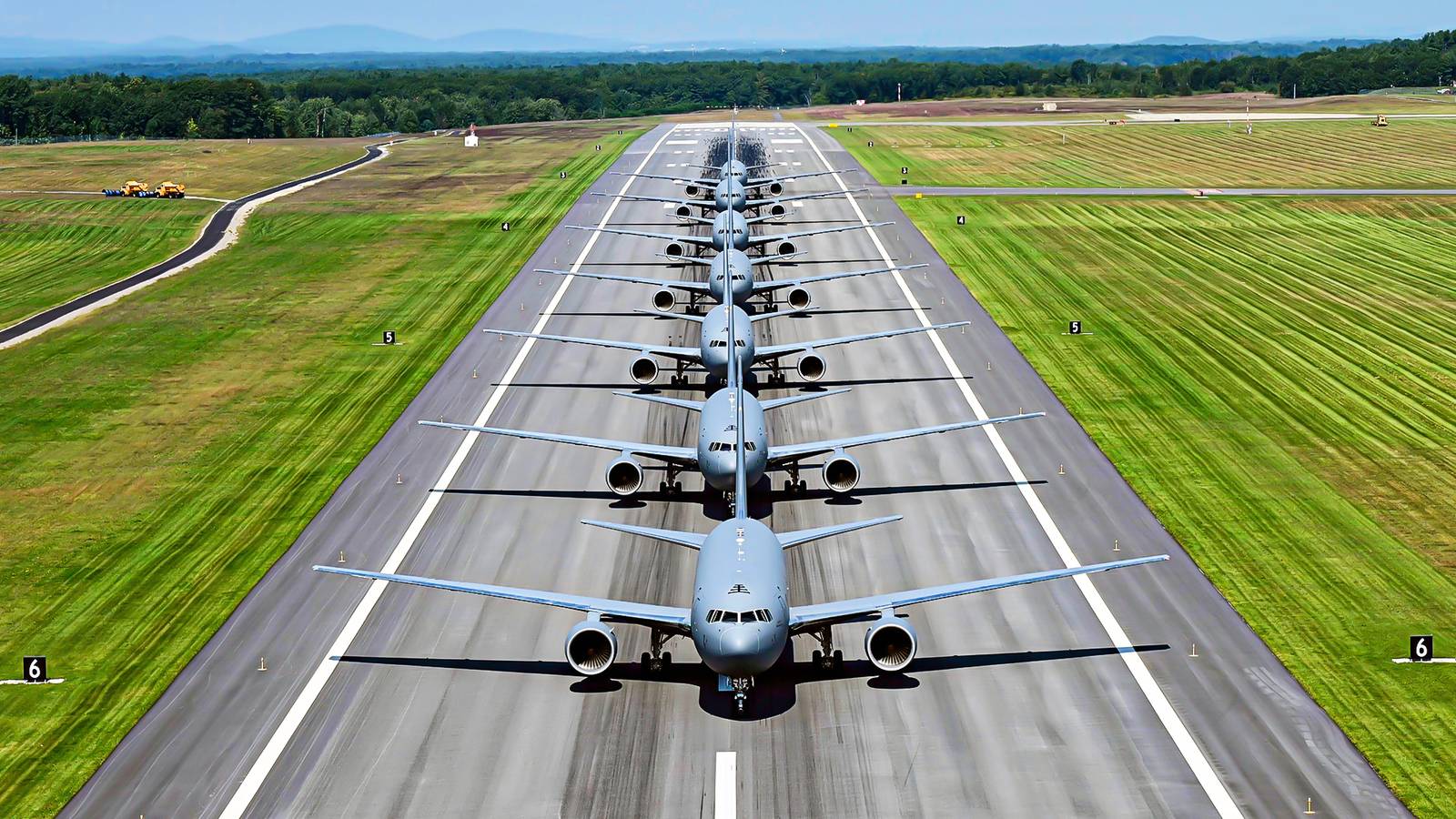
The United States Air Force confronts an unprecedented crisis in aerial refueling as its KC-135 Stratotanker fleet approaches an average service life of seven decades—a longevity record no frontline military aircraft has ever reached. According to a report, the aging tankers are experiencing structural failures and present mounting safety risks, while their intended successor remains plagued by controversy.
The KC-135 fleet, built during the Eisenhower administration, is reportedly suffering from physical deterioration and recent midair incidents that have raised alarm about continued operations. Unlike modern combat aircraft, these tankers lack contemporary electronic warfare systems, radar-evading technology, or advanced defensive countermeasures that would protect them in potential conflicts with peer adversaries. Defense analysts note that Chinese long-range missiles are specifically engineered to target support aircraft like tankers, bypassing fighter escorts.
Boeing's KC-46 Pegasus was conceived as far more than a fuel truck, designed to serve multiple missions in contested airspace. The manufacturer states the aircraft can transition between refueling, cargo transport, passenger movement, or medical evacuation roles with under two hours of ground preparation. Compared to its predecessor, the Pegasus reportedly carries double the passengers, triple the cargo pallets—matching the C-17 Globemaster's capacity—and offers thirty percent greater medical evacuation capability.
However, the KC-46 program has been mired in difficulties including severe design defects, cost overruns totaling billions of dollars, and critical safety issues. The aircraft's Remote Vision System has experienced persistent technical problems that have drawn particular scrutiny. Despite these high-profile flaws, the newer platform offers factory-fresh airframes derived from the commercial Boeing 767, enhanced defensive sensors, electromagnetic shielding, and expanded cargo capabilities through oversized doors and compatibility with existing Air Force loading equipment.
The strategic calculus has shifted dramatically as the KC-135 ages beyond serviceable limits. While the original Stratotanker was engineered for extreme durability to survive nuclear warfare scenarios, the KC-46 emphasizes operational flexibility and efficiency over pure ruggedness. With structural integrity concerns mounting across the legacy fleet and no viable alternative available, the Air Force reportedly has exhausted its timeline for replacement, forcing acceptance of the Pegasus despite its ongoing challenges.