Pilots Highlight Key Differences Between F-15 Eagle and F-35 Lightning II
The legacy F-15 Eagle and modern F-35 Lightning II represent contrasting design philosophies that continue to shape how air forces deploy advanced fighters in combined operations.
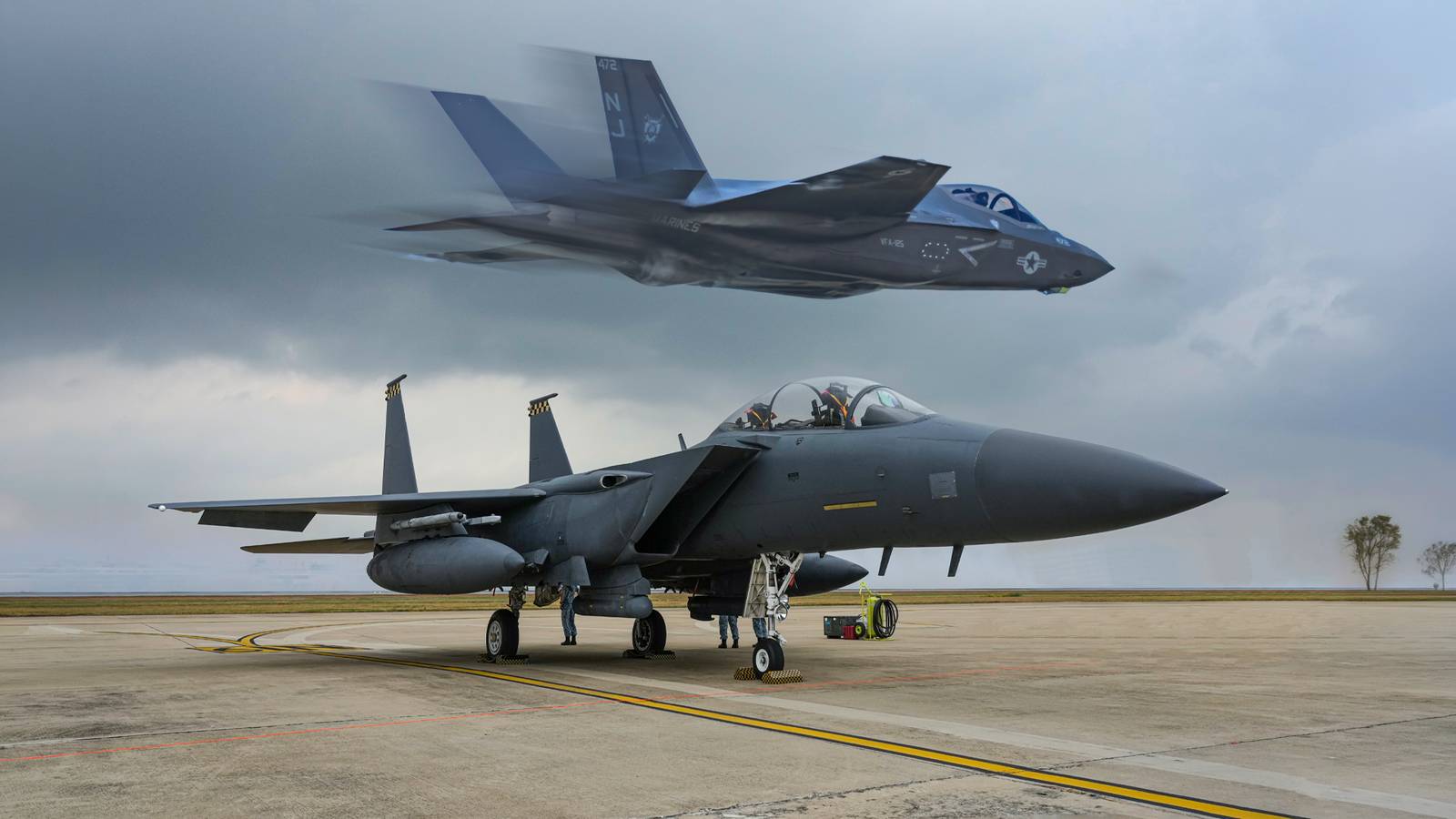
Two of the United States Air Force's premier fighter jets—the F-15 Eagle and the F-35 Lightning II—embody fundamentally different approaches to air combat, reflecting the evolution of military aviation across nearly five decades.
The McDonnell Douglas F-15 Eagle, which entered operational service in 1976, was engineered specifically for air dominance through superior speed, maneuverability, and climb performance. The aircraft was designed around large wing surfaces, potent engines, and a lightweight airframe that delivered exceptional thrust-to-weight ratios. That formula proved remarkably effective: the platform has accumulated more than 100 aerial victories without a single combat loss in air-to-air engagements, establishing one of the most successful records in fighter aviation history.
The Lockheed Martin F-35 Lightning II reflects a different set of priorities aligned with contemporary warfare requirements. Developed through the multinational Joint Strike Fighter program, the aircraft prioritizes stealth characteristics, sensor fusion capabilities, and network-centric operations over raw kinematic performance. Its advanced radar systems, infrared sensors, and data-sharing architecture enable the jet to identify and track threats at extended ranges while maintaining a reduced radar signature.
Modern iterations continue to evolve both platforms. The Boeing F-15EX Eagle II incorporates digital fly-by-wire controls, contemporary glass cockpit displays, and the AN/APG-82 active electronically scanned array radar system, alongside expanded weapons capacity that extends the airframe's operational relevance into the current decade.
Rather than replacing one another, the two aircraft types increasingly operate in complementary roles within air force inventories. The F-35's stealth profile and information dominance pair with the F-15's substantial payload capacity and long-range strike capabilities, allowing military planners to leverage the distinct strengths of each platform in coordinated missions.