American Airlines to Pilot Fix for 'Rolling Delay' Complaints
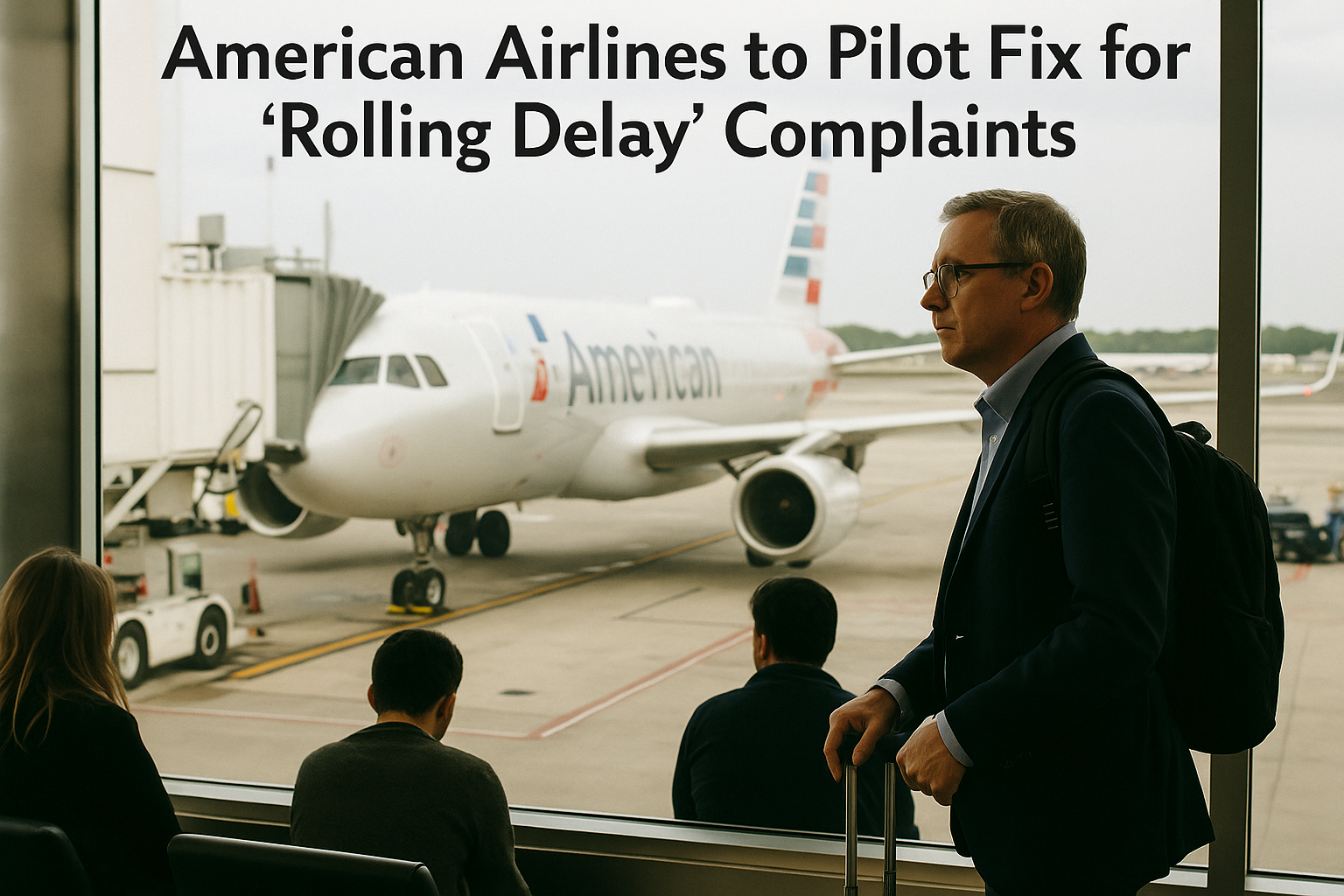
American plans to base boarding estimates on the actual arrival time of the inbound aircraft, testing the change first at its Charlotte hub, according to aviation reporter JonNYC.
What travelers need to know
- What happened: American Airlines is reportedly piloting a new approach to "rolling delays," estimating boarding times based on when the inbound aircraft is actually expected to arrive rather than issuing repeated short delay updates.
- Who's affected: American Airlines passengers, particularly those flying through its Charlotte hub during the initial test.
- Where: Charlotte Douglas International Airport (CLT), with a possible systemwide rollout later.
- When: Reported .
- What to do: Passengers can still cross-check inbound aircraft status on tools like Flightradar24 or FlightAware until the new system expands.
American Airlines is reportedly testing a change to how it communicates delays, aiming to give passengers a more honest estimate of when boarding will actually begin. Instead of relying on a string of incremental delay postings, the airline will base its boarding estimate on the expected arrival time of the inbound aircraft, according to aviation industry watcher JonNYC, who has a track record of reporting airline operational changes before they're officially announced.
The program will reportedly launch first at Charlotte Douglas International Airport, one of American's busiest and most operationally strained hubs, before any consideration of expanding it across the airline's network. JonNYC described the mechanics simply: "Basically they will estimate boarding time based off arrival time of the inbound aircraft," adding that it's something flight-tracking apps have let passengers do themselves for years.
Advertisement
The move targets a specific and long-standing passenger complaint. So-called rolling delays happen when an airline pushes back a flight's departure time in small increments — 15 or 20 minutes at a stretch — even when the inbound plane is still hundreds of miles away and clearly won't land in time to make the newly posted departure. Passengers end up camped at the gate, reluctant to wander off for food or work because boarding seems perpetually imminent, when a quick check of a flight-tracking app would show the aircraft hasn't even taken off yet.
Why the incremental delays frustrate flyers most
Both aviation outlets covering the reported change note that travelers generally accept that delays happen — mechanical issues, weather, and crew scheduling are part of flying. What frustrates them is losing control of their own time. A single accurate estimate of a two-hour delay lets a passenger have dinner, work from a lounge, or rebook onto another flight. A cascade of 15-minute pushes does none of that; it just keeps people tethered to a gate area on the assumption that boarding could start any minute.
American has made incremental improvements to how it handles disruptions more broadly. Its app and website now display reasons for delays, and self-service rebooking has gotten easier for passengers who want to jump onto another flight. But the specific dishonesty of rolling delays — implying imminent departure while the incoming plane sits at a gate elsewhere — has remained a persistent complaint among frequent flyers, one that outside tools like Flightradar24 have effectively been filling a gap the airline's own systems didn't address.
Charlotte becomes the testing ground
Charlotte's selection as the pilot site is notable given its size and complexity within American's route network — a hub where connection banks and aircraft turnarounds make delay management especially difficult. If the new system proves workable there, the expectation reported is that American would look to expand it more broadly, though no timeline for a systemwide rollout has been specified.
Advertisement
For now, passengers flying through hubs other than Charlotte have no indication of when — or whether — the change will reach them. Until it does, checking an inbound aircraft's real-time location remains the most reliable way to gauge an actual departure time, delay notification or not.
Advertisement
Plan this trip
Here's what it costs.