In This Guide
- 1.What chapulín season actually means
- 2.The mezcal courtyard circuit
- 3.Tlayudas at Doña Vale and why the famous ones are overrated
- 4.Rainy season logistics y'all should actually plan for
- 5.Chapulín tacos at Comedor Chabelita
- 6.What to drink when you're done with mezcal (temporarily)
- 7.The walk after the rain stops
The first real rain hit Jalatlaco on a Tuesday in late June, and by Thursday the chapulín vendors were already set up along Calle de Aldama with plastic buckets full of grasshoppers sorted by size. That's how fast the season turns here. One week the barrio smells like dry dust and lime plaster; the next it smells like toasted chile and wet cobblestone.
I walked into Oaxaca's rainy season last year expecting mole and mezcal — which, sure, you'll get — but what caught me off guard was how the rain reorganizes daily life in Jalatlaco. Courtyards that sit empty in May suddenly fill with people drinking mezcal under tin roofs while storms roll through. Street food that wasn't there in April appears on corners with no signage. The whole neighborhood runs on a calendar most travel guides don't bother printing.
1. What chapulín season actually means
Chapulines — grasshoppers, if you want the plain English — show up in Oaxacan markets right after the first rains, roughly late June through September. They're harvested from alfalfa fields in the Central Valleys, and the timing depends entirely on precipitation. No rain, no grasshoppers.
You'll see them at Mercado 20 de Noviembre and Benito Juárez, but in Jalatlaco the better move is buying from the women who sell along Calle de Aldama near the Templo de San Matías. Small ones — chicos — run about 80-100 pesos for a quarter kilo. They're the crunchiest, almost like seeds. The large ones, grandes, have more chew and a stronger funk. I prefer the mediums, which have enough body to hold the garlic and lime but don't require you to think too hard about what you're eating.
Most vendors will let you taste before buying. If they don't offer, ask.
Pro tip:Chapulines keep for weeks in a sealed bag at room temperature. Buy extra on your last day — they're a better souvenir than anything in the airport shops.
2. The mezcal courtyard circuit
Jalatlaco has more mezcal bars per block than any other neighborhood in Oaxaca, and most of them operate in converted house courtyards. During rainy season, this matters — you're drinking under corrugated metal or tile overhangs while water sheets off the roof edges two feet from your elbow.
Start at Mezcaloteca on Calle Reforma 506. It's a tasting room, not a bar, and they'll walk you through flights of small-batch mezcals organized by agave species. Tastings run around 250-400 pesos depending on the flight. The staff actually knows the producers. This is not a place to slam shots.
From there, walk to Los Amantes on the same street. The courtyard is larger, the vibe is louder, and they mix cocktails if straight mezcal isn't your thing. Their mezcal sour with passionfruit is solid.
Skip Mezcalería In Situ on Friday or Saturday night. The space is too small for the crowd it draws, and you'll spend more time waiting for a table than drinking. Weekday afternoons, though, it's a different place entirely — quiet, the bartenders have time to talk, and the pours are generous.
Pro tip:Most mezcal courtyards don't open until 2 or 3 p.m. Don't show up at noon expecting service.
3. Tlayudas at Doña Vale and why the famous ones are overrated
Here's my contrarian take: the tlayudas at the Mercado 20 de Noviembre night stalls are fine, but they're not the best in town, and the line makes them worse. Tourists treat that market like a pilgrimage site. The tlayudas come out rushed and sometimes under-crisped because the cooks are cranking through volume.
Doña Vale, who sets up her comal on the corner of Aldama and Matamoros in Jalatlaco most evenings around 7 p.m., makes a better one. No sign. Just a woman, a comal over coals, and a folding table with asiento, black beans, quesillo, and whatever meat she has that day. The tasajo tlayuda costs 70 pesos. The edges char properly because she's not in a hurry.
She's not there every night. Rain sometimes pushes her out. But when she's there, she's there until the masa runs out, usually around 10.
4. Rainy season logistics y'all should actually plan for
The rain in Oaxaca from late June through September isn't all-day tropical monsoon. It follows a pattern: mornings are clear, clouds build by 1 p.m., and heavy rain hits between 3 and 6 p.m. Then it stops, the streets steam, and the evening is cool and good for walking. Plan your outdoor eating for mornings and after 7 p.m.
Jalatlaco floods. Not catastrophically, but the streets around the Templo de San Matías collect ankle-deep water during hard downpours. Wear shoes you don't care about or bring sandals that can get wet. I made the mistake of wearing leather boots my first rainy season afternoon and spent the rest of the trip with damp feet.
Drive time from the airport (Xoxocotlán) to Jalatlaco is about 20 minutes without traffic, 35-40 during afternoon rain when everyone drives slower and the roundabouts back up. A taxi from the airport should cost 200-250 pesos if you buy the ticket at the official booth inside the terminal. Don't negotiate outside.
Pro tip: Carry a thin rain shell, not an umbrella. The streets are narrow and umbrellas make you a hazard to other pedestrians.

Stay in Oaxaca
Top-rated hotels near Oaxaca
Best locations · Verified reviews · Free cancellation
View deals
Expedia →5. Chapulín tacos at Comedor Chabelita
Comedor Chabelita sits on Calle Porfirio Díaz in Jalatlaco, a few blocks east of the main square. It's a family-run comedor with maybe eight tables and a handwritten menu on a whiteboard. During chapulín season they add tacos de chapulines with avocado and a smoky red salsa that has real heat.
Three tacos and an agua de horchata ran me 95 pesos last July.
The place opens at 8 a.m. for breakfast and closes when lunch service ends, usually around 4 p.m. They don't do dinner. The enfrijoladas are also worth ordering — thick tortillas bathed in black bean sauce with crumbled cheese. Properly made food in a room where the radio is always on.
Pro tip:Ask for the chapulines con ajo if they have them. The garlic version isn't always on the board but they'll make it if they have the ingredients.
6. What to drink when you're done with mezcal (temporarily)
Tejate. That's the answer.
It's a pre-Hispanic drink made from cacao, mamey seed, and toasted corn, served cold in a jícara gourd. It looks like dirty dishwater topped with foam. It tastes like nothing you've had before — earthy, slightly sweet, with a texture that's somewhere between horchata and a smoothie. The foam on top is the best part; it's made from cacao fat and has a grainy quality.
In Jalatlaco, look for women selling tejate from large clay bowls near the market areas in the morning. A cup is usually 20-30 pesos. It's a morning drink — by afternoon the vendors are gone.
If you want something fermented, pulque shows up at a few bars in the neighborhood during rainy season. Pulquería La Jícara on Calle Hidalgo serves natural and curado versions. The curado de guayaba is worth trying. The natural is an acquired taste — sour, viscous, alive-tasting. I like it. Most people I've brought there do not.
Stay in Oaxaca
Top-rated hotels near Oaxaca
Best locations · Verified reviews · Free cancellation
View deals
Expedia →7. The walk after the rain stops
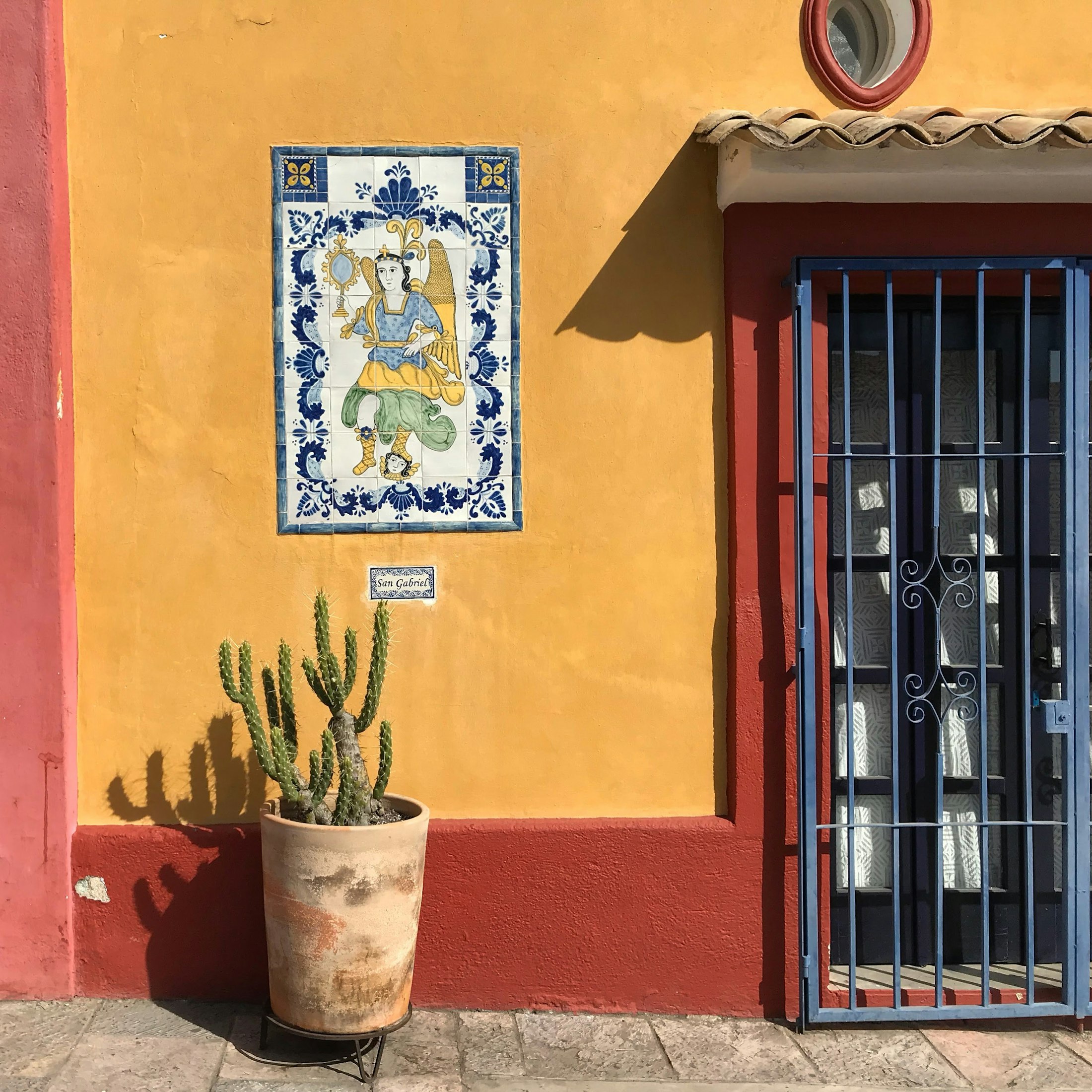
After 7 p.m., when the rain has quit and the air cools down to the low 60s, Jalatlaco becomes the best walking neighborhood in Oaxaca. The colored facades along Calle de Aldama go dark and reflective with water. Cooking smoke drifts out of doorways. Cobblestones slick enough that you have to watch your feet.
Walk south from the Templo de San Matías toward the railroad tracks. The mural walls along the way are worth seeing in the wet light. Then loop back north on Reforma toward the mezcal bars for a nightcap.
The whole circuit takes about 40 minutes if you don't stop. You will stop.
Pro tip:Bring a headlamp or use your phone flashlight. Street lighting south of the temple is inconsistent, and the uneven cobblestones will roll an ankle if you're not watching.
Essential tips
Rain hits hardest between 3 and 6 p.m. from late June through September. Schedule outdoor meals before noon or after 7 p.m.
Most Jalatlaco comedores and street vendors are cash only. The nearest reliable ATM is the Banamex on Independencia, about a 10-minute walk from the barrio center.
Cobblestones in Jalatlaco get dangerously slick after rain. Skip the sandals for evening walks and wear shoes with actual tread.
Chapulín season peaks in July and August. By late September the vendors thin out and prices climb. Time your trip for mid-July if grasshoppers are the draw.
Ready to visit Oaxaca?
Book your hotel, flights, and activities through our Expedia-powered search.


