In This Guide
- 1.Chaya is not a garnish here
- 2.First-rain courtyard suppers and why June matters
- 3.Skip the Itzimná church plaza at midday
- 4.Calle 33's quiet coffee stretch
- 5.The case for Itzimná's market over Lucas de Gálvez
- 6.Where to sleep in the neighborhood
- 7.After dark on foot
- 8.Weather, drive times, and the stuff guides forget to mention
The first time rain hit the courtyard tiles at a supper club on Calle 33, I watched a woman across the table close her eyes and tilt her head back like she'd been waiting all dry season for exactly that sound. Itzimná does this to people. It's a residential colonia north of Mérida's centro, slower and leafier, where the sidewalks crack around ceiba roots and someone is always grilling something behind a limestone wall.
Most guides will send you straight to Paseo de Montejo or Santa Lucía. Fine. But Itzimná is where Meridanos actually spend their Saturday mornings — at herb nurseries, panaderías with no Instagram presence, and taco counters that close when the tortillas run out. The neighborhood runs roughly from Calle 19-A up to Prolongación Montejo, east-west between Calles 24 and 34. You can walk the whole thing in forty minutes, but you won't, because you'll stop.
1. Chaya is not a garnish here
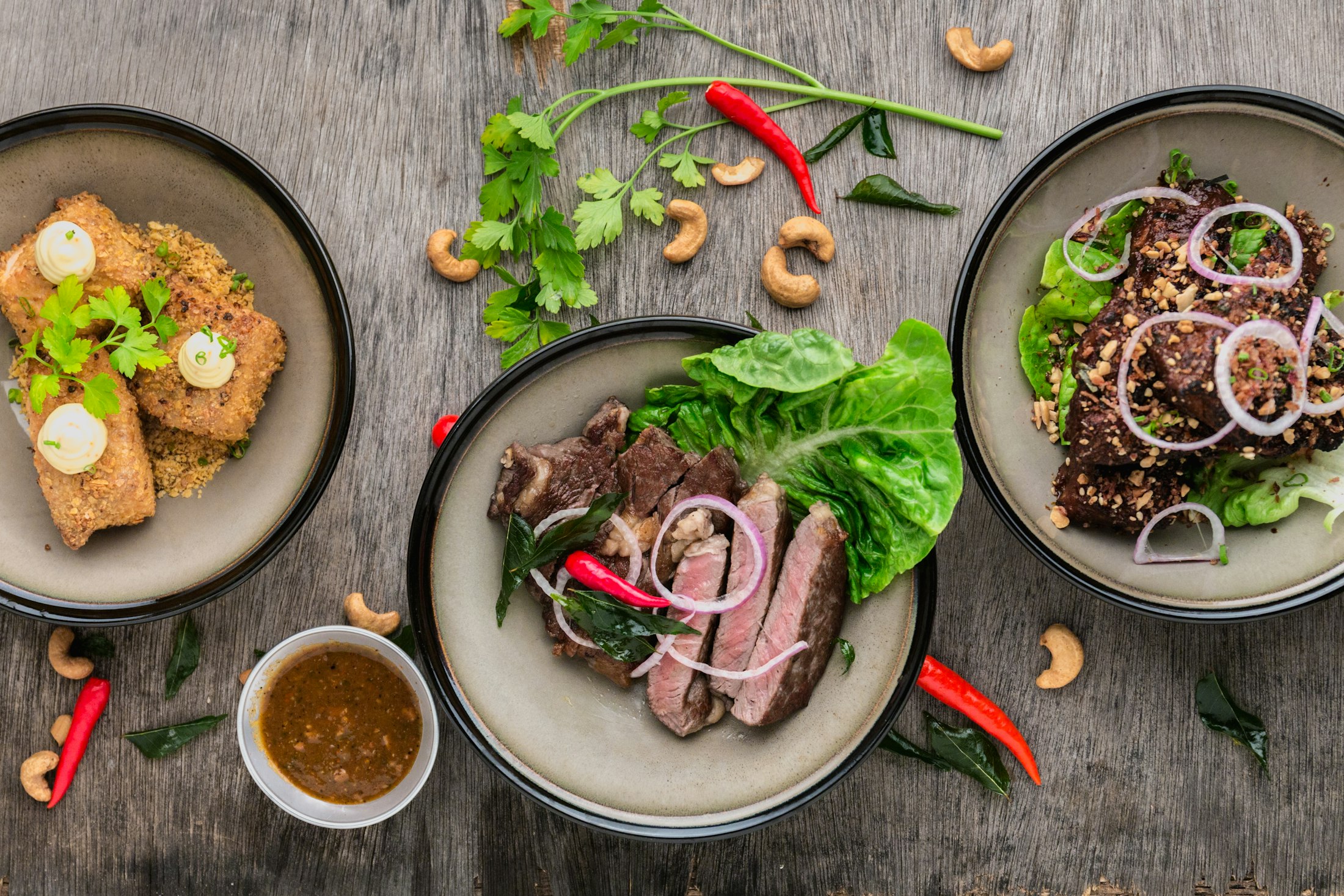
If you've eaten in the Yucatán for more than a day, you've had chaya — the large-leafed plant that shows up in eggs, tamales, and agua fresca. In Itzimná, people grow it like Americans grow rosemary: casually, everywhere, in raised beds next to the front door.
The nursery at Vivero Itzimná on Calle 26 between 31 and 33 sells chaya starts for around 35 MXN. The owner, Doña Silvia, will tell you — without being asked — that chaya leaves must be cooked before eating because they contain hydrocyanic acid. She says this the way a flight attendant points to the exits. You will also leave with lemongrass and epazote you didn't plan on buying.
For the best prepared chaya in the neighborhood, walk to Wayan'é on Prolongación Montejo. Their huevos con chaya are 95 MXN and come with a stack of thick tortillas and a small cup of habanero salsa that earns its reputation. Get there before 9:30 a.m. on weekends or expect a thirty-minute wait.
Pro tip:Raw chaya is mildly toxic. Always cooked — boiled, sautéed, or blended into drinks after heating. Street vendors know this, but if you're buying leaves to cook at an Airbnb, boil them at least five minutes.
2. First-rain courtyard suppers and why June matters
Mérida's rainy season starts in earnest around late May or early June, and the first real downpours trigger something close to a civic holiday. Temperatures drop from punishing to bearable in twenty minutes. People cook.
The courtyard supper tradition isn't formal — it's someone with a big enough patio, a long table, and a WhatsApp group. In Itzimná, a few of these have gone semi-public. The one I keep coming back to operates out of a private home on Calle 29 near the corner of 28. The host, a retired architect named Joaquín, charges 450 MXN per person for a five-course meal that changes weekly. Last June I sat through a downpour eating papadzules under a corrugated tin overhang while rain hammered so loud we had to shout. The papadzules had a pumpkin-seed sauce so thick it held a spoon upright.
These suppers are not advertised. Ask at La Negrita mezcalería or check the community board at the Itzimná market. Spots fill two or three days before the meal.
Pro tip: June through September is rainy season. Showers usually hit between 3 and 6 p.m. and last under an hour. Plan outdoor eating for after the rain — the air cools ten degrees and mosquitoes back off briefly.
3. Skip the Itzimná church plaza at midday
I know it's on every walking-tour list. The Iglesia de Itzimná is a fine 17th-century church, and the small plaza out front has a few benches and a couple of juice carts. But between 11 a.m. and 4 p.m., the shade disappears entirely, the benches could fry an egg, and there's nothing to do but squint. I've seen tourists gamely taking photos of the façade at 1 p.m., looking like they're being punished.
Come at 7 a.m. if you want the plaza. Older residents walk their dogs, the juice cart on the southeast corner sells fresh naranja for 20 MXN, and the light on the church front is actually worth a photograph. Or come at dusk, when kids are out on bikes.
4. Calle 33's quiet coffee stretch
Three cafés within four blocks of each other on Calle 33, and none of them are trying to be Mexico City. That's the appeal.
Honorato Café, near the corner of Calle 24, roasts beans from Chiapas and charges 55 MXN for a pour-over. The space is a converted living room with exactly six tables and a ceiling fan that wobbles in a way you'll find either concerning or endearing. They open at 8 a.m. and close at 2 p.m. — no evening hours, no exceptions.
Two blocks east, Café Orgánico has a larger menu and air conditioning, which in Mérida's April heat is a valid reason to choose a restaurant. Their café de olla uses piloncillo and cinnamon and costs 45 MXN. I'll be honest: I think Honorato's coffee is better, but Orgánico's chairs are more comfortable and sometimes that wins.
Pro tip:If you're coming from centro, it's a 12-minute cab ride or about a 30-minute walk north on Calle 28. Agree on the fare before getting in — 40-50 MXN is fair from the main plaza.
5. The case for Itzimná's market over Lucas de Gálvez
This is where y'all might disagree with me. Most visitors head straight to Mercado Lucas de Gálvez in centro, and I get it — it's massive, it's famous, and the food stalls deliver. But it's also hot as the inside of an engine, packed tight, and oriented increasingly toward tourists who want to photograph pyramids of chiles.
Itzimná's smaller market — Mercado de Itzimná, on Calle 31-A — is where I'd rather eat. The cochinita pibil torta at the stand near the north entrance costs 40 MXN and comes wrapped in brown paper with pickled onion so pink it looks dyed. It isn't. The produce section is small but the vendors will talk to you if you speak even broken Spanish. I once left with a bag of mamey sapote after a five-minute conversation conducted mostly in hand gestures.
The market is busiest from 7 to 11 a.m. By noon, half the stalls are closing up.
Pro tip:The bathrooms at Mercado de Itzimná cost 5 MXN and are cleaner than you'd expect. Bring your own tissue anyway.
6. Where to sleep in the neighborhood
Itzimná doesn't have the density of boutique hotels you'll find in centro or Santiago, and that's part of why it stays residential. A handful of guesthouses in converted colonial homes, most bookable through direct websites or Airbnb.
Look for places on or near Calle 26 or Calle 28, which put you walking distance to the market and the cafés without being on a noisy bus route. Expect to pay 1,200-2,500 MXN per night for a private room with air conditioning, which you will need from March through October. Anything without AC below 900 MXN is a gamble I wouldn't take in summer. I made the mistake of booking a "naturally ventilated" room in April 2022 and slept approximately ninety minutes total.
If you want a pool, you'll likely need to look at properties closer to Prolongación Montejo, where a few larger houses have been converted into small hotels.
Pro tip:Ask whether the AC runs on a timer or continuously. Some older guesthouses shut the units off between midnight and 6 a.m. to save on electricity. You want to know this before you're lying awake at 2 a.m. in 30°C heat.
Stay in Mérida
Top-rated hotels near Mérida
Best locations · Verified reviews · Free cancellation
View deals
Expedia →7. After dark on foot
Itzimná is one of the safer colonias to walk at night. Streets are lit, if unevenly, and there's enough foot traffic after dinner to keep things from feeling empty. The stretch of Prolongación Montejo between the Walmart and the Monumento a la Patria stays active until 10 or 11 p.m.
For a drink, Malahat on Calle 21 serves mezcal flights starting at 180 MXN and plays vinyl — actual vinyl, on a turntable you can see from the bar. The space fits maybe thirty people and there's no sign on the door, just a green light. They open at 7 p.m. Wednesday through Saturday.
Don't bother walking south of Calle 19-A after about 10 p.m. looking for nightlife. That direction takes you toward centro, where the bars are, but the in-between blocks go dark and quiet fast. Grab a cab for that stretch.
8. Weather, drive times, and the stuff guides forget to mention
Mérida is hot. I mean it in a way that the word "tropical" doesn't communicate. From March through May, before the rains, afternoon temperatures hit 38-40°C with humidity that makes it feel worse. January and February are the sweet spot — highs around 30°C, low humidity, almost no rain. If you can time a trip for late November through February, do it.
The drive from Mérida's airport (MID) to Itzimná takes 20-30 minutes depending on traffic, and a taxi from the airport should run 250-350 MXN. The airport taxi desk sets fixed rates; pay there, not in the car.
From Itzimná, you're about 15 minutes by car to the centro histórico, 90 minutes to Celestún (flamingos, mangroves, a beach worth the drive), and just over an hour to Izamal. Chichén Itzá is roughly two hours east on the cuota highway — tolls run about 200 MXN round trip. A full tank of gas in a compact rental will handle all of these day trips.
Bring sunscreen rated for actual sun, not the cosmetic SPF 30 you use at home. And a refillable water bottle — Mérida's tap water isn't safe to drink, but garrafones (20-liter jugs) are available at every corner store for 25-35 MXN.
Pro tip: Download the InDriver app for cheaper rides around Mérida. It lets you bid on fares, and drivers in Itzimná respond quickly. Often 30-40% less than Uber in this city.
Stay in Mérida
Top-rated hotels near Mérida
Best locations · Verified reviews · Free cancellation
View deals
Expedia →Essential tips
Best months to visit are November through February. March-May heat is brutal — 38-40°C with thick humidity. Rainy season (June-October) is cooler but expect daily afternoon showers.
Itzimná runs on cash. Cafés and market stalls rarely take cards. ATMs inside Oxxo and Walmart on Prolongación Montejo are reliable; avoid standalone ATMs on the street.
Airport to Itzimná: 250-350 MXN by fixed-rate taxi from the airport desk. Don't negotiate with drivers outside — the desk rate is fair and you get a receipt.
Mosquitoes peak at dusk and after rain. DEET-based repellent works; the natural citronella stuff does not. Farmacias Similares on Prolongación Montejo sells OFF! spray for about 65 MXN.
Ready to visit Mérida?
Book your hotel, flights, and activities through our Expedia-powered search.


