In This Guide
- 1.Boarding at Acevedo: Where the Metrocable Begins
- 2.Doña Gloria's Chicharrón Stand on Carrera 32
- 3.Biblioteca España and the Graffiti Corridor
- 4.Tinto and Empanadas at Tienda La Esperanza
- 5.The Sunset Ride: Returning on Line K at Golden Hour
- 6.Dinner Below: Mondongos in El Centro
- 7.The Longer Route: Continuing to Parque Arví
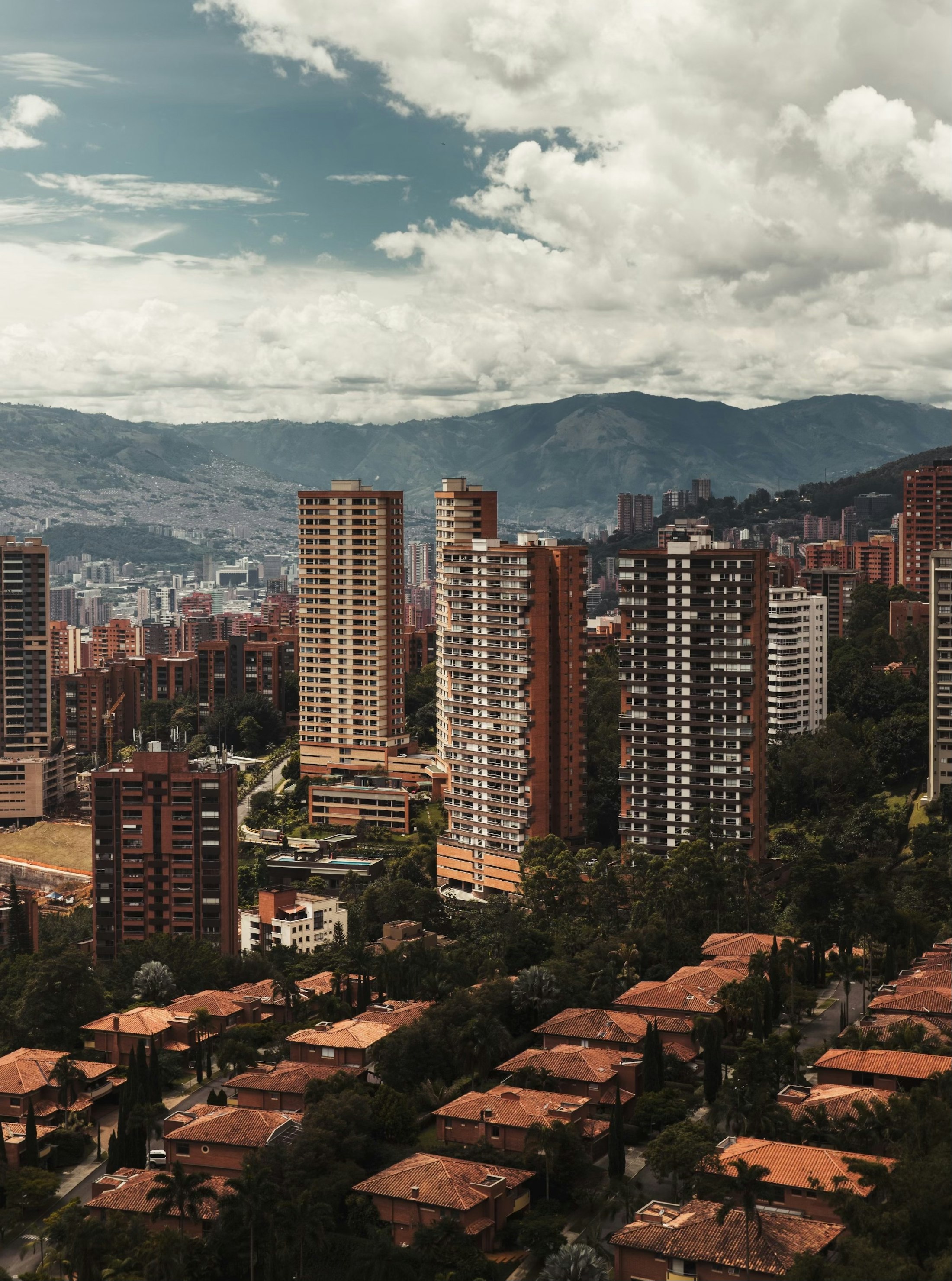
The Metrocable cabin lurches gently from its station and the city tilts beneath you—terracotta rooftops stacked like playing cards, murals the size of apartment blocks, and somewhere below, the unmistakable blue haze of pork fat crisping over open flame. Santo Domingo Savio is not a neighbourhood you drive through; it rises above Medellín's northeastern valley wall, and the only civilised way to arrive is dangling from a steel cable at sixty metres altitude.
This guide traces a single afternoon-to-sunset route through Santo Domingo and its surrounding comunas, following the scent of chicharrón, the sound of vallenato leaking from corner tiendas, and the shifting light that turns the Aburrá Valley from haze-white to amber. You will not find these stops on most tourist maps. That is precisely the point—each one rewards the traveller who lingers rather than photographs and leaves.
1. Boarding at Acevedo: Where the Metrocable Begins
Your journey starts at Estación Acevedo, the transfer point where Metro Line A feeds passengers onto Metrocable Line K. Exit the metro, follow the overhead cables with your eyes, and join the short queue at the turnstile. The cabins seat eight but often carry four; midweek at 2 p.m. you may have one to yourself.
As the gondola climbs, orient yourself: the Medellín River cuts a grey-brown seam through the valley floor to your left, while the brick comunas of Popular and Santa Cruz cascade uphill to your right. Watch for the massive mural of a hummingbird near Calle 107—it marks the old boundary between rival gang territories, now a symbol of truce.
The ride to Santo Domingo station takes roughly twelve minutes. Resist the urge to film everything through glass—the reflections ruin footage. Instead, open the small ventilation window and let the Andean air and distant reggaeton flood in. The cabin sways slightly at each pylon; this is normal, engineered, and oddly meditative.
At the top, step off onto a concrete platform crowded with school kids and fruit vendors. You are now at approximately 1,900 metres above sea level, some 400 metres higher than the city centre. The air is thinner, the light sharper, and lunch is calling.
Pro tip: Load your Cívica card at any metro station kiosk before boarding—Metrocable does not accept cash, and the top-up machines at Acevedo often have long lines during rush hour.
2. Doña Gloria's Chicharrón Stand on Carrera 32
Turn left from the Metrocable station exit and walk two blocks downhill along Carrera 32 until the smoke finds you. Doña Gloria—a stout woman in a flour-dusted apron—has been frying chicharrón de cerdo here for nineteen years from a steel cart with a gas burner the size of a truck wheel. Her setup sits across from a yellow-painted barbershop with no sign.
Order the chicharrón sencillo for 8,000 COP. You get a palm-sized slab of pork belly, deep-fried until the skin puffs into crackling shards while the fat layer beneath stays almost custard-soft. She serves it on a square of wax paper with a wedge of lime, a scoop of ají casero, and two arepas de maíz blanco griddled on the same flame.
The ají is her real secret—habanero, cilantro, green onion, and a splash of lulo juice that adds a citric high note cutting straight through the pork fat. Ask for extra; she will grin and pile it on. Skip the morcilla she sometimes offers on weekends unless you genuinely enjoy blood sausage with a gritty texture.
Eat standing, as locals do, with one eye on the valley view framed between concrete buildings. You will see businessmen in ties next to construction workers in hard hats. Chicharrón is classless here, a shared sacrament of salt and fat.
Pro tip: Doña Gloria closes by 4 p.m. when the pork runs out. Arrive before 3 p.m. on Saturdays—she sells double volume but finishes even earlier due to weekend foot traffic.
Stay in Medellín
Top-rated hotels near Medellín
Best locations · Verified reviews · Free cancellation
View deals
Expedia →3. Biblioteca España and the Graffiti Corridor
Walk northeast from the chicharrón stand for five minutes and you will reach Parque Biblioteca España, the trio of angular black buildings designed by architect Giancarlo Mazzanti. The library has been closed for structural repairs since 2015, but the surrounding terraces remain open and offer one of the most commanding panoramas in Medellín—unobstructed, 180 degrees, free of charge.
The real draw is the pedestrian corridor leading to the library plaza, lined with street art that changes seasonally. Local collective Casa Kolacho organises graffiti tours, but you can walk the route independently. Look for the large-scale portrait of a girl releasing paper birds—painted by artist Chota in 2019—on the wall of a two-storey house near Calle 109B.
Pause at the mirador railing where teenagers gather after school. On a clear day you can trace the metro line all the way south to Estadio station. The haze lifts most reliably between 2 and 4 p.m. during dry season (December through February), giving the sharpest photographs.
Avoid wearing flashy jewellery or pulling out a DSLR on a tripod without company. The neighbourhood is vastly safer than its 1990s reputation, but conspicuous equipment still attracts unwanted attention. A phone camera or a small mirrorless body around your neck is fine.
Pro tip:For a guided graffiti walk with local artists who actually paint the walls, book directly through Casa Kolacho's Instagram page—they run small groups on Wednesdays and Saturdays at 10 a.m. for around 60,000 COP per person.
4. Tinto and Empanadas at Tienda La Esperanza
Halfway back down the hill, on a nameless corner where Calle 107 meets Carrera 33B, you will find Tienda La Esperanza—recognisable by its faded Bavaria beer sign and a plastic table with exactly three chairs. This is a neighbourhood tienda in the truest sense: a living room converted into a shop, owned by a couple who have lived upstairs for three decades.
Order a tinto—Colombian black coffee, brewed sweet and strong in a stove-top pot—and a pair of empanadas antioqueñas. The empanadas here are smaller than the tourist-market versions downtown, fried in a communal pot, and stuffed with a mealy potato-and-beef mixture seasoned with cumin and a hint of hogao. Each costs 1,500 COP. Pay in cash; they do not own a card reader.
Sit outside if the single exterior table is free and listen to the neighbourhood. Vallenato and champeta leak from passing motorcycles, kids kick a deflated football against a mural of the Virgin Mary, and someone uphill is hammering rebar. This is Medellín's sonic wallpaper, more authentic than any curated playlist.
Do not linger past dusk if you are unfamiliar with the streets. The area is welcoming by day but quieter foot traffic after dark makes solo navigation inadvisable. Finish your tinto, leave a small tip on the counter, and walk back toward the Metrocable station.
Pro tip: If Doña Marta behind the counter offers you a bocadillo con queso—a guava paste block sandwiched with white cheese—say yes immediately. She only makes them when she has leftover guava from the weekend market.
5. The Sunset Ride: Returning on Line K at Golden Hour
Time your return to Santo Domingo Metrocable station for approximately 5:15 p.m. The sun drops behind the western ridge of the Aburrá Valley between 5:40 and 6:00 p.m. year-round—Medellín sits six degrees north of the equator, so sunset barely shifts across seasons. You want to be mid-cable when the light turns.
As the gondola descends, the valley transforms. Office towers in El Centro catch the last direct sun and glow copper against a sky shifting from white to peach. The comunas on the western slope—Robledo, La América—become a lattice of warm-toned rooftops and shadow. It is the single best free spectacle in Medellín and you share it with commuters heading home.
Bring a light jacket or hoodie. The temperature drops noticeably once the sun dips, and the open ventilation slots in the cabin let in a steady breeze during descent. Evening humidity can also fog your phone lens; wipe it before the best light hits at around 5:45.
Back at Acevedo station, transfer to the metro southbound. Two stops to Hospital if you are heading to Laureles, five stops to Parque Berrío for El Centro. The metro runs until 11 p.m., so there is no rush—but the golden-hour glow in your memory will not wait for you to stop smiling.
Pro tip: Sit on the left side of the cabin (facing downhill) for the widest valley vista during descent. The right side faces the hillside and offers mostly close-up views of rooftops and laundry lines.
Stay in Medellín
Top-rated hotels near Medellín
Best locations · Verified reviews · Free cancellation
View deals
Expedia →6. Dinner Below: Mondongos in El Centro
Cap the evening at Mondongos, a Medellín institution at Calle 49 No. 52-80 in El Centro, a ten-minute walk from Parque Berrío metro station. This no-frills restaurant has served bandeja paisa and its namesake tripe soup since 1979. The fluorescent lighting is brutal; the food is not.
Order the bandeja paisa completa—red beans, rice, ground beef, chicharrón, chorizo, fried egg, plantain, avocado, and arepa—for around 38,000 COP. It arrives on an oval plate the size of a small shield. You have already eaten chicharrón today; the version here is thinner, crispier, and a worthy second act. Pair it with a refajo, the Colombian cocktail of Colombiana soda and beer.
The restaurant fills by 7:30 p.m. on weekends. Arrive by 6:45 or expect a fifteen-minute wait on the sidewalk. Service is brisk and unsmiling in the best Antioquian tradition—efficient, no-nonsense, generous with portions. Tip ten percent; it is not added automatically.
Walking back to the metro after dinner, you will pass street vendors selling mango biche with salt and lime. Buy one. It costs 3,000 COP and its sour crunch is the ideal palate cleanser after a day built on pork fat, sugar coffee, and Andean wind.
Pro tip: Ask for the hogao on the side rather than spooned over the beans—it lets you control the sweetness and keeps the chicharrón crackling dry instead of soggy from tomato-onion sauce.
7. The Longer Route: Continuing to Parque Arví
If your afternoon is elastic, do not descend from Santo Domingo. Instead, transfer to Metrocable Line L, which continues uphill from Santo Domingo station to Parque Arví, an 1,800-hectare nature reserve at 2,500 metres elevation. The additional ride takes about fifteen minutes and costs only the price of a second Cívica swipe.
Parque Arví is cloud forest, not city. The temperature drops to around 17°C, pine and eucalyptus replace concrete, and the noise floor drops to birdsong and wind. Follow the Sendero de la Biodiversidad, a well-marked 2.5-kilometre loop trail through native silky oaks and bromeliads. It is flat, muddy after rain, and manageable in trainers if you watch your step.
At the park's central market near the cable station, vendors sell local cheese, arequipe, and fresh trout. The trout empanadas here—sold from a blue tarp stall with no name—are crispier and more delicately seasoned than anything in the city below. Buy two and eat them on the wooden benches overlooking the valley.
Return before 4:30 p.m. to catch the sunset cabin. The last Metrocable from Parque Arví departs at 5:30 p.m. on weekdays and 6:00 p.m. on weekends. Missing it means a taxi back through winding mountain roads—expensive, nauseating, and entirely avoidable with a watch glance.
Pro tip: Bring a reusable water bottle. Parque Arví has no filtered water stations, and the small plastic bottles sold at the market cost triple the city price. Fill up at a tienda near Acevedo station before you ascend.
Essential tips
A single Metrocable ride costs around 2,950 COP using a Cívica card. Buy the card at any metro station for 6,000 COP (non-refundable) and load at least 15,000 COP to cover all transfers including Parque Arví.
Santo Domingo sits higher and slightly cooler than Medellín's centre but UV exposure is intense at altitude. Wear SPF 50 even on overcast days—the equatorial sun burns through cloud cover and the Metrocable offers zero shade.
Carry small bills in denominations of 5,000 and 10,000 COP. Street vendors and tiendas in Santo Domingo rarely break a 50,000 note. ATMs are available at Acevedo station but charge withdrawal fees for foreign cards.
Mobile signal is strong along the Metrocable route but drops intermittently inside Parque Arví. Download offline maps of Medellín's northeast zone via Google Maps before ascending—GPS still works without data coverage.
Wear closed-toe shoes with decent grip. Santo Domingo's streets are steep, sometimes unpaved, and slippery after afternoon rain showers. Flip-flops are a fast route to a twisted ankle on the hillside stairways between the station and the library.
Ready to visit Medellín?
Book your hotel, flights, and activities through our Expedia-powered search.


