In This Guide
- 1.The broth that outlasts the downpour
- 2.Rain-shelter bars on Carrera 35
- 3.Aguapanela and the case against fancy coffee
- 4.Doña Esther's empanadas near the Provenza stairs
- 5.What to do when the rain doesn't come
- 6.The bandeja paisa question
- 7.Lulo juice at the juice counter inside Éxito
- 8.After the rain: Provenza at dusk
- 9.The late-night caldo on Calle 10
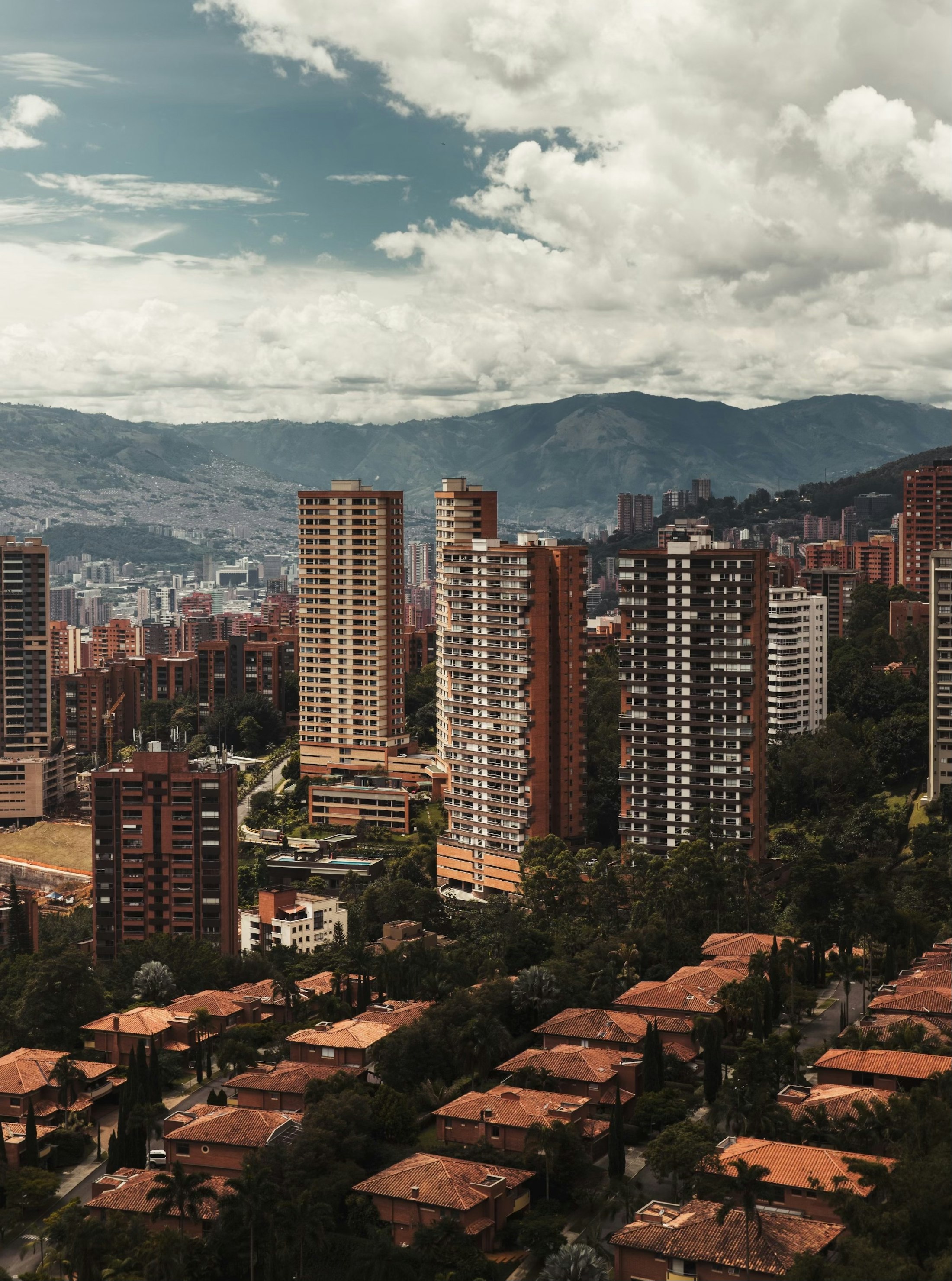
Around 3 p.m. in Medellín, the sky doesn't darken so much as thicken. The air turns copper-green. Then the aguacero drops — a vertical rain so dense it erases the mountains for twenty minutes. Everyone in El Poblado seems to know the drill: you duck under the nearest awning, someone hands you something warm, and you wait.
I've been caught in a dozen aguaceros across this city over the past three years, and the ritual never changes. The rain starts, the sancocho appears, and the afternoon recalibrates. This is less an article about restaurants than about the hour between 3 and 5 p.m., when the weather decides what you're eating.
1. The broth that outlasts the downpour
Sancocho in Medellín is not one soup. It's a category of argument. Every kitchen claims a family version — the protein changes, the starch ratios shift, someone insists on green plantain while the next cook would never. What stays constant is the size of the pot and the unhurried timeline. A proper sancocho has been going since morning.
At Mondongos, on Calle 10 #38-38 in El Poblado, a bowl of sancocho antioqueño costs around COP 32,000. It arrives with a mound of white rice on one side, a wedge of avocado on the other, and a small dish of hogao — a cooked tomato-and-onion relish that you spoon in yourself. The broth is cloudy, almost starchy, with chunks of yuca that have gone translucent at the edges. Three kinds of potato. Corn on the cob cut into thick rounds, still on the bone of the cob, which forces you to pick it up with your hands.
The place is loud. Tile floors, families at long tables, servers moving fast. I don't go for the atmosphere. I go because the broth has a depth that suggests someone actually roasted the bones first, which is not as common here as you'd think.
Pro tip: Mondongos opens at 7 a.m. and the sancocho is available from the start, but the pot hits its stride around noon. By 4 p.m. on a rainy Saturday, expect a 20-minute wait for a table.
2. Rain-shelter bars on Carrera 35
The strip of Carrera 35 between Calle 8A and Calle 10 has a run of bars and cafés with deep overhangs and second-floor balconies — the kind of setup where you can sit with a drink and watch the gutters overflow without getting wet. The aguacero circuit.
I keep ending up at Cervecería Libre, where a pint of their pale ale runs about COP 14,000. The space is narrow, open to the street, and when the rain hits, the sound off the corrugated awning makes conversation difficult. Nobody seems to mind. You drink, you watch the water, you check your phone, you order another.
Skip the craft cocktail bars on Calle 10 near Parque Lleras after 9 p.m. on weekends. The prices triple, the crowds are unpleasant, and the drinks taste like they were designed for an Instagram reel rather than a mouth. The same street at 4 p.m. on a Tuesday, during a downpour, is a different city entirely.
Pro tip:Most of these bars don't take reservations. Arriving at 2:30 p.m. — just before the rain typically starts — gets you a balcony seat. By 3:15, they're gone.
Stay in Medellín
Top-rated hotels near Medellín
Best locations · Verified reviews · Free cancellation
View deals
Expedia →3. Aguapanela and the case against fancy coffee
Here is my contrarian position: in Medellín, a city that exports some of the most sought-after coffee on earth, the best hot drink to order during a rainstorm is aguapanela. It's water boiled with panela — unrefined cane sugar pressed into a hard block — sometimes with a squeeze of lime, sometimes with a sliver of cheese dropped into the bottom of the cup. That last detail sounds wrong. It isn't.
The specialty coffee scene in El Poblado is fine. Pergamino on Carrera 37 #8A-37 does a careful pour-over. But aguapanela costs COP 3,000 from a street vendor, and on a wet afternoon when your shoes are soaked, it does something that a single-origin V60 cannot. It warms you the way a grandmother's kitchen warms you — without asking you to appreciate it intellectually.
4. Doña Esther's empanadas near the Provenza stairs
There's a woman who sets up a folding table and a deep fryer on the steps leading up from Carrera 35 toward Provenza, roughly across from the Éxito supermarket entrance. She's there most afternoons. I don't know her actual name — everyone in the area calls her Doña Esther, and she doesn't correct them.
Her empanadas are the yellow corn kind, the masa tinted with achiote, fried until the surface blisters. Inside: a filling of seasoned potato and shredded meat, packed tight. COP 3,500 each. She serves them on a square of wax paper with a small plastic cup of ají that has real heat — not the decorative salsa you get in tourist-facing restaurants.
When the rain is heavy, she moves under the staircase overhang and keeps frying. The oil smell mixes with wet concrete.
Pro tip:She tends to sell out by 5 p.m. Cash only, and she doesn't make change easily — bring small bills.
5. What to do when the rain doesn't come
Some days it doesn't. December through February, the aguaceros become less reliable, and the sky stays a flat, warm white all afternoon. Those days feel wrong, somehow. The city loses its punctuation.
Without the rain, the sancocho-and-shelter rhythm breaks down, and El Poblado becomes just another warm neighborhood with too many people looking at their phones. On dry afternoons I tend to walk up toward the Museo de Arte Moderno on Carrera 44 #19A-100. The building itself — a refurbished steel warehouse — is worth the walk, and the ground-floor café serves decent coffee in relative quiet. Admission runs about COP 18,000.
A dry aguacero hour feels like showing up to a concert where the headliner canceled.
Stay in Medellín
Top-rated hotels near Medellín
Best locations · Verified reviews · Free cancellation
View deals
Expedia →6. The bandeja paisa question
Everyone will tell you to order bandeja paisa. Red beans, rice, chicharrón, ground meat, chorizo, fried egg, plantain, arepa, avocado, all on one oval plate. It is enormous. It is also, in my experience, almost always better at a fonda in Envigado or Itagüí than anywhere in El Poblado proper.
Hatoviejo, which has a location on Carrera 43A in El Poblado, is the name most visitors encounter. The bandeja paisa there costs around COP 45,000 and arrives like a prop. It's competent. But the chicharrón lacks the crackle you get at smaller places outside the tourist radius, and the beans taste like they were made in quantity rather than with intent.
If you want bandeja paisa, take the metro south to Envigado station and walk to any fonda within two blocks. You'll pay COP 22,000–28,000 and the difference is immediate.
Pro tip: The Envigado metro station is a 15-minute ride from Poblado station. Exit toward Calle 37 Sur and follow the foot traffic at lunchtime.
7. Lulo juice at the juice counter inside Éxito
A small thing, but it matters. Inside the Éxito supermarket on Carrera 35 near Calle 10, there's a juice counter to the left of the entrance. They make fresh lulo juice — lulo being a citrus-adjacent fruit that tastes like a grapefruit raised on tropical soil. Tart, a little sour, pale orange.
A large glass costs around COP 5,000. They blend it with water and a minimal amount of sugar, which is the correct way. Some juice bars drown lulo in sweetener, which defeats the point. This counter doesn't.
I stop here before the rain starts, almost every time.
8. After the rain: Provenza at dusk
Provenza — the sloped blocks above Carrera 35, roughly between Calle 9 and Calle 11 — is where El Poblado goes after the rain stops. The sidewalks steam. The restaurants put their chairs back outside.
Almazen Café, on Carrera 34 #7-67, does a solid arepa de choclo — a sweet corn arepa with melted cheese inside, pressed on a griddle until the exterior caramelizes. Around COP 12,000. The texture is somewhere between a pancake and a grilled cheese. They serve it on a wooden board with nothing else, which is the right instinct.
The post-rain light in Provenza lasts about forty minutes. The buildings turn amber, the trees drip, and for a narrow window the neighborhood looks like it was art-directed.
Pro tip:Provenza's restaurants fill up fast between 6:30 and 7:30 p.m. on Thursdays through Saturdays. Going right at 5:30, while things are still damp, gets you first pick.
9. The late-night caldo on Calle 10
After midnight, a few street carts appear on Calle 10 near Parque Lleras selling caldo de costilla — a rib broth served in a styrofoam cup. A hangover preventative consumed before the hangover starts. The broth is salty, fatty, with a few pieces of potato dissolving at the bottom and a single rib bone you gnaw clean.
COP 6,000. No seating. You stand on the sidewalk holding a warm cup while the nightlife stumbles past.
Last February I made the mistake of skipping the caldo after a long night at a mezcal bar on Calle 9. I regretted it by 7 a.m. The caldo works. I don't understand the mechanism, but I've stopped questioning it.
Pro tip: The carts tend to appear around 12:30 a.m. and stay until roughly 3 a.m. Friday and Saturday nights only.
Essential tips
Medellín's aguaceros typically hit between 3 and 5 p.m., most reliably from March through May and September through November. Carry a light rain jacket — umbrellas are cumbersome on the narrow sidewalks of El Poblado.
Street food vendors and smaller fondas are cash-only. ATMs inside Éxito and at Bancolombia on Carrera 43A are the most reliable in El Poblado. Withdraw in multiples of COP 50,000 to get smaller bills.
The Poblado metro station is a 15-minute walk downhill from most of Provenza. Going back uphill after dark, use a taxi or InDrive — the walk is steep and poorly lit above Calle 10.
Sancocho and bandeja paisa are lunch dishes. Ordering them at dinner is possible in tourist restaurants, but kitchens that make them properly often stop serving by 4 p.m.
Ready to visit Medellín?
Book your hotel, flights, and activities through our Expedia-powered search.


