In This Guide
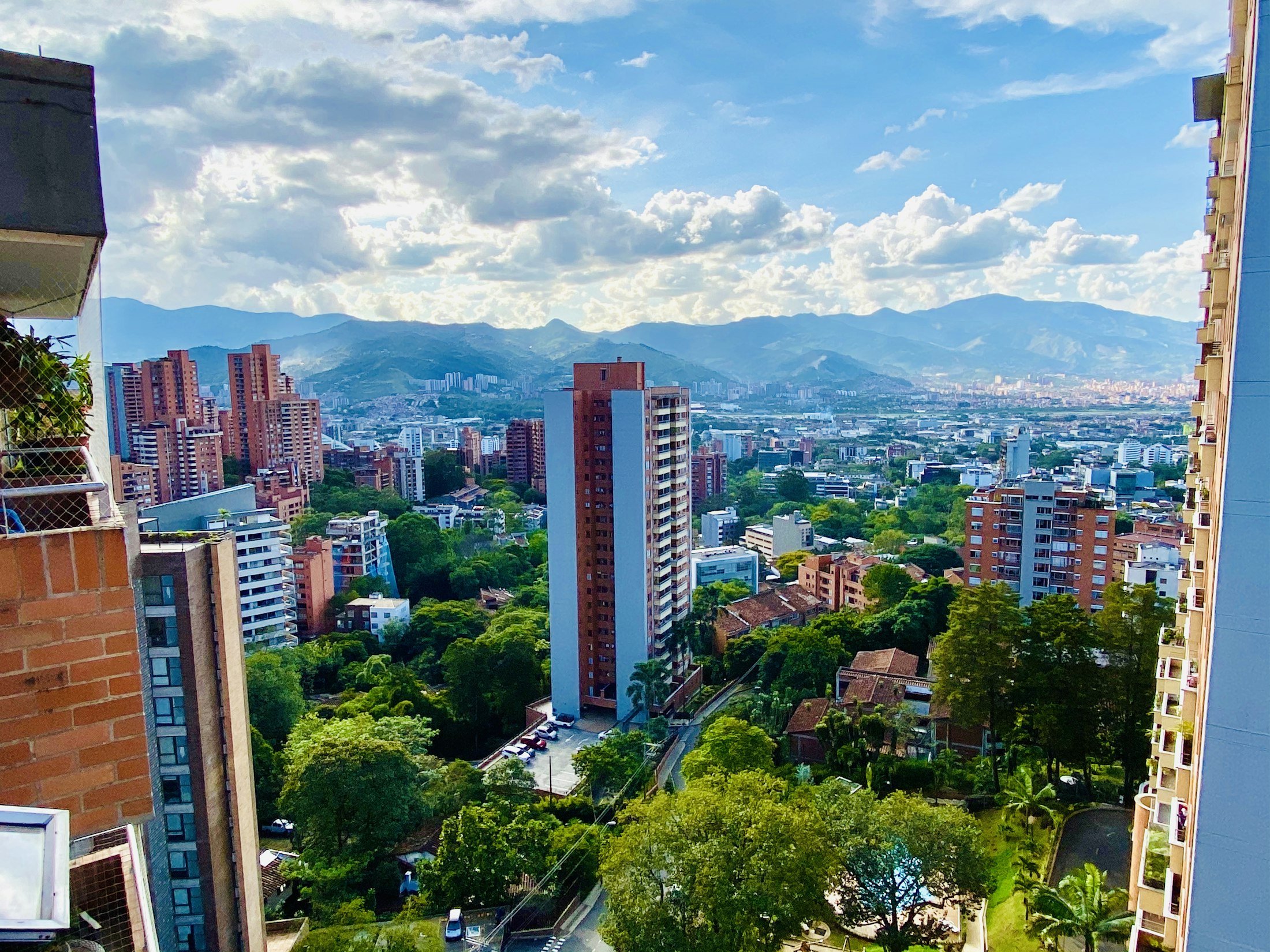
Sunday morning in La América smells like corn masa steaming inside banana leaves and sounds like a transistor radio tuned to Atlético Nacional's pregame show. While tourists cluster around El Poblado brunch spots, this middle-class barrio west of the Medellín River wakes to a quieter, more delicious rhythm — one built around obleas, tamales antioqueños, and sidewalk football arguments that have raged, unresolved, for decades.
This self-guided walking trail covers a two-kilometre loop through La América's Sunday food ecosystem, from the oblea cart at Parque de La América to a tamal vendor who has worked the same corner since 1998. You will eat supremely well for under 25,000 Colombian pesos, eavesdrop on passionate football theology, and understand why paisas consider this barrio the soul of Medellín's working identity.
1. Parque de La América: The Oblea Starting Line
Your trail begins at Parque de La América, the barrio's central green space on Calle 44 between Carreras 84 and 86. By nine on a Sunday, the park benches are already occupied by abuelos reading El Colombiano, and the oblea vendors have set up their glass-topped carts near the basketball court. This is where Medellín's oblea tradition feels least performative and most lived-in.
Order your oblea from Don Hernán, the vendor with the blue cart closest to the church side of the park. He has been pressing wafers here for over fifteen years. Ask for the full treatment: arequipe, shredded coconut, mora jam, and a sprinkle of maní. The combination costs 4,000 pesos and delivers a textural range that no single dessert should legally be allowed to achieve.
Watch how Don Hernán spreads the arequipe — one smooth, deliberate pass with a wooden spatula, edge to edge, no gaps. This is a point of professional pride. A poorly spread oblea is considered a minor neighbourhood scandal. You will see children sent back by their mothers to request a redo if the coverage is uneven.
Eat your oblea standing up, as locals do, letting the crumbs fall onto the concrete. Sitting on a bench to eat an oblea is acceptable but marks you immediately as an outsider. The park also has a decent shoe-shine stand if your walking shoes need attention before the trail continues south.
Pro tip: Don Hernán only works Sundays and holidays. On Saturdays, a different vendor occupies the spot with a noticeably thinner arequipe layer. Time your visit accordingly.
2. Doña Lucía's Tamales on Carrera 84
Walk one block south from the park to Carrera 84 with Calle 45, where Doña Lucía sets up a folding table beside the Droguería Pasteur pharmacy every Sunday by 7:30 a.m. Her tamales antioqueños — sold from a large aluminium pot wrapped in towels — are the benchmark against which this neighbourhood measures all others. She typically sells out by 11 a.m., so arrive with urgency.
The tamal antioqueño is a different creature from its Mexican or Venezuelan cousins. Doña Lucía's version wraps a slow-cooked filling of pork rib, chicken thigh, carrot, potato, rice, and chickpeas inside a masa of yellow corn, then bundles everything in a bijao leaf tied with string. Each one weighs close to 400 grams. It is breakfast, lunch, and a mild cardiovascular event in a single package.
Pair the tamal with a cup of chocolate santafereño from the same table. Doña Lucía's daughter prepares it with water, not milk, in the traditional paisa style — less creamy, more bitter, exactly right for cutting through the richness of the pork fat. The chocolate costs 2,000 pesos. Do not ask for milk; you will receive a look.
Unwrap your tamal slowly, peeling back the bijao leaf to use as a plate. Locals add a few drops of ají from a communal squeeze bottle on the table. The heat is mild but the vinegar brightness lifts the entire dish. This is one of those Medellín experiences that never appears on curated food tours, and that is precisely why it matters.
Pro tip: Doña Lucía accepts only cash. Bring small bills — she rarely has change for anything above 20,000 pesos, and the negotiation will cost you valuable tamal-eating time.
Stay in Medellín
Top-rated hotels near Medellín
Best locations · Verified reviews · Free cancellation
View deals
Expedia →3. The Football Corner: Calle 44 with Carrera 85
Continue west along Calle 44 to the intersection with Carrera 85, where a cluster of plastic chairs appears every Sunday outside Tienda El Paisa, a small corner shop that doubles as the barrio's unofficial football parliament. By 10 a.m., a group of men between the ages of fifty and eternity will be debating Nacional versus Medellín with a ferocity that suggests the match is happening now, even when it is not for six hours.
You do not need to understand Spanish perfectly to enjoy this. The gestures are universal — the dismissive hand wave, the finger pointed at the sky invoking a higher authority, the slow head shake that communicates decades of accumulated sporting disappointment. Buy a Pilsen or a Póker from the tienda for 3,000 pesos and pull up a chair if one is offered.
The shop owner, Don Jorge, keeps a chalkboard inside with a running tally of neighbourhood predictions for the next clásico paisa. He has done this since 2003. The board is photographed by no one and seen by everyone. It is the most honest opinion poll in Colombian football.
If you are asked your allegiance, say Nacional — it is the safer demographic bet in La América. Saying Medellín is not dangerous but will invite a longer, more exhausting counter-argument from the majority. Saying you support Millonarios will end the conversation entirely.
Pro tip: Don Jorge stocks Colombiana soda, the bright-red champagne-flavoured soft drink that pairs oddly well with everything on this trail. Ask for it cold — he keeps a small stash behind the Póker shelf.
4. Pandebono and Buñuelos at Panadería La Tradicional
From the football corner, walk two blocks south to Calle 46 and find Panadería La Tradicional, a no-frills bakery with a yellow awning and a glass counter that has displayed the same four items for as long as anyone can remember: pandebono, buñuelos, pan de queso, and empanadas. The pandebono here — a chewy, cheese-laced bread made with cassava starch — comes out of the oven every forty-five minutes on Sundays.
Timing your visit to catch a fresh batch is essential. A warm pandebono is elastic, salty, and slightly sweet at the crust. A room-temperature pandebono is still acceptable but loses roughly forty percent of its emotional impact. Ask the counter attendant when the next tanda comes out and adjust your pace accordingly.
The buñuelos are fried to a deep amber, crispier than many versions in Medellín, with a cheese-forward interior that squeaks against your teeth. Order two — one to eat immediately, one to carry in a wax paper bag for later. They cost 1,500 pesos each and represent perhaps the best calorie-to-peso ratio in the city.
The bakery has no seating. Eat standing at the narrow ledge by the window, watching the Sunday parade of families in their best clothes heading to late mass at Iglesia de Nuestra Señora de La América. The people-watching here is superb and entirely free.
Pro tip: Panadería La Tradicional closes at 1 p.m. on Sundays, significantly earlier than weekdays. If you arrive after noon, the pandebono will likely be gone. The buñuelos last slightly longer.
5. Jugo de Lulo and Sidewalk Life on Calle 44
Double back to Calle 44 and head east toward the Estadio metro station. Midway along this stretch, between Carreras 82 and 83, you will find a juice cart run by a woman known only as La Mona — a reference to her light hair, which in paisa slang is a term of endearment rather than description. She squeezes fresh lulo, maracuyá, guanábana, and mango into enormous styrofoam cups with ice and a restrained amount of sugar.
Order the lulo. This tart, citrusy fruit native to the Colombian Andes makes a juice that tastes like a lime and a tomato had a more interesting child. La Mona blends it with just enough sugar to balance the acidity, and the result is bracingly refreshing after a morning of corn-based carbohydrates. A large cup costs 3,500 pesos.
This section of Calle 44 functions as La América's Sunday promenade. Families walk slowly, stopping to greet neighbours. Dogs of uncertain breed trot alongside without leashes. The occasional motorcycle weaves through, but the energy is overwhelmingly pedestrian and unhurried. It is the Medellín that existed before the digital nomad boom, still intact.
Linger here with your juice. Observe the señoras carrying market bags from the nearby plaza. Notice how every third person stops to pet the same golden retriever tied outside the Éxito Express. This is barrio choreography — unrehearsed, repeated weekly, and deeply satisfying to witness.
Pro tip: La Mona also makes a salpicón — a Colombian fruit salad in juice — for 5,000 pesos. It contains chopped banana, papaya, watermelon, and mango. It is a meal unto itself and the smartest five thousand pesos you will spend.
Stay in Medellín
Top-rated hotels near Medellín
Best locations · Verified reviews · Free cancellation
View deals
Expedia →6. Iglesia de Nuestra Señora de La América and the Noon Bells
End your trail at Iglesia de Nuestra Señora de La América, the neighbourhood's parish church on the northeast corner of the park where you began. The church, built in the mid-twentieth century in a restrained Romanesque revival style, is not Medellín's most architecturally celebrated — but its Sunday noon bells signal the shift from morning ritual to afternoon rest, and hearing them from inside the park completes the loop perfectly.
Step inside briefly if mass is not in session. The interior is cool, dim, and smells of melted candle wax and floor polish. The stained glass windows along the nave depict scenes of the Virgen del Carmen, patroness of drivers and travellers — an appropriate blessing given that you have been walking for three hours on a stomach full of masa.
Outside the church, the oblea vendors begin their second wave. Families exiting the noon service line up with children who have been promised a post-mass treat. The cycle you witnessed at nine in the morning resets. Don Hernán, if he is still at his cart, will be spreading arequipe with the same meticulous care.
This is the quiet genius of La América on a Sunday: nothing here is designed for visitors, yet everything is welcoming. The trail you have walked is not a curated experience but a living weekly rhythm. You were simply lucky enough to walk through it at the right time, with the right appetite.
Pro tip: The church keeps irregular visiting hours outside of mass. If you want to see the interior, aim for the twenty-minute window after the 12 p.m. service ends, when the doors remain open but the pews are mostly empty.
Essential tips
Take the Metro to Estadio station (Line A). La América's park is a seven-minute walk west along Calle 44. Avoid driving — Sunday street parking in the barrio is scarce and poorly marked.
Bring cash in small denominations. Most vendors on this trail do not accept cards or digital payments. A budget of 25,000 to 35,000 pesos covers every food item mentioned, with room for a second buñuelo.
Start by 9 a.m. to catch Don Hernán's oblea cart and Doña Lucía's tamales before they sell out. The entire loop takes two to three hours at a comfortable, food-heavy pace.
Wear comfortable flat shoes. The route is entirely on paved sidewalks with minimal elevation change, but some pavement sections near the church are uneven. Leave the hiking boots at your hotel.
Medellín's morning weather is usually dry, but afternoon showers arrive by 2 p.m. most Sundays. Carry a compact umbrella or finish the trail before noon to stay ahead of the rain.
Ready to visit Medellín?
Book your hotel, flights, and activities through our Expedia-powered search.


