In This Guide
The walk from Envigado's metro station to Parque Principal takes about seven minutes if you don't stop. I always stop. There's a man on Carrera 43 who sells avocados from a wheelbarrow, and his are consistently better than anything in the supermarkets up the hill. But on Sundays, the avocados are secondary. Sundays in Envigado belong to mondongo.
Mondongo — tripe soup, slow-cooked with potato, carrot, yuca, and enough cilantro to turn the broth faintly green — is not a dish that inspires casual admiration. You either grew up eating it or you need convincing. I needed convincing. What did it was not a restaurant but the atmosphere around the bowl: the clatter of dominoes on plastic tables, the mid-morning aguardiente poured without ceremony, the fact that nobody in the room was performing anything for anyone. Envigado on a Sunday morning is Medellín without the sales pitch.
1. Start at the park, but don't linger
Parque Principal de Envigado fills up after 10 a.m. with families, balloon sellers, and a DJ who sets up near the church with speakers that seem calibrated for a stadium. Skip the park itself on Sundays unless you want to shout over reggaeton. The cantinas worth visiting are on the streets radiating outward — Calle 38 Sur, Carrera 43, and the unnamed alley behind the Éxito supermarket where two competing mondongo spots share a wall.
Get there by 8:30 a.m. The tripe needs time, and so do you.
Pro tip: Take the Metro to Envigado station (Line A), not a taxi from El Poblado. The ride is COP $2,950 and drops you closer to the park than most drivers bother to go.
2. Mondongo at Doña Eunice
Doña Eunice's place doesn't have a sign. It's on Calle 38 Sur between Carreras 42 and 43, ground floor of a residential building with a green door that stays propped open on weekends. She's been serving mondongo from the same pot — or its spiritual descendant — for over twenty years, according to regulars who treat her like extended family.
The bowl arrives with a mound of white rice on the side, a wedge of lime, and a small dish of hogao — that cooked tomato-and-onion sauce that shows up across Antioquia like punctuation. The broth is the thing. It's cloudy, thick from the starch of dissolving potato, and carries a background heat from ají that Doña Eunice adds at a stage of cooking she won't specify. The tripe is cut into pieces small enough that texture never overwhelms. A full bowl runs COP $18,000.
I've heard people say the best mondongo in the municipality is at Mondongos El Gordo on the main road. I disagree. El Gordo is fine — competent, consistent, air-conditioned — but the broth tastes like it was designed by committee. Doña Eunice's version has rough edges, and they're the right ones.
3. The domino table as social infrastructure
In three of the cantinas I visited along this route, dominoes were not a sideshow. They were the reason half the men in the room had shown up. The tiles hit the table with a specific crack — somewhere between a knock and a slap — and the games moved fast, with commentary from onlookers that functioned as both analysis and trash talk.
At a spot called La Esquina del Mono on Carrera 43, a Sunday domino game has run continuously since at least 2016, according to the owner, a thin man named Hernán who pours aguardiente into plastic cups and charges COP $5,000 per bottle-share. The buy-in for dominoes is nothing. You just sit down when a seat opens. I watched for forty minutes before anyone acknowledged me, and when they did, it was to ask if I wanted a cup. Not to play. That invitation, I was told, takes repeat visits.
Pro tip:If you sit at a domino table uninvited, nobody will say anything rude — but you'll get a look. Wait to be waved over.
4. Aguardiente before noon
This will seem early. It is early. But Sunday mondongo and aguardiente exist in a pairing as fixed as wine and cheese in other latitudes. The anise flavor cuts through the fat of the broth in a way that beer doesn't quite manage.
Antioqueño is the regional brand, and it's what you'll be poured unless you ask otherwise. A bottle splits four ways comfortably. The pour is small — maybe 50 ml — and the expectation is that you sip between spoonfuls of soup, not knock it back. Last time I was here in March, a man at the next table told me, entirely unprompted, that aguardiente after mondongo "heals the stomach and the soul." I can't verify the second claim.
5. The cantina behind the Éxito
No name on the facade, just a Pilsen sign and a half-curtain over the door. Walk past the Éxito supermarket on Carrera 43A, turn into the alley, and it's the second entrance on the left. The woman running it — I never got her name, and asking felt like it would break something — serves a smaller menu: mondongo, bandeja paisa, and empanadas. The empanadas are fried to order and arrive almost too hot to hold, with a thin shell that cracks rather than bends.
Three tables, a mounted television playing cycling coverage with the volume off, and a cat asleep on a stack of newspapers. The mondongo here is COP $15,000 and slightly thinner in body than Doña Eunice's, with larger pieces of yuca that hold their shape.
Pro tip:She closes by 1 p.m. Don't plan this as a lunch stop.
6. Walking it off: Calle de la Buena Mesa
Calle de la Buena Mesa — the stretch of Carrera 43 between Calles 36 and 38 Sur — is where Envigado concentrates its more formal restaurants. On Sundays, most don't open until noon, so the street is calm in the morning hours. A good route for walking off the soup, past bakeries selling pandebono and buñuelos, and a few storefronts that seem to exist exclusively to sell lottery tickets.
Skip Carbón y Leña. I stopped in on my first visit expecting something interesting. Standard grill restaurant, laminated menus, a waiter who tried to seat me at a table facing the street "for the view." The view was a parking lot.
The bakeries are another matter. Panadería La Gloria, near the corner of Calle 37 Sur, sells pandebono for COP $2,000 apiece, and they come out of the oven around 9:30 a.m. on Sundays. The cheese pulls in threads.
Stay in Medellín
Top-rated hotels near Medellín
Best locations · Verified reviews · Free cancellation
View deals
Expedia →7. What mondongo tells you about a neighborhood
There's a theory — mine, not anyone else's — that you can gauge the self-sufficiency of a Colombian neighborhood by whether its mondongo culture is intact. In El Poblado, nobody makes mondongo at home anymore. In Laureles, a few abuela kitchens persist. In Envigado, the soup is still an organizing principle. People build their Sundays around it.
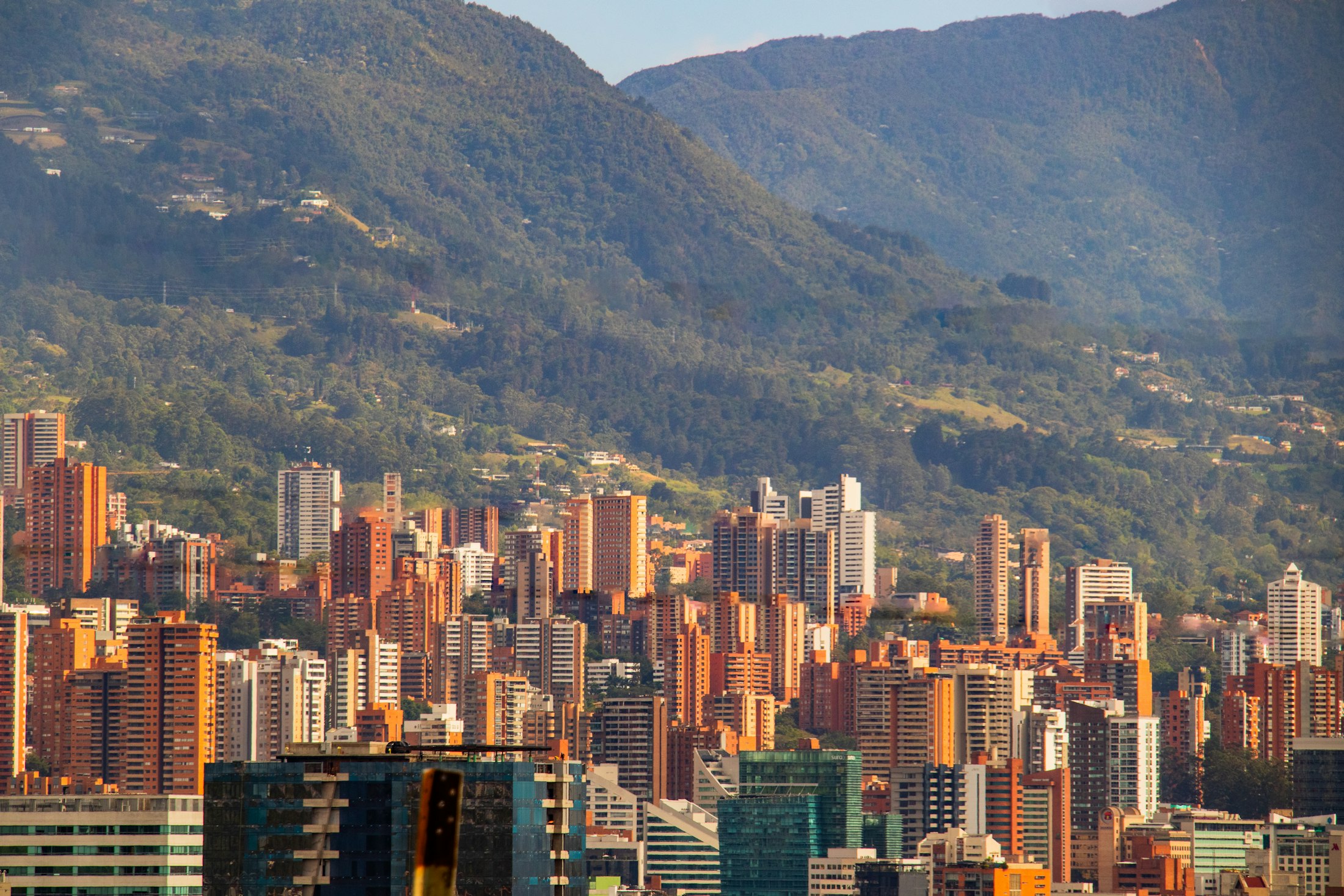
This matters because Envigado is changing. New apartment towers are going up along the metro corridor. Coworking spaces have appeared on streets that five years ago were entirely residential. The mondongo trail isn't a relic being preserved for tourists — tourists don't come here for soup — but it's also not guaranteed to survive another decade of development unchanged.
8. Ending at the right time
By noon, the Parque Principal is loud, the cantinas have shifted from soup to beer, and the domino games have acquired a sharper edge. The Sunday mondongo trail is a morning thing. Stretching it into the afternoon changes its character in ways that aren't improvements.
Leave by 12:30. Take the metro back toward Medellín or walk south along Carrera 43 into the residential blocks, where the streets go quiet and the mountains above Envigado look close enough to touch. Tripe, potato, the slow warmth of cilantro broth settling somewhere behind your ribs.
Pro tip:If you're heading back to El Poblado, stay on the metro past Poblado station and get off at Aguacatala instead. The walk from there into the neighborhood is flatter and passes better street food.
Stay in Medellín
Top-rated hotels near Medellín
Best locations · Verified reviews · Free cancellation
View deals
Expedia →Essential tips
Metro Line A to Envigado station. COP $2,950 per ride. Rechargeable Cívica cards available at any station — worth getting if you're in Medellín for more than two days.
Arrive by 8:30 a.m. on Sunday. Most cantinas serving mondongo open between 7:30 and 8, and the best bowls go to the first pot. Second batches are never quite the same.
Carry cash in small bills. COP $50,000 notes are difficult to break at cantinas. Most of these places don't take cards.
Envigado mornings in rainy season (April–May, September–November) often stay dry until noon. Afternoon storms are the norm, which is another reason to wrap up early.
Ready to visit Medellín?
Book your hotel, flights, and activities through our Expedia-powered search.


