In This Guide
- 1.Saddling Up at Finca La Esperanza
- 2.The Camino Real to Vereda El Salado Alto
- 3.Inside the Trapiche: How Panela Is Actually Made
- 4.The Panela-Mill Lunch You Came For
- 5.The Descent Through Vereda La Verde and Quebrada La Manguala
- 6.Getting There and Choosing Your Season
- 7.What to Wear, Carry, and Leave Behind
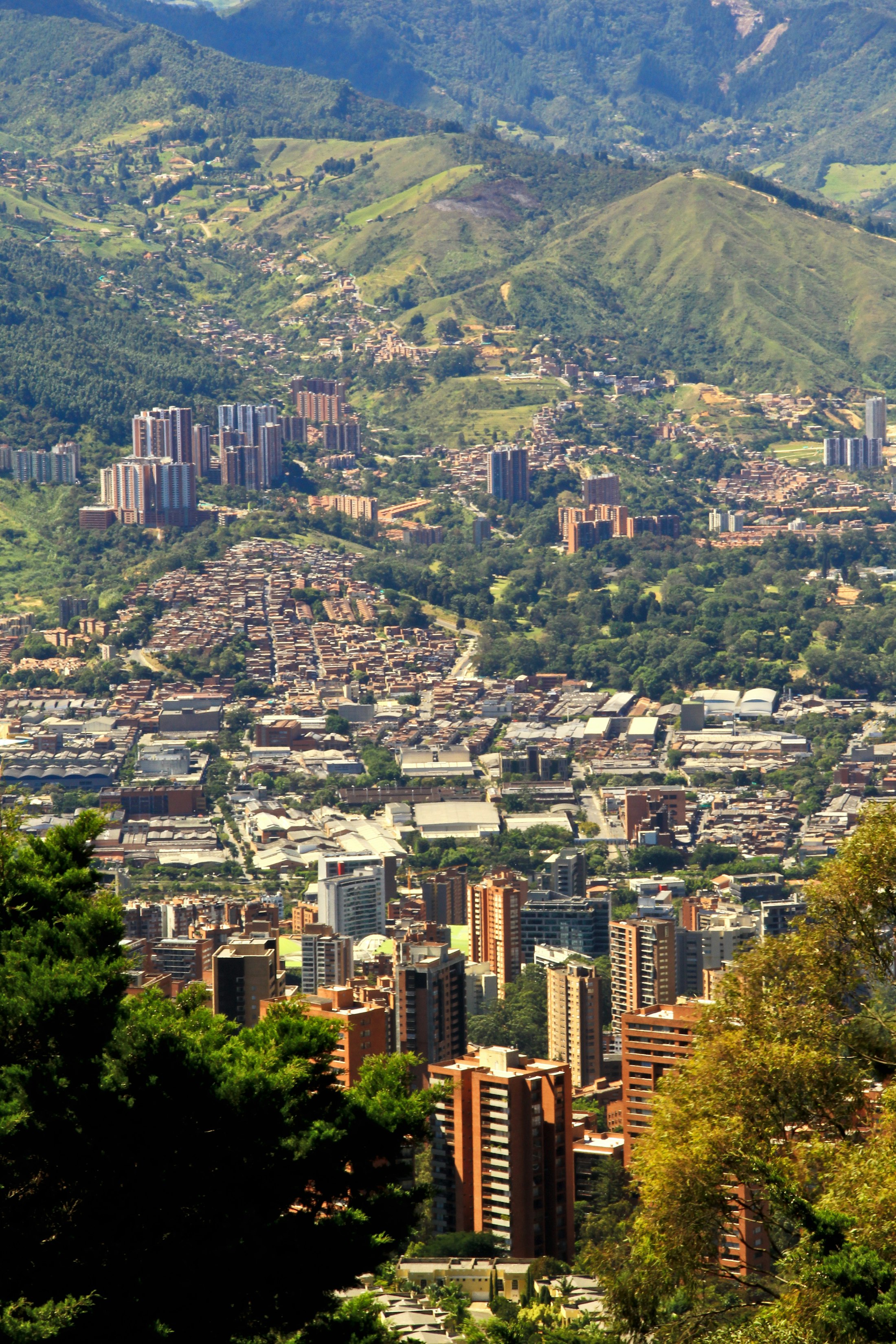
The cloud forest above Medellín swallows sound before it swallows sight. At 2,200 metres, where the Aburrá Valley's western ridge crumbles into a lattice of coffee-and-cane veredas, the hamlet of El Salado emerges from perpetual mist like a half-remembered photograph. Here, mules still outperform motorcycles on rain-slicked caminos reales, and the creak of a trapiche — a wooden sugarcane press — marks time more reliably than any clock.
This guide traces a full-day horseback route through El Salado's fog belt veredas, from saddling up at dawn to sitting down for a panela-mill lunch you won't find on any delivery app. It matters because Medellín's rural corregimientos are gentrifying fast; the trapiches that once powered Antioquia's economy are disappearing, replaced by weekend fincas and Airbnb conversions. Riding out now means tasting a food culture balanced on the edge of living memory.
1. Saddling Up at Finca La Esperanza
Your day begins at Finca La Esperanza, a working cattle-and-cane property off the road to San Antonio de Prado, roughly forty minutes by car from El Poblado. Owner Don Hernán Carvajal runs a small string of criollo horses specifically for vereda rides. Arrive by seven to catch the fog at its thickest, when the Andean wax palms along the ridge appear and vanish like signal flags.
Don Hernán assigns horses based on experience, not ego. Tell him honestly how much you've ridden. His mare Canela, a compact chestnut with an impossibly smooth paso fino gait, is reserved for nervous riders. More confident equestrians get Trueno, a taller gelding with an opinionated mouth but sure feet on the steep descents toward Quebrada La Manguala.
Before mounting, you'll drink a tinto sweetened with raw panela rather than sugar — a distinction Don Hernán considers non-negotiable. The coffee comes from his own micro-lot, dried on a raised bed behind the stable. It tastes of tamarind and wet earth, and it sets the metabolic baseline for four hours in the saddle.
Expect to pay around COP 180,000 per person for the full-day ride including lunch. That fee goes directly to the family, not a tour aggregator. Book via WhatsApp at least two days ahead; Don Hernán doesn't use Instagram and doesn't want to.
Pro tip: Bring your own helmet if you have one — the finca provides hard hats, but sizing is limited. A cycling helmet works in a pinch and packs lighter than an equestrian one.
2. The Camino Real to Vereda El Salado Alto
The trail out of La Esperanza follows a colonial-era camino real, its cobblestones still visible under moss and clay. For the first kilometre, you descend through dense guadua bamboo, the hollow trunks amplifying every hoof-strike into a percussive echo. The route then forks left toward El Salado Alto, gaining elevation through a series of switchbacks that would humble most mountain bikers.
At roughly the one-hour mark, the canopy opens onto a mirador with views — weather permitting — across the Aburrá Valley toward the Cerro El Volador. On clear mornings, you can trace the Medellín River's brown thread through the city's concrete sprawl. On foggy mornings, which is most of them, you see only white, and that somehow feels more honest.
Your guide for this section is usually Don Hernán's nephew, Camilo, who grew up running these trails barefoot and knows every bird by its call. Ask him to identify the barranquero — the Andean motmot — whose pendulum tail feather swings like a metronome among the cecropia trees. He will also point out yarumo leaves, whose silvery undersides the campesinos once used as emergency rain gauges.
The trail is rideable year-round, but the October-to-November rains make certain creek crossings chest-deep for the horses. If you ride in late rainy season, expect detours and embrace them; the alternate routes through secondary forest are actually more scenic.
Pro tip: Wear quick-dry hiking pants rather than jeans — denim absorbs fog moisture and chafes brutally after two hours in the saddle. Lightweight synthetic trousers with a gusseted crotch are ideal.
Stay in Medellín
Top-rated hotels near Medellín
Best locations · Verified reviews · Free cancellation
View deals
Expedia →3. Inside the Trapiche: How Panela Is Actually Made
The midpoint destination is the trapiche of Doña Rosalba Montoya, a weathered open-air mill perched on a hillside in Vereda El Salado Alto. The structure is exactly what a nineteenth-century engraving would show you: a vertical iron press powered by a mule walking in a slow, meditative circle, crushing cane stalks fed by hand. The extracted juice — guarapo — runs along a wooden channel into a series of copper evaporation pans called pailas.
Doña Rosalba fires the pailas with bagasse, the dry cane fibre left after pressing. The combustion cycle is closed-loop and carbon-minimal, a detail she mentions without any performative environmentalism. She learned the process from her mother, who learned it from hers. The guarapo boils for roughly three hours, concentrating into a sticky amber syrup before being poured into wooden moulds to cool into solid panela blocks.
You're invited to drink fresh guarapo straight from the channel, lukewarm and frothy, with a sweetness that is grassy rather than cloying. It tastes nothing like refined sugar. If Doña Rosalba offers you guarapo with a squeeze of lime and a pinch of baking soda — a folk remedy for altitude queasiness — accept. It works better than Dramamine.
The trapiche operates Thursdays through Sundays, when enough cane has been harvested to justify firing the pailas. Midweek visits require prior arrangement and a minimum group of four. Doña Rosalba sells her panela in one-kilo blocks for COP 5,000 each — bring a zip-lock bag to protect it in your saddlebag.
Pro tip:Ask to try the melcocha — molten panela pulled like taffy on a wooden hook until it turns golden and chewy. It's available only in the final minutes of the boiling process, so timing your arrival around 11 a.m. is key.
4. The Panela-Mill Lunch You Came For
Lunch is served on a long plank table beside the trapiche, assembled by Doña Rosalba's daughter-in-law, Yenny. The menu is not negotiable, which is part of the point. You will eat bandeja campesina: red beans cooked with pork hock and panela, white rice, a fried egg with lacy edges, ripe plantain caramelised in — what else — panela, house-made hogao, and a wedge of cuajada cheese that Yenny presses each morning.
The beans are the centrepiece. They simmer overnight in a wood-fired clay pot, the panela lending a molasses depth that brown sugar cannot replicate. The pork hock dissolves into the broth, leaving only collagen and a faint smokiness. You eat with a deep spoon, mixing rice and beans in roughly equal proportions, mopping the residue with an arepa de chócolo that arrives hot from a separate griddle.
Drink is aguapanela con limón, served in enamelled tin cups — panela dissolved in hot water with a generous lime squeeze. It is the defining beverage of rural Antioquia, cheaper than coffee and arguably more functional at altitude. Yenny will not offer you a Coca-Cola, and you should not ask for one.
Vegetarians should notify Don Hernán when booking. Yenny can substitute the pork beans with a guiso of lentils and green plantain, though she will look faintly puzzled. There is no vegan option and no apology for that; this is campesino food built around animal fat and sugarcane.
Pro tip: Bring a small cash tip for Yenny separately from the ride fee — COP 20,000 to 30,000 is appropriate and genuinely appreciated, as the lunch labour is hers alone.
5. The Descent Through Vereda La Verde and Quebrada La Manguala
After lunch, the route drops steeply toward Vereda La Verde, where the fog thins just enough to reveal terraced cane plots interspersed with coffee, avocado, and the occasional stand of lulo. This section follows Quebrada La Manguala, a cold-water creek whose boulders are upholstered in brilliant green moss. The horses know the crossing points by instinct; loosen your reins and trust them.
Camilo will stop at a natural pool below a small cascade where, if the day has warmed, you can dismount and wade up to your knees. The water is around 14°C — bracing but not punishing. Local kids swim here on weekends, leaping from a flat rock that overhangs the pool. You are welcome to watch but advised against jumping; the depth fluctuates with rainfall and the landing zone shifts seasonally.
The trail passes through the property of Don Elías, a retired arriero — mule driver — who keeps a roadside stall selling homemade arequipe, a panela-based caramel spread. His version is thicker and darker than commercial dulce de leche, with a faintly burnt edge that comes from stirring the milk and panela in a copper pot over an open flame. A jar costs COP 8,000 and lasts approximately one hotel-room evening.
The final stretch to the trailhead is a gradual descent through secondary forest alive with tanagers. The blue-grey tanager is ubiquitous; the rarer multicoloured tanager, if spotted, is cause for Camilo to halt the entire party in reverent silence.
Pro tip:Carry a dry-bag or waterproof phone pouch for the creek section — spray from the horses' hooves crossing Quebrada La Manguala will soak anything in your lap or open saddlebag.
Stay in Medellín
Top-rated hotels near Medellín
Best locations · Verified reviews · Free cancellation
View deals
Expedia →6. Getting There and Choosing Your Season
From El Poblado, drive or taxi to the San Antonio de Prado junction on the road toward San Cristóbal, then follow signs toward Vereda El Salado for approximately eight kilometres on a paved-then-gravel road. A taxi from Parque Lleras costs roughly COP 55,000 one way; agree on the price before departing and ask the driver to wait, or arrange a pickup time with Don Hernán.
The optimal window is December through February, when rainfall eases and the trails firm up without losing their fog-belt atmosphere. March and April are also excellent. Avoid the heavy rains of late October and November unless you're comfortable with genuinely challenging trail conditions and the possibility of a rerouted ride.
Sunday rides have a festive energy — neighbouring families fire up their own trapiches, and you may encounter impromptu vallenato sessions at trailside tiendas. Weekday rides are quieter and more meditative, with a better chance of wildlife sightings. Thursday is the sweet spot: Doña Rosalba's trapiche is operational, the trails are empty, and the light has a particular pearlescent quality that photographers prize.
Mobile signal drops to zero once you pass the last cell tower above San Antonio de Prado. Consider this a feature. Download offline maps on Maps.me before departing, and let your hotel know you'll be off-grid until approximately 3 p.m.
Pro tip:If you don't have a WhatsApp-capable local SIM, ask your hotel concierge to make the booking call to Don Hernán — he is more responsive to voice notes than text messages.
7. What to Wear, Carry, and Leave Behind
Layer for altitude fog, not tropical heat. A lightweight merino base layer under a water-resistant softshell jacket handles the 14–19°C temperature range you'll encounter. Cotton is a liability; it holds moisture and drops your core temperature during the exposed ridge sections. Bring a buff or neck gaiter for the descents, when wind chill bites unexpectedly.
Footwear matters more than you think. Closed-toe boots with a small heel — hiking boots work, cowboy boots work better — keep your foot from sliding through the stirrup. Trainers and sandals are explicitly prohibited by Don Hernán, who will lend you rubber farm boots if you arrive improperly shod. They are functional but not flattering.
Carry a one-litre water bottle, sunscreen rated SPF 50 (the UV index at 2,200 metres is savage even under cloud cover), insect repellent for the creek sections, and a compact rain jacket you can stuff into a saddlebag. Leave the drone at home: it spooks the horses, annoys the campesinos, and Medellín's aviation authority restricts flights in the western corregimientos.
A small daypack is manageable if it sits flat against your back; anything bulky will unbalance you on steep descents. Don Hernán provides saddlebags for cameras and purchased panela. If you carry a telephoto lens for birding, request the calmer horse — fumbling with a lens hood while managing reins is a recipe for a dropped Nikon.
Pro tip:Tuck COP 50,000 in small bills into a zip-pocket — you'll want cash for Don Elías's arequipe, Doña Rosalba's panela blocks, and any trailside snacks, as no one up here accepts cards or transfers.
Essential tips
Budget COP 280,000–320,000 total per person: COP 180,000 for the ride and lunch, COP 55,000 for a one-way taxi, plus cash for panela, arequipe, tips, and incidentals. No card payments exist on the route.
Fog and light drizzle are virtually guaranteed regardless of season — pack a rain jacket even in January. Waterproof your phone and keep your camera in a saddlebag between shots.
If you've never ridden, say so. Don Hernán adjusts the route and horse assignment for beginners without judgment. First-timers still complete the full day comfortably on the right mount.
Arrive at Finca La Esperanza by 7:00 a.m. sharp. The schedule is built around the trapiche's boiling cycle, and a late start means missing the melcocha window and eating lunch in the afternoon heat.
Basic Spanish transforms this experience. Don Hernán, Doña Rosalba, and Camilo speak no English. Learn key phrases for riding commands — 'suave' (easy), 'quieto' (steady), 'vamos' (let's go) — before you mount.
Ready to visit Medellín?
Book your hotel, flights, and activities through our Expedia-powered search.


