In This Guide
- 1.Getting there and what the weather will actually do to you
- 2.The fritanga economy
- 3.Iglesia de Nuestra Señora del Perpetuo Socorro and the plaza that actually matters
- 4.Cumbia rehearsals and where to hear them
- 5.Bakeries that haven't updated since 1994
- 6.The shoe-repair shops and what they tell you
- 7.Walking Castilla safely and honestly
The rain quit around four in the afternoon, which is what rain does in Medellín — it shows up hard, floods the gutters on Carrera 65, and then vanishes like it has somewhere better to be. I was standing under a corrugated tin awning outside a fritanga cart in Castilla, water still sheeting off the metal, and the woman running the grill just kept flipping chicharrón like nothing had happened. That's the barrio's whole personality.
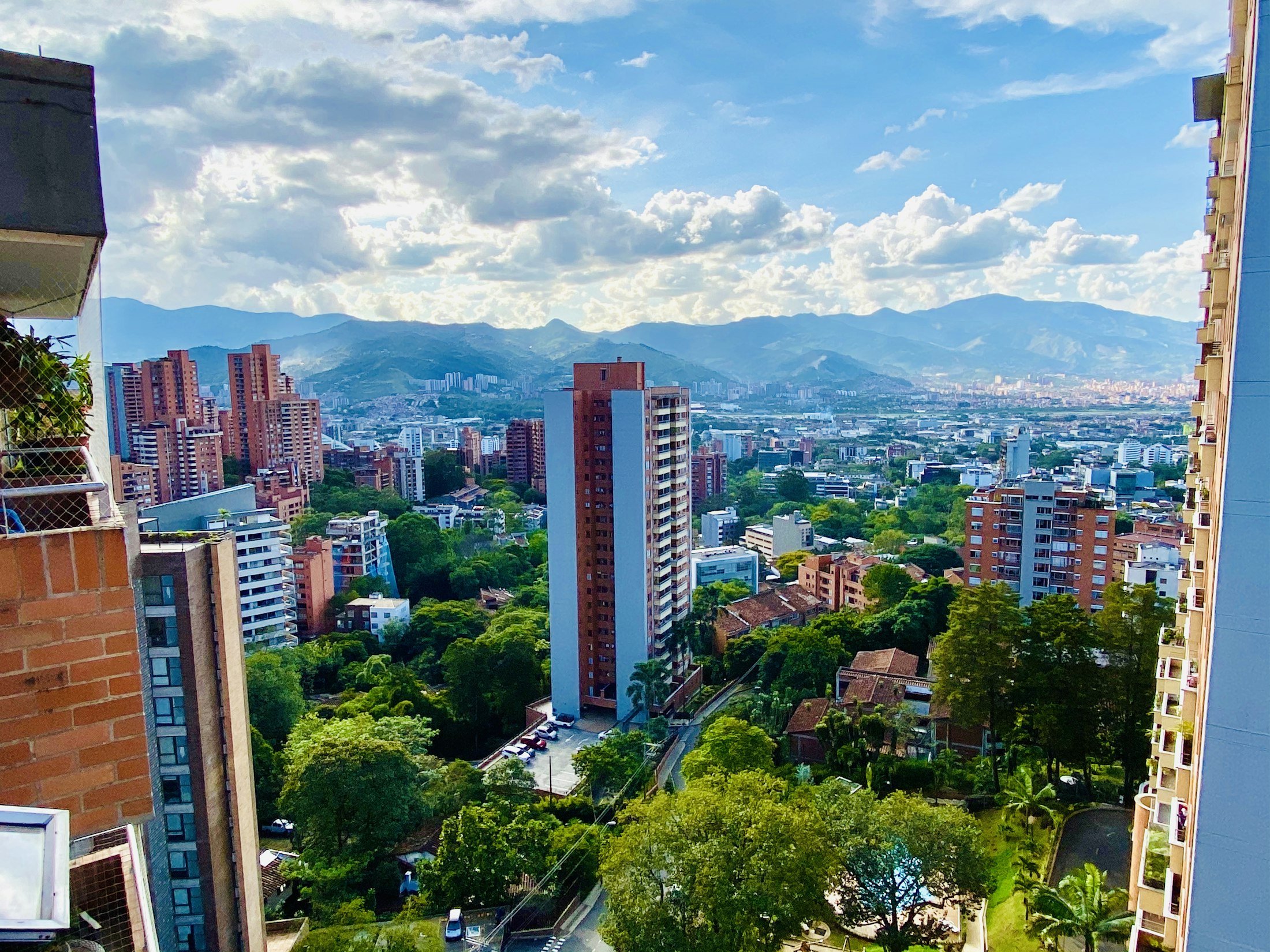
Castilla sits in the north of Medellín's Zona Noroccidental, above Caribe and below the mountains that eventually climb toward San Cristóbal. Most travel coverage of this city dead-ends in Laureles or El Poblado. Castilla doesn't make those lists. The neighborhood runs on fritanga smoke, cumbia rehearsals leaking out of second-floor windows, and a stubborn local economy of bakeries and shoe-repair shops that haven't changed their signage since the '90s.
1. Getting there and what the weather will actually do to you
Take the Metro to Caribe station and grab a bus heading north on Carrera 65. The ride is about fifteen minutes, depending on traffic, and costs COP $2,950 on a Cívica card. A taxi from El Poblado will run you around COP $18,000–$22,000 and takes 30 to 45 minutes depending on the hour. From Laureles, 20 minutes tops.
Weather. Y'all need to know this before you pack a bag. Medellín's eternal-spring reputation is technically accurate but practically misleading in Castilla. The barrio sits lower than Poblado, traps more humidity, and afternoon downpours between March and May hit hard — sudden, cold, finished in an hour. Carry a light rain shell or accept that you'll be wet. Morning hours, say 8 to 11 a.m., are usually clear and in the low 70s Fahrenheit. That's your window for walking the neighborhood on foot without cursing your choices.
Pro tip:The bus routes on Carrera 65 aren't well-marked. Ask the driver for 'Castilla, la iglesia' and you'll get dropped near the commercial center, which is a better orientation point than the official Castilla bus stop farther north.
2. The fritanga economy
Fritanga is the anchor of Castilla's food culture — carts and small storefronts selling fried pork belly, morcilla, chorizo, papa criolla, and arepa de chócolo, usually assembled on a Styrofoam plate and drowned in ají. The best concentration of carts fires up around 3 p.m. along Calle 93 between Carreras 65 and 68. A loaded plate runs COP $12,000–$18,000.
I made the mistake of eating a full lunch in Laureles before heading to Castilla last October. Don't do that. Arrive hungry.
The standout for me was a cart with no name — just a woman and her daughter operating a single charcoal grill near the corner of Calle 93 and Carrera 67. Their chicharrón had a shatter to it that the bigger places along the road couldn't match. They sell out by 6 p.m. most days. If you want morcilla specifically, look for the cart closer to Carrera 65 that has a hand-painted sign reading "La Morci" — theirs is rice-heavy and seasoned with enough cumin that you'll smell it from across the street.
3. Iglesia de Nuestra Señora del Perpetuo Socorro and the plaza that actually matters
The church anchors Castilla's commercial strip and gives the neighborhood its only real gathering plaza. The building itself is plain — concrete, functional, built in the mid-20th century when this part of the city was filling up with workers from the textile factories. Don't come expecting colonial grandeur.
What matters is the plaza outside. On weekend mornings, vendors set up tables selling used books, phone cases, and loose herbs. Old men sit on concrete benches arguing about football. There's a juice stand on the east side of the plaza that squeezes lulo and maracuyá for COP $3,000 a cup, and the lulo is worth stopping for.
Skip the empanada place directly facing the church entrance — it's overpriced by Castilla standards (COP $4,500 for a single empanada) and the filling is mostly potato. Walk one block east on Calle 93 and you'll find three empanada vendors who charge COP $2,000–$2,500 and actually use meat.
Pro tip: Sunday mornings between 9 and 11 a.m. are the best time to see the plaza at its most active. By noon, the vendors start packing up and the heat settles in.

Stay in Medellín
Top-rated hotels near Medellín
Best locations · Verified reviews · Free cancellation
View deals
Expedia →4. Cumbia rehearsals and where to hear them
Castilla has at least three active cumbia and tropical-music groups that rehearse in residential spaces — living rooms, garages, second-floor apartments with the windows thrown open. You hear them before you find them. On Thursday and Friday evenings, walk along Carrera 67 between Calles 96 and 99 after 7 p.m. and listen.
This isn't a concert series. Nobody's selling tickets. The musicians are rehearsing for upcoming fiestas, quinceañeras, and barrio events. If you stand outside and listen, people will usually notice you and either wave you in or bring you a beer. I spent an hour on a plastic chair in a garage on Calle 97 watching a seven-piece group run through a Lucho Bermúdez arrangement. The drummer's kid was doing homework on a folding table three feet away.
Most guides to Medellín's music scene will point you to the bars in Provenza or the salsa clubs in La 70. Those are fine. But the argument that Medellín's live-music culture is best experienced in a commercial venue is wrong. It lives here, in these garages, unannounced and unplugged from any tourist infrastructure.
5. Bakeries that haven't updated since 1994
Castilla's panaderías are locked in a time warp and I mean that as a compliment. The bread cases are glass. The pastries are simple — pandebono, buñuelos, pan de yuca, roscón. The prices haven't fully caught up with inflation.
Panadería y Cafetería El Trigal, on Carrera 65 near Calle 95, sells pandebono for COP $1,500 apiece. The buñuelos are dense and salty in the center. They open at 6 a.m. and the first batch comes out hot around 6:15. The coffee is tinto — dark, sweet, served in a small plastic cup for COP $1,200. Nobody is doing pour-over here.
There are at least four other bakeries within a three-block radius, and the quality is consistent enough that you can't go badly wrong. The one thing Castilla's bakeries don't do well is anything involving chocolate. I've tried. The brownies are dry. Stick to the corn-based stuff.
Pro tip:If you want to bring pandebono or buñuelos back to your hotel, ask for a bolsa extra — they'll give you a second bag so the grease doesn't soak through the first one on the Metro ride back.
Stay in Medellín
Top-rated hotels near Medellín
Best locations · Verified reviews · Free cancellation
View deals
Expedia →6. The shoe-repair shops and what they tell you
I'm not suggesting you go to Castilla specifically to get your shoes fixed. But notice the shoe-repair shops. At least five along the Carrera 65 commercial strip, all operating out of narrow storefronts no wider than a doorway.
They're holdovers from when this neighborhood supplied labor to the textile and garment industries that drove Medellín's economy. The factories have mostly closed or moved. The repair shops stayed. A sole replacement runs about COP $25,000. A full resole with stitching, COP $40,000–$50,000.
These places tell you more about what Castilla is than any mural tour would. Working neighborhood. Practical economy. Nobody's opening a co-working space here anytime soon.
7. Walking Castilla safely and honestly
Castilla is a working-class barrio with a complicated history. During the worst years of Medellín's violence, the neighborhood was heavily affected. It's calmer now, but it is not a polished tourist zone and pretending otherwise would be dishonest.
Stick to the commercial corridors — Carrera 65, Calle 93, and the blocks immediately around the church plaza — during daylight hours. Don't wander deep into residential side streets alone after dark. Keep your phone in your pocket when you're not actively using it. Same rules any paisa who lives in the neighborhood would give you.
Daytime visits, especially morning through mid-afternoon, are straightforward. I've walked the main strip multiple times without issue. People are direct but welcoming. If you're visibly foreign, expect some curiosity — a few questions, maybe an invitation to sit down.
None of this should scare you off. It should calibrate your expectations. Castilla rewards people who show up paying attention, not people who show up performing adventure.
Pro tip:Learn the phrase '¿Por dónde es más seguro caminar?' — 'Which way is safer to walk?' Locals will answer you honestly and specifically, which is more useful than any app.
Essential tips
Afternoon rain in Castilla is near-guaranteed from March through May and again in October–November. Plan your walking for morning hours (8–11 a.m.) and carry a packable rain layer, not an umbrella — the streets are narrow and you'll be jousting with other pedestrians.
Almost nothing in Castilla accepts credit cards. Bring cash in small denominations — COP $5,000 and $10,000 bills. Breaking a $50,000 note at a fritanga cart will get you a long stare.
Caribe Metro station is the closest rail stop, but it serves multiple bus routes heading in different directions. Confirm with the driver that the bus goes to Castilla before boarding — saying 'Castilla, la iglesia' removes ambiguity.
Cell service on Claro and Tigo is reliable in Castilla's main commercial strip. Coverage gets spottier in the residential blocks higher up the hill toward San Cristóbal. Download offline maps before you go.
Ready to visit Medellín?
Book your hotel, flights, and activities through our Expedia-powered search.


