In This Guide
The taxi from El Poblado took forty-five minutes in light traffic and another twenty in fog so thick the driver turned his hazards on and muttered something about God. That's how you get to Campo Valdés — not the archaeological museum downtown that shares the name, but the actual barrio up in the northeastern comunas, where the city thins out and the air drops ten degrees. I climbed out at the top of a concrete staircase, rain still dripping off every awning, and a woman was already pressing corn arepas on a plancha the size of a card table. No sign. No menu. Just smoke and the smell of rendered butter cutting through wet mountain air.
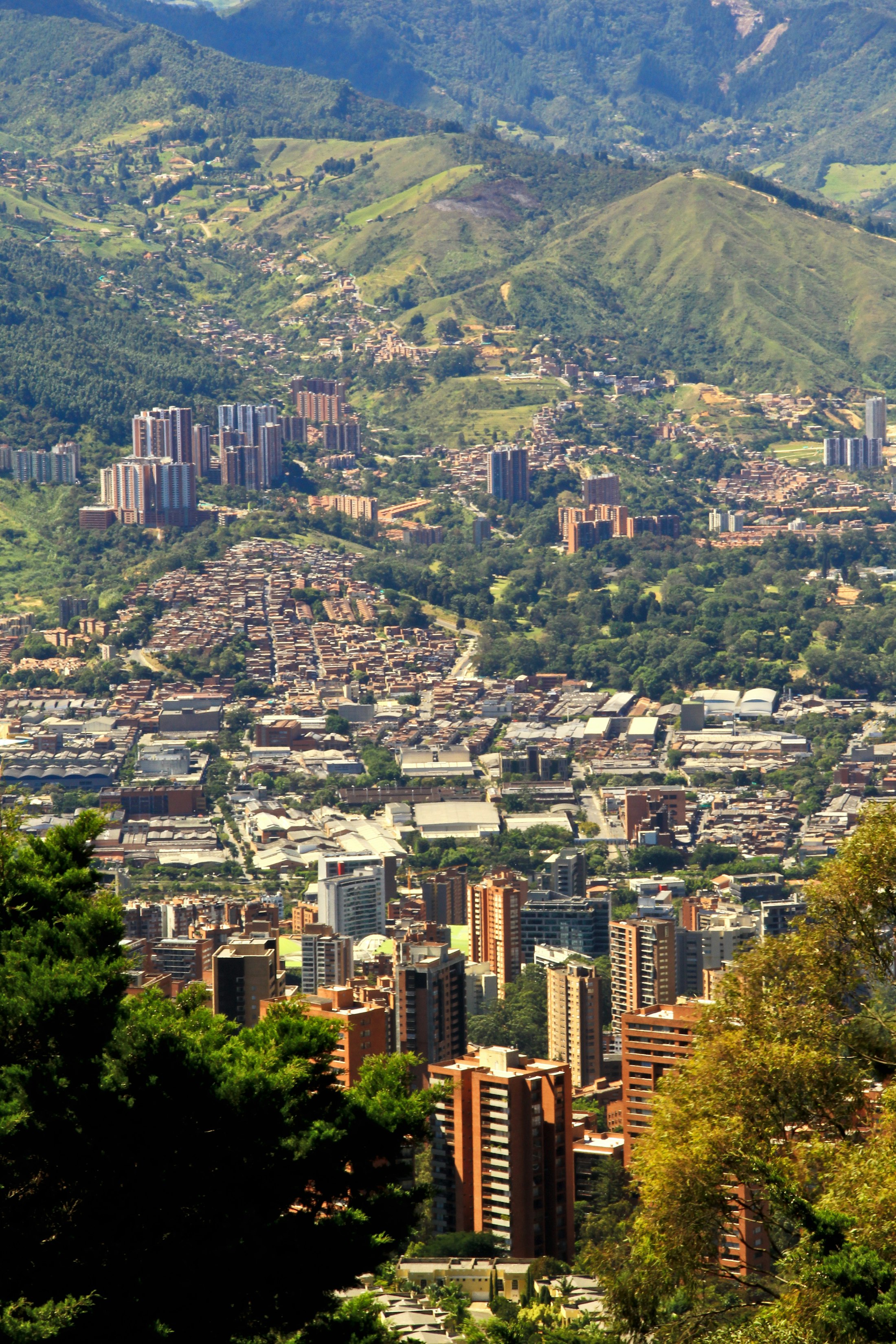
Most Medellín guides will route you to Comuna 13 for the street art or Laureles for the brunch scene. Both are fine. But Campo Valdés after a rainstorm — when the clouds sit below you and the domino tables come out under corrugated porticos — is a different frequency entirely. Y'all won't find it on a walking tour.
1. The arepa lady at the top of the stairs
Her name is Doña Amparo, or at least that's what the neighbors call her. She sets up most mornings around 6:30 on the corner where the staircase meets Carrera 36, just below the water tank with the faded Águila beer ad. The operation is simple: white corn arepas, about the diameter of a coffee saucer, cooked on a flat steel plancha over a gas burner. She splits them open and fills them with quesito — a soft, salty cheese that melts into the hot dough without fully dissolving.
They cost 2,000 pesos each. That's roughly fifty cents. I ate three.
The corn she uses is coarser than what you'll get at the polished arepa spots in El Poblado. It has texture, a slight chew, and a flavor that tastes like actual grain rather than starch. Doña Amparo doesn't do toppings, fillings beyond cheese, or modifications. She'll look at you blankly if you ask for hogao. I respect that.
Pro tip:She runs out by 9 a.m. on weekdays, closer to 10 on Saturdays. Don't bother on Sundays — she's not there.
2. Why the rain matters
Medellín's weather reporting is almost useless for the comunas at elevation. The city center can be 28°C and clear while Campo Valdés sits under a ceiling of gray mist at 19°C. The barrio is roughly 1,800 meters above sea level — a few hundred meters higher than Parque Berrío — and the afternoon rains that sweep through the Aburrá Valley hit here first and hardest.
But the rain is the point. After it passes, usually between 3 and 5 p.m., the fog settles into the valley below and the barrio sits above it. You can stand on the edge of a concrete landing and watch the tops of buildings downtown poke through cloud cover like they're drowning slowly. I have never seen a better free view in this city, and I'm including the Metrocable.
Bring a rain shell. Not a poncho from a street vendor — an actual waterproof layer with sealed seams. The rain here is cold and horizontal.
3. The domino porticos aren't for show
Every third or fourth house on the upper streets has a covered porch — corrugated zinc roof, plastic chairs, a folding table. After the rain clears, older men appear with domino sets and small cups of tinto. Nobody is doing it for tourists because tourists don't come here.
I made the mistake of hovering too close to a game my first time, trying to take a photo. One of the players waved me over and pointed at the empty chair. You either sit down and play or you move along. So I sat down, lost badly at what turned out to be a Cuban-style partnership variant, and drank two cups of coffee that tasted like it had been boiled with panela.
The etiquette is straightforward: don't photograph without asking, don't narrate the game, and if someone offers you tinto, take it. The tables start filling around 4 p.m. and games run until dark, which this close to the equator means about 6:15 year-round.
Pro tip:If you've never played dominoes, say so. They'll teach you. But they will not slow down.
4. Skip the mirador everyone mentions
If you search Campo Valdés online — the few results that come up — someone will mention a "mirador" near the school on Calle 58. Skip it. It's a narrow gap between two walls with a partial view obstructed by a cell tower, and the last time I went there were three stray dogs blocking the path who did not seem interested in negotiating.
The better view is two blocks north, from the retaining wall behind the yellow tienda with the Postobón sign. No name on the shop. The owner, a guy in his sixties who goes by El Mono, will sell you a Club Colombia for 4,000 pesos and let you stand on his wall as long as you don't leave the bottle up there. The sightline faces west-southwest, directly into the valley, and on a clear post-rain evening the light turns the fog below a shade of copper I haven't seen anywhere else in Colombia.
Pro tip:El Mono closes his shop when he feels like it, but he's reliably open between 2 p.m. and 7 p.m. Thursday through Saturday.
Stay in Medellín
Top-rated hotels near Medellín
Best locations · Verified reviews · Free cancellation
View deals
Expedia →5. Getting there without losing your mind
From El Poblado, budget a full hour by taxi. More if it's raining. The route goes through some stretches of road that make Uber drivers cancel, so I'd recommend using a local cab hailed from the street or calling one through Tappsi rather than relying on apps that let drivers see the destination before accepting.
The Metrocable to Santo Domingo gets you partway there, but you'll still need a 15-minute walk uphill on steep, uneven concrete stairs. Wear shoes with grip. Not sandals, not fashion sneakers — actual tread.
There's no parking up top worth mentioning. If you drive, you'll circle. Don't drive.
Pro tip:Tell your taxi driver "Campo Valdés arriba, por el tanque de agua" — the water tank is the landmark everyone in the neighborhood uses. Saying just "Campo Valdés" will get you dropped at the museum downtown.
6. Lunch at Donde Mary, if she's open
Donde Mary is a corrientazo spot — set lunch, no choices — on the staircase about halfway between the main road and Doña Amparo's corner. The meal is soup, a main plate with rice, beans, meat, plantain, and a small salad, plus a glass of jugo de lulo. 12,000 pesos. Under three dollars.
The soup the day I went was sancocho with big pieces of yuca still firm enough to hold their shape. The main was carne molida with a fried egg on top. Nothing revolutionary. Just well-seasoned home cooking served on a plastic plate at a folding table.
Mary opens around 11:30 and serves until the food runs out, which is usually by 1:30. She's closed Mondays. There's no sign outside — look for the doorway with the blue curtain and the sound of a pressure cooker.
Stay in Medellín
Top-rated hotels near Medellín
Best locations · Verified reviews · Free cancellation
View deals
Expedia →7. A contrarian note on Medellín's "transformation tourism"
I know the narrative. Medellín reinvented itself, the escalators in Comuna 13 symbolize progress, the Metrocable is a triumph of urban planning. All true enough. But the tourism machine that grew out of that story has a way of flattening neighborhoods into content — murals become backdrops, poverty becomes context for your personal growth, and every steep hill becomes a metaphor.
Campo Valdés hasn't been flattened yet. People live here. They play dominoes because they like dominoes, not because a tour operator scheduled it. The arepas aren't "authentic street food experiences." They're breakfast.
I don't know how long that lasts once a place gets written about, which makes me slightly uncomfortable writing this. But the alternative — only ever pointing people toward the same five neighborhoods — seems worse. Just go quietly. Buy an arepa. Lose at dominoes. Leave the drone in your bag.
Essential tips
Check Windy.com rather than a standard weather app — it shows precipitation by elevation, which matters when you're heading 200 meters above the city center.
The concrete staircases are slick after rain. Wear rubber-soled shoes with tread. I watched a guy in Vans slide down four steps on his first visit.
Bring cash in small bills — 2,000 and 5,000 peso notes. Nobody up here takes cards or Nequi, and breaking a 50,000 will get you a tired look.
Tappsi is more reliable than Uber or InDriver for rides into the upper comunas. Drivers on Uber can see the destination and cancel; Tappsi drivers in this part of the city are more used to the routes.
Best window is 3 p.m. to 6 p.m. after an afternoon rain. Arrive earlier and you'll just be wet. Arrive later and you'll miss the fog-line views and the domino games.
Ready to visit Medellín?
Book your hotel, flights, and activities through our Expedia-powered search.