In This Guide
- 1.The Roldán Workshop: A Living Archive of Tiple-Making
- 2.Jueves de Serenata at Parque Boston
- 3.Café Palermo and the Cantina Circuit
- 4.The Tiple's Anatomy: Understanding What You're Hearing
- 5.Walking Boston: Architecture, Street Life, and the Iglesia del Sagrado Corazón
- 6.Don Héctor and the Oral History of Serenata in Boston
- 7.Buying a Tiple: What to Look For and Where to Shop
On a sloping side street in Barrio Boston, behind a door propped open with a half-finished soundboard, Carlos Arturo Roldán draws a blade along a strip of Colombian cedar and pauses to listen to the wood. The shavings curl at his feet like sheet music. He is one of perhaps five remaining luthiers in Medellín who still build the tiple — the twelve-string instrument that gives Colombian serenata its unmistakable shimmer — entirely by hand, without CNC routers or factory templates.
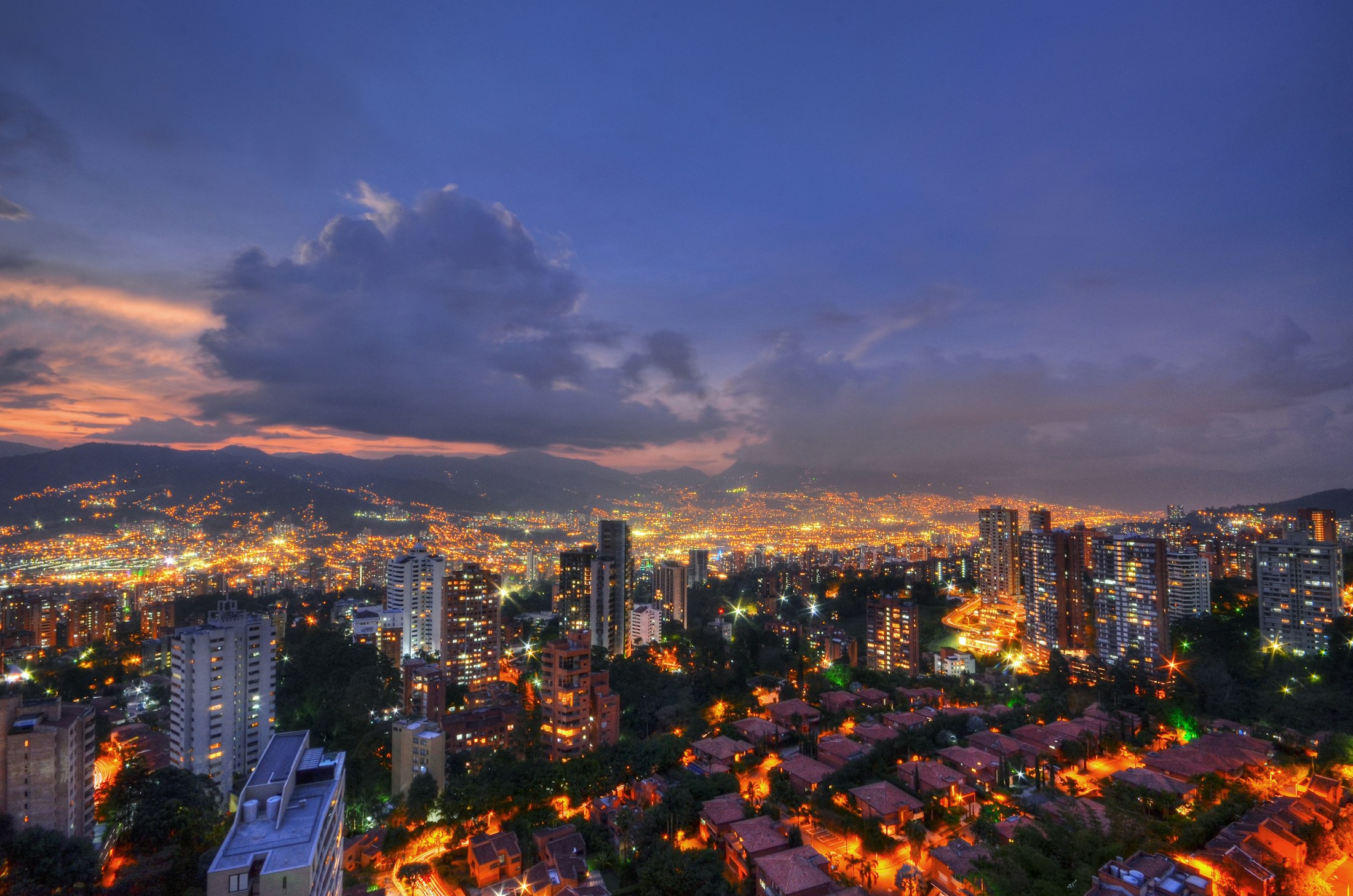
This guide takes you inside the workshops, cantinas, and Thursday-night gatherings where the tiple still breathes in Medellín's oldest residential barrio. Boston sits just east of the city centre, overlooked by most visitors drawn to Comuna 13's murals or El Poblado's restaurants. Yet for anyone interested in living craft traditions, this neighbourhood offers something rarer: an unbroken lineage of instrument-making and informal street music that predates the metro, the narco era, and the tourist boom — and refuses, stubbornly, to die.
1. The Roldán Workshop: A Living Archive of Tiple-Making
Carlos Arturo Roldán's taller sits at Calle 56 No. 42-31, a narrow storefront whose interior smells permanently of lacquer and páramo cedar. He learned the craft from his father, who learned from a luthier trained in Aguadas, Caldas — the historic heartland of tiple construction. Each instrument takes Roldán roughly six weeks to complete, and he finishes no more than eight per year.
You can visit without appointment on weekday mornings, though calling ahead via the number taped to his door is courteous. Roldán will walk you through his process: selecting tonewood, shaping the distinctive figure-eight body that is slightly smaller than a guitar, and installing the four courses of triple strings that produce the tiple's bright, choral attack.
Ask to see his collection of retired instruments hanging on the back wall. Several date to the 1940s, their fretboards worn to scoops by decades of rasgueo strumming. Roldán occasionally restores these for families who bring in a grandfather's tiple — work he considers more sacred than new builds.
Avoid visiting on Mondays, when Roldán sources wood from suppliers near the Plaza Minorista. If you want to purchase a finished tiple, expect to pay between 800,000 and 1,500,000 Colombian pesos depending on tonewood and ornamentation. He does not ship internationally, so plan your luggage accordingly.
Pro tip: Bring a small offering — Roldán drinks tinto negro without sugar. A good cup from the café two doors down buys you an extra hour of conversation and likely a private demonstration of his instruments.
2. Jueves de Serenata at Parque Boston
Every Thursday evening around seven, a loose assembly of musicians gathers on the benches of Parque de Boston — the small, tree-lined plaza at the barrio's centre bounded by Carrera 42 and Calle 54. There is no formal organisation, no amplifiers, no ticket booth. Someone opens a guitar case, another produces a tiple, and within minutes the bambuco rhythms start pulling neighbours to their balconies.
You should arrive by 6:30 to claim a bench and order an empanada from the cart that parks on the plaza's western edge. The music typically runs until ten, cycling through bambucos, pasillos, and the occasional vals colombiano. Requests are welcome but keep them traditional — this crowd has little patience for vallenato or reggaeton.
The serenata tradition in Boston predates the park's 1920s renovation. Older residents recall their grandparents describing tiple players on these same corners during the Thousand Days' War era. The continuity is not sentimental — it is stubbornly practiced, week after week, even during Medellín's most violent decades.
Listen for the interplay between tiple and bandola, the mandolin-like instrument that carries the melody. When a skilled trío gets locked in, the tiple's metallic shimmer creates a harmonic bed that no synthesiser has managed to replicate. This is the sound the neighbourhood refuses to let go.
Pro tip: Thursdays after paydays — the 15th and 30th of each month — draw the largest crowds and often feature aguardiente passed among musicians. These sessions run latest and attract the most accomplished players.
Stay in Medellín
Top-rated hotels near Medellín
Best locations · Verified reviews · Free cancellation
View deals
Expedia →3. Café Palermo and the Cantina Circuit
Café Palermo, on Carrera 42 near Calle 55, functions as Boston's unofficial green room. Musicians stop here before and after Thursday gatherings for tinto, aguapanela, or cold Club Colombia. The owner, Doña Marta, has run the place for over thirty years and keeps a framed photograph of Garzón y Collazos — the legendary Colombian duet — behind the register.
You should order the empanadas de pipián if they are available; Doña Marta makes them only when she sources the right peanut paste. Pair them with a milo caliente, the malt drink that Colombians treat as comfort food. Avoid the arepas after 3 PM — they sit too long and lose their crisp.
Two blocks south, Bar El Recuerdo on Calle 53 hosts informal jam sessions on Friday nights that feel more raucous and less curated than the park gatherings. The crowd skews younger, the aguardiente flows faster, and you might hear a tiple player attempt a cumbia arrangement — heretical to purists but thrilling when it works.
The cantina circuit in Boston rewards the patient drinker who lingers. These are not cocktail bars with menus; they are rooms where people know each other's names. Sit quietly, buy a round when invited, and you will hear stories about Medellín that no walking tour covers.
Pro tip: At Bar El Recuerdo, ask the bartender for aguardiente Antioqueño sin azúcar — the sugar-free version that locals prefer. It is smoother, less cloying, and signals you know what you are drinking.
4. The Tiple's Anatomy: Understanding What You're Hearing
Before you attend a serenata, a basic understanding of the tiple transforms passive listening into genuine appreciation. The instrument has twelve steel strings arranged in four courses of three. The outer courses are tuned in octaves, producing the bright, ringing quality that cuts through street noise and carries across a plaza without amplification.
You will notice players using a rapid downstroke technique called rasgueo that gives bambuco its rhythmic drive. Unlike flamenco rasgueado, the Colombian version emphasises a syncopated accent on beats you would not expect. This asymmetry is what makes bambuco feel like it is constantly about to topple forward without ever falling.
At Roldán's workshop, ask him to demonstrate the difference between a cedar-topped tiple and one made with pino romerón. The cedar produces warmth; the pine delivers the cutting brightness preferred for outdoor serenatas. Most Boston luthiers favour cedar because it ages better in Medellín's humidity, which hovers around seventy percent year-round.
The tiple is not a guitar. Treating it as one — or calling it a small guitar to a luthier's face — is the surest way to end a conversation. It evolved independently from indigenous and Spanish string traditions and occupies a unique sonic and cultural space in Andean Colombian music.
Pro tip: The Universidad de Antioquia library on Calle 67 holds early-twentieth-century recordings of tiple masters on digitised 78 RPM discs. Ask at the music archive desk — access is free with a passport.
5. Walking Boston: Architecture, Street Life, and the Iglesia del Sagrado Corazón
Boston was Medellín's first residential expansion beyond the colonial core, developed in the early 1900s for the city's merchant class. You can still read this history in the neighbourhood's Republican-style facades — ornate balconies, tiled entryways, and interior courtyards now subdivided into apartments. Walk Carrera 42 from Calle 50 to Calle 58 for the densest concentration of intact early-twentieth-century architecture.
The Iglesia del Sagrado Corazón, at the park's eastern edge, anchors the barrio visually and socially. Its red-brick neo-Gothic towers are visible from several blocks away and serve as the neighbourhood's compass point. Step inside during weekday mornings to see the stained glass without crowds — the light between nine and eleven is extraordinary.
You will notice Boston's street life operates at a different tempo than Laureles or El Poblado. Neighbours greet each other by name, shopkeepers stand in doorways, and the pace suggests a small town grafted onto a metropolitan hillside. This is not performative nostalgia; it is simply a neighbourhood that never fully surrendered its rhythms to the car or the mall.
For lunch, walk to Restaurante Doña Fanny on Calle 54, where a bandeja paisa runs about 18,000 pesos and arrives on a plate the size of a hubcap. The chicharrón is the best indicator of quality — here it is crisp and dry, not greasy. Skip the juice and order limonada de panela instead.
Pro tip:Wear flat, grippy shoes. Boston's streets are steep and many sidewalks are narrow or broken. Cobblestones near the church get slick after afternoon rain, which arrives almost daily between April and November.
Stay in Medellín
Top-rated hotels near Medellín
Best locations · Verified reviews · Free cancellation
View deals
Expedia →6. Don Héctor and the Oral History of Serenata in Boston
If Roldán is the barrio's hands, Héctor Jaime Ospina is its memory. A retired schoolteacher now in his eighties, Don Héctor has attended Thursday serenatas since 1958 and can recite the repertoire of every significant trío that has played the park in the last six decades. He usually sits on the same bench near the northwest corner, wearing a fedora and nursing a café con leche.
You should introduce yourself respectfully and mention your interest in the tiple — he will do the rest. Don Héctor's particular obsession is the lost repertoire of Medellín bambucos from the 1930s and 1940s, songs he insists were never properly recorded and survive only in the fingers and memories of ageing musicians.
He carries a notebook filled with handwritten lyrics and chord notations, a personal archive that no institution has copied. Several ethnomusicology students from the Universidad EAFIT have tried to formalise his collection, but Don Héctor resists digitisation. He believes the songs belong to the air, not to a server.
This tension — between preservation and lived practice — defines Boston's tiple culture. The luthiers and musicians here are not opposed to documentation, but they distrust any process that replaces playing with curating. For them, the tradition survives only if someone picks up the instrument tonight.
Pro tip:Don Héctor sometimes does not attend during December's Feria de las Flores preparations, when the noise overwhelms the park. Visit in January through March for the most consistent Thursday gatherings and his reliably warm mood.
7. Buying a Tiple: What to Look For and Where to Shop
If you want to bring home an instrument, Roldán's workshop is the premium option but not the only one. Luthier Jhon Freddy Cano operates a smaller workshop on Calle 52 near Carrera 43A and specialises in student-grade tiples priced between 400,000 and 700,000 pesos. His instruments lack the tonal refinement of Roldán's but are solidly built and suitable for learning.
You should evaluate any tiple by pressing each string at the twelfth fret and checking intonation. A well-made instrument will ring true with no buzzing. Run your hand along the neck — it should feel smooth and symmetrical, with frets that do not protrude past the fingerboard edges. These details separate craft from mass production.
Avoid buying tiples from souvenir shops near Parque Berrío or the tourist stalls at Pueblito Paisa. These are decorative objects made from plywood with painted finishes, strung with cheap wire that will not hold tuning. They look like tiples the way a photograph of food looks like dinner.
For strings, visit Almacén Musical Diapasón on Carrera 46 in the centre. They stock Medina brand tiple strings, preferred by most Boston musicians for their brightness and durability. Buy several sets — they are difficult to source outside Colombia and a single set costs roughly 15,000 pesos.
Pro tip:Ask your luthier to write a brief nota de autenticidad describing the instrument's materials and construction date. This handwritten note adds provenance and can help with customs if officials question the instrument at the airport.
Essential tips
Take Metro Line A to Parque Berrío station and walk east uphill for about twelve minutes to reach Barrio Boston. Taxis from El Poblado cost approximately 12,000-15,000 pesos. Avoid driving — parking is scarce and streets are narrow.
Boston is a Spanish-only neighbourhood. Even basic phrases — '¿Puedo escuchar?' (May I listen?) or '¿Me permite ver?' (May I look?) — open doors that English cannot. Download offline Spanish on Google Translate before arriving.
Always ask before photographing luthiers at work or musicians mid-performance. Most will agree but appreciate the courtesy. In workshops, never touch an instrument without explicit permission — unfinished wood is fragile and oils from your hands can affect the finish.
Medellín's afternoon rains typically hit between 2 and 5 PM. Plan workshop visits for mornings and carry a compact umbrella. Thursday serenatas rarely cancel for drizzle, but heavy downpours push gatherings under the church portico.
Carry cash in small denominations. Most cantinas, street vendors, and luthier workshops in Boston do not accept cards. An ATM on Carrera 43 near Calle 54 dispenses pesos without excessive fees if you use a Bancolombia machine.
Ready to visit Medellín?
Book your hotel, flights, and activities through our Expedia-powered search.


