In This Guide
At 45°C, the medina doesn't invite you in — it dares you. The air in the Mouassine quarter sits heavy as wool, and by 2 p.m. even the stray cats have retreated under the carved cedar lintels of the foundouks. This is not the Marrakech of rooftop cocktail content and curated souk walks. This is the city stripped down to heat and appetite, where dinner doesn't start until 9:30 p.m. because nothing else makes sense.
I came back to Mouassine last July specifically for the riad suppers — private, reservation-only meals cooked behind the heavy brass-studded doors that line Derb el Hammam and the streets branching off it. The tradition has roots in the dada system, the women cooks who ran aristocratic Fassi and Marrakchi households for generations. What's happening now is a loose revival: home cooks, a few trained chefs, and riad owners who realized their kitchens were more interesting than their room rates.
1. The dada table, reclaimed
The word dada doesn't translate cleanly. It referred to women — often Black women from sub-Saharan backgrounds — who cooked, managed, and essentially defined the private culinary tradition of elite Moroccan households for centuries. Their recipes were oral, passed hand to hand in kitchens that guests never saw. You won't find a museum exhibit about this. You'll find it in the way a seventy-year-old cook named Khadija seasons a chicken tagine with ras el hanout she grinds herself, in a riad off Rue Mouassine that doesn't have a website.
The modern riad supper scene borrows from this lineage, sometimes respectfully, sometimes not. A few places have hired actual dadas or their daughters. Others have hired culinary school graduates and draped the table in "traditional" aesthetics — brass lanterns, rose petals — without any connection to the tradition they're invoking. Know the difference before you book.
Pro tip: Ask your host directly: who is cooking, and what is their background? The best riad suppers will answer proudly. The performative ones will pivot to talking about the décor.
2. Why apricots, and why now
Moroccan apricot season runs roughly mid-June through late July, depending on rainfall in the Draa-Tafilalet region. The mishmish — the Arabic word that also gave us the English "apricot" through a long etymological chain — shows up in Mouassine's riad kitchens as a sweet-tart counterpoint to lamb, a glaze for slow-roasted duck, and a compote spooned over fresh jben cheese at the end of the meal.
The fruit's role in Moroccan palace cooking goes back to the Saadian dynasty, the same rulers who built the nearby Ben Youssef Medersa. Apricots were cooked with saffron and honey into a sauce called mqalli, originally reserved for celebrations. Today, the combination threads through summer menus at riad suppers across the quarter.
Dried apricots are available year-round, obviously. But the fresh ones — small, blushed orange, slightly fibrous — are a different ingredient entirely. Sharper, less cloying. If you're visiting outside the season, don't let anyone charge you a premium for a "seasonal apricot tagine" made with the dried ones from a bag. That's just Tuesday dinner.
3. Dar Cherifa: the supper that sets the bar
Dar Cherifa sits at 8 Derb Chorfa el Kebir, in a sixteenth-century riad that functions during the day as a literary café and gallery. Evenings are different. Between Thursday and Saturday in summer, the owner Abdellatif Ait Ben Abdallah hosts a set menu for no more than fourteen guests, served in the central courtyard under a rectangle of open sky. Last July, dinner was 650 MAD per person — roughly €60 — with no alcohol but unlimited mint tea and almond milk.
The meal I had started with briouates filled with goat cheese and fresh apricot, the pastry so thin it dissolved on contact. Then a chicken tagine with preserved lemons and green olives, the sauce reduced to a dark caramel. The apricot course came as dessert: halved mishmish baked with orange blossom water and a scattering of toasted sesame seeds, served in individual clay dishes still hot from the oven.
No background music. No rose petals on the table. A courtyard, a fountain dripping, and the sound of forks on ceramic.
Pro tip:Reserve at least 48 hours ahead by calling directly — the café's Instagram DMs go unanswered for days. Ask for a courtyard seat, not the upstairs salon, which traps heat.
4. Skip the Jemaa el-Fna food stalls after dark
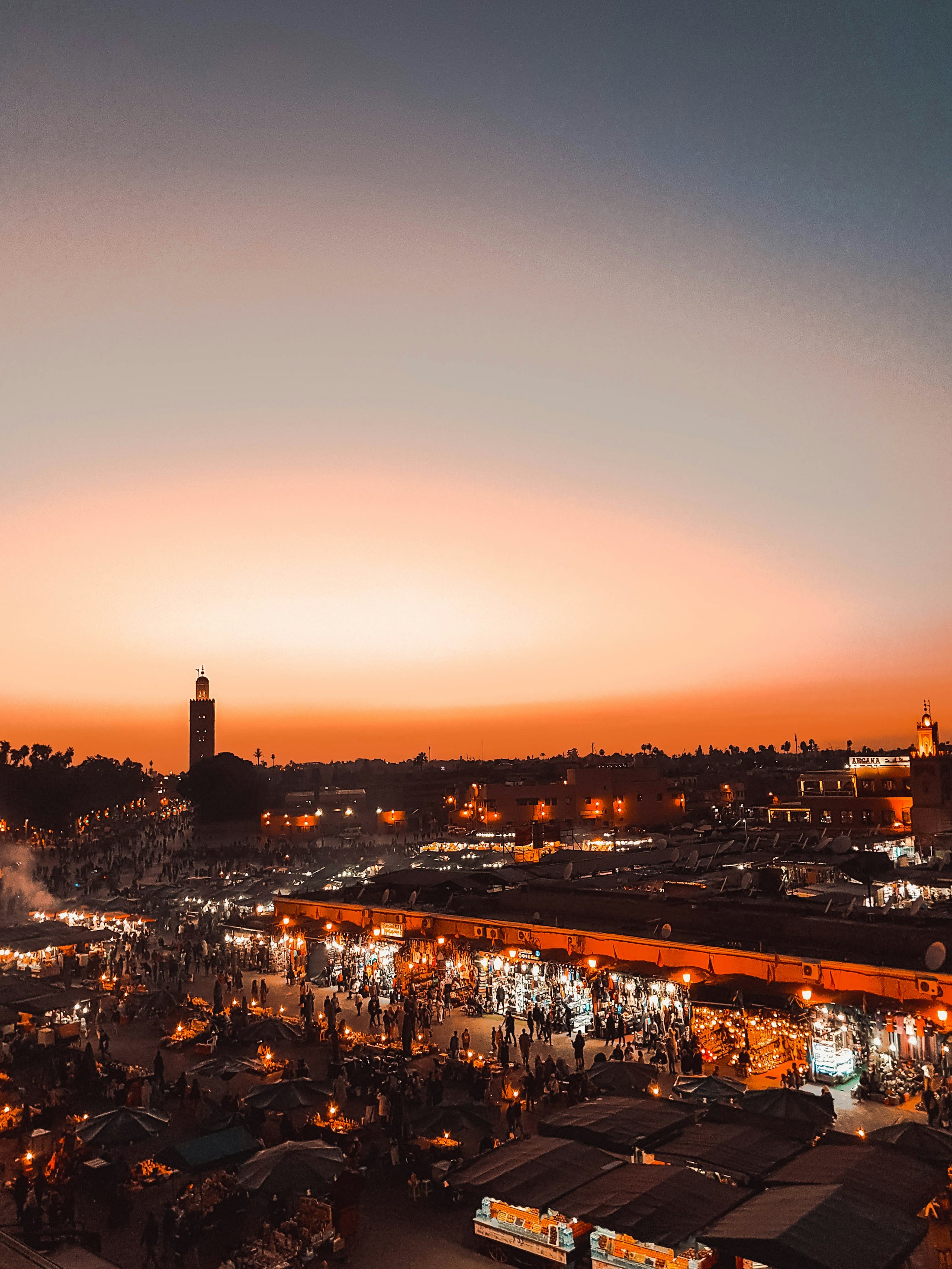
I know this is heresy. Every guide, every blog, every travel show sends you to the smoke-clouded food stalls on Jemaa el-Fna at sunset. And the atmosphere is real — the drums, the storytellers, the snail-broth vendors. But the food at most stalls has declined sharply over the past decade, priced for tourists and cooked for speed. The harira is thin. The merguez sits on the grill too long. I've gotten sick twice.
If you want street food in the Mouassine area, walk instead to the stalls on Rue Bab Doukkala near the Bab Doukkala mosque. The msemen vendor at the corner — no name, just a woman with a griddle and a plastic stool — sells the best flaky semolina flatbread I've eaten anywhere in Morocco, 3 MAD per piece. She's there from about 7 a.m. to noon.
Stay in Marrakech
Top-rated hotels near Marrakech
Best locations · Verified reviews · Free cancellation
View deals
Expedia →5. The 9:30 p.m. question: what to wear when the city is still 38°C
Riad suppers are private homes, not restaurants. Dress matters, but not in the way Westerners assume. Shoulders covered. Linen, not athleisure. Shoes you can slip off at the door, because many courtyard floors are zellij tile that the hosts don't want scratched.
The heat doesn't really break until 10 p.m. in July, so the first hour of any supper is the hardest. Most riads have no air conditioning in the courtyard — they rely on the physics of the building itself, thick walls and cross-ventilation. Bring a cotton scarf. You'll use it to blot your neck between courses, and it reads as polite rather than slovenly.
Pro tip: Carry a small handheld fan — the kind you can buy for 15 MAD at the Mouassine fountain souk stalls. Nobody local will think twice about it.
6. Three other tables worth the heat
La Table Al Badia, inside Riad Al Badia on Derb l'Hôtel, does a Friday-night menu that leans Fassi rather than Marrakchi — pastilla with pigeon, not chicken, and a saffron-apricot lamb shoulder that takes six hours. Around 800 MAD per person.
Riad Jaaneman on Derb Sidi Bouamar is smaller — eight guests maximum — and the cook, a woman named Fatima who worked for twenty years in a private household in Guéliz, prepares a single tagine each evening based on what she bought at the souk that morning. No set menu. No choices. 400 MAD, tea included.
Then there's Le Jardin, at 32 Souk Sidi Abdelaziz, which operates more like a conventional restaurant but shifts to a supper-club format on Wednesdays in summer. The courtyard is planted with banana trees and bougainvillea, and the apricot tarte tatin they serve in season — caramelized almost to the point of burning, served with crème fraîche — is the best dessert I've eaten in the medina. Mains run 120–180 MAD. Honestly, Le Jardin's regular restaurant menu is forgettable; go only on a Wednesday.
Pro tip:At Riad Jaaneman, Fatima won't cook for walk-ins. You need to call the riad's landline the day before. The number is posted on a card at the Mouassine fountain.
7. After supper: the medina at midnight
The walk home is half the experience. Mouassine at midnight in summer is a different quarter — cooler by ten degrees, empty except for cats and the occasional motorbike threading through a passage too narrow for cars. The fountains are still running. Brass lanterns above the riads throw patterns on the plaster walls.
I made the mistake once of booking a taxi back to Guéliz after a late supper. The driver couldn't find the riad, I couldn't explain the derb, and we spent twenty minutes circling Bab Doukkala. Stay in the medina. Walk.
The Mouassine fountain — the sixteenth-century sabil on Rue Mouassine — is worth a stop on your way back. At midnight, when the souvenir shops are shuttered and the square is empty, you can actually hear the water. That sound, after four hours of heat and apricots and conversation with strangers around a shared table.
Stay in Marrakech
Top-rated hotels near Marrakech
Best locations · Verified reviews · Free cancellation
View deals
Expedia →Essential tips
Riad suppers in Mouassine rarely start before 9:30 p.m. in summer. Eat a late lunch and skip the 7 p.m. hotel dinner trap — you'll spoil your appetite and your wallet.
Carry cash in dirhams. Most private riad suppers don't accept cards, and the ATMs inside the medina near Rue Mouassine charge 30-40 MAD in fees. Use the BMCE ATM on Avenue Mohammed V in Guéliz before entering.
Bring your own water bottle and refill it at your riad before dinner. Hosts usually provide tea and almond milk, but bottled water at the table isn't always included and asking can feel awkward in a home setting.
GPS is unreliable in the Mouassine derbs. Screenshot the walking directions your host sends or, better, ask for a landmark reference — 'the green door opposite the hammam' is more useful than a pin that lands you on a rooftop.
Ready to visit Marrakech?
Book your hotel, flights, and activities through our Expedia-powered search.


