In This Guide
- 1.Start at Badi Chaupar, not Hawa Mahal
- 2.The gem cutters of Johari Bazaar work in back rooms you can actually enter
- 3.Pre-monsoon lassi is a different drink
- 4.Tripolia Gate to Maniharon ka Rasta: the lac bangle alley
- 5.Why Nahargarh at sunset is not worth the auto-rickshaw fare
- 6.Dinner is dal-baati or nothing
The light turns pink around 5:30 p.m. in May, and the sandstone walls of Jaipur's old city stop looking like a postcard backdrop and start looking like what they are — a functional perimeter around a neighbourhood where people live, cut gemstones, sell paan, and argue about cricket. I've walked this grid in December and in the pre-monsoon heat of late June, and the June version is better. Fewer tour buses, more desperation lassi, and the gem-cutting workshops stay open later because the cutters are waiting for the evening cool before heading home.
This is a dusk walk. Don't come at 10 a.m. with your hotel's guided tour. Come at five, stay until eight, eat twice.
1. Start at Badi Chaupar, not Hawa Mahal
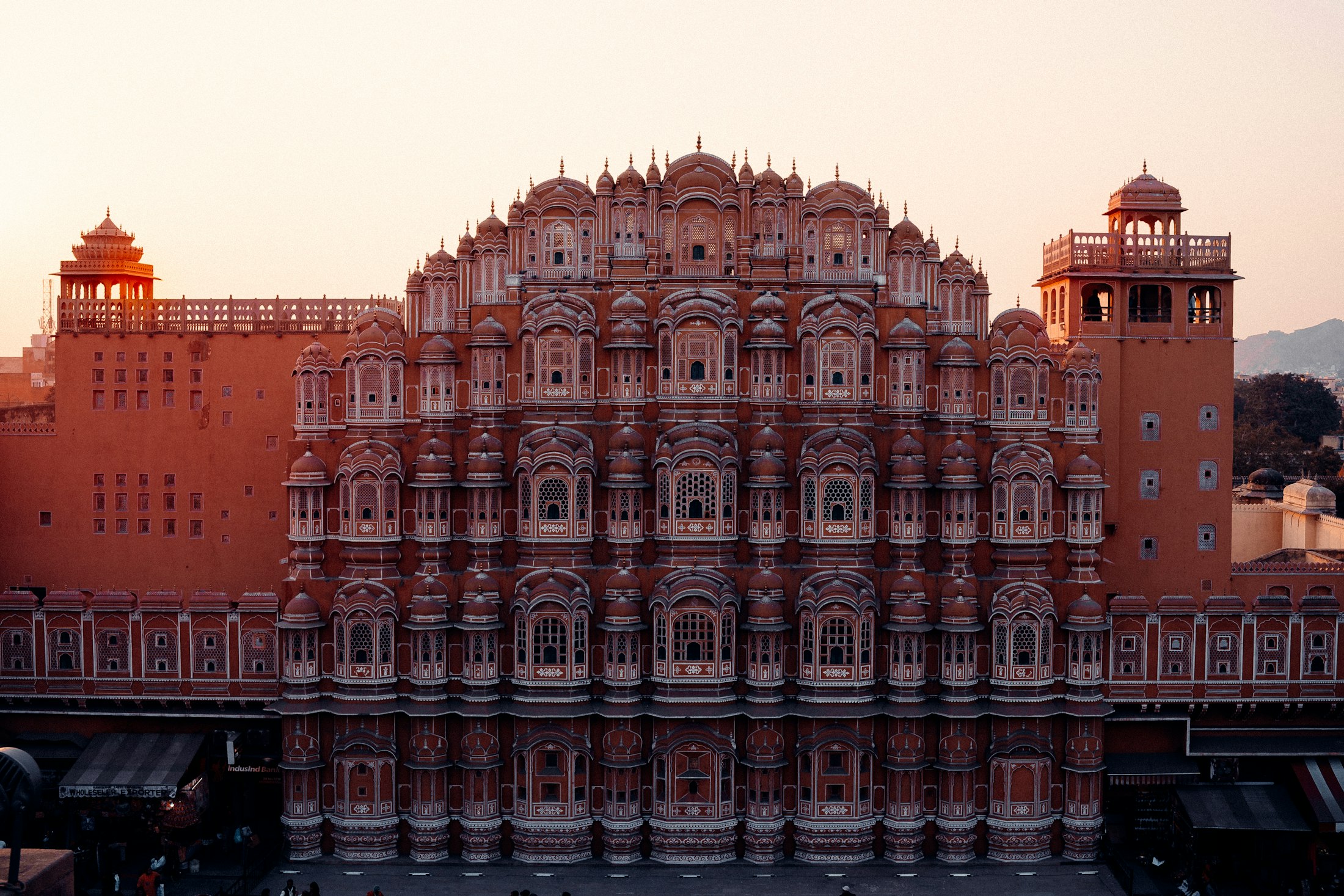
Every rickshaw driver will drop you at Hawa Mahal's front facade and expect a tip. Skip it. The building is genuinely more interesting from behind — from the interior courtyard side on Pratapeshwar Lane — and you can see it later for free when the crowd thins after 6 p.m.
Instead, start at Badi Chaupar, the big intersection where Johari Bazaar meets Tripolia Bazaar. Stand near the LMB sweet shop (Laxmi Mishthan Bhandar, est. 1727, if the sign's to be believed) and orient yourself. The old city is a nine-block grid, and this crossroads is the hinge. From here you walk south into Johari Bazaar, where the gem trade actually happens.
Pro tip:LMB's ghevar — a disc-shaped Rajasthani sweet drenched in syrup — is ₹80-120 per piece depending on size. Get one before the walk. You'll need the sugar.
2. The gem cutters of Johari Bazaar work in back rooms you can actually enter
Johari means jeweller, and the bazaar earns the name. The ground-floor shops sell finished kundan and polki jewellery at tourist markups, but the work happens upstairs or in the alleys behind. Last time I was here in June, a shop owner on the west side of the bazaar — roughly opposite Tholia Jewellers — waved me up a narrow staircase to watch two men faceting emeralds on a hand-cranked lap wheel. No charge, no sales pitch. They just seemed bored.
The cutting sound is distinctive: a thin, wet hiss, not the grinding screech you'd expect. The stones are small, mostly under two carats, because Jaipur processes lower-grade emeralds and garnets in volume rather than prestige pieces. The prestige stuff goes to Surat or Antwerp.
You won't find these workshops on Google Maps. Walk Johari Bazaar between Badi Chaupar and Sanganeri Gate, look for staircases with stone dust on the steps, and ask. "Cutting ka kaam?" worked for me.
3. Pre-monsoon lassi is a different drink
In May and June, Jaipur's lassi shops adjust the recipe. More water, more ice, sometimes a pinch of black salt. The result is thinner than the yoghurt bricks tourists photograph in winter, and it's better — a rehydration drink rather than a dessert.
The consensus pick is Lassiwala on MI Road, the one with the metal urns. I think it's fine. Not revelatory. The lassi at Badshah Lassi near Badi Chaupar is saltier and served in unfired clay cups that dissolve into the drink slightly, adding an earthy taste. ₹30 for a standard cup. The clay-cup thing sounds like a gimmick until you taste the difference.
Pro tip:Ask for "namkeen" (salty) rather than "meethi" (sweet). The sweet version buries the yoghurt flavour under sugar.
4. Tripolia Gate to Maniharon ka Rasta: the lac bangle alley
Walk west from Badi Chaupar along Tripolia Bazaar and turn into Maniharon ka Rasta, the bangle-makers' lane. The craft here is lac — a resin secreted by insects, heated into rods, then shaped into bangles over a small flame. The workshops are open-fronted and the heat from the burners in May is punishing, which is partly why the artisans work early morning and after 5 p.m.
Prices range from ₹50 for a plain set to ₹400-500 for bangles embedded with small stones. Bargain, but not aggressively — these are produced by hand in real time in front of you, and the margin isn't what you think it is.
Single file. The lane is narrow enough that two people can't walk abreast comfortably.
Pro tip:Lac bangles crack in cold, dry climates. If you're bringing them to a Northern European or North American winter, wrap them in cloth and store them with a damp paper towel for the first week.
Stay in Jaipur
Top-rated hotels near Jaipur
Best locations · Verified reviews · Free cancellation
View deals
Expedia →5. Why Nahargarh at sunset is not worth the auto-rickshaw fare
Every guide tells you to catch sunset from Nahargarh Fort above the city. I've done it. The view is good, but the logistics are bad: ₹300-500 for an auto-rickshaw up, a ₹200 entry fee, a crowd of people holding phones at arm's length, and then the problem of getting back down after dark when the autos triple their price. Skip it.
Watch the sunset from the rooftop of any old-city haveli restaurant instead. Wind View Café on the top floor near Hawa Mahal charges nothing for the view and ₹150-250 for dal-baati-churma. The food is average, but the angle — looking north across the pink rooftops toward the Aravalli ridge — is the same view you'd get from the fort, just inverted.
6. Dinner is dal-baati or nothing
After dark the old city shifts. The jewellery shops pull their shutters, the food stalls take over, and the temperature drops just enough that walking feels possible again.
Dal-baati-churma is the dish. Hard wheat-flour balls baked in coals, broken open, doused in ghee, eaten with a spiced five-lentil dal and a sweet crumbled wheat dessert called churma. Heavy, oily, and it makes sense after two hours of walking in 42-degree heat. Rawat Mishthan Bhandar on Station Road (technically outside the walled city, about a 10-minute walk south from Sanganeri Gate) does a reliable version.
I made the mistake once of ordering a pizza at a rooftop café near Johari Bazaar — paneer tikka pizza, ₹350 — and spent the rest of the night regretting both the flavour and the principle.
The old city gets quiet by 9:30 p.m. on weeknights. Walk out through any gate, find an auto, go back to wherever you're sleeping. The city doesn't manufacture a poetic ending to the evening, and neither should you.
Pro tip:Rawat's pyaaz kachori (onion-stuffed fried pastry, ₹25-30 per piece) is a better reason to go there than the dal-baati. Get both.
Stay in Jaipur
Top-rated hotels near Jaipur
Best locations · Verified reviews · Free cancellation
View deals
Expedia →Essential tips
Wear shoes you can slip on and off — you'll remove them entering some workshops and all temples. Sandals with a back strap work better than flip-flops on the broken pavement.
Pre-monsoon Jaipur hits 40-45°C. Carry a one-litre bottle minimum. Bisleri 1L is ₹20 at any corner shop — check the seal before you pay.
Auto-rickshaw fares inside the walled city should be ₹30-80 for short hops. Agree on the price before getting in. Uber works in Jaipur but drivers often can't navigate the old city lanes and will call you repeatedly asking for directions.
Don't photograph the gem cutters without asking. Most will say yes. Some won't. The ones who won't are cutting stones they'd rather not document.
Ready to visit Jaipur?
Book your hotel, flights, and activities through our Expedia-powered search.


