In This Guide
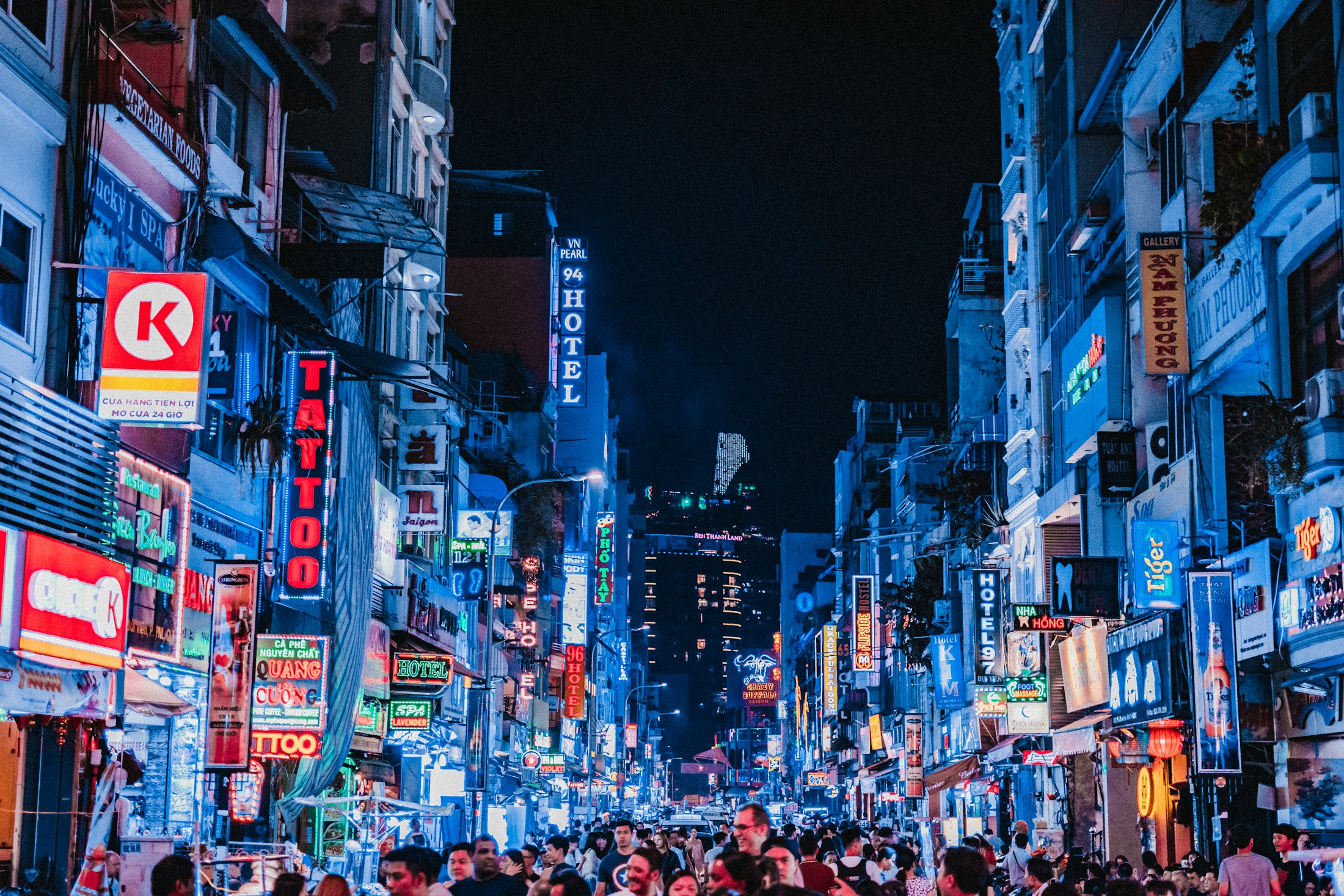
The rain quit around seven, and the streets of Phú Mỹ Hưng exhaled. Water pooled in the decorative gutters along Nguyễn Đức Cảnh, and the Korean signage — there's more of it than Vietnamese on some blocks — reflected off the wet pavement in pink and blue. I walked from my hotel toward the side streets between Crescent Mall and the canal, where a specific kind of restaurant has been multiplying: not Korean, not Vietnamese, but something born from proximity and shared lunch breaks.
District 7's Korean population has been here long enough that the food has stopped being polite. The early years gave us bibimbap with fish sauce on the side, tentative compromises. What's happening now is less diplomatic and more interesting — cooks who grew up eating both cuisines and see no reason to keep them apart. The results aren't always successful, but the best ones have a logic that feels inevitable once you taste it.
1. The broth at Hanwoori that nobody orders correctly
Hanwoori sits on the ground floor of a residential building on Phạm Thái Bường, across from a GS25 convenience store. The menu is long and laminated and most tables order the galbi or the cheese dakgalbi. That's fine. But the item worth sitting down for is the canh kimchi bò, a kimchi stew made with local beef shank instead of pork belly.
The broth is the color of roof tiles. It has the sour depth of well-fermented kimchi — the restaurant makes its own, and it sits longer than most Korean places bother with — but the beef gives it a sweetness that pork wouldn't. There's a scattering of sliced ớt hiểm on top, the small pointed chili that Vietnamese grandmothers keep in jars on their counters. It doesn't need it. The fermentation already carries enough heat. But someone in the kitchen decided this is how the dish goes, and I'm not going to argue with someone who's been making this longer than I've been eating it.
A bowl runs about 85,000 VND. They open at 10:30 a.m. but the stew is better after noon, once the pot has had time to reduce.
Pro tip:Ask for cơm trắng (plain rice) instead of the default portion that comes with the stew — the default is too large and you'll stop eating the broth to finish it.
2. Skip the Korean BBQ strip on Hà Huy Tập
I'll save you an evening. The cluster of Korean barbecue restaurants along Hà Huy Tập, between the Sunrise towers — the ones with the extraction fans roaring and the LED-lit meat displays — are fine if you want exactly what you'd get in Koreatown anywhere. Standard marinated galbi, ssamjang from a squeeze bottle, lettuce that was cut too early. Prices hover around 350,000–500,000 VND per person, which is high for District 7 and not justified by anything on the grill.
The exception is a small place called Gogi House PMH, though even that recommendation comes with a caveat: go for the side dishes, not the meat. Their japchae uses Vietnamese glass noodles, thinner than Korean dangmyeon, tossed with rau muống (morning glory stems) and sesame oil. It's 65,000 VND and it's the most honest dish on the street.
Stay in Ho Chi Minh City
Top-rated hotels near Ho Chi Minh City
Best locations · Verified reviews · Free cancellation
View deals
Expedia →3. Bánh mì meets gochujang, and it works better than it should
There's a cart. Not a restaurant — a cart with a plastic awning, parked most evenings on Nguyễn Lương Bằng near the Saigon South International School gate. The woman who runs it is Vietnamese, married to a Korean man, and she makes a bánh mì filled with bulgogi, pickled daikon done the Korean way (thicker cut, sweeter brine), and a smear of gochujang mayo that she mixes in a takeaway coffee cup.
I've heard people call this "fusion street food" in the tone reserved for things that shouldn't exist. I disagree. The bread is proper bánh mì bread — shattering crust, almost hollow inside — and the fillings follow the same structural logic as any bánh mì: protein, acid, fat, crunch. The gochujang doesn't fight the bread. It leans into it.
35,000 VND. She's usually there by 5 p.m. and gone by 8. No signage. Red awning, small speaker playing trot music.
Pro tip: She also makes a kimchi bánh mì with pâté. It sounds chaotic but the pâté rounds out the sourness. Worth trying once.
4. What a cold noodle shop taught me about District 7's afternoon
Last time I was here, in March, the humidity was so total that my notebook pages buckled before I could write on them. I ducked into a naengmyeon place on Tôn Dật Tiên called Myeongdong Noodle and ordered mostly to justify sitting in the air conditioning.
The bowl arrived fast. Buckwheat noodles in an iced beef broth, topped with sliced Asian pear and half a boiled egg — classic Pyongyang-style, nothing Vietnamese about it. Except. The mustard on the side table was Colman's-style, the bright yellow kind you see at phở stalls, not the pale wasabi-adjacent paste you'd get in Seoul. And the vinegar was Vietnamese white vinegar, sharper than Korean rice vinegar, which made the broth snap differently when you stirred it in. Small calibrations. The kind of thing that happens when a kitchen sources locally for long enough that the dish drifts.
A large bowl is 95,000 VND. The restaurant is open daily from 10 a.m. to 9 p.m., though they sometimes run out of broth by late afternoon on weekends. The dining room seats maybe thirty people and is quiet by 2 p.m. — that dead hour in District 7 when the rain threatens but hasn't started, and the only sound is chopsticks against stainless steel bowls.
Pro tip: If you want the broth at its coldest, go right at opening. By mid-afternoon the ice situation gets unreliable.
Stay in Ho Chi Minh City
Top-rated hotels near Ho Chi Minh City
Best locations · Verified reviews · Free cancellation
View deals
Expedia →Essential tips
Grab drivers in Phú Mỹ Hưng know Korean restaurant names better than addresses. Say the restaurant name, not the street number — it's faster.
Rainy season (May–November) floods certain underpasses near Nguyễn Văn Linh. If your driver suggests a longer route, take it. The shortcut can strand you for an hour.
Most Korean-run restaurants in District 7 accept card, but the carts and smaller Vietnamese-run spots are cash only. Keep small bills — breaking 500,000 VND at a bánh mì cart is awkward for everyone.
Lunch service at Korean restaurants here starts later than typical Vietnamese hours. Don't show up at 11 expecting a full kitchen — noon is safer.
Ready to visit Ho Chi Minh City?
Book your hotel, flights, and activities through our Expedia-powered search.


