In This Guide
- 1.Hải Thượng Lãn Ông and the wall of dried things
- 2.Skip the Binh Tay Market tour groups
- 3.Chè in District 5 is not what you had in the backpacker district
- 4.The temples you can actually enter quietly
- 5.Lunch is a hủ tiếu problem
- 6.Fabric and thread shops on Soạn Sơn Đông
- 7.Where to stay if you're actually sleeping in District 5
- 8.After dark on Nguyễn Trãi
- 9.Getting in, getting out, not getting lost
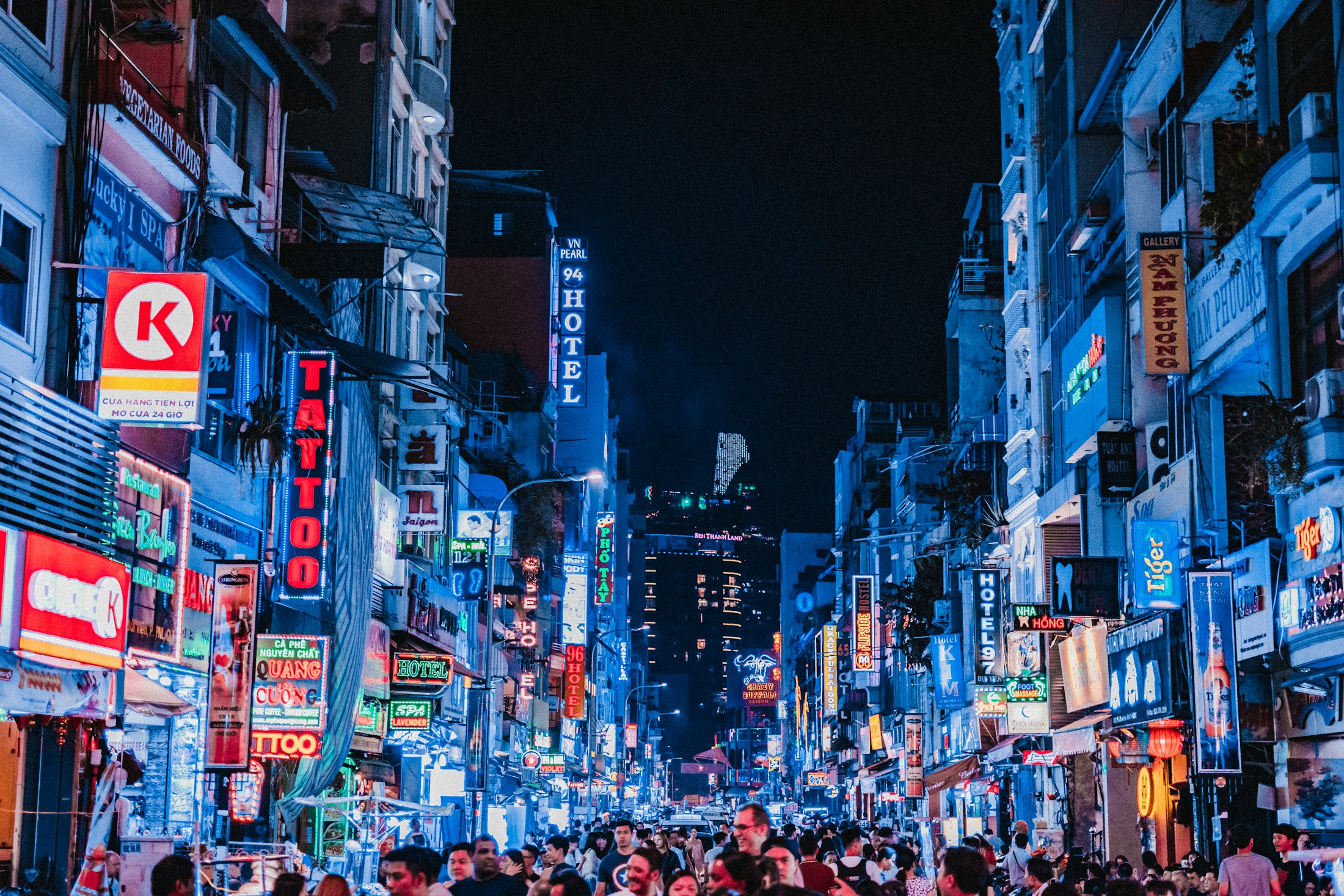
The rain started at 2 p.m., which is what rain does in Saigon between May and November. I was on Hải Thượng Lãn Ông street with no umbrella and a pair of canvas shoes already turning the color of weak tea. District 5 doesn't care about your footwear plans.
Chợ Lớn — Saigon's Chinatown, if you need the shorthand — is better in the rain anyway. The apothecary lanes smell stronger when they're wet. The chè parlours fill up with people who'd otherwise be somewhere else. The tourists thin out, which in District 5 means going from almost none to actually none. I've walked these blocks across three separate trips, always in the wet season, never on purpose.
1. Hải Thượng Lãn Ông and the wall of dried things
This is the street. Entire blocks of shop-houses selling traditional Chinese medicine ingredients, stacked floor to ceiling in glass jars and plastic bins. Dried seahorses. Goji berries in 5-kilo sacks. Sliced astragalus root bundled with rubber bands. The air is dense with a smell I can only describe as woody licorice cut with something fungal.
Most shops don't have names worth noting — they're family operations with hand-painted signs in Chinese and Vietnamese. Walk from the intersection with Phùng Hưng east toward Triệu Quang Phục and you'll pass maybe forty of them in 300 meters. Prices are negotiable but not dramatically so; a bag of dried longan runs about 80,000–120,000 VND depending on grade. Nobody will hustle you. Nobody especially cares if you buy.
Weekday mornings before 10 a.m., when the wholesalers are loading motorbikes with orders. By afternoon the shutters start coming down.
Pro tip:If you want to buy something but don't speak Cantonese or Vietnamese, pointing works fine. Most shops have a calculator they'll punch prices into for you.
2. Skip the Binh Tay Market tour groups
I know, every guide tells you Binh Tay Market is the heart of Chợ Lớn. It is, in the sense that it's the largest covered market in the area and has a renovated yellow facade that photographs well. But the ground floor is mostly wholesale dry goods — giant sacks of rice, industrial quantities of MSG — and walking through it at peak hours is mostly being in the way of people doing actual commerce.
The courtyard is fine for a photo. Give it fifteen minutes. Then leave.
The surrounding streets — Tháp Mười, Phan Văn Khỏe — are where the interesting food happens. The vendors who set up along the exterior walls sell bánh bò, bánh tiêu, and various fried things that cost between 5,000 and 15,000 VND each. A bánh tiêu — hollow fried sesame bread — eaten standing up in light rain is enough.
3. Chè in District 5 is not what you had in the backpacker district
The chè (Vietnamese sweet soup/dessert drink) served in District 1 tourist restaurants is a diluted, over-iced version of what you get here. District 5 chè parlours tend toward the Chinese-influenced end — heavier on black sesame, taro, lotus seed, red bean. Less coconut milk drowning everything.
Chè Hiển Khánh at 588 Nguyễn Trãi has been the one I return to. The chè thập cẩm (mixed dessert soup) is around 30,000 VND and arrives in a tall glass with about eight layers of things you can't immediately identify. Sweet potato. Taro. Jelly cubes. Tapioca pearls. Something crunchy that might be water chestnut. You stir the whole thing together and accept the chaos.
Open until about 10 p.m. most nights. Not air-conditioned. Plastic stools.
Pro tip:Order the chè nóng (hot version) if it's raining. Most people default to cold, but the hot black sesame version is better when you're already damp.
4. The temples you can actually enter quietly
Thiên Hậu Temple (Chùa Bà) on Nguyễn Trãi gets the most foot traffic, and it's worth the stop — massive ceramic friezes on the roof, spiral incense coils hanging from the ceiling that burn for weeks. Free entry. It's a functioning place of worship, not a museum, so dress accordingly and keep your voice down.
But the one I prefer is Tam Sơn Hội Quán, a few doors down at 118 Triệu Quang Phục. Smaller. Emptier. The interior stonework is 19th-century Fujian craftsmanship and nobody's elbowing you for a selfie angle. Last time I was there in September, I was the only visitor for twenty minutes.
Ông Bổn Pagoda (Nhị Phủ Miếu) on Hải Thượng Lãn Ông is another — look for the narrow entrance between the medicine shops. All three are free, all three are active, all three will be burning incense that saturates your clothes for the rest of the day.
5. Lunch is a hủ tiếu problem
District 5 runs on hủ tiếu — rice noodle soup with pork, shrimp, or both, served with a side plate of herbs and bean sprouts. The Chinese-Vietnamese version here uses a clearer, sweeter pork bone broth than what you'll find elsewhere in the city. Every block has at least one place serving it.
Hủ Tiếu Sa Đéc Cô Nguyệt on Trần Hưng Đạo B is the one that kept coming up when I asked around. A bowl of hủ tiếu nam vang (Phnom Penh style, with ground pork and shrimp) runs about 55,000 VND. It's served with a small plate of lettuce, herbs, and chili slices that you tear and add yourself.
You can also get hủ tiếu khô — the dry version, where the noodles come tossed in sauce with the broth on the side. I think the dry version is better. This is not a popular opinion among the people I've eaten with.
Pro tip: Ask for extra hành phi (fried shallots) if they have them. Free at most places. Transforms the broth.
6. Fabric and thread shops on Soạn Sơn Đông
Not food. Not temples. Just a street of fabric shops near Chợ Lớn's textile quarter, concentrated around Trần Nhân Tôn and the smaller alleys feeding into it. Cotton by the meter. Industrial spools of thread in every color. Ribbons, elastic, buttons sorted by size in shallow trays.
I made the mistake of going on a Saturday and couldn't move. Weekday mornings again.
The shops sell wholesale primarily, but will cut retail lengths if you ask. Cotton runs from about 40,000 VND per meter for basic prints. Not a place you go for souvenirs, unless your idea of a souvenir is six meters of floral cotton and a spool of vermilion thread. Which, honestly, isn't bad.
7. Where to stay if you're actually sleeping in District 5
Most visitors stay in District 1 or District 3 and take a bus or Grab over. That works — the number 1 bus from Bến Thành to Chợ Lớn takes about 30 minutes and costs 6,000 VND. But if you want to be here for the 6 a.m. market energy, sleeping nearby makes sense.
The hotel options in District 5 are not glamorous. This is not a neighborhood that has been styled for foreign visitors, and I consider that a feature. A few guesthouses and mid-range hotels along Trần Hưng Đạo and Châu Văn Liêm offer clean rooms with air conditioning for 400,000–700,000 VND a night. Don't expect English-speaking front desks at the budget end.
Check the location carefully before booking — District 5 is dense, and a block can make the difference between sleeping above a quiet alley and sleeping above a loading dock.
Pro tip: Ear plugs. Seriously. Wholesale deliveries start before dawn and the trucks are not quiet about it.
Stay in Ho Chi Minh City
Top-rated hotels near Ho Chi Minh City
Best locations · Verified reviews · Free cancellation
View deals
Expedia →8. After dark on Nguyễn Trãi
Nguyễn Trãi at night is mostly neon pharmacy signs, motorbike headlights, and the glow from chè and dessert shops that stay open late. It's not a nightlife district. There are no rooftop bars. Good.
The stretch between Châu Văn Liêm and Học Lạc has a few seafood restaurants with plastic furniture spilling onto the sidewalk — the kind of place where you point at a tank and they weigh the creature and tell you the price. Expect to pay 200,000–400,000 VND per person for a seafood dinner with beer. Bia Saigon tallboys run about 18,000 VND at street-level prices.
A midnight walk back along Hải Thượng Lãn Ông is a different thing from the daytime. The medicine shops are shuttered, the street is empty, and the smell of dried herbs lingers like something left behind on purpose.
9. Getting in, getting out, not getting lost
District 5 is roughly bounded by Hùng Vương to the north and Nguyễn Trãi / Trần Hưng Đạo to the south and east. The apothecary lanes, temples, and chè parlours are all within a walkable rectangle of about one square kilometer. You don't need a guide.
From District 1: the number 1 bus from Bến Thành Market bus station, or a Grab bike for around 25,000–40,000 VND depending on surge. Regular metered taxis will also do it — just don't take one from a hotel doorman who's getting a commission.
Google Maps works. Street signs are bilingual in Vietnamese and Chinese. If you're lost, walk toward the smell of dried chrysanthemum and you'll end up back on Hải Thượng Lãn Ông eventually.
Bring shoes that can get wet.
Pro tip: Download the offline map for District 5 before you go. Cell signal drops out in some of the narrower alleys between Hải Thượng Lãn Ông and Triệu Quang Phục.
Stay in Ho Chi Minh City
Top-rated hotels near Ho Chi Minh City
Best locations · Verified reviews · Free cancellation
View deals
Expedia →Essential tips
Wet season (May–November) means afternoon downpours almost daily. They usually last 30–90 minutes. Duck into a chè shop and wait it out — this is what the locals do.
Carry cash in small denominations. Most shops and street vendors in District 5 don't take cards. ATMs are on Nguyễn Trãi and near Binh Tay Market.
The number 1 bus (Bến Thành–Chợ Lớn) is 6,000 VND and air-conditioned. Runs roughly every 10–15 minutes. Board at the Bến Thành station on Hàm Nghi, not on the main road.
Wear waterproof sandals or shoes you don't care about. The streets flood in patches during heavy rain. Leather is a bad idea.
Ready to visit Ho Chi Minh City?
Book your hotel, flights, and activities through our Expedia-powered search.


