In This Guide
- 1.Ốc Đào and the Art of Arriving Before the Rain
- 2.Hẻm 75: The Alley Kitchen That Doesn't Want to Be Found
- 3.Reading a Snail Menu When You Don't Read Vietnamese
- 4.Blood Cockles at Ốc Chị Em and Why the Rain Makes Them Better
- 5.The Drinking Protocol: Beer, Sugarcane, and Monsoon Hydration
- 6.Ốc Oanh After Midnight: When the Second Wave Arrives
- 7.Navigating the Flood: Getting In and Out of District 4 During Downpours
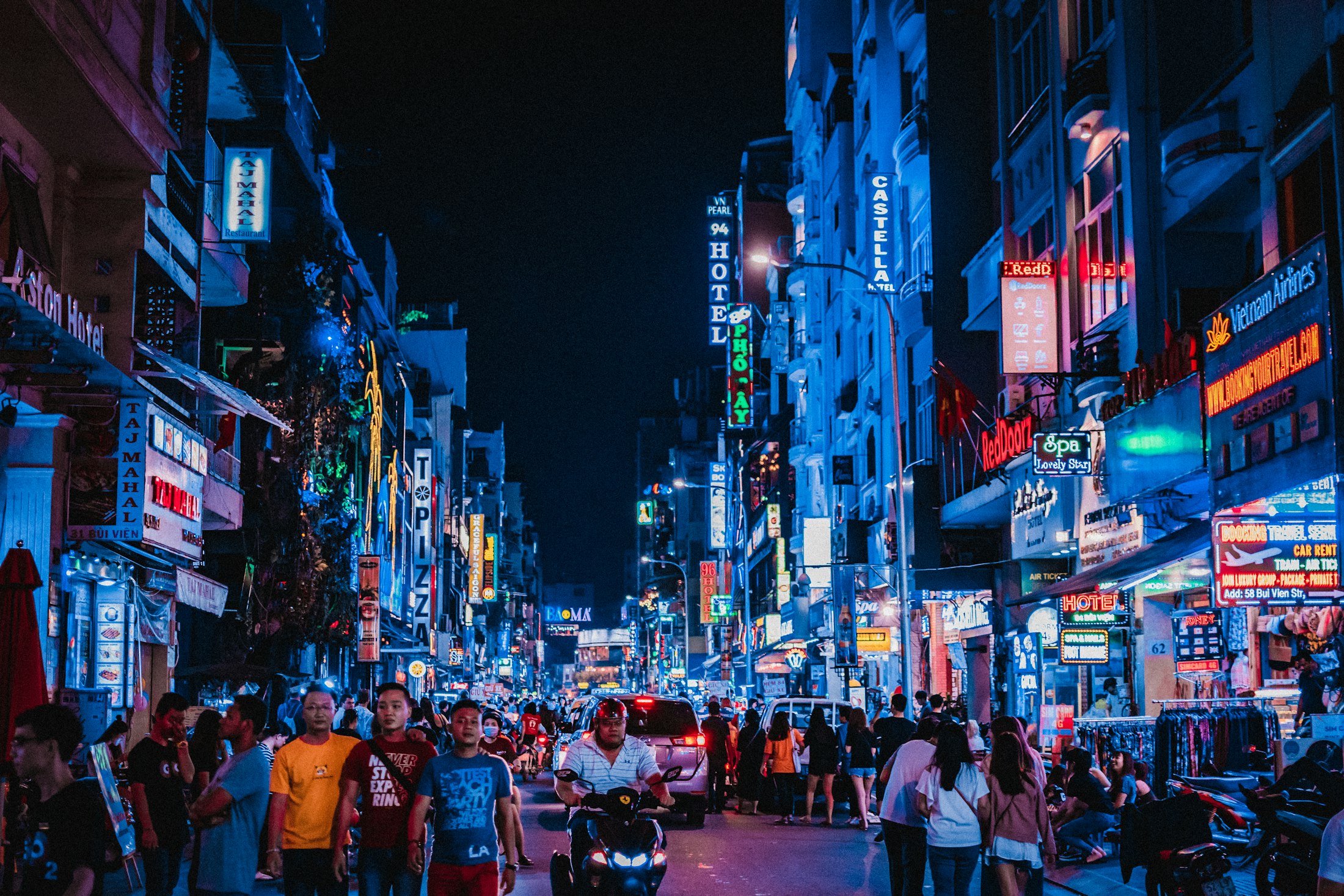
The first monsoon downpour arrives without warning in late May, turning District 4's narrow alleys into shallow rivers that reflect the blue-white glow of fluorescent kitchen lights. Plastic stools sink slightly into wet concrete as regulars duck under corrugated awnings, shaking off umbrellas before settling into the serious business of cracking snail shells with tiny pliers. The rain amplifies everything — the hiss of woks, the fragrance of lemongrass, the cold bite of a Saigon Green against your palm.
This guide maps the essential snail alley kitchens of District 4's Vĩnh Khánh Street corridor and its surrounding hẻm (alleyways) during early monsoon season, roughly May through July. The rains transform an already atmospheric dining scene into something theatrical, thinning tourist crowds while deepening flavors — vendors adjust their broths, add more chili, lean harder into warming aromatics. If you want to understand Ho Chi Minh City's most democratic culinary tradition at its most visceral, this is when and where you do it.
1. Ốc Đào and the Art of Arriving Before the Rain
Ốc Đào at 212 Vĩnh Khánh is the anchor of District 4's snail strip and the kitchen most visitors encounter first. It sprawls across both sides of the street, with staff ferrying platters through motorbike traffic. Arrive by 5:30 PM during monsoon season — the first squalls typically hit between 6 and 7 PM, and you want a seat under the deeper awning on the south side before the chaos.
Order the ốc len xào dừa first — tiny sea snails simmered in coconut milk with a punch of green chili that lingers on your tongue. The shells are impossibly small, requiring a safety pin or toothpick to extract each morsel, but the coconut broth pooling at the bottom of the bowl is the real prize. Tip it back like a shot when you finish.
Their sò điệp nướng mỡ hành — grilled scallops buried under a mound of scallion oil and crushed peanuts — is theatrically good when rain is hammering the tin roof above you. The shells arrive still bubbling. Use the small metal tongs provided rather than your fingers unless you enjoy blisters.
Skip the deep-fried options here during heavy rain — the humidity wreaks havoc on batter crispness. Stick to grilled and braised preparations, which actually improve in cooler, wetter conditions. The kitchen knows this too; watch how the grill station stays busiest when the storm peaks.
Pro tip:Ask for a seat at the back-left cluster near the kitchen pass on the south side — it's the driest zone during sideways rain and lets you watch the grill masters work the charcoal in real time.
2. Hẻm 75: The Alley Kitchen That Doesn't Want to Be Found
Turn into Hẻm 75 off Vĩnh Khánh and walk approximately forty meters past a motorbike repair shop until you see a woman running two portable gas burners under a blue tarpaulin. She has no signage, no menu, and no particular interest in being Instagram-famous. Regulars call her Chị Tư. She operates from roughly 5 PM until she runs out, which during monsoon season can be as early as 8 PM.
Her specialty is ốc hương — sweet whelks steamed with lemongrass and served with a salt-lime-chili dipping sauce she mixes fresh in small ceramic bowls. The ratio changes nightly depending on her mood and the limes available. During rain, she adds a whisper of ginger to the steaming liquid, which makes the flesh almost perfumed.
You eat standing or perched on a plastic crate. There is nowhere to put your bag that won't get wet. Bring a waterproof pouch for your phone and accept that your shoes are a lost cause.
Chị Tư charges roughly 80,000 to 120,000 VND per plate depending on market prices that day. She accepts only cash, given in exact or near-exact amounts. Don't ask for a receipt. Don't try to photograph her face — she has refused before and will refuse again.
Pro tip: Bring your own wet wipes — Chị Tư provides a communal basin of water for hand washing, which during monsoon season overflows constantly. A small pack of antibacterial wipes saves you the awkwardness of the shared bowl.
Stay in Ho Chi Minh City
Top-rated hotels near Ho Chi Minh City
Best locations · Verified reviews · Free cancellation
View deals
Expedia →3. Reading a Snail Menu When You Don't Read Vietnamese
District 4's snail kitchens rarely offer English menus, and Google Translate struggles with regional shellfish terminology. Learn five words and you can navigate any stall: ốc (snail), sò (clam/shellfish), nướng (grilled), xào (stir-fried), and hấp (steamed). Combine them with pointing and you'll eat spectacularly well without a single fluent sentence.
The critical distinction is between preparation styles, not species. Nướng mỡ hành — grilled with scallion oil — is the crowd-pleaser. Rang muối ớt — stir-fried with chili salt — delivers the most heat. Hấp sả — steamed with lemongrass — is the lightest, and during monsoon season's humidity, often the most refreshing despite the weather suggesting otherwise.
Watch what the table next to you ordered. Snail culture in District 4 is inherently communal — pointing at someone else's plate and raising your eyebrows is not rude, it's standard protocol. Most diners will nod enthusiastically and tell you the name of the dish, sometimes pulling up a photo on their phone to help.
Avoid ordering everything at once. Snail kitchens cook in waves, and dishes arrive at wildly different intervals. Order two plates, eat them, then order two more. This approach also lets you recalibrate based on spice tolerance — some chili-salt preparations in District 4 are genuinely brutal for the uninitiated.
Pro tip: Screenshot the Vietnamese names of five key dishes before you go — ốc len xào dừa, sò huyết nướng, ốc hương hấp sả, nghêu hấp, ốc mỡ rang muối — and show your phone to the kitchen. It earns immediate respect.
4. Blood Cockles at Ốc Chị Em and Why the Rain Makes Them Better
Ốc Chị Em at 196 Vĩnh Khánh sits three doors down from the more famous Ốc Đào but draws a distinctly local crowd. The plastic tables are lower, the lighting dimmer, and the menu leans harder into blood cockles — sò huyết — which the owners source from Cần Giờ mangrove estuaries southeast of the city. Early monsoon runoff enriches these estuaries, and regulars swear the cockles are plumper in June.
Order the sò huyết nướng — blood cockles grilled just until the shells crack open, so the interior stays rare and custard-soft. They arrive on a dented metal tray with a saucer of tamarind dipping sauce. Eat them within ninety seconds of arrival; they overcook from residual shell heat if you let them sit while fumbling with your phone camera.
The kitchen also does an exceptional chem chép xào bơ tỏi — baby clams stir-fried with butter and garlic — that pools a rich, vaguely French-inflected sauce at the bottom of the plate. Use the complimentary bánh mì slices to mop it up. Not traditional, but it works.
During heavy downpours, the staff stretch an additional tarp from the building's second-floor balcony, creating a waterproof pocket that fits roughly four tables. These fill immediately. If you can't get one, sit at the exposed tables and do what the locals do — keep eating, ignore the rain, and let your shirt dry on you later.
Pro tip:Ask for extra tamarind sauce (nước me) on the side — Ốc Chị Em's version has a fermented depth that works as a universal condiment across every dish they serve, and they don't charge extra for additional saucers.
5. The Drinking Protocol: Beer, Sugarcane, and Monsoon Hydration
Snail eating in District 4 is a drinking event. The default pairing is bia Saigon (the green-labeled lager), served over ice in short glasses. Yes, ice. The dilution is the point — it keeps the beer cold in ambient humidity that regularly exceeds 85 percent during monsoon, and it tempers alcohol absorption so you can eat for two hours without losing the plot.
If beer doesn't appeal, order nước mía — fresh sugarcane juice — which most snail stalls press to order from stalks leaning against the wall. During rain, ask for it with a squeeze of calamansi lime and no ice. The natural sweetness cuts through chili-salt preparations with a precision that beer can't match.
Do not order wine. Do not ask for cocktails. Several of the Vĩnh Khánh stalls now stock Tiger and Heineken for tourists, but these are priced at a premium and signal to the kitchen that you're unfamiliar territory. Stick with Saigon Green or 333 and you'll be treated like a regular within minutes.
Hydration becomes genuinely critical during monsoon snail sessions. The combination of chili, salt, alcohol, and humidity can dehydrate you faster than you realize. Alternate every two beers with a full glass of water or sugarcane juice. The kitchens all provide free trà đá (iced tea) — use it liberally between courses.
Pro tip:Order your beer by saying 'một Sài Gòn' (one Saigon) — using the Vietnamese name rather than pointing at the fridge signals familiarity and occasionally triggers slightly faster service during peak monsoon rush.
Stay in Ho Chi Minh City
Top-rated hotels near Ho Chi Minh City
Best locations · Verified reviews · Free cancellation
View deals
Expedia →6. Ốc Oanh After Midnight: When the Second Wave Arrives
Ốc Oanh at 534 Vĩnh Khánh operates later than its neighbors, often serving until 1 or 2 AM. During monsoon season, a second wave of diners arrives after 11 PM — shift workers, taxi drivers, young couples who waited out the evening rain. The atmosphere shifts from communal to intimate, with fewer tables occupied and the kitchen working at a slower, more deliberate pace.
This is when to order the ốc bươu xào me — apple snails stir-fried with tamarind sauce. The late-night kitchen has time to caramelize the tamarind properly, creating a glaze that clings to the massive shells. You crack them open and pull the spiral of meat out in one coiled piece. Dip in chili salt. Repeat.
Ốc Oanh also serves ếch chiên bơ — butter-fried frog legs — which technically aren't snails but appear on every late-night table. The batter is thin and shatters on contact. Order them alongside a plate of rau muống xào tỏi (garlic morning glory) to balance the richness with something green and iron-forward.
The post-midnight monsoon atmosphere at Ốc Oanh is District 4 at its most honest. The rain has usually stopped, leaving the street steaming. Puddles reflect motorbike headlights. The air smells of wet concrete and charcoal. Shells piled in front of you and nowhere else to be.
Pro tip:Ốc Oanh's late-night crowd skews younger and more English-conversant — if you want dining companions who can walk you through the menu in real time, this is the stall where serendipitous table-sharing actually leads to useful guidance.
7. Navigating the Flood: Getting In and Out of District 4 During Downpours
District 4 floods. Not metaphorically — the low-lying streets around Vĩnh Khánh can accumulate 15 to 30 centimeters of standing water during heavy monsoon bursts. Motorbike taxis (xe ôm via Grab) will still operate, but drivers charge surge pricing and some refuse the District 4 pickup during active flooding. Book your return ride before the rain starts or accept a wet wait.
The simplest approach is to walk from District 1 across the Cầu Ông Lãnh bridge, which stays above flood level and deposits you within a ten-minute walk of the Vĩnh Khánh strip. Wear waterproof sandals — not flip-flops, which float off your feet in moving water, and not sneakers, which become swamp ecosystems within minutes.
If you're caught in a genuine downpour mid-meal, stay put. Every snail kitchen in District 4 has weathered thousands of monsoon evenings and will not close because of rain. The water recedes within 30 to 60 minutes of the rain stopping. Use the time to order another round and watch the street theatre of scooters hydroplaning past your table.
District 4's flooding has improved significantly since the 2020 drainage upgrades along Tôn Thất Thuyết and Khánh Hội, but Vĩnh Khánh's interior alleys still pool badly. Keep your bag on your lap, not the floor. Elevate your feet on a stool rung if water creeps under the awning.
Pro tip:Download the Grab app before arriving and keep a pre-loaded Vietnamese SIM active — cell signal can weaken during heavy storms, and having the app ready to book means you're not fighting connectivity when the rain breaks and everyone simultaneously requests rides.
Essential tips
Wear waterproof sport sandals with heel straps, not flip-flops. District 4's flooded alleys have uneven surfaces and occasional open drain grates that claim a flip-flop every monsoon evening. Teva-style sandals with grip soles are the local expat standard.
Carry cash in denominations of 10,000 to 50,000 VND. Most Vĩnh Khánh stalls accept only cash, and breaking a 500,000 VND note at a street kitchen creates genuine logistical problems. ATMs cluster on Khánh Hội road, a three-minute walk from the strip.
Apply mosquito repellent before arriving — monsoon standing water breeds aggressive mosquitoes that swarm District 4's alley kitchens after sundown. DEET-based sprays from any Guardian pharmacy in District 1 work; citronella wristbands do not.
Peak snail hours are 6 to 9 PM, but monsoon rain thins crowds significantly between 7 and 8 PM — the sweet spot for seating without a wait. Arrive at 6:45 PM, let the first squall clear the uncommitted, then claim your table.
Charge your phone fully and bring a small power bank. Between translation apps, Grab booking, and the inevitable photo documentation, battery drain accelerates in humid conditions. A wet phone screen also requires more deliberate touch input — budget extra time for app navigation.
Ready to visit Ho Chi Minh City?
Book your hotel, flights, and activities through our Expedia-powered search.


