In This Guide
- 1.What bánh canh cua actually is
- 2.Bánh Canh Cua 87 Trần Khắc Chân — the one everyone names first
- 3.The alley stall on Vĩnh Khánh with no sign
- 4.Why June specifically
- 5.Quán Bánh Canh Ghẹ on Nguyễn Khoái
- 6.The pork knuckle question
- 7.Getting to District 4 without overpaying
- 8.What to drink with it (and what to skip)
- 9.After the soup
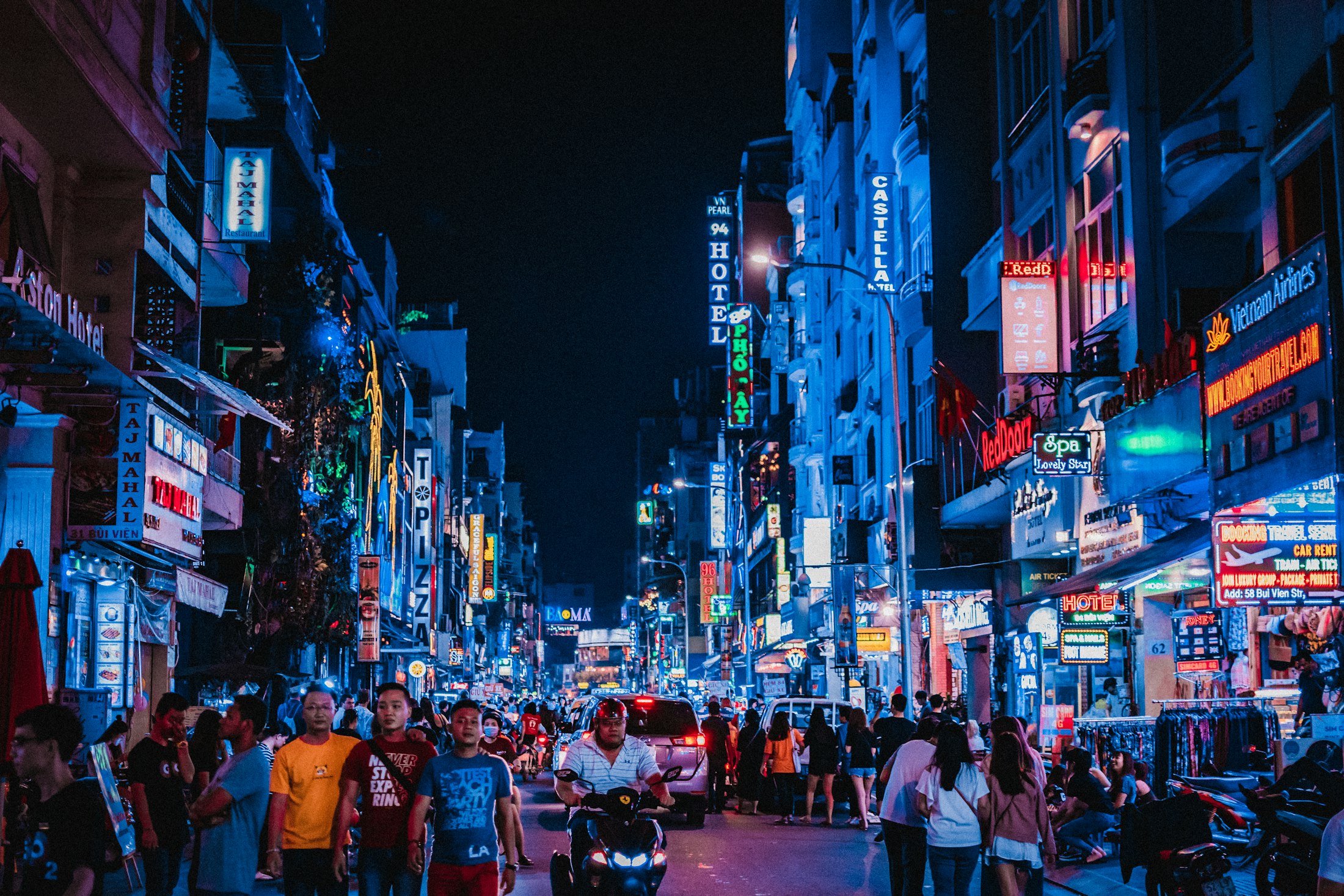
The rain started at 2 p.m., which is what rain does in Saigon in June. Within ten minutes the gutters on Tôn Đản Street were ankle-deep and every plastic stool in District 4 had been dragged six inches closer to the awnings. I was already sitting at one, holding a bowl of bánh canh cua with both hands, watching a woman across the lane crack crab shells with a cleaver the size of my forearm.
District 4 doesn't photograph well. It's flat, dense, threaded with alleys that dead-end at the river. But it has the highest concentration of crab noodle soup sellers in the city, and in the wet season they operate with a grim, steaming urgency that makes the whole neighborhood smell like tapioca starch and shellfish by noon.
1. What bánh canh cua actually is
Thick tapioca-and-rice-flour noodles in a crab-thickened broth. The noodles are slippery, almost translucent, closer to udon than to phở in texture. The broth gets its body from crab paste — sometimes crab roe — cooked down until it coats the back of a spoon.
Most bowls come topped with a crab claw or two, a quail egg, and a fistful of chopped green onion. Some places add pork knuckle. The good ones don't need to.
2. Bánh Canh Cua 87 Trần Khắc Chân — the one everyone names first
87 Trần Khắc Chân, District 1, technically. But it sits right at the edge of District 4 and draws the same crowd. A bowl runs 65,000–85,000 VND depending on extras. They open around 6:30 a.m. and sell out by early afternoon.
The broth here is sweeter than most, almost dessert-adjacent, which locals love and I find slightly cloying. I know this is a minority position. The line at 11 a.m. on a Tuesday suggests I'm wrong. But I'd rather have a saltier, more mineral version, and District 4 proper has those.
The crab claw presentation is generous, though — you get actual meat, not a decorative garnish.
Pro tip: Go before 8 a.m. on weekdays. By 10 the wait is 20+ minutes and the sidewalk seating situation becomes adversarial.
3. The alley stall on Vĩnh Khánh with no sign
Vĩnh Khánh is District 4's eat-street, which means every food blog has covered it, which means half the stalls now have laminated English menus and charge accordingly. Skip the ones with LED signs and QR codes.
About 200 meters from the Tôn Đản intersection, on the left if you're walking south, there's a woman who sells from a single cart. No signage. She sets up around 4 p.m. and goes until the pot's empty, usually by 7:30. Her noodles are hand-cut, irregular, some fat as my thumb. The broth is darker than the norm, almost tawny, and tastes like someone reduced a whole crab into a single cup of liquid. 55,000 VND for a bowl.
I found this place in 2022 by following a motorbike driver who clearly knew where he was going. Still the best method of restaurant discovery in this city.
Pro tip:Bring cash in small denominations. She doesn't break 500,000 VND notes and will stare at you until you find something smaller.
4. Why June specifically
Crab season in the Mekong Delta peaks from roughly April through July. The crabs are fatter. The roe is more abundant. Prices at Bình Điền market drop enough that the soup sellers can afford to be lavish.
June also means the monsoon is fully established, and a hot bowl of starch-heavy soup in 90% humidity sounds miserable until you're actually eating one under a tin roof while the rain hammers down and someone's parked Honda Wave is slowly flooding. Then it makes sense.
5. Quán Bánh Canh Ghẹ on Nguyễn Khoái
This one uses ghẹ — blue swimming crab — instead of the mud crab you get at most stalls. Different animal, literally. The meat is sweeter, more delicate, and the shells are thinner, which means less wrestling with your hands.
A bowl with two half-crabs costs around 75,000 VND. They also do a version with both crab and pork ribs for 85,000. Open from about 10 a.m. to 8 p.m., though I wouldn't trust the broth quality past 6.
A narrow shophouse with maybe twelve seats and a TV playing Vietnamese game shows at full volume. Bring your tolerance for fluorescent lighting.
Pro tip: Ask for extra bánh canh (noodles) rather than extra broth if you want more food. The noodles are the point here. 10,000 VND for an add-on portion.
Stay in Ho Chi Minh City
Top-rated hotels near Ho Chi Minh City
Best locations · Verified reviews · Free cancellation
View deals
Expedia →6. The pork knuckle question
About half the bánh canh cua stalls in District 4 add giò heo — braised pork knuckle — to the bowl. It's tender, collagen-rich, and it turns the soup into something approaching a full meal.
I think it muddies the crab flavor. Not everyone agrees. If you want the pork version, fine, but try one bowl without it first so you know what the broth actually tastes like on its own. The crab should be doing the work.
7. Getting to District 4 without overpaying
From District 1, District 4 is across the Kênh Tẻ canal. Walk over the Cầu Kênh Tẻ bridge from Nguyễn Tất Thành — takes about fifteen minutes from Bến Thành Market. A Grab bike will cost 15,000–20,000 VND from central District 1. A Grab car, roughly 30,000–40,000.
Or take bus route 79, which runs along Nguyễn Tất Thành and stops near Tôn Đản. Fare is 6,000 VND. The bus is not air-conditioned. In June, this matters.
Do not let a xe ôm at the tourist spots quote you a price to District 4. They'll say 80,000 or 100,000. It's a ten-minute ride.
8. What to drink with it (and what to skip)
Trà đá — iced tea — comes free or nearly free at most stalls. It's brewed weak and served in a plastic cup with enough ice to last about four minutes in the heat. This is the correct pairing.
Skip the sugarcane juice vendors on Vĩnh Khánh. They're fine in isolation, but sugarcane and crab broth is a bad combination — too much sweetness stacking. A bia Saigon (about 15,000 VND from the nearest tiệm tạp hóa) works if you need something cold with carbonation.
Last time I was here in June 2023, someone at the next table was drinking a smoothie from a delivery app and eating bánh canh cua simultaneously. Brave.
Pro tip: The small grocery shops (tiệm tạp hóa) on side streets sell canned beer 3,000–5,000 VND cheaper than the drink stalls directly on Vĩnh Khánh.
Stay in Ho Chi Minh City
Top-rated hotels near Ho Chi Minh City
Best locations · Verified reviews · Free cancellation
View deals
Expedia →9. After the soup
If you're in District 4 and it's still raining, walk south on Vĩnh Khánh toward the river end. There are a few chè (sweet dessert soup) carts that set up in the late afternoon, and a bánh tráng trộn (mixed rice paper salad) seller near the corner of Vĩnh Khánh and Nguyễn Khoái who charges 20,000 VND for a bag large enough to share.
Or just sit. Nobody in District 4 is in a hurry in the rain. The stool is yours as long as you want it. The tea refills itself. The rain will stop around 4:30 or it won't, and either way you're not going anywhere useful.
Essential tips
June downpours typically hit between 2–5 p.m. Eat early (before noon) if you want dry feet, or lean into it and go at peak rain when the stalls are less crowded.
Most District 4 hawkers are cash-only. Carry bills in 10,000–50,000 VND denominations. ATMs on Khánh Hội (the main road) dispense 500,000 notes, which no soup seller wants to break.
If a stall's broth looks thin and pale, walk on. Good bánh canh cua broth should be opaque and cling to the noodles. Color ranges from orange to brown depending on whether they use crab roe or crab paste.
Wear shoes you don't care about. District 4's side streets flood fast in the rain and the water is not clean. Rubber sandals you can rinse off are better than sneakers you'll regret.
Ready to visit Ho Chi Minh City?
Book your hotel, flights, and activities through our Expedia-powered search.