In This Guide
- 1.What bò kho actually is (and isn't)
- 2.Bà Ngoại's stall, Bến Thành Market — the obvious first stop
- 3.Chợ Tân Định and the bowl that changed the trip
- 4.Skip Chợ Bình Tây unless you're buying bulk spices
- 5.The street-side option: Bò Kho Gánh on Lý Chính Thắng
- 6.Chợ Hồ Thị Kỷ — the flower market with a food alley
- 7.Why the rain matters
The rain started at 2 p.m., the way it does every day in Saigon in June — sudden, vertical, like someone upended a swimming pool over District 1. I ducked under the corrugated tin awning of a market stall on Nguyễn Thái Học and watched motorbikes hydroplane through six inches of water, their riders wrapped in translucent ponchos like ghosts on wheels. The woman behind me tapped my shoulder and pointed at her pot. Bò kho. Beef stew, essentially, but calling it that feels criminal.
This is the dish that pulled me back to Ho Chi Minh City for the third time. Not phở (sorry), not bánh mì, not the caramelized claypot fish that every food blogger loses their mind over. Bò kho — the rust-colored braise that the city eats for breakfast, lunch, and whenever the sky opens up. I spent four days and roughly 600,000 đồng chasing it through covered markets in the wet season. Here's what I found.
1. What bò kho actually is (and isn't)
Let me get this out of the way: bò kho is not pho's cousin. It's not "Vietnamese beef stew" in the way that gets translated on laminated tourist menus next to a stock photo. It's a standalone thing. Chunks of beef shank and tendon, sometimes carrots, braised in a base of lemongrass, star anise, and annatto seed — that last one gives it the almost alarming orange color.
You eat it with bread (bánh mì, torn and dunked), with egg noodles (mì), or with rice noodles (phở or hủ tiếu, depending on who you ask). The bread version is the one that wrecked me. A fresh baguette with a shattery crust, soaking up that broth until it collapses in your hand.
Every stall does it differently. Some go heavy on the cinnamon. Some spike it with a little coconut water. Some serve it with a plate of Thai basil and bean sprouts on the side, some don't.
Pro tip: If the broth is brown instead of orange-red, walk. Annatto seed (hạt điều màu) is non-negotiable in a proper bò kho. Brown means corners were cut.
2. Bà Ngoại's stall, Bến Thành Market — the obvious first stop
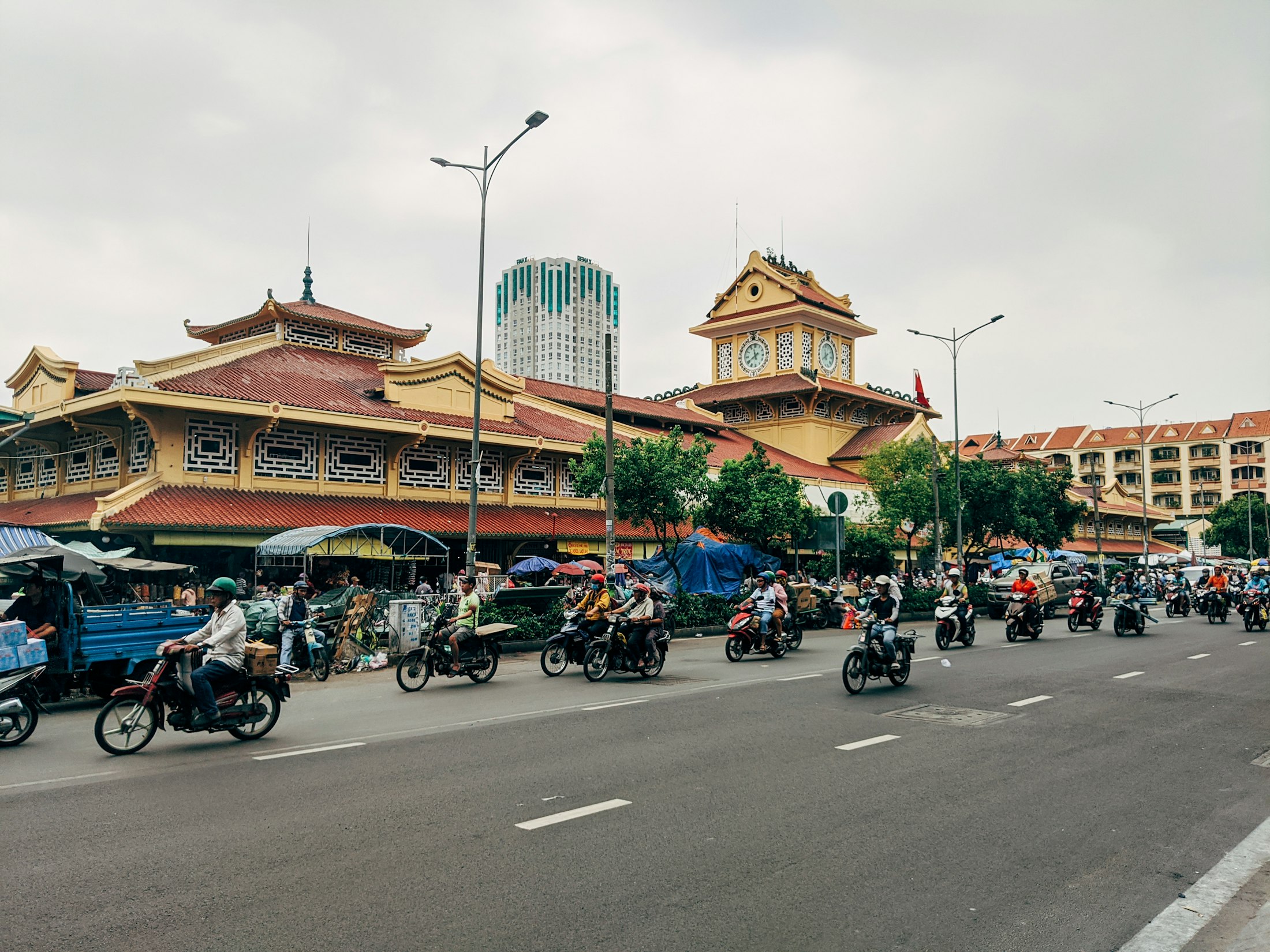
Everyone starts at Bến Thành. That's fine. Just go early — by 10 a.m. the aisles get thick with tour groups holding GoPros at arm's length, and the vendors shift into aggressive friendliness that makes actual eating harder.
I sat down at a stall on the interior east side of the market around 7:30 a.m. on a Tuesday. The bò kho came in a small metal bowl, served with a half-baguette and a wedge of lime. 55,000 đồng. The beef was tender but not falling apart — you could tell it had been braised overnight rather than pressure-cooked into submission. The lemongrass was there but not screaming. Solid.
Here's my contrarian take: Bến Thành bò kho is better than most food writers give it credit for. The consensus online is that you should skip it entirely because it's "too touristy," and sure, you'll pay a small premium. But the market vendors have been making this dish for decades. Tourism didn't erase their skill. It just raised their prices by 10,000 đồng.
Pro tip: Enter through the east gate (Cửa Đông) on Phan Chu Trinh. Less foot traffic before 9 a.m., and the food stalls cluster on this side.
3. Chợ Tân Định and the bowl that changed the trip
Tân Định Market sits on Hai Bà Trưng in District 1, about a 15-minute walk north of the Notre-Dame Cathedral. Smaller, older, and the ceiling fans do almost nothing against the June humidity. I loved it immediately.
The bò kho stall I found was on the second floor, near the back, run by a woman who looked annoyed that I'd come upstairs at all. No English menu. I pointed at the pot, held up one finger, and sat on a plastic stool that put my knees roughly at chin height. The bowl arrived with egg noodles instead of bread — I hadn't been given a choice, which is usually a good sign.
This was the best bò kho of the trip. The broth had a depth I hadn't tasted at Bến Thành — darker spice, a whisper of coconut, and enough chili heat to make my nose run. The tendon had gone completely gelatinous. The noodles were springy and yellow and caught the sauce in their curls. 45,000 đồng. I went back the next morning and she seemed less annoyed.
I made the mistake of not writing down her name or the exact stall number. What I can tell you: second floor, rear left corner if you're facing Hai Bà Trưng. Look for the orange pot.

Stay in Ho Chi Minh City
Top-rated hotels near Ho Chi Minh City
Best locations · Verified reviews · Free cancellation
View deals
Expedia →4. Skip Chợ Bình Tây unless you're buying bulk spices
Everyone recommends Bình Tây Market in Cholon (District 6) as the "real" market experience. For wholesale goods — dried shrimp, fabric, kitchenware — sure, it delivers. But for eating? Frustrating. The food stalls are sparse, spread across a massive complex, and the bò kho I tried at a ground-floor vendor was lukewarm and underseasoned. 40,000 đồng wasted.
The building itself is impressive — big French colonial bones, renovated a few years back. But I wouldn't send a friend there for a meal. The 45-minute taxi ride from central District 1 (roughly 100,000-150,000 đồng by Grab) doesn't help.
5. The street-side option: Bò Kho Gánh on Lý Chính Thắng
Not a market, technically, but I'm including it because it operates under a tarp that might as well be a market roof. Bò Kho Gánh (the name just means "carried bò kho," a reference to the shoulder-pole vendors who used to walk the streets) sits on Lý Chính Thắng in District 3. Morning only — they're set up by 6 a.m. and done by 10.
The setup: two pots on a portable gas burner, a stack of baguettes, and maybe eight plastic stools. That's it.
I ordered with bread. The baguette was so fresh it was still warm, the crust cracking audibly when I tore it. The broth was thinner here than at Tân Định — more consommé than gravy — but intensely aromatic. Star anise forward, lemongrass second. The beef chunks were huge, almost unwieldy. 40,000 đồng. Cash only, obviously.
Pro tip:Bring your own tissues or napkins. There's no dispenser, and you will need them — the chili sauce on the table is not decorative.
6. Chợ Hồ Thị Kỷ — the flower market with a food alley
This one's in District 10, technically a flower market, and the food vendors line a narrow alley along its southern edge. You'll smell it before you see it — frying shallots, caramelized sugar, pork fat. The alley comes alive around 4 p.m. as the rain tapers off and the evening crowd filters in.
The bò kho here came with both bread and noodles — the vendor just looked at me and brought both, the Saigon equivalent of "trust me." Smart call. The noodles were rice vermicelli this time, thinner than what I'd had at Tân Định, and the bread was denser, chewier, almost like a Portuguese roll. Different animal entirely.
Broth-wise, this version leaned sweeter. More cinnamon, less heat. I liked it less than Tân Định but more than Bến Thành. String lights, vendors shouting across the alley, a woman selling chè (sweet dessert soup) from a cart that looked older than me. 42,000 đồng for the bò kho, 20,000 for a cup of chè đậu đỏ (red bean) that I didn't need but couldn't refuse.
Pro tip: The alley gets tight after 6 p.m. Go at 4:30 for first-round food and actual elbow room.
Stay in Ho Chi Minh City
Top-rated hotels near Ho Chi Minh City
Best locations · Verified reviews · Free cancellation
View deals
Expedia →7. Why the rain matters
June in Saigon means rain every single afternoon. Not drizzle — monsoon curtains that turn streets into rivers for an hour, then vanish like nothing happened. Most travel advice says avoid the wet season. I disagree.
The rain empties the markets of casual browsers. It drops the temperature from unbearable to merely uncomfortable. And it makes a hot bowl of bò kho feel necessary rather than optional — you're not eating it because a blog told you to, you're eating it because you just sprinted through a downpour and your shoes are soaked and someone is handing you a bowl of something scalding and orange and good.
A covered market, a plastic stool, rain hammering tin overhead, and a broth that tastes like someone's grandmother figured it out forty years ago and never saw a reason to change it.
Essential tips
Pack a lightweight poncho (available at any convenience shop for 10,000 đồng) and waterproof sandals. Sneakers will be destroyed by day two in June.
Market bò kho runs 40,000-55,000 đồng per bowl (roughly $1.60-$2.20 USD). Carry small bills — vendors rarely break 500,000 đồng notes.
Most market food stalls open by 6-7 a.m. and wind down by early afternoon. Morning is the move — fresher broth, fewer crowds, cooler air.
Use Grab (Southeast Asia's Uber) instead of street taxis. Metered cabs in HCMC still occasionally run rigged meters, especially near Bến Thành.
Ready to visit Ho Chi Minh City?
Book your hotel, flights, and activities through our Expedia-powered search.


