In This Guide
- 1.Getting off the ferry and getting your bearings
- 2.The church isn't just a church
- 3.What people get wrong about Santería tourism
- 4.Eating in Regla (lower your expectations, then lower them again)
- 5.The Colina Lenin and the view back toward Havana
- 6.The Museo Municipal de Regla is 30 minutes well spent
- 7.Timing, weather, and when to leave
The ferry from Old Havana to Regla takes about ten minutes and costs one Cuban peso. You board at the Emboque de Luz terminal on Avenida del Puerto, and by the time the diesel engine settles into its rhythm, you can already see the concrete seawall on the other side. July is not the comfortable month to do this. The air is 34°C before noon and the humidity sits on your chest like a wet towel. But Regla doesn't perform for tourists on a schedule, and something about the heat — the way it empties the streets by 2 p.m. and fills them again after 5 — strips away any pretense.
I first crossed on a January afternoon two years ago, when the temperature was almost bearable. Coming back in July changed the neighborhood completely. The ceremonies were louder, the offerings at doorsteps more frequent, and the few other foreigners I saw looked as dazed as I felt. Regla in summer is Regla undiluted.
1. Getting off the ferry and getting your bearings
The Regla ferry terminal drops you on Calle Martí, which runs south from the waterfront straight into the center of town. There's no taxi rank. There are no pedicabs waiting. You walk.
Turn left when you hit Calle Maceo and you'll see the Iglesia de Nuestra Señora de Regla within two blocks — the church with the blue-and-white facade that anchors the neighborhood's identity. The whole walkable core of Regla is maybe eight blocks square. You don't need a map, but you do need water. The nearest reliable place to buy a bottle is a small kiosk on Martí about 50 meters from the dock. After that, options thin out.
Pro tip:Ferries run roughly every 15-20 minutes during the day but get irregular after 8 p.m. Don't count on a late return — plan to be back at the terminal by 7:30 p.m. or budget for a taxi through the tunnel.
2. The church isn't just a church
The Iglesia de Nuestra Señora de Regla is where Catholic liturgy and Santería exist in the same room without anyone feeling the need to explain the contradiction. The Black Virgin of Regla — a small dark-skinned Madonna figure — sits above the altar. In Santería, she's Yemayá, the orisha of the sea and motherhood. Devotees leave offerings of blue flowers, molasses, and coins at the base of the statue. On a Wednesday morning in July, I counted eleven people inside, most of them praying quietly, a few arranging small bundles of herbs near the pews.
The church is open daily, generally from 7:30 a.m. to 5:30 p.m., though July hours can shift. No entry fee. Photographs are tolerated but not welcomed — read the room. If someone is in the middle of a prayer or a ritual consultation near the side altar, pointing a phone at them is not the move.
Pro tip:September 7 is the feast day of the Virgen de Regla and draws thousands. If you're anywhere near Havana that week, it's worth seeing — but July gives you the church almost to yourself.
3. What people get wrong about Santería tourism
Here's my contrarian take: most guides treat Regla like a spiritual zoo, somewhere you go to observe Afro-Cuban religion from a safe distance. That framing is lazy and a little gross. Santería isn't a tourist attraction. It's a living practice, and the people in Regla who follow it are not performing for you.
That said, the neighborhood is genuinely welcoming to respectful visitors. Babalawo practitioners sometimes invite conversation. If someone offers to do a consulta (a divination reading using cowrie shells), understand that this is a religious service, not a souvenir. Expect to pay 500-1000 CUP, and don't haggle. You wouldn't negotiate the price of a confession.
Skip the guys near the ferry terminal who offer "Santería tours" for 20 CUC or its MLC equivalent. They'll walk you past three houses, make up half the mythology, and charge you for photos with someone else's altar. You'll learn more from a quiet hour in the church and a conversation at a food stall.
4. Eating in Regla (lower your expectations, then lower them again)
Regla is not a food destination. I want to be honest about that because too many neighborhood guides manufacture culinary excitement where none exists. The paladares here are sparse and the menus are short — rice, beans, pork, maybe some fried plantain if the oil is fresh.
The best meal I had was at a no-name spot on Calle Céspedes, three blocks south of the church. A plate of congri with roast pork and a fried egg cost 150 CUP. The woman running the kitchen cooked out of her front room and served four tables. No menu. She told me what she had and I said yes.
Bring snacks from Havana if you're picky. Seriously.
Pro tip:Street vendors sell guarapo (fresh sugarcane juice) from hand-crank presses for about 10-20 CUP. In July heat, it's the best 20 pesos you'll spend.
5. The Colina Lenin and the view back toward Havana
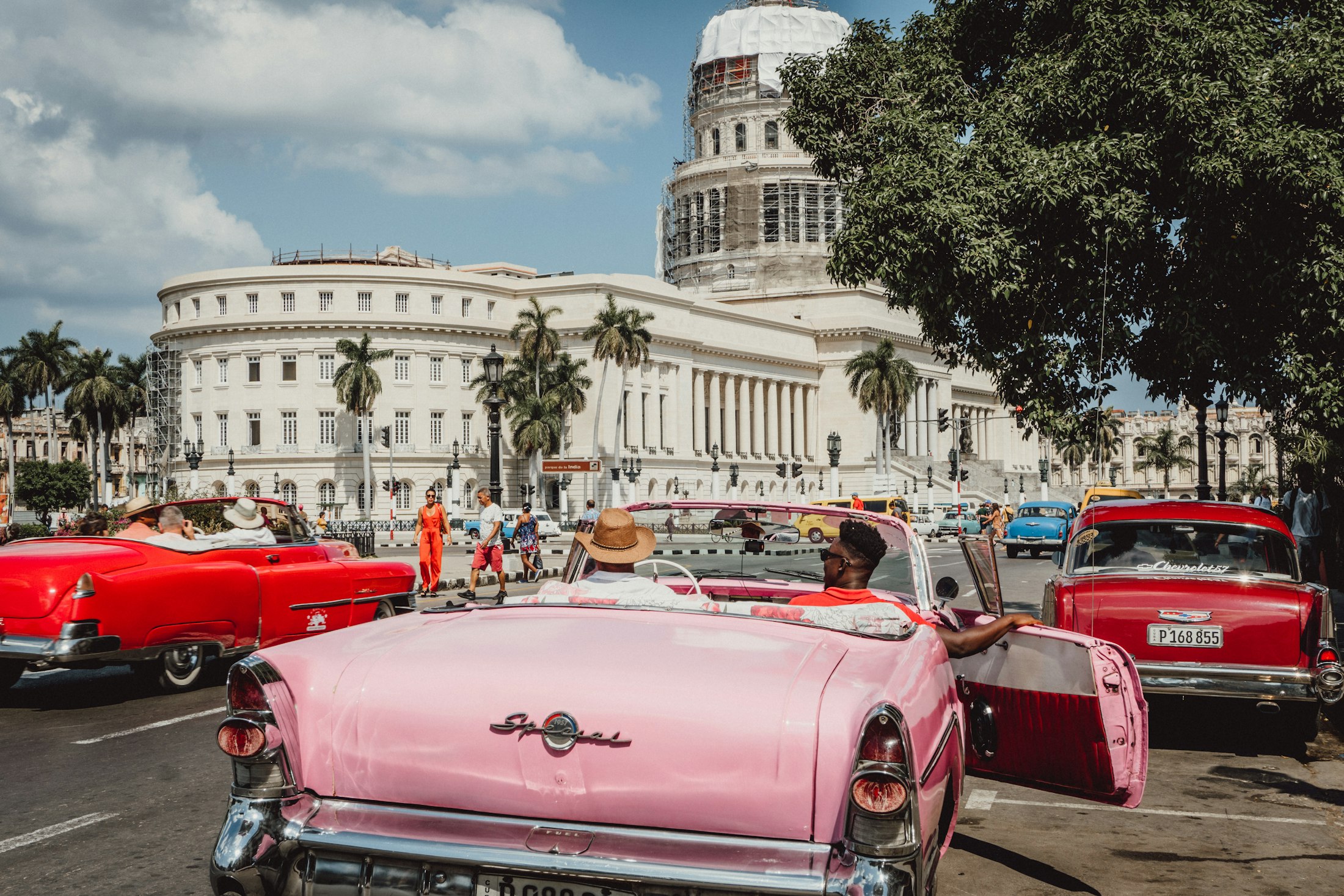
Walk east from the church up the hill — locals call it the Colina Lenin for the bust of Lenin that sits at the top, though the bust itself is underwhelming. Concrete. Faded. About waist-high. Don't go out of your way for the sculpture; it's the kind of Soviet-era leftover that looks better in someone else's Instagram than it does in person. The reason to climb is the view west across the harbor to Old Havana. On a clear July evening around 6 p.m., the light turns the Capitolio dome amber and you can watch the ferries cutting back and forth below.
The climb takes maybe fifteen minutes at a casual pace, but in midday heat it's brutal. Go after 4:30 p.m. or don't bother.
A couple of benches at the summit. No vendors, no bathrooms. Just the hill, the breeze that finally shows up in the late afternoon, and the city across the water looking like somewhere you haven't been yet.

Stay in Havana
Top-rated hotels near Havana
Best locations · Verified reviews · Free cancellation
View deals
Expedia →6. The Museo Municipal de Regla is 30 minutes well spent
A small museum on Calle Martí, about a block from the waterfront. It covers the neighborhood's history — the slave trade, the sugar economy, the development of syncretic religious practices. One room is dedicated to Santería artifacts: beaded necklaces called elekes, wooden batá drums, iron tools associated with Ogún. The labels are in Spanish only.
Admission was 20 CUP when I visited. Open Tuesday through Saturday, roughly 9 a.m. to 5 p.m., though Cuban museum hours are more suggestion than policy. I've shown up to find it closed on a Wednesday with no explanation posted.
The museum won't change your life. But it provides context that makes the rest of Regla land differently, especially if you're unfamiliar with the orishas and their Catholic counterparts.
Pro tip:Ask the attendant about the photo binder behind the front desk — it has images from past September 7 celebrations that aren't in the main exhibit.
7. Timing, weather, and when to leave
July in Regla means afternoon thunderstorms that appear fast and hit hard. They usually roll in between 3 and 5 p.m., dump rain for thirty minutes, and leave the streets steaming. Almost no covered shelter outside the church and a few doorways. Bring a light rain jacket or accept that you'll get soaked.
The smart itinerary: take the first ferry after 8 a.m., visit the church and museum in the morning, eat around noon, wait out the worst heat somewhere shady, then climb the Colina Lenin in the late afternoon. Catch a ferry back by 7 p.m. The whole trip is a half-day, not a full one. Trying to stretch it longer just means more time sweating in a neighborhood with limited shade.
One more thing. Regla is safe by Havana standards, but it's a working-class neighborhood, not a tourist zone. Don't flash expensive cameras or wander into residential streets after dark with no sense of where you're going. Common sense applies, same as anywhere.
Pro tip:If the ferry line is long on the return, walk south along the waterfront to the Casablanca ferry terminal — it's about a 20-minute walk and sometimes has shorter waits.
Stay in Havana
Top-rated hotels near Havana
Best locations · Verified reviews · Free cancellation
View deals
Expedia →Essential tips
The Emboque de Luz ferry terminal is on Avenida del Puerto in Old Havana, near the corner of Calle Santa Clara. Fare is 1 CUP each way — have coins ready, the ticket window doesn't always make change.
Bring at least 1.5 liters of water per person. There is one reliable kiosk near the Regla ferry dock; after that, you're dependent on finding an open doorway selling refrescos.
July afternoon storms are nearly daily. A packable rain shell weighs nothing and saves you from a miserable ferry ride back in wet clothes.
Regla runs on Cuban pesos (CUP), not MLC or USD. ATMs don't exist here. Bring enough CUP cash for the day — 1000-1500 CUP should cover food, museum entry, and a consulta if offered.
Ready to visit Havana?
Book your hotel, flights, and activities through our Expedia-powered search.


