In This Guide
The apricots arrive in Fez before summer does. By late May, they show up in shallow wooden crates along Derb Rcif, stacked by women who weigh them on handheld scales and don't negotiate. The fruit is small, freckled, not particularly beautiful — and sweeter than anything you'll find in the nouvelle médina shops catering to tour groups.
I came back to the Rcif quarter this past June because someone told me Haj Mustapha had stopped making pastilla. That turned out to be only half true. But the apricots were at peak, and most of what I ate that week — on rooftops, in dim kitchens, standing in doorways — had their sticky fingerprints on it.
1. The rooftop apricot situation
Several riads in Rcif dry apricots on their rooftops in June and early July, and the best place to see this is not a riad at all but the roof terrace of Café Clock's Fez location on Derb el Magana. Order a spiced coffee (25 MAD) and look east. The neighboring rooftops are covered in drying racks — apricot halves turning from orange to a deep amber over three or four days.
What makes Rcif apricots different from the ones sold vacuum-packed in the spice souks near Bab Bou Jeloud? Altitude and neglect. The fruit comes from small orchards south of Sefrou, about 30 kilometers away, where the trees are largely untended. Nobody's optimizing for size.
I bought a kilo for 15 MAD from a woman near the Rcif fountain. She had maybe six crates left. The fruit was warm, slightly yielding, with that faintly floral quality you get from apricots picked the same morning. I ate half of them before I got back to where I was staying.
Pro tip:The Sefrou apricot harvest peaks in mid-to-late June. If you're in Fez the first week of June, you'll get early fruit — still good, but firmer and less complex.
2. Haj Mustapha's pastilla, and why you shouldn't believe the food blogs
Most English-language guides will tell you to eat pastilla at one of the palace restaurants in the Fes el-Bali tourist circuit — Dar Roumana, or the restaurant at Palais Amani. Skip them. What you'll get is a competent pastilla made in large batches, dusted with cinnamon in a decorative lattice, and served to tables of eight. Fine. Also 180-250 MAD for a dish that costs a fraction of that when made by someone who isn't plating for a photographer.
Haj Mustapha works out of a narrow shopfront on Derb Rcif, roughly 200 meters past the fountain heading toward the tanneries. There's no sign. He makes pigeon pastilla — the traditional filling, not the chicken substitution most places default to — and he makes it only on Fridays and sometimes Saturdays, depending on whether his son is helping. A whole pastilla serves three to four people and costs 80 MAD.
The consensus online is that traditional pastilla is vanishing from Fez. I don't think that's true, exactly. What's vanishing is the willingness to use pigeon, which is more expensive, more labor-intensive, and harder to source now that fewer families in the médina keep birds. Haj Mustapha still does. The warqa layers of his pastilla are shattered and thin, and the filling underneath has a mineral depth that chicken cannot replicate. Powdered sugar on top, yes. Almonds, yes. But nothing sweet about the interior — it's savory and slightly gamy and the eggs are barely set.
He told me he's seventy-three. His son is a mechanic who helps on weekends.
Pro tip:Arrive before noon on Friday. By 1 p.m. after prayers, what he's made is usually spoken for. Bring your own container if you want to take it back to a riad — he wraps in newspaper otherwise.
Stay in Fez
Top-rated hotels near Fez
Best locations · Verified reviews · Free cancellation
View deals
Expedia →3. What to eat in Rcif that isn't pastilla
There's a harira stall at the entrance of Derb Rcif, on the left side if you're walking in from Place Rcif, that operates from about 5 p.m. until the pot is empty. A bowl costs 5 MAD. The broth is thick — more lentil than tomato — and they serve it with dates and a round of bread that tastes like it was baked ten minutes ago, because it was. The woman running it does not want to be photographed, so don't.
For breakfast, the msemen at the stall across from the Rcif mosque is unreasonably good. Crisp, not greasy, folded with a scrape of soft cheese and honey. 3 MAD each.
One thing worth going out of your way for: the apricot-and-almond milk drink sold from a cart near the fountain in late June. Seasonal, unrefrigerated, made that morning. Tastes like the smell of a stone-fruit orchard at noon. 10 MAD for a tall glass.
Stay in Fez
Top-rated hotels near Fez
Best locations · Verified reviews · Free cancellation
View deals
Expedia →4. The quiet part of the quarter
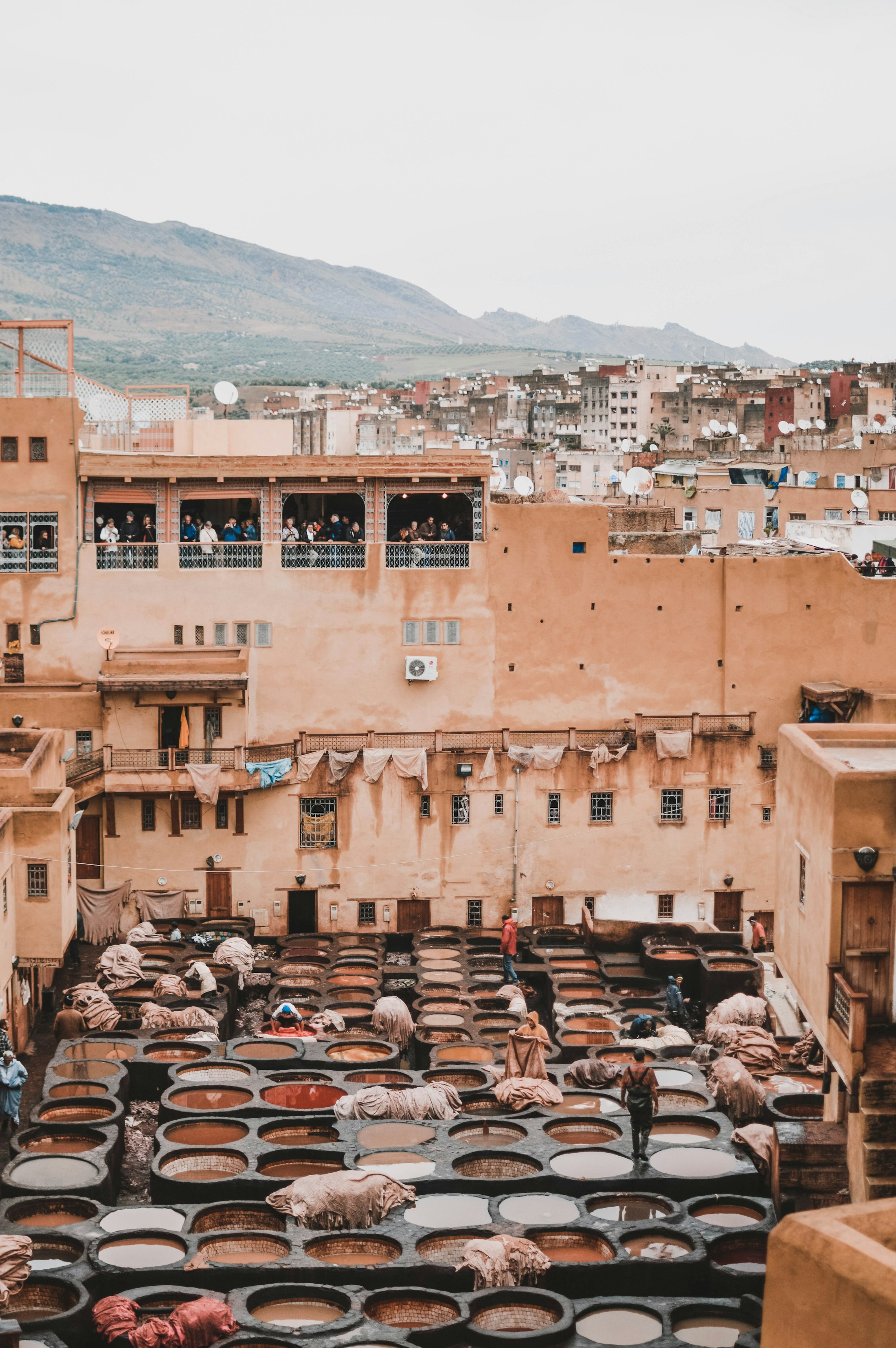
Walk past the tannery viewpoints — past the shops where men will offer you mint to hold under your nose — and the crowds thin. The residential streets south of Derb Rcif are narrow enough that your shoulders nearly touch both walls. Laundry overhead. Cats with operational confidence.
This isn't a destination. There's nothing to buy here. But the light in these alleys around 4 p.m. in June does something particular, falling in hard slants that turn the plaster walls the color of the apricots drying on the roofs above. I sat on a step for twenty minutes and nobody asked me to move or tried to sell me anything.
Essential tips
Petit taxis from the Ville Nouvelle to Place Rcif cost 15-20 MAD. Insist on the meter — drivers near Bab Bou Jeloud will try to charge 50.
The alleys around Derb Rcif are uneven stone, often slick with water from the fountain and nearby drainage. Closed-toe shoes with grip, not sandals.
Almost nothing in Rcif accepts cards. The nearest reliable ATM is a BMCE branch on Tala'a Sghira, about a 10-minute walk uphill.
Photographing people at food stalls without asking first will get you a sharp rebuke in Rcif, more so than in the tourist-facing parts of the médina. Ask, and often the answer is no. Respect it.
Ready to visit Fez?
Book your hotel, flights, and activities through our Expedia-powered search.