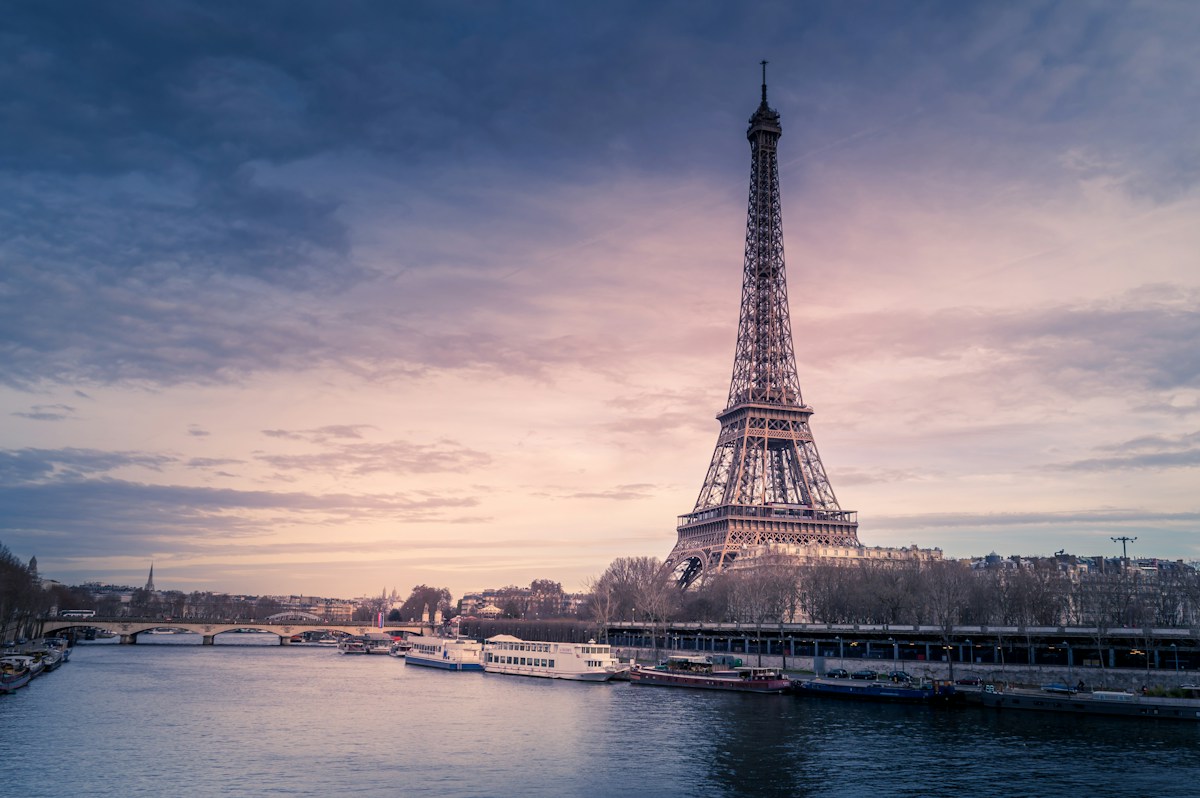
Paris is not trying to impress you, and that's the point
The city that invented the art of appearing effortless rewards the traveler who finally stops rushing.
Advertisement
The city that doesn't perform
We've been coming to Paris long enough to notice the moment tourists realize the city isn't performing for them. It happens somewhere around the third day, when the itinerary loosens and the instinct to photograph everything softens. Paris doesn't arrange itself around your visit. It simply continues — the boulangeries restocking at dawn, the bouquinistes along the Seine lifting their green boxes at the same hour they have for a century, the arguments on terraces that are, somehow, never quite arguments. We stopped trying to decode this quality years ago and started simply receiving it. That shift is the real entry point to the city.
What limestone does to light
No photograph does justice to how Haussmann's facades behave at seven in the evening in late June. We walked the Rue de Rivoli last summer at that hour and understood, physically, why painters moved here. The stone — lutetian limestone, quarried from beneath the city itself — absorbs the low sun and releases it slowly, like a material that has decided to cooperate with the light rather than merely reflect it. Stand outside the Palais-Royal gardens at that hour and the colonnades glow with a warmth that feels almost embarrassed by its own beauty. The tourists clustered around the Buren columns don't quite notice. We did.
The meal that never announces itself
The best thing we ate in Paris last year was not at a restaurant with a waiting list. It was a jambon-beurre from Du Pain et des Idées on the Rue Yves Toudic — the kind of sandwich that makes you briefly furious at every other country's bread. The bakery smells of caramelized dough and something older, like the oven itself has a memory. Chef Christophe Vasseur's croissants aux amandes are correctly famous, but we keep coming back for the bread that underpins everything else. Paris has always understood that a culture's sophistication reveals itself not in its formal meals but in what it does with flour, butter, and time.
The traveler who stops waiting for Paris to perform discovers, almost by accident, that they have become the audience Paris was made for.
The grammar of sitting still
Paris taught us to sit without purpose, which is harder than it sounds. The French have a word — flâner — that roughly means to wander without destination, and they practice it with genuine seriousness. We spent an afternoon on the terrace of Café de Flore on the Boulevard Saint-Germain nursing a single café crème for ninety minutes, and no one made us feel we were supposed to leave. The chairs all face outward, toward the street, which is itself an architectural argument: the spectacle worth watching is life in motion, not whatever is happening at your own table. The coffee was fine. The time we spent with it was extraordinary.
The museum that admits its own ambiguity
We have complicated feelings about the Musée d'Orsay, and we think you should too. The building was a train station, which means the clock faces still preside over the nave like indifferent gods, and the light through the vaulted glass roof falls on the Impressionists the way it once fell on departing passengers — democratically, without aesthetic preference. Stand in front of Gustave Caillebotte's The Floor Scrapers and you'll feel the grit of the floorboards in your knees, the physical labor the Impressionists usually chose to romanticize rendered here with something approaching accountability. The painting is small. The discomfort it provokes is not.
Why we keep coming back
Paris is not a city that gives itself up to you. It is a city that allows you, under the right conditions and with sufficient patience, to give yourself up to it. That is a meaningful distinction. We have watched first-time visitors leave disappointed because the city failed to match the fantasy, and we have watched the same visitors return five years later and fall completely. The city did not change between those two visits. The traveler who stops waiting for Paris to perform discovers, almost by accident, that they have become the audience Paris was made for. We keep coming back because it keeps asking something of us, and we are, apparently, still learning how to answer.
Advertisement