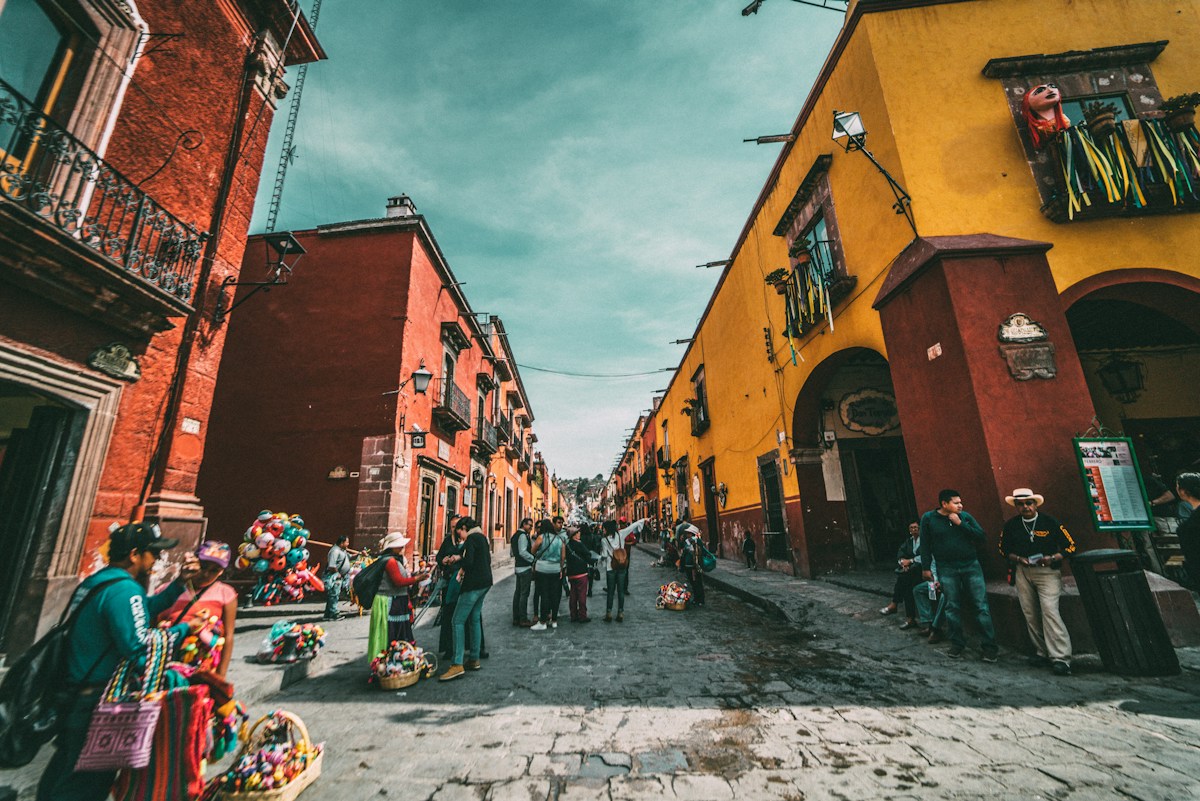
Mexico City rewards the traveler who slows down
Twenty-two million people, three thousand years of history, and one city that still manages to feel intimate.
Advertisement
The city that refuses to be summarized
We have been to Mexico City enough times to stop trying to explain it at dinner parties. It is not like anywhere else — not like Buenos Aires, not like Madrid, not even like the version of itself that existed a decade ago. What we can say is this: the city operates on its own internal logic, and the moment you stop fighting that and simply follow it, something opens up. The Anthropology Museum on Paseo de la Reforma is the obvious place to start feeling this. Walk past the Aztec Sun Stone and you will notice that the room around it is nearly silent despite being full of people — a rare, involuntary hush that the scale of human time tends to produce.
Altitude and appetite arrive together
At 2,240 meters above sea level, your body does something unexpected in Mexico City: it tires faster, slows down, and becomes, almost against your will, more attentive. The air is thin enough that a long lunch feels like a reasonable response to the afternoon. At Contramar in Colonia Roma, the tuna tostadas arrive on a long ceramic plate, the fish cold and faintly briny against a smear of avocado, and the room fills with a particular clatter of conversation that sounds like a city genuinely enjoying itself. We have eaten there at noon and not left until three, without once feeling like we were wasting time.
The neighborhood as the real unit of travel
The colonia — the neighborhood — is how Mexico City actually works, and Coyoacán is the one that makes the argument most clearly. It sits south of the center, a former village absorbed by the expanding city that never quite agreed to become urban. The cobblestones on Avenida Francisco Sosa are uneven in the way that suggests centuries of use rather than decorative intent, and on weekend mornings the jardin smells of fresh corn from the tamale vendors before it smells of anything else. Frida Kahlo's blue house is here too, and even with a timed ticket and a crowd, the garden — with its Diego Rivera pre-Columbian sculptures half-sunk into the ground — carries a genuine weight of personal history that reproductions cannot dilute.
The city operates on its own internal logic, and the moment you stop fighting that, something opens up.
The dead are not kept at a distance
One of the more quietly startling things about Mexico City is the ease with which the past stays present. This is not sentimentality; it is architecture and civic habit. The Templo Mayor, the excavated Aztec ceremonial center that sits one block from the Zócalo, exists because workers laying cables in 1978 hit a carved stone disc eight feet underground. The city decided to dig rather than pave over it. Standing at the excavation edge, you can see the layers — colonial foundation on top of ceremonial platform on top of older platform — like a cross-section of the city's refusal to pretend it began at any single moment.
What the mezcal bars understand about hospitality
By nine in the evening, the Roma Norte streets fill with a particular kind of unhurried foot traffic — people who are not going home yet but are not in any particular rush to arrive somewhere either. At a mezcal bar like Bósforo in the Centro Histórico, the bottles are unlabeled, the pours are serious, and the bartender will ask where you are from before recommending anything. The smoke of a good Oaxacan espadin lingers longer than expected, and the conversation at the small wooden tables tends to stay. The city, we have found, does not push you out. It simply keeps offering the next reason to remain.
Advertisement