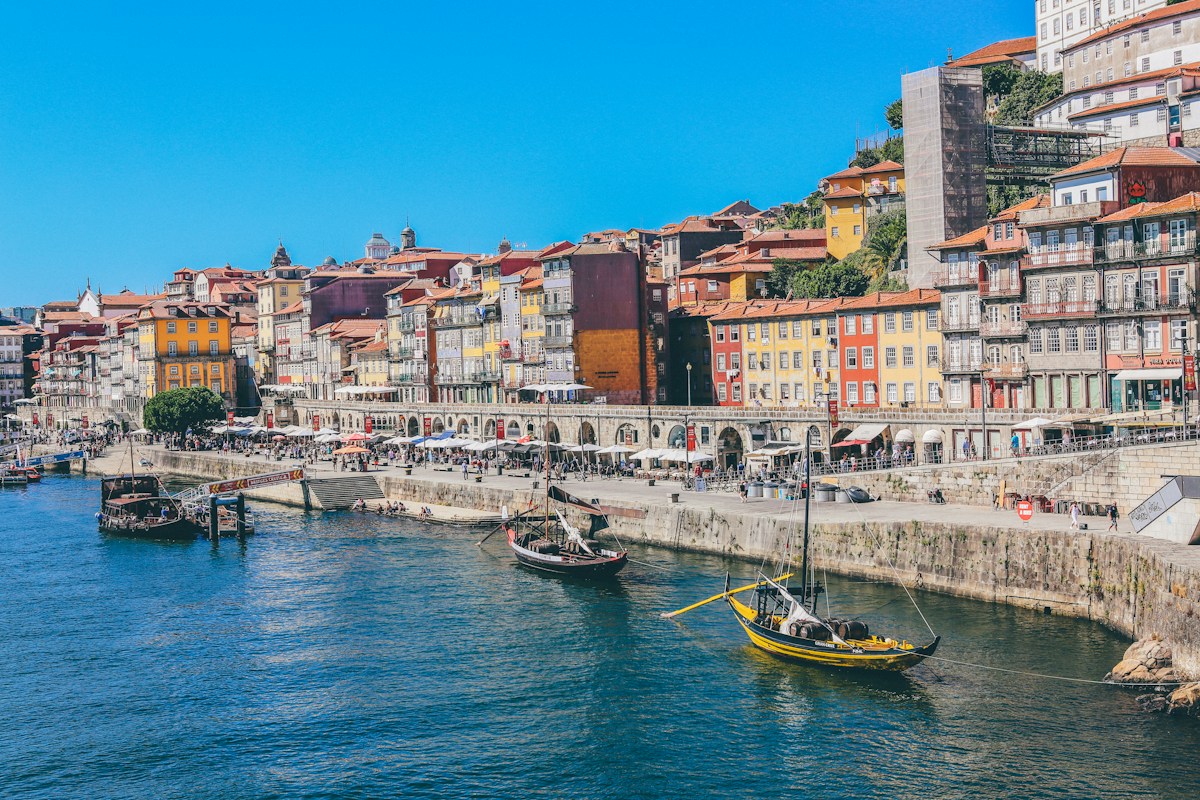
Lisbon rewards the traveler who slows down
Portugal's capital isn't trying to impress you — and that's precisely what makes it so disarming.
Advertisement
The city operates on its own clock
Lisbon has never been in a hurry, and it refuses to start now on your behalf. Arrive expecting the kinetic pulse of Barcelona or the self-conscious cool of Copenhagen and you will spend your first two days slightly confused, possibly annoyed. Stay long enough to recalibrate — and we mean at least five nights — and something shifts. You stop trying to maximize and start simply being somewhere. At Pastéis de Belém, the original custard-tart bakery open since 1837, we watched a man eat three pastel de nata in complete silence at a marble counter, powdered cinnamon dusting his jacket, entirely unconcerned. That is the correct attitude.
The hills are not a metaphor — they're a commitment
Seven hills sounds poetic until you are climbing the Escadinhas de Santo Estêvão at noon in late June, the cobblestones radiating heat back up through your soles. Lisbon is physically demanding in a way that surprises people who have only seen the postcard. But the effort sorts the city into layers. The Miradouro da Graça sits one terrace above the more photographed Portas do Sol, and on a clear morning the Tagus estuary stretches so wide and silver it looks oceanic rather than riverine. The smell up there is jasmine and warm stone, and occasionally someone's washing. We have never once regretted the climb.
Fado is not background music
It is easy to treat fado as atmosphere — something to absorb alongside a glass of wine before moving on. We'd argue that's a category error. At Tasca do Chico in Madragoa, a room that holds perhaps thirty people and operates on reservations booked weeks in advance, the musicians perform without amplification and the room goes genuinely, self-policed silent. The music describes saudade, that untranslatable Portuguese ache for something beautiful that is already gone, and hearing it in a room where the audience clearly believes in it changes the experience entirely. Your chest does a thing. It's not comfortable, exactly, and it should not be.
Lisbon will not perform for you — and that is, ultimately, the thing we keep returning for.
The river is the real center of gravity
Most European cities built on rivers eventually turn their backs on the water. Lisbon never quite managed to. The Ribeira das Naus, a long riverside promenade that was once a shipyard where the Age of Discovery was literally assembled plank by plank, today draws a cross-section of the city — grandparents in folding chairs, young couples, off-duty kitchen workers with cans of Sagres. On summer evenings the light turns the Tagus the color of hammered copper, and the 25 de Abril bridge overhead looks borrowed from San Francisco, which is not an accident. We find ourselves returning to this stretch of water every trip, not because there is anything specific to do there, but because it clarifies what Lisbon actually is: an Atlantic city that once faced outward toward the whole world and now sits with that history quietly.
The food asks nothing of you
Lisbon's restaurant culture is not performative. You will find no tasting menus requiring narrative guides, no dishes engineered to be photographed. At Zé da Mouraria, a family-run taberna with hand-written menus and a television playing football at low volume, the bacalhau à brás arrives in a cast-iron pan — shredded salt cod folded through scrambled eggs and thin fried potato, finished with black olives and parsley. It is a dish with five ingredients and approximately four hundred years of practice behind it. We ate it for lunch and then thought about it, unprompted, for three days.
What Lisbon asks of you
The city makes a quiet demand: be present in the unspectacular. A tram ride on the 28E line through Alfama is not remarkable for any single moment — it is remarkable for the sustained, unbroken ordinariness of it, the way the car tilts and groans through streets barely wider than itself, the driver impassive, passengers gripping rails with the ease of long habit. Lisbon will not perform for you. That is, ultimately, the thing we keep returning for.
Advertisement