Kyoto rewards the patient traveler
Japan's old imperial capital doesn't perform for visitors — it simply continues, and that's the point.
Advertisement
The city that doesn't try to impress you
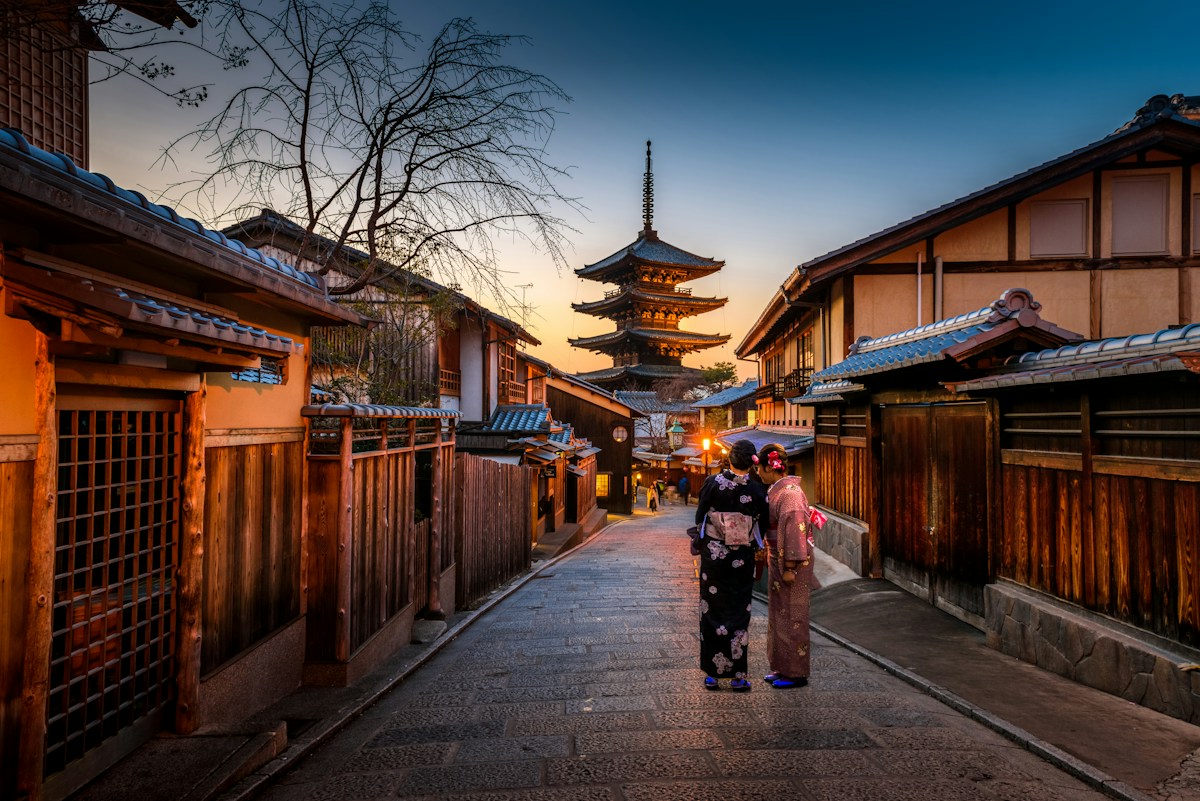
Kyoto has been misread for decades as a museum city, a place you visit to collect temples like passport stamps before returning to Tokyo's electricity. That reading misses almost everything. What Kyoto actually offers is a city still organized around ritual time — the hour before dawn at Fushimi Inari, the specific stillness of a December afternoon in Higashiyama — and the traveler who understands this arrives differently. We arrive without an itinerary that needs executing. We arrive ready to be slowed down.
Stone and cedar, older than the signage
The architecture does the slowing. At Kōdai-ji, a Zen temple founded in 1606 by the widow of Toyotomi Hideyoshi, the main garden is raked gravel and shaped pine, and in early morning the smell of cedar resin is sharp enough to feel medicinal. There are no crowds at six-thirty in the morning. There is only the sound of a broom somewhere inside the complex, and the particular quality of light that comes when the sun is still low and diffuse through mountain vapor. We have stood in that garden and felt, with genuine conviction, that the twenty-first century was a rumor.
What the food tells you about the place
Kyoto cuisine — kyo-ryori — is the product of geography and constraint. Landlocked, historically deferential to Buddhist dietary codes, the city developed a cooking tradition that makes vegetables the argument rather than the accompaniment. At Nakamura, a kaiseki restaurant operating since 1716 on the bank of the Kamo River, a single course might be nothing more than a piece of tofu made that morning, floated in dashi the color of pale gold, garnished with a shaving of yuzu peel. The flavor is so precise and so quiet that it takes a moment to understand you've just eaten something extraordinary. Kyoto trained us to pay that kind of attention.
Kyoto trained us to pay that kind of attention — one piece of tofu at a time.
The craft of slowness
The city's relationship with making things by hand is not nostalgia — it's infrastructure. The Nishijin district has produced woven silk textiles for over a thousand years, and the sound of a working Jacquard loom through an open workshop door is a low, rhythmic clatter that carries half a block. We watched a weaver in her sixties work a section of obi fabric for twenty minutes without once looking up. The thread count on a single Nishijin obi can exceed ten thousand per square centimeter. When you understand that, you understand why Kyoto moves at the pace it does. Precision at that level has no shortcut.
The season is the itinerary
Kyoto in late June sits in the overlap between tsuyu — the rainy season — and the full heat of summer, and it is, by conventional wisdom, a difficult time to visit. The humidity is real. So is the light. We walked the stone path along the Philosopher's Walk on a rainy Tuesday in June and found the canal transformed: the surface silver and pocked with rain, the overhanging maple branches heavy and very green, the whole corridor of it empty. The moss on the retaining walls was the color of something that has no name in English. Visiting Kyoto in its so-called off-season is not a coping strategy — it is, in fact, the correct choice.
What we take home, eventually
Kyoto doesn't offer the traveler a version of themselves that got somewhere. It offers something less legible and more durable: the experience of a city that has decided, over many centuries, what it values and has organized itself accordingly. That clarity is genuinely rare. We leave with fewer photographs than we expected and a persistent sense that we missed things — not because the city hid them, but because we hadn't yet learned how to look. That sensation, the productive dissatisfaction of wanting to return, is Kyoto's best souvenir, and it costs nothing to carry.
Advertisement