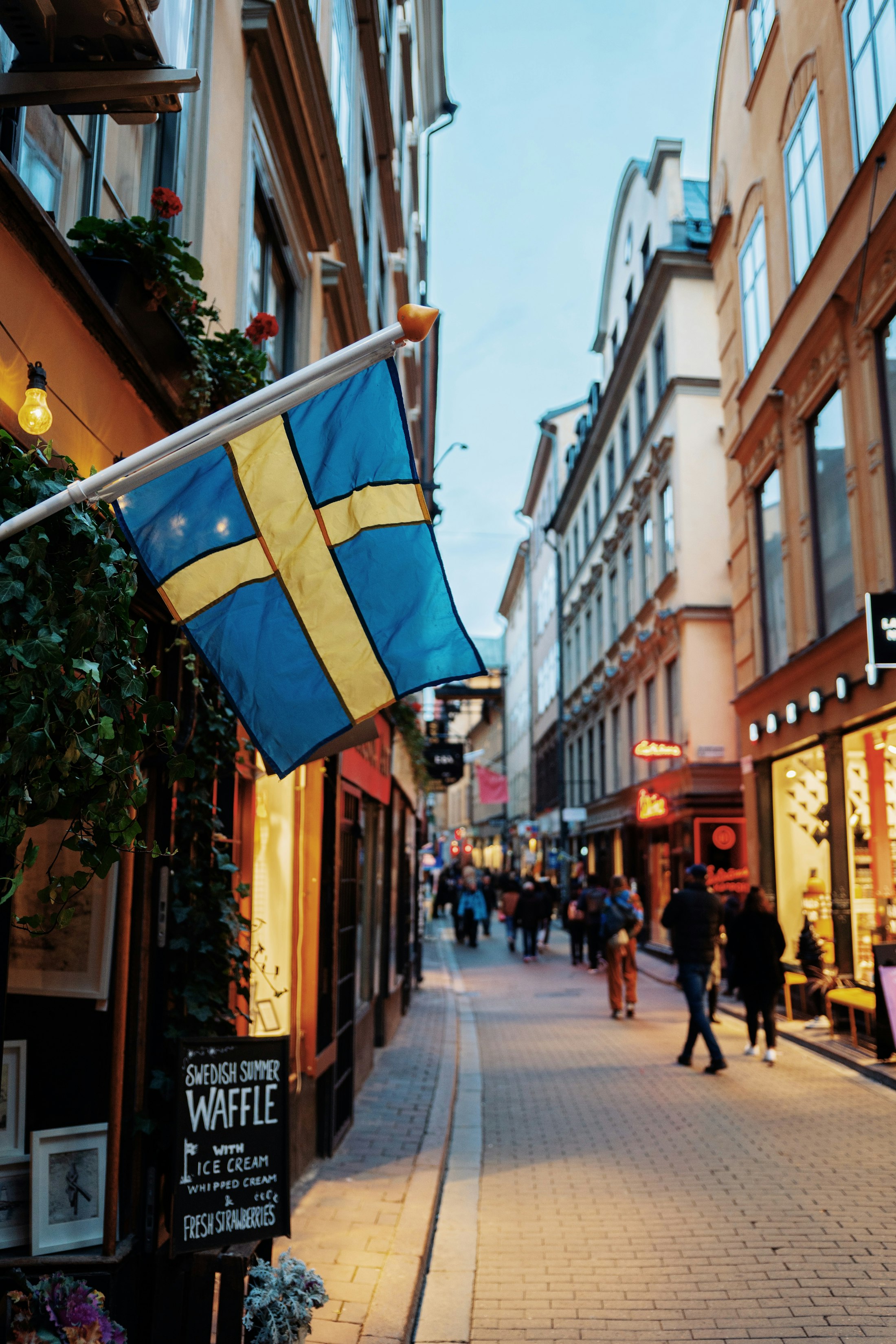
In This Guide
- 1.Kungsträdgården: Ground Zero for the Bloom
- 2.Vete-Katten: The Grande Dame of Swedish Fika
- 3.Drop Coffee: Third-Wave Precision in Norrmalm
- 4.Fabrique Stenugnsbageri: Cardamom Buns Worth Crossing Town For
- 5.Rosendals Trädgård: Fika in a Working Garden on Djurgården
- 6.Djurgårdsbrons Sjöcafé: Sunset Coffee at the Water's Edge
- 7.Timing the Bloom: How to Hit the Narrow Window
There is a week in mid-April when Stockholm becomes, briefly and almost improbably, a pink city. The Kungsträdgården cherry trees erupt in a canopy of pale blossoms, locals abandon their offices for park benches, and the air carries a sweetness that feels imported from somewhere far warmer. It is a narrow, luminous window — sometimes only five or six days — and the entire capital conspires to celebrate it with cardamom buns and strong coffee held in both hands.
This guide maps a walking fika crawl through Stockholm's most bloom-adjacent cafés and bakeries, from Norrmalm to Djurgården, timed to coincide with the sakura peak that typically falls between April 12 and 22. You will move through seven stops across four neighbourhoods, each paired with a specific pastry or coffee order worth seeking out. Consider it a sugar-dusted walking tour for the kind of traveller who plans trips around both weather charts and sourdough lamination schedules.
1. Kungsträdgården: Ground Zero for the Bloom
Start where every Stockholmer starts: beneath the sixty-three Japanese cherry trees gifted to the city in 1998. Kungsträdgården sits between the Norrmalmstorg and the Royal Palace, and during peak bloom it draws photographers, picnickers, and a surprising number of wedding parties. Arrive before nine in the morning if you want unobstructed shots of the canopy against a clean sky.
The blossoms here are Prunus 'Accolade,' a hybrid variety that produces semi-double pink flowers in dense clusters. They open earlier than Tokyo's Somei-Yoshino, which is why Stockholm's sakura season sits firmly in mid-April. Wind and rain are the enemies — a single overnight storm can strip the petals in hours, so check the @LoveStockholm social feeds for real-time bloom updates.
There is no dedicated café inside the park itself, but the kiosk near the Molins fontän sells a serviceable filter coffee. Your real first fika stop is a four-minute walk away, so treat Kungsträdgården as the visual appetiser. Linger, photograph the petals drifting onto the reflecting pool, then head northeast toward Östermalm.
Before you leave, notice the small brass plaques at the base of several trees — they mark the 2018 replanting effort after disease claimed a portion of the original grove. It is a quietly moving detail that most visitors walk past entirely.
Pro tip: The southwest corner of the park, near the Karl XII statue, has the densest canopy and the best backlight for photographs between 8:00 and 9:30 AM.
2. Vete-Katten: The Grande Dame of Swedish Fika
Walk north along Biblioteksgatan and turn left onto Kungsgatan to reach Vete-Katten at number 55. This bakery-café has occupied the same premises since 1928, and stepping inside feels like entering a Wes Anderson set dressed by someone's Swedish grandmother. The rooms are divided into intimate parlours with mismatched wallpaper, low ceilings, and glass cases that gleam with pastry.
Order the semlor if they are still available — Vete-Katten often extends their semla season into mid-April, well past the traditional Fat Tuesday cutoff. The almond paste filling here is coarser and less sweet than most competitors, and the cardamom bun is pillowy without being airy. Pair it with a bryggkaffe, the standard filter coffee that Swedes actually drink when nobody is watching.
The upstairs room, which many tourists miss entirely, has a quieter atmosphere and original Art Deco ceiling mouldings. Ask the staff to seat you in the green room if it is available. You will share it with elderly regulars reading Dagens Nyheter, and that is exactly the company you want.
Avoid the lunch sandwiches — competent but unremarkable — and resist the urge to order a latte. Vete-Katten is a filter-coffee institution, and the bryggkaffe is roasted specifically for them by a local supplier. Honour the house tradition.
Pro tip:Arrive before 10:30 AM on weekdays to avoid tour groups. Ask for the 'lilla semlor' — the smaller size — so you have room for the six stops ahead.
Stay in Stockholm
Top-rated hotels near Stockholm
Best locations · Verified reviews · Free cancellation
View deals
Expedia →3. Drop Coffee: Third-Wave Precision in Norrmalm
From Vete-Katten, walk ten minutes south to Drop Coffee at Wollmar Yxkullsgatan 10 on Södermalm — or, if you prefer to stay in Norrmalm, visit their pop-up bar that frequently appears near Hötorget during spring weekends. Drop is Stockholm's most awarded specialty roaster, with multiple Nordic Roaster Competition titles and a devotion to single-origin beans that borders on academic.
Order a pour-over of whatever their current seasonal filter is — in April 2024 it was a washed Ethiopian Guji with jasmine and apricot notes that paired almost comically well with the season's blossoms. The baristas here will talk you through the tasting notes without pretension if you show genuine curiosity. Skip the espresso drinks; pour-over is their theatre.
The interior is minimal Scandinavian: white walls, blonde wood, a single communal table. It is not a place to linger for hours, but rather to drink one exceptional cup slowly and with attention. Think of it as the palate cleanser between the old-world sweetness of Vete-Katten and the pastry indulgences ahead.
If you are buying beans to take home, the 250-gram bags make superior souvenirs. They roast on Tuesdays and Thursdays, so buying mid-week guarantees the freshest bags on the shelf.
Pro tip:Ask for the 'omakase filter' — an off-menu option where the barista chooses the bean for you based on your flavour preferences. It costs the same as a standard pour-over.
4. Fabrique Stenugnsbageri: Cardamom Buns Worth Crossing Town For
Fabrique has multiple locations across Stockholm, but the one you want is the original bakery at Rosenlundsgatan 28 on Södermalm. The sourdough cardamom bun here — crisper on the outside, stickier within — has become a quiet Stockholm legend. They bake in a stone oven that gives the pastry a faintly smoky undertone you will not find at their satellite locations.
The walk from Drop Coffee takes roughly twelve minutes through the backstreets of Södermalm, past vintage shops and street art that make the transit feel like its own neighbourhood tour. Cross Mariatorget, where a second, smaller cluster of cherry trees blooms in mid-April — less famous than Kungsträdgården but more peaceful and better for sitting.
Order the kardemummabulle and a flat white. The bun arrives warm, its surface lacquered with pearl sugar and a whisper of vanilla. Tear it from the centre outward — the cardamom concentration is highest in the innermost spiral, and discovering that layer last is the correct dramatic arc.
Fabrique is also where many Stockholmers buy their daily sourdough loaf. If your accommodation has a kitchen, grab a levain round and a block of Västerbotten cheese. That combination, eaten on a Södermalm balcony with cherry petals drifting past, constitutes one of April's most underrated pleasures.
Pro tip: The Rosenlundsgatan location opens at 7:00 AM. The first bake comes out at 7:15, and the cardamom buns sell through their initial batch by 9:00 on weekends. Time accordingly.
5. Rosendals Trädgård: Fika in a Working Garden on Djurgården
Take the number 7 tram or the Djurgården ferry from Slussen to reach Rosendals Trädgård, a biodynamic garden and café tucked behind the Rosendal Palace on Djurgården island. The greenhouse café serves pastries baked with flour milled on site and apples from their own orchard. In April, the garden is still waking up — early tulips, rhubarb shoots, the first brave herbs — and the light through the greenhouse glass is extraordinary.
Order the apple cake with vanilla sauce and a pot of organic tea. The cake is dense, tangy, and not overly sweet — a welcome recalibration after a morning of cardamom and sugar. Eat it inside the greenhouse where the warmth from the glass panels creates a microclimate that feels ten degrees warmer than the garden outside.
Rosendals is also a working nursery, so after your fika, walk the garden beds and pick up seedlings or herb bundles as souvenirs. The biodynamic compost operation alone is worth a wander if you have any interest in regenerative agriculture. It is deeply, almost aggressively wholesome, and it works.
The walk from the ferry stop passes through oak forest that edges Djurgården's eastern shore. In mid-April, wood anemones carpet the ground in white — a secondary bloom event that most cherry-focused visitors miss entirely. Allow twenty minutes for the walk and resist the urge to rush.
Pro tip: Rosendals closes early — typically 5:00 PM — and the greenhouse café stops serving hot food at 4:00. Make this your mid-afternoon stop, not your finale.
Stay in Stockholm
Top-rated hotels near Stockholm
Best locations · Verified reviews · Free cancellation
View deals
Expedia →6. Djurgårdsbrons Sjöcafé: Sunset Coffee at the Water's Edge
Walk back from Rosendals toward the Djurgården bridge, where Djurgårdsbrons Sjöcafé sits directly on the waterfront with views toward Strandvägen's grand façades. This café is seasonal, opening in April just as the bloom peaks, and its outdoor terrace catches the late-afternoon sun as it drops over Norrmalm. It is not the city's best coffee — it is adequate — but the setting is unbeatable.
Order a kanelbulle and a cappuccino, find a waterfront table, and watch the city turn gold. Ferries pass in the foreground, joggers cross the bridge, and the water carries reflections of both the cherry blossoms from Kungsträdgården across the harbour and the amber light of an April sunset that, this far north, stretches out luxuriously past seven o'clock.
This is where the fika crawl transitions from eating to simply being. The Swedes have a word — lagom — that roughly means 'just the right amount,' and by your sixth stop you should feel precisely that: pleasantly full, mildly caffeinated, and deeply contented in a way that only a day spent walking a beautiful city with purpose can produce.
If you have energy remaining, walk across the bridge and along Strandvägen back toward Kungsträdgården for a final look at the cherry blossoms under evening light. The petals glow faintly pink against the darkening sky, and the crowds will have thinned to a handful of couples and solitary photographers working tripods.
Pro tip:The terrace's south-facing tables get direct sunset light from approximately 6:30 PM in mid-April. Arrive by 6:00 to secure one without a reservation.
7. Timing the Bloom: How to Hit the Narrow Window
Stockholm's cherry bloom is not a month-long spectacle — it is a five-to-eight-day event that shifts annually based on winter severity and spring temperatures. Over the past decade, peak bloom has fallen between April 12 and April 22, with the average centring around April 16. Booking flights for the third week of April gives you the best statistical odds.
Follow the Stockholm Cherry Blossom Watch accounts on social media — several local photographers post daily bud-stage updates beginning in early April. Once the buds show colour, you typically have three to four days before full bloom and another three to four days before petal fall. The entire arc, from first colour to bare branches, rarely exceeds ten days.
Rain is your adversary. A single heavy downpour during peak bloom can trigger mass petal drop overnight, turning the ground into a pink carpet and the branches into bare wood. If rain is forecast during your visit, accelerate your crawl — do the outdoor stops first and save the indoor cafés for the wet day.
Temperature also matters. Cool nights below five degrees Celsius slow the bloom's progression, effectively extending your window. Unseasonably warm spells above fifteen degrees accelerate it. Check the SMHI weather service — Sweden's meteorological institute — for ten-day forecasts before finalising your itinerary.
Pro tip:Set a Google Alert for 'Kungsträdgården körsbärsblom' — the Swedish term for the cherry bloom — to catch real-time local coverage as the season approaches.
Essential tips
Buy a 24-hour SL Access card (165 SEK) for unlimited travel on the metro, trams, buses, and Djurgården ferry. It covers every transit segment on this crawl and saves you from fumbling with single tickets at each stop.
Stockholm is effectively cashless. Every café on this route accepts cards and mobile payments. Do not bother exchanging currency — even market stalls and street kiosks prefer Visa or Swish, Sweden's ubiquitous mobile payment app.
April in Stockholm averages 5–10°C with sharp wind off the water. Layer a merino base under a wind-resistant jacket and carry a light scarf. The greenhouse at Rosendals will feel tropical by comparison, so dress for easy removal.
Download the SL Journey Planner app for real-time transit updates, and save Google Maps offline for Djurgården — mobile signal drops intermittently near the eastern forest paths between the ferry landing and Rosendals Trädgård.
Respect the trees at Kungsträdgården. Shaking branches for petal-rain photos damages buds and shortens the bloom for everyone. Park wardens actively monitor during peak season, and locals will not hesitate to correct you politely but firmly.
Ready to visit Stockholm?
Book your hotel, flights, and activities through our Expedia-powered search.