In This Guide
- 1.The Alameda's Post-Feria Rhythm: What Changes and What Stays
- 2.The Vermouth Hour: Where to Drink Like It's Always Been Noon
- 3.Flamenco Without the Tablao: Rehearsal Rooms and Peñas of the Alameda
- 4.Eating Late and Eating Well: Alameda Kitchens in Quiet Season
- 5.The Mercado de Feria and the Alameda's Working Market Culture
- 6.After Dark: The Alameda's Night Terraces and the Art of Staying Put
- 7.Morning Walks: The Alameda to the Macarena Walls Before the Heat
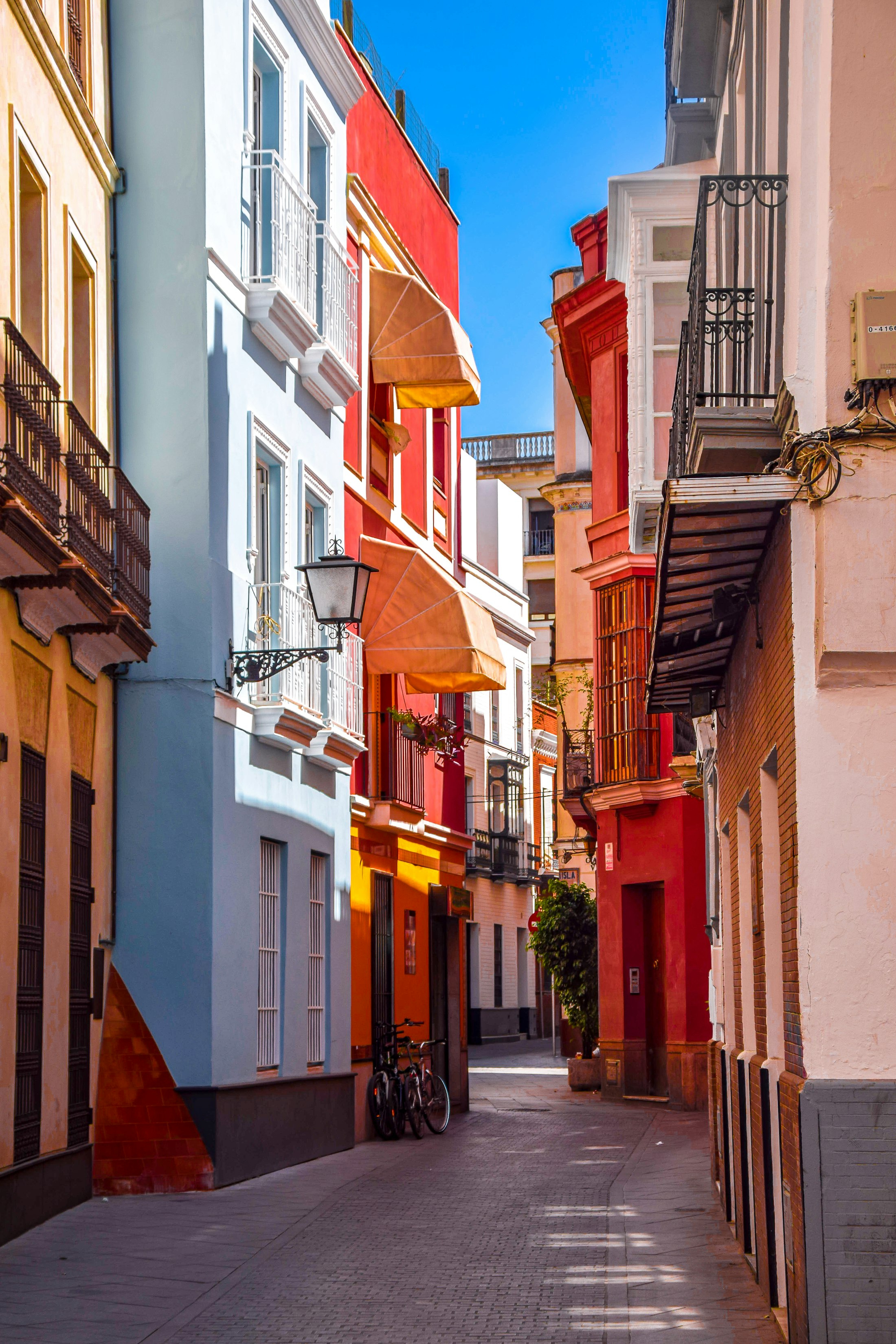
The last caseta has been dismantled, the polka-dot dresses returned to their garment bags, and the collective hangover of Feria de Abril is still settling over Seville like a warm compress. By mid-May, the tourists who came for the spectacle have moved on to Granada or the coast, leaving the Alameda de Hércules neighbourhood in a state of blissful, sun-drenched reprieve — its plane trees heavy with new shade, its terraces populated by locals who finally have their barrio back.
This guide maps the Alameda in its most honest season: the unhurried weeks between Feria's final sevillana and the crushing heat of June. It is a neighbourhood built for vermouth hours that stretch past three, for flamenco compás drifting from open rehearsal-room windows, and for the particular pleasure of a city exhaling. If you want Seville without performance, without queue, without the algorithmic crush of peak season — this is precisely when and where to find it.
1. The Alameda's Post-Feria Rhythm: What Changes and What Stays
Walk the Alameda de Hércules on any mid-May morning and you will notice the difference immediately. The promenade's twin Roman columns still anchor the southern entrance, but the crowds thin to dog walkers, retired men reading ABC on metal benches, and café owners hosing down pavement with unhurried precision. The energy has downshifted, and that is entirely the point.
The neighbourhood's identity as Seville's countercultural heart sharpens in the off-weeks. Street art on Calle Amor de Dios looks better without crowds blocking the murals. The Sunday flea market at the northern end of the Alameda shrinks to a handful of dedicated vendors — vintage ceramics, second-hand flamenco records, someone selling homemade vermouth from an unmarked bottle. Bargaining is expected.
You will find that bar terraces, impossibly packed during Feria, now operate at a civilised half-capacity. Waiters remember faces again. Conversations happen across tables rather than being shouted over them. The local rhythm reasserts itself: breakfast around ten, errands before the heat, a long vermouth hour, and evenings that do not start until the streetlights flicker on at nine thirty.
Avoid the mistake of treating the Alameda as a single strip. The real texture is in the side streets — Calle Pérez Galdós, Calle Castellar, the narrow lanes connecting to the Feria market street. This is where the neighbourhood lives year-round, and in May, it invites you in with unusual generosity.
Pro tip: The Sunday flea market operates roughly 10am to 2pm at the north end of the Alameda promenade. Arrive before 11 for the best ceramics; the serious dealers pack up early when foot traffic is light.
2. The Vermouth Hour: Where to Drink Like It's Always Been Noon
Vermutería La Carbonería (Calle Céspedes 21A, off the Alameda) is not the famous Carbonería — that flamenco cave is across town. This smaller bar, tiled floor to dado rail, serves house vermouth on tap from a ceramic barrel, poured over a single ice cube with a fat green olive and a twist of orange. Order a media and a plate of encurtidos. Do not rush this. The entire institution of vermut depends on your willingness to sit still.
Closer to the promenade, Duo Tapas at Alameda de Hércules 95 has refined the vermouth ritual without gentrifying it. Their vermouth rojo comes with a complimentary gilda — the Basque pintxo of anchovy, olive, and guindilla pepper. The terrace faces west, catching the late-morning light that turns the Alameda's plane trees almost luminous. In May, you can actually get a table without the strategic planning of a military operation.
For something less traditional, Bar Eslava's outpost near Plaza de San Lorenzo — a ten-minute walk from the Alameda — pours a vermut blanco with tonic and a sprig of rosemary that borders on cocktail territory. Purists will object, but the drink works in the rising May heat. Pair it with their slow-cooked egg on mushroom cream, which has earned a near-mythic reputation for good reason.
The unwritten rule of Alameda vermouth culture: you order one, maybe two, and you stay for the conversation. This is not a pub crawl. The point is the pause, the anchoring of your afternoon around something bittersweet and unhurried.
Pro tip: Ask for vermut del grifo (on tap) rather than bottled — it is fresher, cheaper, and signals to the bartender that you understand the local preference. Most Alameda bars charge between €2 and €3 for a copa on tap.
Stay in Seville
Top-rated hotels near Seville
Best locations · Verified reviews · Free cancellation
View deals
Expedia →3. Flamenco Without the Tablao: Rehearsal Rooms and Peñas of the Alameda
The Alameda sits at the centre of Seville's working flamenco geography. This is not about tourist tablaos with fixed curtain times and two-drink minimums. On Calle Castellar and surrounding streets, private academies and peñas flamencas run rehearsals through May as artists prepare for summer festival circuits. The sound leaks through open windows — a guitarist running bulerias, a dancer's zapateado hitting the wooden floor like controlled thunder.
Peña Torres Macarena on Calle Torrijiano — a five-minute walk north of the Alameda — hosts informal recitals on Thursday evenings that are technically open to anyone but feel wonderfully private. There is no cover charge; you buy a drink and sit in a room that smells of old wood and cigarette ghosts. The performers are local — sometimes students, sometimes veterans working through new material.
For something more structured, Fundación Cristina Heeren on Calle Pureza in Triana (a fifteen-minute walk across the river) opens its end-of-year student showcases in late May. These are free, intensely moving, and attended almost exclusively by other flamenco students and their families. You are witnessing craft in formation, which is more honest than any polished show.
The key distinction: in May, flamenco in the Alameda orbit is process, not product. You hear mistakes, repetitions, shouted corrections. You see dancers stretching in doorways. This is the art without its public face on, and it is more revealing than anything you will find on a booking platform.
Pro tip: If you hear flamenco through an open door and the space looks semi-public, it is generally acceptable to stand quietly at the threshold and listen. Do not photograph or record. Nod when you leave. This is the etiquette.
4. Eating Late and Eating Well: Alameda Kitchens in Quiet Season
Contenedor on Calle San Luis 50, a five-minute walk east of the Alameda, occupies a converted house with a courtyard and serves what might be the best seasonal menu in the neighbourhood. In May, expect salmorejo made with intensely ripe tomatoes from Los Palacios, grilled presa ibérica with a smoked pimentón glaze, and a cheesecake with Pedro Ximénez reduction that justifies the walk. Book for 10pm — earlier and you will eat alone.
On the Alameda itself, La Cantina at number 15 keeps things elemental. Their fried aubergine with sugarcane honey is a benchmark version of the dish, and the croquetas de pringá — made from the slow-cooked meats of a traditional Sevillian cocido — are dense, savoury, and slightly smoky. Two rounds of croquetas and a cold manzanilla constitute a legitimate dinner here, and nobody will judge you.
For breakfast or a late-morning second coffee, Virgen del Carmen on Calle Relator serves tostada con manteca colorá — toasted bread with paprika-spiced pork lard — that has no business being this satisfying at 10:30 in the morning. The café con leche is strong and served in a glass, Andalusian style. The décor has not been updated since the nineties, which is exactly the reassurance you want.
Skip the more conspicuously instagrammable brunch spots that have colonised the Alameda's south end. They serve to a different audience and at a different price point. The neighbourhood's real kitchens are on the side streets, marked by handwritten specials boards and the clatter of plates through a service window.
Pro tip: Contenedor does not always appear on mainstream booking apps. Call directly (+34 954 916 333) or walk in around 10:15pm on weeknights in May — you will likely get a courtyard table without a reservation.
5. The Mercado de Feria and the Alameda's Working Market Culture
The Mercado de la Feria on Calle Feria — the Alameda's eastern spine — is not a renovated gastro-market. It is a functioning neighbourhood market where residents buy fish, fruit, and meat from vendors they have known for decades. In May, with the tourist infrastructure focused elsewhere, the market operates at its most authentic pace. Go between 9am and noon on a weekday.
The fish stalls are the main event. Seville sits sixty miles from the coast, but the Mercado de la Feria receives daily deliveries from Huelva and Cádiz. You will see white prawns from Sanlúcar, chocos (cuttlefish) destined for frying, and whole dorada laid on ice. Even if you are not cooking, the visual theatre of the pescadería is worth the visit. Ask vendors what is freshest — they will tell you with blunt authority.
Outside the market, the Thursday morning street market along Calle Feria itself is the oldest in Seville, dating to the thirteenth century. Stalls sell everything from used books to copper pots to cheap household goods. It has none of the curated charm of a European flea market and all of the chaotic energy of a functioning street economy. In May, the stalls stretch further because there is room.
Pick up jamón croquettes and a cold beer from the bar at the market's corner entrance afterward. This is a standing-only, tile-counter operation where transactions are fast and the food is honest. You will spend under five euros and eat better than at most sit-down restaurants in the centro histórico.
Pro tip: The Thursday street market on Calle Feria runs roughly 9am to 1:30pm. The northern stretch near Calle Resolana has the best vintage finds — old ceramic tiles, brass hardware, and occasionally Feria de Abril memorabilia at post-season prices.
Stay in Seville
Top-rated hotels near Seville
Best locations · Verified reviews · Free cancellation
View deals
Expedia →6. After Dark: The Alameda's Night Terraces and the Art of Staying Put
By 9:30pm in May, the Alameda's promenade transforms. Families claim benches, teenagers cluster near the Hércules columns, and the terrace bars fill with a crowd that is almost entirely local. The air cools just enough to make sitting outside a pleasure rather than an endurance test. This two-hour window — before midnight, after the heat — is when the Alameda is at its most magnetic.
Bullbar at Alameda de Hércules 74 draws a creative, slightly older crowd with craft beers and a terrace that faces the promenade's widest stretch. The music stays low enough for conversation, which is a rarer achievement in Seville than it should be. Order a local IPA from Destraperlo brewery and the patatas bravas, which come with a surprisingly refined alioli.
For something with more edge, Fun Club on Alameda de Hércules has been the neighbourhood's anchor nightlife venue for over two decades. It hosts live music, DJ sets, and the occasional flamenco-electronic hybrid night that sounds terrible on paper and works brilliantly in practice. In May, the crowd is thinner and the door is open — no queue, no list, just a five-euro cover if there is a live act.
The Alameda's unspoken night rule: you pick one terrace and you commit. Bar-hopping is for the centro. Here, you settle into a spot, order rounds slowly, watch the promenade's human theatre unfold, and let the night find its own pace. By midnight, you will know the people at the next table. By one, you might have dinner plans for tomorrow.
Pro tip: Bring a light layer for after 11pm — the Alameda sits in a slight depression and catches a breeze off the Guadalquivir that can surprise in May. Locals keep a cardigan draped over their chair, and so should you.
7. Morning Walks: The Alameda to the Macarena Walls Before the Heat
Leave your accommodation by 8:30am and walk north along Calle Feria toward the Macarena gate. In May, the morning light in Seville is soft and golden without the punishing glare of summer. The route takes you past shuttered bars still exhaling last night's cigarette smoke, past bakeries pulling out the first trays of palmeras, and past the Basílica de la Macarena before the tour buses arrive.
The Murallas de la Macarena — the surviving stretch of Seville's twelfth-century Almohad walls — are best appreciated in near-solitude. In May mornings, you might share them with a jogger and a couple of stray cats. Walk the length of the wall from the Puerta de la Macarena to the Puerta de Córdoba. The gardens below are unkempt and beautiful, with orange trees dropping fruit that nobody collects.
On your return, stop at Confitería La Campana's satellite counter on Calle Orfila for a piononos — a small sponge roll filled with cream — and a café solo. The pastry costs under two euros and has been made the same way since your grandparents' generation, regardless of who your grandparents were. Eat it standing at the counter. This is the Sevillian way.
The entire walk, including the pastry stop, takes about ninety minutes and deposits you back at the northern end of the Alameda in time for the vermouth hour to begin. This is how mornings work here in May: gentle exertion followed by deliberate stillness. The city teaches you this rhythm if you let it.
Pro tip:The Basílica de la Macarena opens at 9am and is free to enter. The weeping Virgin — Seville's most venerated religious image — sits in her glass case without the Semana Santa crowds. You may have the entire nave to yourself.
Essential tips
Mid-May temperatures in Seville average 28-32°C. The Alameda's plane trees provide genuine shade, but carry water and plan indoor time between 2pm and 6pm. The neighbourhood empties during these hours — follow the locals' lead.
Several Alameda bars and all Mercado de la Feria vendors still operate cash-first. Carry €20-30 in small notes. The Unicaja ATM on the promenade's east side charges no foreign-card fees and rarely has a queue in May.
The Alameda is a 12-minute walk from the cathedral quarter or a quick ride on the C5 circular bus. Taxis from Santa Justa station cost €8-10. Do not drive — parking in the Alameda zone requires a resident permit and enforcement is aggressive.
Check the exact Feria de Abril dates before booking — they shift annually and sometimes extend into early May. The quiet window this guide describes typically begins 5-7 days after Feria ends and lasts until early June when summer heat becomes the dominant fact.
The Alameda's cobblestones and uneven pavements punish thin-soled shoes. Wear comfortable flats or low-profile sneakers. Heels are for Feria — in May, the neighbourhood is dressed down and expects you to be as well.
Ready to visit Seville?
Book your hotel, flights, and activities through our Expedia-powered search.


