In This Guide
- 1.The Txotx Ritual at Petritegi Sagardotegia
- 2.Pintxos and Pours in the Parte Vieja
- 3.Txakoli de Getaria: The Other Glass in Your Hand
- 4.The Cider Houses of Astigarraga Valley
- 5.Morning at La Bretxa Market and the Cider Vinegar Connection
- 6.The Txuleta Question: Where to Eat the Definitive Steak
- 7.Sunset Txakoli on La Concha and the Evening Ritual
The Atlantic fog hasn't fully lifted when the first wooden cider barrels are rolled out onto Calle Mayor in San Sebastián's Parte Vieja. It's May, and the city's txotx season — the communal ritual of tasting cider straight from the barrel — is reaching its final, most exuberant weeks. The briny air carries notes of green apple and wet oak, and every sidrería within walking distance of La Concha hums with a particular energy that only fermented fruit and Basque conviviality can produce.
This guide maps the essential experiences of San Sebastián's May cider season, from the traditional sagardotegiak (cider houses) in the hillside suburbs of Astigarraga to the txakoli-splashed pintxos counters of the old town. You'll learn where to catch the last barrel openings of the year, which kitchens pair cider with salt cod and bone-in txuleta in ways that feel almost liturgical, and why timing your visit to this narrow window between late spring and early summer unlocks a side of Donostia that even seasoned visitors rarely encounter.
1. The Txotx Ritual at Petritegi Sagardotegia
Drive fifteen minutes south from the city centre to Petritegi Sagardotegia on the Astigarraga road and you'll find the archetype of a Basque cider house. The 600-year-old farmstead stores enormous kupelak — chestnut barrels that hold upwards of 6,000 litres each — and between January and late May, you stand beneath the spigot, glass tilted, catching a thin stream of naturally fermented cider as it arcs through the air.
The txotx call is simple: someone shouts 'txotx!' and everyone lines up. You hold your glass at a forty-five degree angle roughly a metre below the stream. The goal is a thin, aerated pour that releases the cider's carbonation on contact. Don't fill your glass more than a finger's width — you'll return to the barrel dozens of times throughout the meal, and pacing is the entire point.
Petritegi's set menu hasn't changed in decades, and that's the beauty. You'll eat tortilla de bacalao, cod omelette glistening with olive oil, followed by bacalao frying in green pepper sauce. The txuleta — a bone-in ribeye from retired dairy cows, cooked over charcoal until the fat renders into something almost sweet — arrives on a wooden board. Idiazabal cheese with quince paste and walnuts closes the meal.
Avoid visiting on weekends in early May without a reservation. Petritegi fills with locals celebrating the tail end of the season. Book midweek, arrive by 1:30 PM, and wear shoes you don't mind getting sticky — the stone floors are permanently glazed with generations of spilled cider.
Pro tip:Ask for the 'kupela zaharra' — the older barrel. Petritegi's cidermakers quietly acknowledge that the rear barrels, filled earliest in the season, develop a funkier, more complex profile by May. Most tourists stick to the front.
2. Pintxos and Pours in the Parte Vieja
Back in the old town, the cider-season energy spills into the pintxos bars along Calle Fermín Calbetón and Calle 31 de Agosto. At Bar Nestor (Calle Pescadería 11), the legendary tortilla española drops at 1 PM and 8 PM sharp — exactly two per day. You queue early or you miss it entirely. Pair your slice with a glass of Basque natural cider, served cold from the bottle with none of the ceremony of the sagardotegi but all the tartness.
Two doors down, Gandarias offers a txuleta pintxo — a thick seared steak bite on bread — that condenses the cider house experience into a single mouthful. Order it with a pour of Isastegi cider, one of the more refined producers from the Astigarraga valley. The acidity slices through the beef fat with surgical precision, and you'll understand why this pairing has survived centuries.
For something less traditional, step into Borda Berri on Calle Fermín Calbetón. Their risotto-style rice with idiazabal and seasonal mushrooms is quietly one of the best bites in the neighbourhood. The bartender will steer you toward a glass of txakoli from Getaria if you ask, but in May, insist on natural cider — it's the season's right of first refusal.
The Parte Vieja operates on its own clock. Most bars open at noon and again at 7:30 PM. The dead hours between 3:30 and 7 are sacrosanct. Don't wander in expecting service — you'll find shuttered doors and the faint sound of kitchen prep behind them.
Pro tip:At Bar Nestor, slip in at 12:45 PM and put your name on the tortilla list with the bartender. There's no formal queue system — regulars simply make eye contact and nod. Be polite, be early, be persistent.

Stay in San Sebastian
Top-rated hotels near San Sebastian
Best locations · Verified reviews · Free cancellation
View deals
Expedia →3. Txakoli de Getaria: The Other Glass in Your Hand
No article titled 'Txakoli and Tides' can ignore the wine itself. Txakoli — a slightly sparkling, bone-dry white made from Hondarrabi Zuri grapes — comes from vineyards that practically tumble into the Bay of Biscay. The denomination of origin Getariako Txakolina covers a small coastal strip just west of San Sebastián, and in May the previous autumn's vintage is fresh, electric, and everywhere.
Visit Bodega Txomin Etxaniz in Getaria, a twenty-five-minute drive along the coastal GI-3440. The winery occupies a steep hillside above the fishing port, and their tasting room offers direct pours of the current vintage alongside an older reserve bottling that spends additional months on lees. The contrast is instructive — young txakoli snaps with green apple and saline; the reserve softens into white peach and bread dough.
Back in Donostia, the traditional high pour is non-negotiable. Bartenders hold the bottle at shoulder height and let txakoli splash into a wide, flat glass from a dramatic distance. This aerates the wine and amplifies its natural effervescence. You drink it immediately — txakoli in the glass loses its sparkle within minutes. Never nurse it.
Pair txakoli with anchoas de Getaria at Txepetxa (Calle Pescadería 5), where the anchovy pintxos come in over a dozen variations — with spider crab, with foie, with roasted pepper — each one a small monument to the Cantabrian anchovy. The wine's salinity mirrors the fish, and the acidity resets your palate between bites.
Pro tip:At Txomin Etxaniz, ask about their 'Berezia' bottling — a limited selection from the oldest vineyard parcels. It's rarely exported and often only available at the winery itself during spring months.
4. The Cider Houses of Astigarraga Valley
Astigarraga is cider's spiritual capital. This unremarkable suburb five kilometres south of San Sebastián contains more sagardotegiak per square kilometre than anywhere else in Europe. Beyond Petritegi, seek out Zelaia (Barrio Gurutzeta, Astigarraga), a family-run operation where the cider skews drier and more tannic than its neighbours. The dining room is spartan — long communal tables, paper placemats, fluorescent lighting — and utterly perfect.
The set menu at every traditional cider house follows the same sacred sequence: cod omelette, cod in green sauce or fried with peppers, txuleta, cheese with quince. Prices hover around €35-40 per person in 2024, and that includes unlimited cider from the barrels. You won't find wine lists. You won't find salads. The menu exists to complement the cider, not the other way around.
By late May, the barrels are running low and the cider's character shifts. It becomes more acidic, occasionally volatile — what cidermakers call 'going to vinegar.' Some purists prefer this final-weeks intensity. If you find a barrel that's turned slightly sharp, lean into it. Splash it over your cod. It functions almost as a condiment at this stage, not unlike the acetic edge of a good Basque cider vinegar.
To visit multiple cider houses in one day, hire a taxi from the Buen Pastor cathedral area. A round trip with two-hour wait runs roughly €40. The K1 bus from Amara station also reaches Astigarraga in twelve minutes, though the last return bus leaves at 10 PM — plan accordingly if your txotx session runs long.
Pro tip:At Zelaia, ask the family if they'll open the 'bodega txikia' — a small secondary cellar with experimental barrels. They sometimes blend apple varieties in unusual proportions here, and tastings are informal and free if you're dining.
5. Morning at La Bretxa Market and the Cider Vinegar Connection
Start a May morning at Mercado de la Bretxa (Boulevard Zumardia, Parte Vieja), where the ground-floor fishmongers display the previous night's catch on beds of crushed ice. In May, look for bonito del norte — albacore tuna that arrives with the warming currents — and percebes, the prehistoric-looking goose barnacles that command absurd prices because harvesting them from wave-battered rocks is genuinely dangerous.
Upstairs, the produce vendors sell local Tolosa beans, guindilla peppers, and — critically — artisanal Basque cider vinegar. Sidra Bereziartua produces a cider vinegar aged in chestnut barrels that rivals any sherry vinegar you've tasted. A 500ml bottle costs around €8 and is the single best edible souvenir you'll carry home from San Sebastián. Find it at the Productos Vascos stall on the upper level.
The connection between cider and vinegar isn't incidental. Historically, barrels that turned too acidic were simply repurposed. Today, the best producers intentionally manage the acetification process, creating vinegars with layers of apple, wood, and a haunting floral quality. Splash it on grilled peppers, drizzle it over fresh anchovies, or simply pack it in your suitcase and rediscover San Sebastián every time you dress a salad.
After the market, walk to the port end of the Parte Vieja and grab a café con leche at Bar La Cepa (Calle 31 de Agosto, 7). The terrace catches the morning sun and overlooks the boats returning to harbour. It's the best possible place to sit and plan which cider house you'll visit that afternoon.
Pro tip:Ask the Bretxa fishmongers to clean and portion your bonito for free — they'll do it expertly. Then carry it to a nearby sidrería for them to grill; several Astigarraga cider houses will cook market fish you bring in for a small corkage-style fee.
Stay in San Sebastian
Top-rated hotels near San Sebastian
Best locations · Verified reviews · Free cancellation
View deals
Expedia →6. The Txuleta Question: Where to Eat the Definitive Steak
The Basque txuleta is not a steak in any conventional sense. It's a thick-cut bone-in rib from a retired dairy cow — typically a Rubia Gallega or old Holstein — aged for at least thirty days, sometimes sixty. The meat is deeply marbled, almost yellow with intramuscular fat, and the flavour profile leans mineral and funky, closer to aged cheese than to the clean beefy taste of a younger animal.
Outside the cider houses, the definitive urban txuleta lives at Elkano in Getaria (Calle Herrerieta 2), though technically this is a grilled fish restaurant. Their steak appears on no menu — you ask, and if they have the right piece, they'll cook it. The more reliable option is Casa Julián de Tolosa (Calle Santa Clara 6, San Sebastián), where the vitrina displays the day's cuts and you select your own slab. Expect to pay €60-80 per kilo.
The correct preparation involves only coarse salt and a blisteringly hot charcoal grill. The exterior chars to a near-black crust while the interior stays rare to medium-rare. You cut it at the table, and the juices should pool on the wooden board within seconds. Pair it with natural cider or, if you're feeling extravagant, a bottle of Reserva txakoli. Avoid any sauce — requesting anything beyond salt is considered mildly offensive.
If Casa Julián has a queue — and at 9 PM on a Friday in May, it will — walk around the corner to Gandarias (Calle 31 de Agosto 23) for a txuleta pintxo that distils the experience into a single glorious bite. You'll sacrifice the theatre of the full presentation, but the quality of meat remains exceptional.
Pro tip: At Casa Julián, ask the waiter to show you cuts from different ageing periods. The 45-day-aged ribs have a nuttier, more concentrated flavour than the 30-day standard, and cost only marginally more per kilo.
7. Sunset Txakoli on La Concha and the Evening Ritual
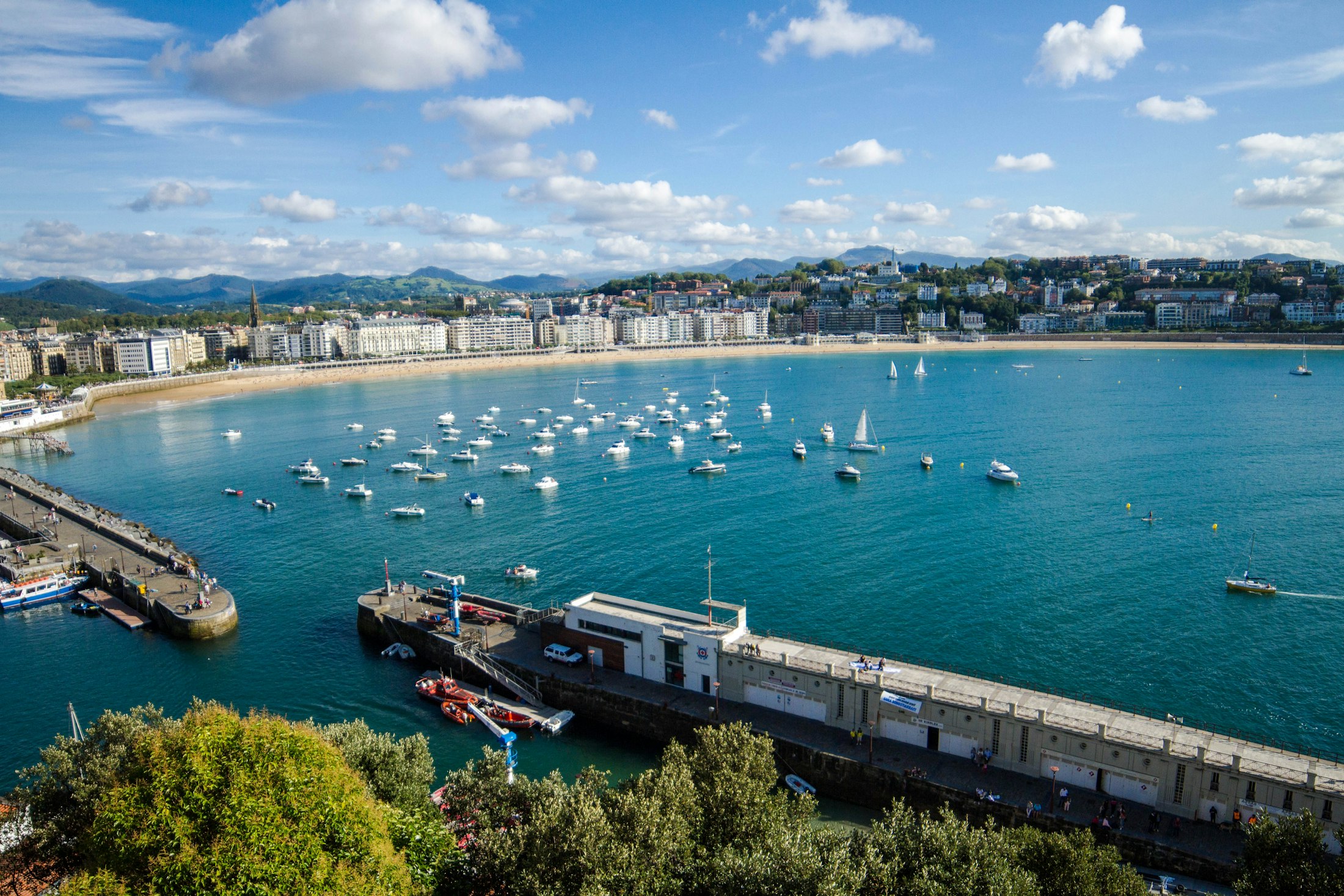
By late afternoon, the May light along La Concha beach turns the bay into a sheet of hammered bronze. Walk the entire promenade from the Ayuntamiento to the Pico del Loro viewpoint at the western end — roughly twenty-five minutes at a contemplative pace — and you'll pass the Belle Époque railings, the Miramar palace gardens, and clusters of locals settling onto the seawall with bottles of txakoli in hand.
Join them. Pick up a bottle of Ameztoi txakoli from any Parte Vieja wine shop — Vinoteca Vides on Calle San Juan is reliable and well-curated — along with a couple of flat glasses. Find a spot on the rocks near the La Perla thalassotherapy centre, pour from height, and watch the tide recede. No pintxo required. The wine is enough, and the view earns its reputation honestly.
As the sun drops, the evening pintxos circuit begins. The Basque tradition of the txikiteo — moving between bars, one drink and one bite at each — is at its most vibrant in May, when the terraces reopen and the crowds haven't yet reached August density. Start at Ganbara (Calle San Jerónimo 21) for their legendary grilled wild mushrooms and jamón, then move to A Fuego Negro on Calle 31 de Agosto for more avant-garde creations.
End the night at La Viña (Calle 31 de Agosto 3) with their burnt Basque cheesecake — the original, the one that launched a thousand imitations. It's wobbly, caramelised, and slightly tangy. Pair it with the last glass of natural cider you can find, and let the acidity cut through the richness. This is how the season closes each night: sweet, sharp, and impossible to replicate anywhere else.
Pro tip:Vinoteca Vides stocks limited-production txakoli from tiny estates that never reach export markets. Ask specifically for Hiruzta's 'Berezia' or Ulacia's single-vineyard bottling — both under €15 and extraordinary.
Essential tips
Txotx season officially runs January through May, but late May offers the most concentrated flavours and thinnest crowds. Book cider house reservations at least two weeks ahead for weekday lunches, three weeks for weekends.
Wear dark clothing and closed-toe shoes to cider houses. The barrel room floors are perpetually wet with cider, and the spray from txotx pours will inevitably mark light fabrics. Leather shoes clean easily; canvas trainers do not.
The Lurraldebus K1 line connects San Sebastián's Amara station to Astigarraga every 30 minutes. A Mugi transit card (available at any Lurraldebus kiosk) saves roughly 40% versus cash fares and works across all regional buses.
May temperatures in San Sebastián average 14-19°C but the Atlantic wind off the bay drops perceived temperature significantly. Pack a light jacket for evening pintxos crawls and mornings on the promenade — the sun is deceptive.
Most pintxos bars in the Parte Vieja are cash-preferred despite accepting cards. Carry €50-60 in small notes for a full evening txikiteo. Pintxos typically run €2.50-4.50 each; cider and txakoli pours €2-3.50.
Ready to visit San Sebastian?
Book your hotel, flights, and activities through our Expedia-powered search.


