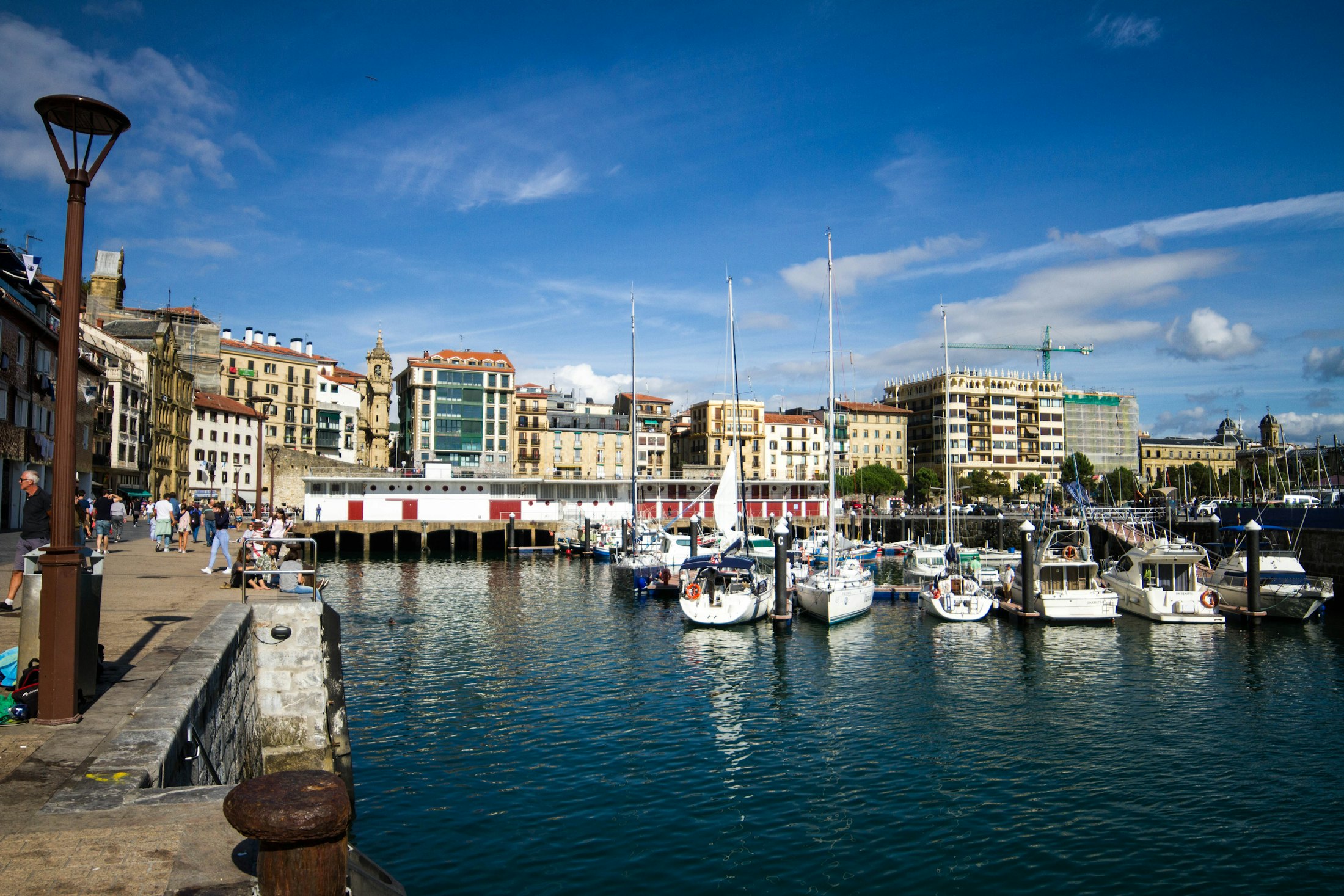
In This Guide
- 1.Topa Sukalderia: The Morning-After Tortilla That Starts Everything
- 2.Bar Zabaleta: Where the Gilda Gets a Surf-Town Makeover
- 3.Bodega Donostiarra: The Unchanged Counter in a Changing Neighbourhood
- 4.Saltyskin Coffee and the Zurriola Promenade Ritual
- 5.Hidalgo 56: The New-Wave Pintxo Bar Rewriting the Rules
- 6.Kursaal Berri: Closing the Loop with Burnt Cheesecake and Patxaran
The Atlantic has finally exhausted itself. After a three-day northwest swell that turned Zurriola Beach into a washing machine of whitewater, the surfers of Gros are peeling off wetsuits and filing into the neighbourhood's tight grid of streets with salt-crusted hair and acute hunger. This is when the barrio reveals its truest self — not as San Sebastián's younger sibling, but as its most honest eating district, where neoprene hangs from balconies and the pintxo bars hum with post-session electricity.
This guide traces a specific route through Gros — eight stops that map the collision point between surf culture and culinary ambition in San Sebastián's most underestimated quarter. You won't find the polished marble of Parte Vieja here, nor the Michelin-starred hush of Centre. What you will find are chefs who shape their menus around tide charts, bars where the guy dripping on the floor beside you just paddled into overhead waves, and a pintxo trail that rewards the curious eater with some of the most inventive bites in the Basque Country.
1. Topa Sukalderia: The Morning-After Tortilla That Starts Everything
Your trail begins at Topa Sukalderia on Calle Bermingham 18, a corner spot with steamed-up windows and a no-nonsense counter. This is where Gros wakes up. By 10 a.m. the first surfers are already planted on stools, damp boardshorts visible under fleece jackets, working through coffee and the house tortilla — a slow-cooked disc with a trembling, almost custard-like interior.
Order the tortilla de patata pintxo, which arrives on a small plate with a smear of red pepper compote. The eggs come from a farm in Hernani, fifteen minutes south, and you can taste the difference — richer yolk, deeper colour. Pair it with a cortado, not a café con leche; the smaller volume matches the density of the tortilla without drowning the flavour.
The crowd here is a reliable mix of construction workers, dog walkers, and dawn patrol surfers comparing wave counts. There is no English menu and no Instagram presence. You point, you eat, you leave a euro tip on the counter. This is not performance dining — it is fuel, executed with quiet Basque precision.
Avoid the croissants. They arrive frozen from a supplier and are the one weak link. Stick to the griddle items — the tortilla, the bikini sandwich with Idiazábal cheese — and you will understand why locals treat this place as a non-negotiable first stop.
Pro tip: Arrive before 10:30 a.m. on weekdays. After that, the tortilla sells out and they switch to a second-rate reheated version. Weekend batches last slightly longer but draw larger crowds from the surf schools.
2. Bar Zabaleta: Where the Gilda Gets a Surf-Town Makeover
Walk east along Calle Zabaleta until you hit number 51, where Bar Zabaleta occupies a modest ground-floor space with a zinc counter and a chalkboard that changes daily. The owners, Iñaki and Miren, are former competitive longboarders who pivoted to hospitality in 2017 without losing any of the subculture's irreverence.
Their signature is a deconstructed Gilda — the iconic Basque pintxo of olive, anchovy, and guindilla pepper — reimagined as a tempura bite. The anchovy is from Getaria, salt-cured for fourteen months, then wrapped around a Gordal olive and flash-fried in a batter so light it barely registers. It arrives on a wooden board with a pipette of pickled pepper oil you squeeze over the top.
You should also try the txangurro toast: spider crab from Pasaia mixed with a subtle béchamel, gratinéed and served on sourdough from Sakana bakery. It is rich without being heavy and pairs exceptionally well with a glass of Hondarrabi Zuri txakoli, which Iñaki pours from a height that suggests years of practice.
The bar fills quickly after 1 p.m. and stays packed through the lunch window. Standing room only is the norm; do not expect a seat. The energy is loud and convivial — surfboards stacked against the exterior wall, the smell of neoprene mixing with fried batter in a way that somehow works.
Pro tip:Ask Iñaki for the off-menu 'marea' plate — a rotating selection of three pintxos based on whatever the Hondarribia fleet landed that morning. It costs around eight euros and is consistently the best value in the neighbourhood.
Stay in San Sebastian
Top-rated hotels near San Sebastian
Best locations · Verified reviews · Free cancellation
View deals
Expedia →3. Bodega Donostiarra: The Unchanged Counter in a Changing Neighbourhood
At Calle Peña y Goñi 13, Bodega Donostiarra has operated since 1928 without any apparent desire to modernise. The tiles are original. The vermouth tap is brass. The anchovies come from the same family in Santoña that supplied the bar when Franco was still alive. In a neighbourhood increasingly colonised by surf brands and coworking spaces, this place is an anchor.
Order the anchoa en salazón on its own — no bread, no garnish. They serve it on a white plate with a drizzle of arbequina olive oil, and the fish is so clean and firm it practically dissolves into savoury butter on your tongue. Follow it with a small glass of the house red, a young Rioja Alavesa that costs under two euros and is better than it has any right to be.
The clientele skews older and Basque-speaking, but the post-surf crowd has begun filtering in over the past few years, drawn by word of mouth and the conspicuous absence of any online marketing. You will not find this place on most food tours, which is precisely the point.
Do not order the croquetas here — they are competent but unremarkable. This bar does two things exceptionally: anchovies and vermouth. Respect the specialisation. Sit with the regulars, keep your phone in your pocket, and let the bartender set the pace.
Pro tip:The vermouth on tap is a house blend from a producer in Pamplona. Order it 'con sifón' — with a splash of soda water — the way the older regulars drink it. It opens up the botanicals and cuts the sweetness.
4. Saltyskin Coffee and the Zurriola Promenade Ritual
Between pintxo stops, you need the Zurriola promenade. Walk the full length from the Kursaal end to the river mouth, coffee in hand from Saltyskin Coffee at Calle Mayor 2 in Gros. This Australian-Basque specialty café opened in 2021 and has become the unofficial clubhouse for the neighbourhood's surf community, stocking boards by the door and flat whites made with beans from a Tolosa roaster.
Order the flat white with oat milk — they use Oatly Barista, and the texture is genuinely better than the dairy option here. Take it to go and walk towards the breakwater at the eastern end of Zurriola, where you can watch surfers drop into the rivermouth peak, a fast left that only works on the outgoing tide.
This pause matters. The pintxo trail in Gros is not a sprint; it is calibrated to the rhythm of surf checks and espresso. Locals will eat one pintxo, walk to the beach, assess the conditions, then circle back for another. You should do the same. The promenade gives you space to digest and recalibrate.
On big swell days, the wave watching from the Kursaal end is spectacular — sets wrapping around the headland, spray catching the light. Even if you do not surf, the energy is infectious. You will see photographers with long lenses, coaches with binoculars, and a quiet gallery of retired fishermen who have been watching this break for decades.
Pro tip: Check the Zurriola webcam on magicseaweed.com before you walk out. If the swell is dropping, the afternoon glass-off around 5 p.m. produces the best light and cleanest waves for photography from the promenade.
5. Hidalgo 56: The New-Wave Pintxo Bar Rewriting the Rules
Hidalgo 56 on Calle San Francisco occupies a former surf shop — you can still see the outline of the old signage above the door. Chef Amaia Arregui, who staged at Mugaritz before returning to her home neighbourhood, runs a pintxo bar that treats each bite as a composed dish. The space is minimal: concrete floors, open kitchen, eight stools, standing room for maybe twenty.
The standout is the smoked eel pintxo — a sliver of eel from the Oria river, cold-smoked over beechwood, served on a black rice cracker with a gel made from green apple and wasabi. It sounds fussy on paper but lands with absolute clarity on the palate: smoky, sweet, sharp, and gone in two bites. It costs three euros and rivals dishes at restaurants charging ten times that.
Amaia changes the menu weekly based on market availability, but the foie gras bonbon with Pedro Ximénez reduction is a semi-permanent fixture and worth ordering every time. The wine list is short and entirely Basque — five txakolis, two Navarran reds, a single cider from Astigarraga.
This is where the collision between surf culture and haute cuisine is most visible. Amaia surfs most mornings before service, and her regulars include several professional surfers who live in the neighbourhood. The conversation flows between wave height and fermentation techniques without any irony. In Gros, these worlds are not separate — they share a postcode and a palate.
Pro tip:Thursday evenings Amaia runs a 'tabla de prueba' — a tasting board of five experimental pintxos she is workshopping for the following week. It costs twelve euros and is only available to the first ten customers who ask.
Stay in San Sebastian
Top-rated hotels near San Sebastian
Best locations · Verified reviews · Free cancellation
View deals
Expedia →6. Kursaal Berri: Closing the Loop with Burnt Cheesecake and Patxaran
Your trail ends where Gros meets the river, at Kursaal Berri on Calle Zurriola 22, directly facing Moneo's Kursaal auditorium. This is not the neighbourhood's most fashionable bar — the lighting is flat, the decor unremarkable — but it serves what many locals consider the best tarta de queso in the city, and in San Sebastián that claim carries serious weight.
The cheesecake is Basque-style: burnt top, creamy and almost molten centre, made with a blend of cream cheese and Idiazábal. It arrives in a thick wedge with no garnish, no sauce, no distraction. Eat it with a small spoon and follow each bite with a sip of patxaran — the sloe berry liqueur from Navarra that the bar serves ice-cold from a freezer bottle.
The combination of burnt dairy fat and herbal anise liqueur is one of the great unsung pairings in Basque gastronomy. Most tourists encounter tarta de queso at La Viña in the old town, surrounded by selfie sticks. Here, you eat it in relative peace, watching the sun drop behind Monte Urgull through salt-streaked windows.
This is also a reliable spot for a final surf check. The bar's terrace offers a direct line of sight to the Zurriola break, and by late afternoon the regulars are already planning tomorrow's dawn patrol over their second patxaran. You are welcome to join the conversation — in Gros, a shared enthusiasm for waves or food is all the introduction you need.
Pro tip:Order the patxaran 'solo, sin hielo' — neat, without ice. The bar's freezer keeps it at the perfect temperature already, and ice dilutes the delicate sloe flavour that makes artisanal patxaran distinct from the commercial supermarket versions.
Essential tips
Gros pintxo bars follow surf rhythms, not tourist schedules. Peak pintxo time is 1–2 p.m. and 8–9:30 p.m. Arriving outside these windows means half-empty counters and reheated bites. Time your trail to match local meal cadence.
Most Gros bars are cash-friendly but increasingly accept cards for amounts over five euros. Carry small bills and coins for single pintxos. Budget roughly two to three euros per pintxo and one-fifty to two-fifty per drink.
The entire Gros pintxo trail fits within a fifteen-minute walking radius. Wear comfortable shoes — you will be standing at most bars. Leave heels and formal wear for Parte Vieja restaurants. Gros dress code is casual to the point of boardshorts being acceptable.
Learn three phrases: 'Pintxo bat, mesedez' (one pintxo, please), 'Txakoli bat' (one txakoli), and 'Eskerrik asko' (thank you in Basque). Using Euskara instead of Spanish in Gros earns genuine warmth from bartenders.
Park at the underground car park beneath Plaza Pio XII if driving. Street parking in Gros is nearly impossible during surf season. Better yet, walk across the Santa Catalina bridge from Centro — the approach gives you a panoramic read of the surf conditions at Zurriola.
Ready to visit San Sebastian?
Book your hotel, flights, and activities through our Expedia-powered search.


