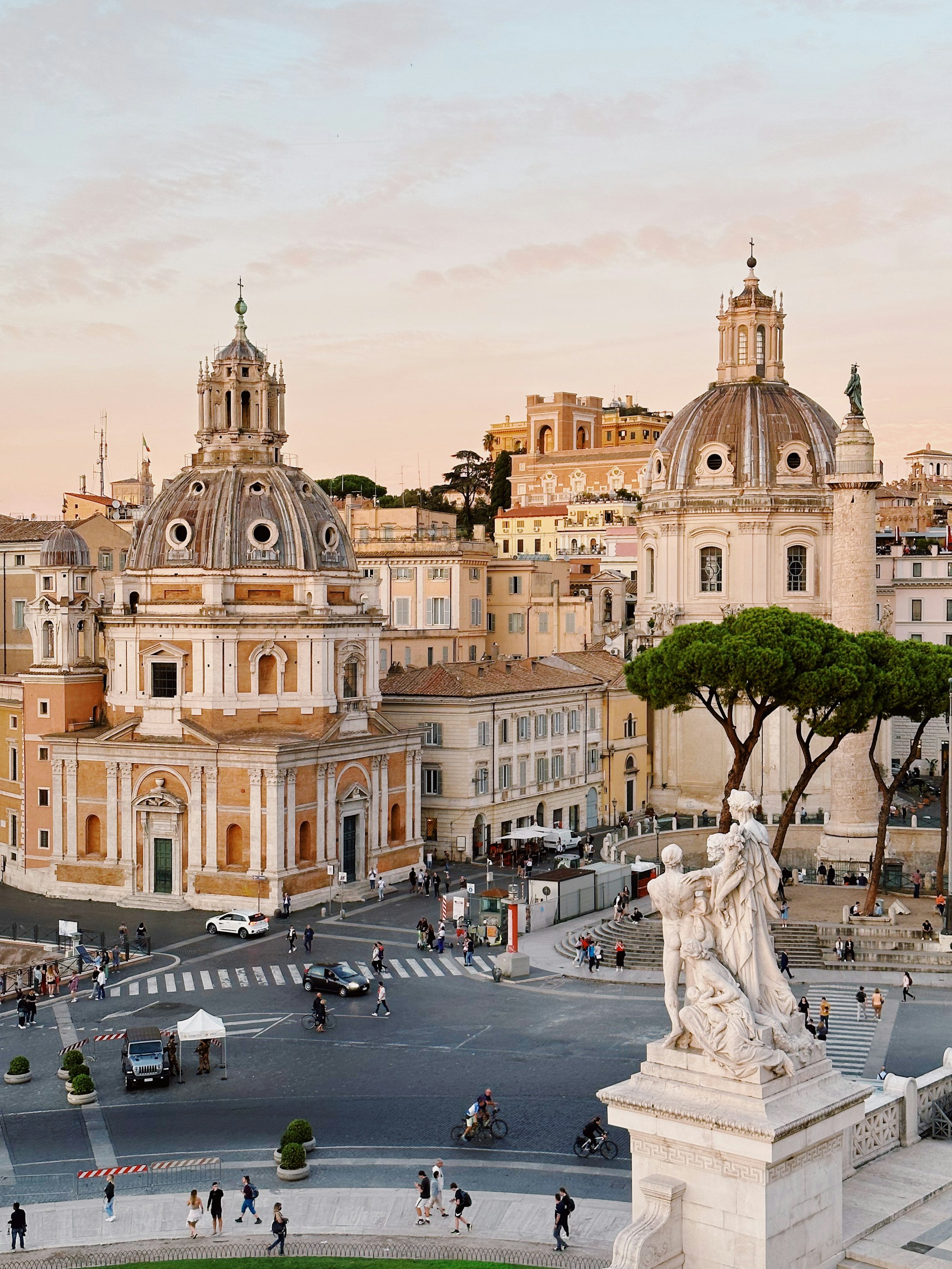
In This Guide
- 1.The Secret Rose Garden at Sunset: Roseto Comunale on Aventine Hill
- 2.Quinto Quarto 101: Understanding Rome's Fifth Quarter Cuisine
- 3.Dinner at Flavio al Velavevodetto: The Mountainside Trattoria
- 4.Morning at Mercato di Testaccio: The New Market Hall
- 5.Aperitivo on Via di Monte Testaccio and the MACRO Testaccio Scene
- 6.The Protestant Cemetery: Keats, Shelley, and the Quietest Hour in Rome
- 7.Late-Night Supplì and Gelato: The After-Hours Ritual
On a warm May evening in Testaccio, the air smells of jasmine and simmering oxtail. Romans spill from trattorias onto cobblestones still radiating the day's heat, wine glasses catching the last copper light. This is Rome's most stubbornly authentic neighbourhood — a former slaughterhouse district turned culinary ground zero, where butchers' grandchildren now pour natural wine beside street art murals, and a secret hilltop garden opens its gates for barely six weeks each spring.
This guide maps a neighbourhood that most visitors never reach, despite it sitting just fifteen minutes south of the Colosseum. You'll find the exact weeks to visit the Roseto Comunale at twilight, the specific dishes that define quinto quarto cuisine and where to eat them without a reservation catastrophe, and the market stalls, dive bars, and cemetery walks that make Testaccio the truest expression of working-class Roman identity still intact in the historic centre.
1. The Secret Rose Garden at Sunset: Roseto Comunale on Aventine Hill
Each year from late April through mid-June, the Roseto Comunale on Via di Valle Murcia opens free to the public, and most tourists have no idea it exists. Perched on the Aventine Hill directly above Testaccio, its eleven hundred rose varieties bloom against a panorama of Palatine ruins and umbrella pines. Visit in May's final two weeks for peak saturation — the Bourbon and Damask roses are intoxicating.
Time your visit for 7:00 to 8:00 PM, when coach groups have gone and golden hour transforms the terraces. The garden's pathways are laid out in the shape of a menorah, honouring the Jewish cemetery that occupied this slope until 1934. It's a detail you'll only notice from the upper terrace, looking down through the geometric beds.
After the garden, walk five minutes downhill to Piazza dei Cavalieri di Malta for the famous bronze keyhole view of St. Peter's dome, perfectly framed by hedgerows. The queue is short at this hour. Then descend into Testaccio proper via the staircase on Clivo di Rocca Savella, arriving hungry at street level just as restaurants begin their evening service.
Avoid weekends if possible — Saturday afternoons draw Roman families for picnics along the terraces. A Tuesday or Wednesday evening gives you near-solitude among the Heritage roses, with the distant clatter of Testaccio's kitchen prep rising from below.
Pro tip:Bring a bottle of Frascati from the Testaccio market and drink it on the upper terrace bench facing south — there's no prohibition on alcohol, and the sunset view toward EUR is the neighbourhood's best-kept secret.
2. Quinto Quarto 101: Understanding Rome's Fifth Quarter Cuisine
Quinto quarto — literally 'fifth quarter' — refers to the offal left after a butchered animal's four prime cuts went to Rome's nobility, clergy, military, and bourgeoisie. The slaughterhouse workers of Testaccio received the remainder: tripe, tail, sweetbreads, intestines, and tongue. From poverty came genius. These ingredients became the neighbourhood's culinary identity, and they remain sacred here.
The essential dishes to understand are four. Coda alla vaccinara is oxtail braised for hours with celery, tomato, pine nuts, and cocoa — rich, falling-apart tender, almost Moorish in complexity. Trippa alla romana is honeycomb tripe simmered in tomato sauce with pecorino and mint. Pajata uses the intestines of milk-fed veal, still containing chyme, served over rigatoni. Coratella is lamb offal sautéed with artichokes, a springtime staple.
Don't approach these dishes as novelty eating. Romans consider quinto quarto comfort food, not daring cuisine. If you wrinkle your nose at a menu description, you'll quietly mark yourself as an outsider. Approach with the same appetite you'd bring to a Sunday roast. The flavours are deep, mineral, and profoundly satisfying.
May is ideal for quinto quarto because spring lamb is at its peak, meaning coratella and abbacchio preparations are at their most tender. The artichokes — specifically the local romanesco variety — overlap with lamb season through mid-May, creating the year's most celebrated pairing on Testaccio tables.
Pro tip:Ask for 'mezzo porzione' (half portion) if you want to sample multiple quinto quarto dishes in one sitting — most traditional trattorias will accommodate this request without judgement, and it lets you try both the coda and the trippa.
Stay in Rome
Top-rated hotels near Rome
Best locations · Verified reviews · Free cancellation
View deals
Expedia →3. Dinner at Flavio al Velavevodetto: The Mountainside Trattoria
Built literally into Monte Testaccio — the ancient hill of discarded Roman amphorae — Flavio al Velavevodetto at Via di Monte Testaccio 97 is the neighbourhood's most reliable quinto quarto restaurant. The dining room's back wall is exposed pottery shards from the second century. Request a table near that wall and you're eating against two thousand years of trade history.
Order the coda alla vaccinara here. Flavio's version is benchmark: slow-braised until the collagen dissolves into the sauce, with bitter cocoa and raisins adding depth without sweetness. Follow it with the rigatoni alla gricia, which at Flavio's arrives with a perfectly emulsified guanciale and pecorino cream. Skip the desserts — they're competent but unremarkable.
Reservations are essential on Friday and Saturday evenings; call at least three days ahead. Midweek, you can often walk in by 8:15 PM if you're willing to wait fifteen minutes at the bar with a glass of Cesanese. The house wine is serviceable, but ask for the Donna Paola from Cantine San Marco for something more interesting at a fair markup.
Pricing is honest — expect €35 to €45 per person with wine for a full multi-course meal. This is not a tourist-trap neighbourhood, and the clientele reflects that: postal workers, architecture students from Roma Tre university, and extended families celebrating unremarkable Tuesdays.
Pro tip:After dinner, walk around Monte Testaccio itself on Via Galvani — the fenced hillside reveals visible amphora layers in cross-section under streetlights, and the surrounding streets house Rome's best late-night clubs if you're not ready for bed.
4. Morning at Mercato di Testaccio: The New Market Hall
Forget Campo de' Fiori — Testaccio's covered market at Via Beniamino Franklin is where Romans actually shop. Relocated to a modern steel-and-glass structure in 2012, it retains the soul of a neighbourhood market: elderly women argue over artichoke prices, fishmongers shout, and nobody is performing authenticity for Instagram. Arrive between 8:00 and 10:00 AM before the stalls thin out.
Head first to Box 66 — Mordi e Vai, where Sergio Esposito serves what many consider Rome's finest street-food sandwich. The allesso di scottona con salsa verde (boiled beef with green sauce) is legendary, but in May, order the picchiapò: yesterday's boiled beef resurrected in a tomato and onion sauce, stuffed into a rosetta roll. It costs under four euros and it ruins all other sandwiches.
For produce, seek out the stalls selling puntarelle — the chicory shoots dressed with anchovy and garlic — though by late May, the season is ending. Stock up on aged pecorino romano at the cheese vendors near the eastern entrance. The market also houses an excellent wine stall, Bevagna Vini, where you can buy serious Lazio bottles for a fraction of enoteca prices.
The surrounding streets reward wandering. Via Marmorata connects the market to the Tiber, and along it you'll find Barberini bakery for morning cornetti and Linari for some of Testaccio's best supplì — rice croquettes filled with ragù and stretching mozzarella, fried to order.
Pro tip:At Mordi e Vai, the sandwich menu rotates daily and is written only on a chalkboard in Italian. Photograph it, translate it on your phone, and commit — there's a queue and Sergio doesn't tolerate indecision.
5. Aperitivo on Via di Monte Testaccio and the MACRO Testaccio Scene
As the sun drops behind Trastevere, Via di Monte Testaccio transforms into Rome's most eclectic aperitivo strip. The street runs along the base of the ancient amphora hill, and its venues range from dive bars with plastic chairs to sleek cocktail spots with curated vinyl. Start at Rec 23 (Piazza dell'Emporio 2), a converted garage space serving craft cocktails and excellent burrata boards.
The former slaughterhouse complex — now MACRO Testaccio and the Città dell'Altra Economia — hosts rotating exhibitions and a weekend organic market. In May, the outdoor spaces come alive with temporary installations and food pop-ups. Check the Mattatoio Roma website before visiting; programming changes weekly and some pavilions close for installation between shows.
For a more local aperitivo, skip the main strip and walk to Oasi della Birra at Piazza Testaccio 41, where hundreds of international craft beers share shelf space with natural wines. The owner, Luca, will guide you toward lesser-known Italian microbreweries if you express interest. Pair your drink with their tagliere of Norcia salumi — it's generous and well-curated.
The neighbourhood's nightlife heritage is real: Testaccio's clubs were Rome's answer to Kreuzberg in the 1990s, and venues like Alibi and Goa still draw crowds after midnight. But May's gift is the twilight hours — warm enough for outdoor seating, cool enough to linger without Rome's July oppression.
Pro tip:Rec 23 offers a €12 aperitivo deal from 6:30 to 8:30 PM that includes a cocktail and access to their buffet spread — far superior to the stale tramezzini you'll find at tourist-area aperitivo bars in the centro storico.
Stay in Rome
Top-rated hotels near Rome
Best locations · Verified reviews · Free cancellation
View deals
Expedia →6. The Protestant Cemetery: Keats, Shelley, and the Quietest Hour in Rome
The Cimitero Acattolico at Via Caio Cestio 6, commonly called the Protestant Cemetery, is one of Rome's most emotionally resonant sites. Keats is buried here beneath a stone reading 'Here lies One Whose Name was writ in Water.' Shelley's heart rests nearby. Gramsci's austere grave draws political pilgrims. Yet somehow, few visitors find their way here, and on a May morning, you may have the cypress-shaded paths entirely to yourself.
The cemetery sits in the shadow of the Pyramid of Cestius, a 36-metre marble-faced tomb built around 12 BC — yes, Rome has an actual pyramid, and it's a functioning metro landmark. Together, the pyramid and cemetery create a surreal juxtaposition: Egyptian revival funerary architecture beside English Romantic poetry, ringed by orange trees and feral cats cared for by a dedicated volunteer colony.
Visit between 9:00 AM and noon for the best light filtering through the umbrella pines. A small donation of €3 to €5 is requested at the entrance, and it's worth every cent — the funds maintain the grounds beautifully. Pick up the free map identifying notable graves, or simply wander and let the inscriptions find you.
Afterward, cross Via Marmorata to Pasticceria Barberini for a caffè and a maritozzo — the cream-filled Roman breakfast bun experiencing a deserved revival. Sit outside, watch the 75 bus rattle past the pyramid, and recognise that this peculiar corner of Rome has given you more atmosphere in two hours than the Trevi Fountain manages in a lifetime.
Pro tip:The cemetery's resident cats are managed by volunteers at the adjacent gattara colony — if you're a cat person, bring a small bag of dry food and introduce yourself. They'll show you kittens hidden among Gramsci's visitors.
7. Late-Night Supplì and Gelato: The After-Hours Ritual
Testaccio doesn't end at dinner. Around 10:30 PM, locals begin a secondary orbit — gelato from one shop, a supplì from another, then a digestivo standing at a bar. This is the passeggiata's final act, and in May's mild air, it stretches past midnight. Your anchor point is Piazza Testaccio, the neighbourhood's modest central square, where benches fill with teenagers and pensioners alike.
For gelato, Giolitti is for tourists — in Testaccio, you go to Flor at Via di Monte Testaccio 34, where seasonal flavours rotate rigorously. May brings strawberry with basil, ricotta with Bronte pistachio, and a dark chocolate sorbet that's almost savoury. Portions are generous and pricing is by cup size, not scoop count. Get the medium — the small will leave you wanting.
For late-night supplì, Trapizzino at Via Giovanni Branca 88, Stefano Callegari's iconic creation, serves the neighbourhood's most inventive fried rice balls alongside his signature triangular pizza pockets stuffed with classic Roman stews. The supplì al telefono — so named because the mozzarella stretches like a telephone cord — is the move. Order two.
End the night at Linari, the historic pasticceria and bar on Via Nicola Zabaglia 9, where locals take their final espresso or amaro. The space is unreconstructed mid-century — formica tables, strip lighting, no pretence. Order a Vecchio Amaro del Capo from the freezer. It arrives ice-cold and herbaceous, the perfect full stop to a Testaccio day.
Pro tip:Trapizzino's pocket stuffed with coda alla vaccinara is the neighbourhood's great synthesis — quinto quarto tradition inside modern street food. It sells out by 9:30 PM on weekends, so time accordingly or go on a weeknight.
Essential tips
Take Metro Line B to Piramide station — it exits directly beside the Pyramid of Cestius and places you at Testaccio's northern edge. From here, the market, cemetery, and Monte Testaccio are all within a ten-minute walk. Avoid taxis; the one-way streets create maddening loops.
The Roseto Comunale typically opens from the last week of April through mid-June, but exact dates vary annually. Check Roma Capitale's website the week before your trip. The rose competition judging in mid-May brings extra displays but larger crowds.
Testaccio is flat and walkable, but the Aventine Hill climb to the rose garden is steep on uneven basalt cobblestones. Wear sturdy shoes, not sandals. The descent via Clivo di Rocca Savella is poorly lit after dark — use your phone torch.
Testaccio remains remarkably affordable by Roman standards. Budget €40 per person for a full trattoria dinner with house wine, €8 for a market lunch of sandwich and supplì, and €0 for the rose garden and cemetery. Carry cash — several market stalls and older bars don't accept cards under €10.
English is spoken less frequently here than in the centro storico. Learn 'posso avere il conto' (may I have the bill) and 'cosa consiglia' (what do you recommend). Attempting Italian — however badly — changes the temperature of every interaction in Testaccio.
Ready to visit Rome?
Book your hotel, flights, and activities through our Expedia-powered search.


