In This Guide
- 1.Ramsons Season at Smalhans: The Dish That Signals Spring
- 2.Supreme Roastworks and the Third-Wave Brunch Ritual
- 3.Godt Brød Grünerløkka: Organic Cardamom Buns and the Art of the Slow Morning
- 4.Foraging Along the Akerselva: A Self-Guided Ramsons Walk
- 5.Hendrix Ibsen: Weekend Brunch with a Neighbourhood Edge
- 6.Markveien and the Afternoon Wine-Bar Drift
- 7.Sunday at Mathallen: The Market Brunch Alternative
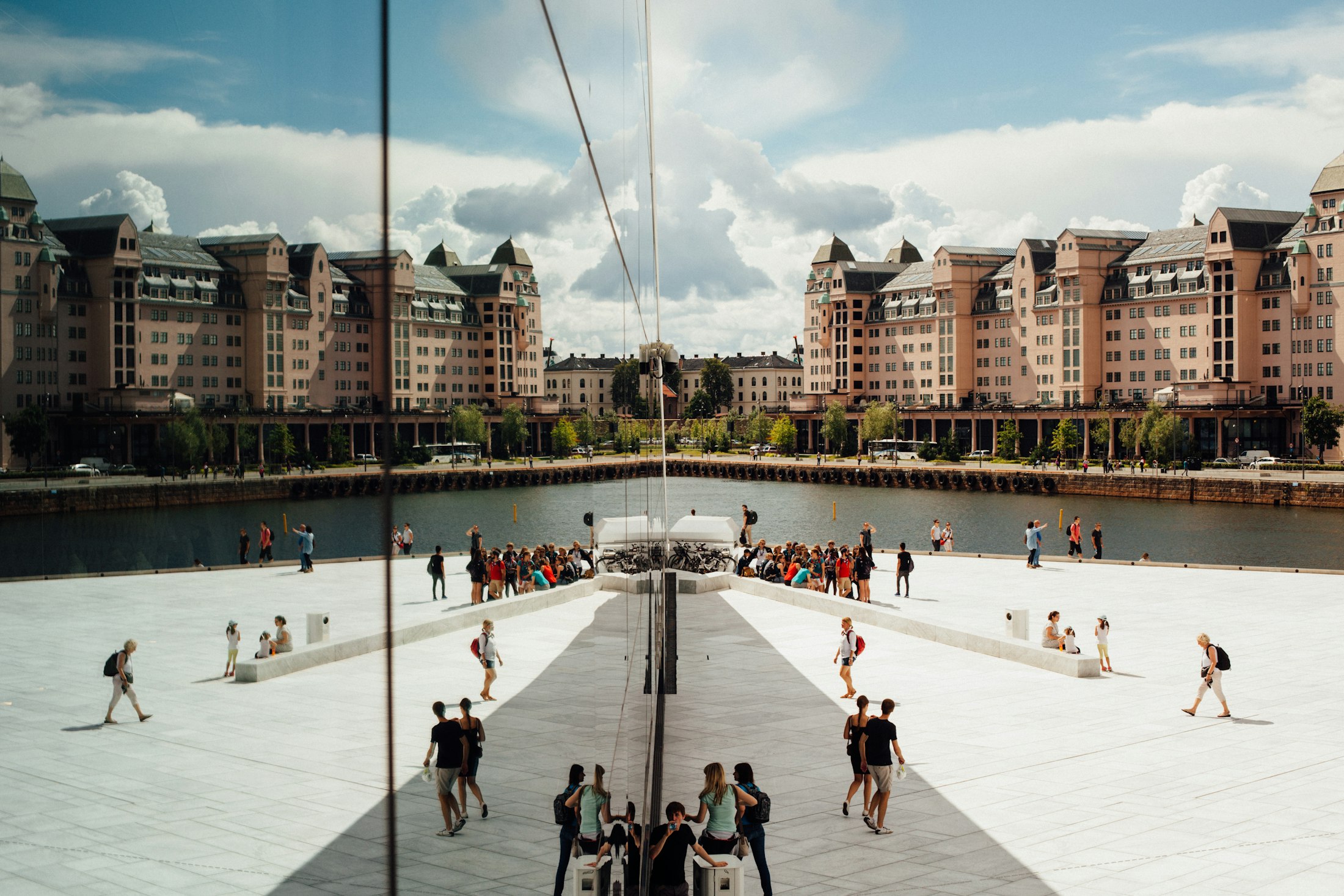
The first warm Saturday in April arrives in Grünerløkka like a communal exhale. Along the Akerselva river, birch catkins dangle above café tables that have been dragged onto cobblestones overnight, and the neighbourhood's cooks are already returning from dawn walks in Nordmarka with rucksacks of ramsons, spruce tips, and wood sorrel. This is Oslo's creative-dining heartland waking from a long Nordic winter, and the foraging-to-brunch pipeline is fully operational.
This guide maps the specific restaurants, bakeries, and riverside spots where Grünerløkka's April food scene is most rewarding — from wild-garlic-laced scrambles served in converted mechanics' workshops to natural wine poured alongside cardamom buns still warm from the oven. Whether you have one brunch or four days, these are the tables, the dishes, and the details that separate a memorable neighbourhood crawl from a forgettable one.
1. Ramsons Season at Smalhans: The Dish That Signals Spring
Smalhans, on Ullevålsveien 43 just west of Grünerløkka's core, operates a compact four-course set menu that shifts weekly based on what arrives from its network of small-scale foragers and farms. In April, ramsons — wild garlic — dominate. Expect a ramson butter spread across house-baked sourdough, and a silky ramson velouté that tastes like the forest floor distilled into something elegant.
The restaurant seats about thirty, and the atmosphere is deliberately communal: long wooden tables, open kitchen, no tablecloths. At weekend brunch, the set offering usually includes a savoury porridge topped with pickled vegetables carried over from autumn's preserving sessions. You are eating the Norwegian calendar here, compressed into four courses.
Book by Wednesday for a Saturday sitting — the online system releases weekend slots mid-week and they vanish within hours. Walk-ins occasionally work at 11:30 when the first service opens, but standing at the door by 11:15 is non-negotiable. The natural wine list leans Danish and Austrian; ask staff for a pairing rather than navigating the brief, handwritten menu yourself.
Avoid the temptation to order extra bread. The courses are calibrated to leave you satisfied but not heavy — important if you plan to continue eating your way down Thorvald Meyers gate afterward, which you absolutely should.
Pro tip: Ask your server if they have any ramson oil bottled for takeaway — Smalhans occasionally sells small jars at the counter, and it is extraordinary drizzled over scrambled eggs in your hotel room the next morning.
2. Supreme Roastworks and the Third-Wave Brunch Ritual
Supreme Roastworks at Thorvald Meyers gate 18A is Grünerløkka's most serious specialty-coffee roastery, and in April the terrace along the street becomes a sun-trap that locals treat as a second living room. Order a filter coffee — the rotating single-origin pour-over is always the move here — and pair it with their open-faced egg sandwich on dense rugbrød topped with pickled red onion and dill.
The interior is industrial-Scandinavian without being derivative: poured-concrete floors, blonde wood counters, and roasting equipment visible behind glass. Weekend mornings between 10 and noon are the sweet spot. By 12:30, the queue extends past the entrance, and the vibe shifts from contemplative to chaotic. Arrive early and claim a window seat facing the street.
Supreme sources green beans directly from farms in Colombia, Ethiopia, and Kenya, and in April they typically release a new spring lot. Ask the barista which lot just dropped — engaging with the single-origin rotation is genuinely rewarding and they are happy to talk process. If you prefer espresso-based drinks, the cortado is textbook: balanced, nutty, no bitterness.
Skip the pastry cabinet if you are heading to Godt Brød next — saving your appetite for their cardamom bun is a strategic decision you will not regret.
Pro tip:Grab a 250g bag of their current filter roast to take home. The spring Ethiopian lots, usually a washed Yirgacheffe, are consistently among Oslo's best retail beans and cost around 150 NOK.
Stay in Oslo
Top-rated hotels near Oslo
Best locations · Verified reviews · Free cancellation
View deals
Expedia →3. Godt Brød Grünerløkka: Organic Cardamom Buns and the Art of the Slow Morning
Godt Brød on Thorvald Meyers gate 49 is an organic bakery chain, but this Grünerløkka outpost transcends any corporate connotation. The cardamom bun — kardemommebolle — is hand-rolled, generously spiced, and slightly under-glazed so the exterior stays matte and chewy rather than candy-slick. In April, they introduce a seasonal rhubarb-and-custard Danish that is worth crossing the river for.
The space is small and perpetually warm from the ovens. If all seats are taken, do what locals do: buy your bun and a takeaway coffee and walk three minutes to Birkelunden park. The benches along the eastern edge catch morning sun from about 9:30, and eating a warm cardamom bun in cold April air while watching dogs chase each other across the grass is a profoundly Oslo experience.
Godt Brød bakes in small batches, so the cardamom buns sell out by early afternoon on weekends. Arriving before 10 AM guarantees selection. Their sourdough loaves — particularly the dark spelt — are exceptional if you are staying in an apartment and want bread for the week. Staff will slice it for you on request.
Pair with a chai latte made with real spice rather than syrup. It complements the cardamom bun without competing, and the combination is warming enough to offset April's unpredictable wind chill along Thorvald Meyers gate.
Pro tip: If you spot their seasonal skillingsboller — cinnamon scrolls with a crème pâtissière centre — buy two. They reheat beautifully in a hotel toaster oven the next day and taste almost as good as fresh.
4. Foraging Along the Akerselva: A Self-Guided Ramsons Walk
You do not need a guided tour to forage in Grünerløkka — you just need to know where to look. Walk north along the Akerselva river path from Ankerbrua bridge, and within fifteen minutes the riverbanks become surprisingly wild. In April, ramsons carpet the shaded slopes between Beyerbrua and the Lilleborg waterfall, their pungent garlic scent unmistakable before you even see the broad green leaves.
Norwegian allemannsretten — the right to roam — allows you to pick wild plants for personal use on uncultivated land. Collect a small handful of ramsons leaves, not bulbs, and use them within hours. Stuff them into a sandwich, chop them into scrambled eggs at your accommodation, or simply chew a leaf on the walk to understand why Oslo chefs build entire menus around this plant each spring.
Beyond ramsons, look for wood sorrel growing in small clumps along mossy rocks near the water. The heart-shaped leaves have a sharp, citric bite that works as a garnish or a palate cleanser. Spruce tips — the bright-green new growth on spruce branches — appear in late April and taste like a cross between rosemary and lemon. Pinch just the tips, never strip a branch.
Bring a cloth tote bag rather than plastic, and wear shoes with grip — the riverbank paths are often muddy in April after snowmelt. The walk from Ankerbrua to Lilleborg and back takes about forty-five minutes at a foraging pace, and you will pass three cafés if you need to warm up.
Pro tip:Download the app 'Seek by iNaturalist' before your walk — point your phone camera at any plant and it identifies the species in seconds, which eliminates guesswork and prevents you from picking anything toxic.
5. Hendrix Ibsen: Weekend Brunch with a Neighbourhood Edge
Hendrix Ibsen at Thorvald Meyers gate 30 occupies a corner spot that feels like a Berlin breakfast bar crossed with a Norwegian hytte. The weekend brunch menu is concise and seasonal: in April, expect poached eggs over a smoked trout hash with pickled mustard seeds, and a buckwheat pancake stack with birch syrup and fresh skyr. Both are excellent. The trout hash is the more distinctly Norwegian choice.
The dining room has exposed brick, mismatched vintage chairs, and a vinyl collection that the staff actually play — expect Coltrane or Khruangbin depending on who is behind the bar. It is not performatively cool; it is genuinely comfortable. Weekend brunch runs from 10 to 15, and the sweet spot is 11:00 before the neighbourhood fully mobilises.
Their Bloody Mary uses aquavit instead of vodka, infused with caraway and dill. It is one of the best brunch cocktails in Oslo — assertive, savoury, and deeply Scandinavian. If you do not drink alcohol, the house-made sea buckthorn and ginger shrub with sparkling water is a credible alternative with real complexity.
Do not leave without trying the smørbrød of the day, usually a single open sandwich that showcases whatever the kitchen is most excited about. In early April, this might be cured Arctic char with horseradish cream and microgreens; by late April, it often features the first asparagus of the season from farms south of Oslo.
Pro tip: Sit at the counter facing the open kitchen if you are dining solo — the cooks are friendly and will often explain what they are pickling or fermenting, which in April usually involves jars of green tomato relish and lacto-fermented ramsons.
Stay in Oslo
Top-rated hotels near Oslo
Best locations · Verified reviews · Free cancellation
View deals
Expedia →6. Markveien and the Afternoon Wine-Bar Drift
After brunch, the gravitational pull of Grünerløkka shifts one block west to Markveien, a quieter street lined with independent boutiques and natural wine bars. Start at Territoriet Vinbar at Markveien 58, which opens at 15:00 on weekends and pours an exceptional by-the-glass selection that rotates constantly. The staff have strong opinions and will steer you toward something unexpected if you let them — say 'something Norwegian and weird' and see what arrives.
Territoriet's food menu is built around sharing plates: cured meats from Rørosmat, aged Norwegian cheeses, and seasonal small dishes that in April often include a ramsons pesto crostini or smoked whitefish rillettes. Order three plates for two people and you have an ideal late-afternoon meal that does not derail your evening plans.
From Territoriet, walk south along Markveien to browse the vintage shops and record stores that punctuate the street. Robot Grønland at Markveien 56 stocks an impressive collection of Scandinavian jazz and electronic vinyl. Even if you do not buy, flipping through crates for twenty minutes while your wine settles is a deeply satisfying Grünerløkka ritual.
The afternoon light in April is remarkable along Markveien — low and golden between 16:00 and 18:00 — and the street's east-facing façades glow in a way that makes even the graffiti look curated. This is the hour to walk slowly, with no particular destination beyond the next interesting doorway.
Pro tip: Ask Territoriet if they have anything from Lerkekåsa, a tiny Norwegian natural winery in Telemark producing skin-contact whites and pétillant naturel — it rarely appears outside Oslo and is worth trying if available.
7. Sunday at Mathallen: The Market Brunch Alternative
Mathallen Oslo at Vulkan 5 sits on the eastern edge of Grünerløkka along the Akerselva, and on Sunday mornings it functions as the neighbourhood's communal kitchen. This indoor food hall hosts around thirty vendors, and the strategy is to assemble your own brunch from multiple stalls rather than sitting down at one. Start with a coffee from Fuglen — their espresso here rivals the original Majorstuen location.
At Gutta på Haugen, order a small portion of their scrambled eggs with truffle oil and shaved Norvegia cheese on toast. Then cross the hall to Vulkanfisk for three pieces of nigiri featuring Norwegian salmon and halibut — an unconventional brunch addition, but the fish is pristine and the combination works. Finally, grab a kanelbolle from Baker Hansen for something sweet.
The upstairs mezzanine offers communal seating with views down into the hall, and on Sunday mornings it is calm enough to linger with a newspaper. April light floods through the industrial skylights, and the hum of vendors and espresso machines below creates a soundtrack that feels distinctly urban-Norwegian.
Mathallen closes at 17:00 on Sundays — considerably earlier than most visitors expect. Plan your visit for 10:00 to 13:00 to overlap with peak selection and energy. By 15:00, vendors begin wrapping up and the best items are gone. Some stalls offer end-of-day discounts on cheese and charcuterie around 16:00 if you want provisions for the week.
Pro tip: Visit the Mathallen cheese counter at Gutta på Haugen and ask to taste Kraftkar — a Norwegian blue cheese that won World Cheese Awards gold. Buy a wedge with crackers and eat it in Vulkan park across the footbridge.
Essential tips
April in Oslo averages 2–10°C with frequent rain showers. Layer with a windproof jacket and pack a light wool beanie — outdoor brunch terraces are glorious in sun but brutal when wind shifts off the fjord.
Oslo is effectively cashless. Every café, market stall, and wine bar accepts contactless card or Vipps (Norway's mobile payment app). Carrying cash is unnecessary and some venues actively refuse it.
Take the T-bane to Stortinget and walk fifteen minutes northeast to Grünerløkka, or ride tram 11 or 12 to Olaf Ryes plass. A single-zone Ruter ticket costs 42 NOK and lasts sixty minutes across all public transport.
Restaurant reservations for weekend brunch should be made by Thursday. Most Grünerløkka spots use online booking via their websites — calling is unusual here and often goes unanswered during service hours.
Foraging etiquette matters: pick only what you will use, never uproot plants, and stay off cultivated land. Ramsons are abundant in April but overharvesting has become a concern — take leaves sparingly and leave patches intact for regrowth.
Ready to visit Oslo?
Book your hotel, flights, and activities through our Expedia-powered search.