In This Guide
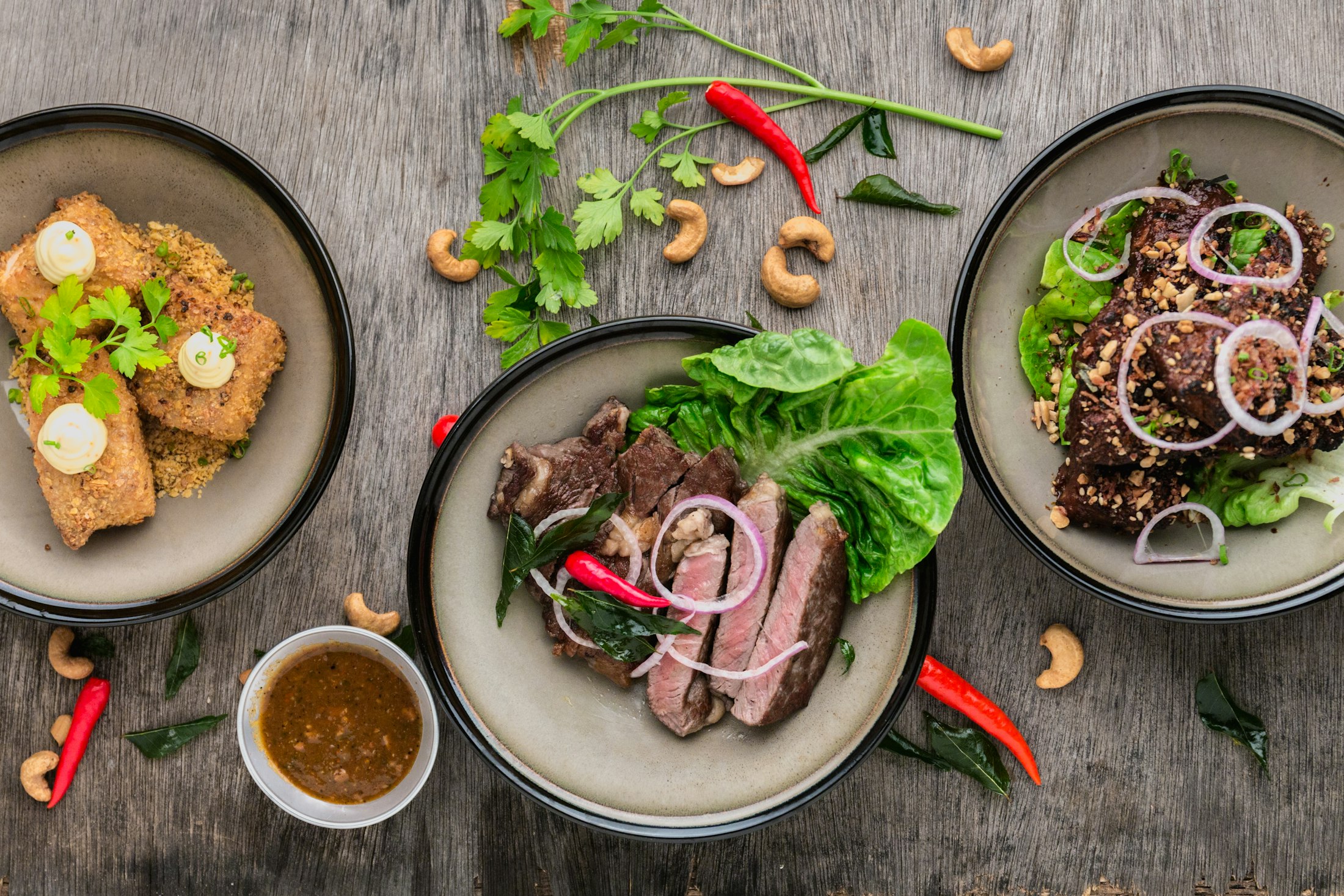
The light in La Mejorada turns amber around seven o'clock. That is when the marquesita carts roll into position along Calle 50, their flat griddles already throwing heat, and the cantinas with crumbling henequen-era facades crack open their wooden shutters. The neighbourhood smells of Edam cheese melting inside crisp crêpe cylinders and of lime wedges balanced on the rims of cold Montejo bottles. This is Mérida's quietest spectacle, and it happens every single evening.
This guide walks you through La Mejorada block by block at dusk — from the best marquesita vendor on the church plaza to the mezcalerías tucked behind former cordage warehouses. You will learn which cantina still serves botanas gratis with every round, where to find a Xtabentún nightcap no tourist has discovered, and how the old henequen merchant quarter has become Mérida's most compelling after-dark neighbourhood without losing a gram of its working-class soul.
1. The Marquesita Cart at Parque de La Mejorada
Start at the southeastern corner of Parque de La Mejorada, directly across from the sixteenth-century ex-convent. By 6:45 p.m. a cart marked "Marquesitas Don Beto" stations itself under the flamboyán tree closest to the corner of Calles 50 and 57. Don Beto — actually his son Iván most nights — has been working this spot for over fifteen years.
Order the classic: queso de bola with Nutella. The crêpe batter hits a spinning cylindrical griddle, crisps in under a minute, then gets rolled around a core of shaved Dutch Edam and a stripe of chocolate-hazelnut spread. The contrast of salty, rubbery cheese against sweet crunch is La Mejorada's signature flavour. Each marquesita costs roughly 35 to 45 pesos depending on fillings.
Avoid the cajeta-only version unless you want pure sweetness — it lacks the savoury tension that makes the dish memorable. Instead, ask Iván for queso de bola with crema de cacahuate, an off-menu combination he reserves for regulars. He will nod, reach under the cart, and pull out a jar of house-ground peanut paste.
Eat your marquesita on the park bench facing the convent's bell gable. The stone glows copper at this hour, and you will hear the first notes of trova guitar drifting from somewhere inside the arcade. This is the moment when La Mejorada shifts from daytime neighbourhood to evening stage.
Pro tip:Arrive before 7 p.m. on Fridays and Saturdays — Don Beto's cart often sells out by 8:30 on weekend nights. Weekday evenings are far calmer and the line rarely exceeds two people.
2. Cantina La Negrita and the Art of Botanas Gratis
Walk four blocks northwest to Calle 62 between 49 and 47 and you will find La Negrita, a cantina that has operated since 1918 inside what was once a henequen broker's townhouse. The tiled floors are original. The ceiling fans wobble at a speed that suggests they have been spinning since the Cárdenas administration. Order at the bar, never at a table — service is faster and the bartenders are more generous.
The system here is old Yucatecan cantina protocol. Every drink you order triggers a small complimentary plate — a botana. First round might bring kibis, the Yucatecan take on Lebanese kibbeh. Second round: salbutes topped with cochinita pibil. Third round: a bowl of ceviche with habanero. The food keeps arriving as long as you keep drinking, and no one rushes you.
Stick to Montejo Negra on draught or order the house michelada, built with a proprietary chamoy-habanero blend that burns slowly and beautifully. Avoid the tequila shelf — this is a beer cantina at heart, and the spirits selection reflects an afterthought. The Montejo here is kept colder than anywhere else in the neighbourhood.
The back courtyard opens at 8 p.m. on Thursdays and Fridays, when a rotating cast of local bands plays cumbia, trova, or jarana. There is no cover charge. Tables fill fast, so claim one by 7:30 and anchor it with a first round.
Pro tip:Ask for the "botana de la casa especial" on your third drink — the kitchen sometimes sends out a relleno negro taco that never appears on any menu. It depends on the cook's mood, but asking signals you know the place.
Stay in Mérida
Top-rated hotels near Mérida
Best locations · Verified reviews · Free cancellation
View deals
Expedia →3. Henequen Warehouse Mezcalería: Donde Pica el Coyote
Tucked behind a rusted iron gate on Calle 57 between 48 and 46, Donde Pica el Coyote occupies a former henequen rope storage warehouse. The owners stripped the space to raw limestone walls and strung Edison bulbs across the exposed rafters. There is no sign on the street — look for a coyote stencil sprayed in orange paint on the metal door.
The mezcal list runs forty-plus expressions, sourced directly from Oaxacan and Guerrero producers. Start with a jícara of Espadín from the San Luis del Río region — clean, citric, and approachable — before graduating to the Tobalá or the smoky Madrecuishe. Each pour is served in a jícara gourd with an orange slice dusted in sal de gusano. The bartenders will walk you through tasting notes without pretension.
Food is minimal and intentional: tlayudas with tasajo, chapulines tostadas, and a rotating mole of the week served with fresh tortillas from a comal in the corner. The tlayuda is enough for two people and costs 120 pesos. Do not overlook the chapulines — they are toasted daily and seasoned with lime, chile, and garlic.
The crowd here skews local — architecture students from the nearby Facultad de Arquitectura, young chefs, and a handful of expats who discovered it through word of mouth. Weeknights are best. By Friday at 10 p.m. the space fills to capacity and the wait for a table can stretch to forty minutes.
Pro tip:Ask the bartender for a "mini vuelo regional" — a three-pour flight of agave spirits all sourced from the same village. It costs about 180 pesos and teaches you more about terroir than any tasting room in Oaxaca.
4. The Xtabentún Ritual at Apoala
Apoala, on Calle 60 at the corner of 55 — technically just outside La Mejorada's border but within a five-minute walk — is the neighbourhood's most polished restaurant. The courtyard dining room sits inside a restored colonial mansion, and the kitchen is run by a team deeply committed to Yucatecan heritage ingredients. Come here specifically for a post-dinner Xtabentún service.
Xtabentún is an anise-honey liqueur made from fermented honey of bees that feed on the xtabentún flower, native to the Yucatán Peninsula. At Apoala, they serve it chilled in a small clay copa alongside a demitasse of Yucatecan espresso. The combination — floral sweetness against bitter coffee — functions as the region's perfect digestif.
Before your Xtabentún, order the sopa de lima and the papadzules. The sopa de lima here is textbook: tart Yucatecan lima agria, shredded turkey, and fried tortilla strips in a deeply layered broth. The papadzules — egg-stuffed tortillas bathed in pepita sauce — are silky and earthy. Both dishes cost between 140 and 190 pesos.
Do not skip the house agua fresca, usually chaya con limón or pitahaya. They are made fresh each afternoon and available until they run out. Request a table in the interior courtyard rather than the street-facing terrace — the acoustics are better and the limestone walls hold the cool evening air.
Pro tip:Order your Xtabentún "con piedra" — over a single large ice sphere. The bartender will produce one from a hand-carved mould. It dilutes the sweetness just enough and extends the sipping time to a proper twenty minutes.
5. Calle 50 at Night: The Corridor of Light and Sound
Calle 50, running roughly from the Arco de Dragones south past the ex-convent, transforms after dark into La Mejorada's informal promenade. Street vendors set up folding tables for empanadas de cazón, elotes preparados, and aguas frescas. Families stroll. Cyclists coast past with speakers strapped to their baskets playing Armando Manzanero ballads. The atmosphere is unscripted and entirely local.
Pause at the corner of Calle 50 and 59 where a woman known only as Doña Mari operates a cochinita pibil stand from a repurposed cooler. She serves tortas and panuchos from roughly 7 to 10 p.m. Her cochinita is pit-cooked in her backyard in the Santiago neighbourhood and transported daily. The habanero salsa is incandescent — approach cautiously on first taste.
Farther south, past Calle 61, you will notice the facades of former henequen merchant houses — some restored into boutique hotels and galleries, others still crumbling romantically. The architecture tells the story of Mérida's late-nineteenth-century boom, when Yucatán produced ninety percent of the world's cordage fibre and this neighbourhood housed the middlemen who brokered the trade.
Do not rush this walk. Give yourself forty-five minutes to cover six blocks. Stop when something catches your eye — a doorway revealing a courtyard garden, a shop selling hammocks woven in Tixkokob, a cat sleeping on a ledge of carved limestone. The dusk light makes everything worth photographing.
Pro tip: Carry small bills — 20 and 50 peso notes. Most street vendors along Calle 50 cannot break anything larger than a 200, and the ATM nearest the park charges a steep foreign transaction fee.
Stay in Mérida
Top-rated hotels near Mérida
Best locations · Verified reviews · Free cancellation
View deals
Expedia →6. Late Night at Mercado de La Mejorada: Tacos and Quiet
By 10 p.m. the formal Mercado de La Mejorada on Calle 56 between 57 and 59 is closed, but two taco stalls on its western exterior wall fire up just as the market gates come down. Look for the one with the green awning — it has no name, only a handwritten sign reading "Tacos de Lechón y Poc Chuc." This is where La Mejorada's taxi drivers and night-shift workers eat.
The poc chuc taco is the move: thin-sliced pork marinated in sour orange and grilled over charcoal, topped with pickled red onion and a smear of refried black beans. Three tacos and a Coca-Cola in a glass bottle will cost you under 80 pesos. The tortillas are handmade on a comal behind the stall and arrive almost too hot to hold.
Avoid the longaniza unless you enjoy aggressive grease — it is cooked on the same flat-top as the lechón and absorbs its rendered fat. The lechón itself, however, is excellent: slow-roasted, crisp-skinned, and served with a xnipec salsa of habanero, tomato, and sour orange that could wake the dead.
The scene here is peaceful. Fluorescent light spills onto the sidewalk. A radio plays quietly. You eat standing up at a metal counter, shoulder to shoulder with strangers who nod politely and return to their food. It is the opposite of performative dining, and it is the best possible ending to an evening in La Mejorada.
Pro tip: The green-awning stall closes when the meat runs out, usually around midnight on weekdays and 1 a.m. on weekends. Arrive before 11 p.m. to guarantee the full menu is still available.
Essential tips
Mérida's humidity barely drops after sunset from May to September. Wear linen or moisture-wicking fabric for your evening walk — cotton will cling within twenty minutes. A small hand fan from the market costs 15 pesos and earns you local credibility.
Use the InDriver app rather than hailing street taxis in La Mejorada after 10 p.m. Negotiate the fare before confirming — most rides within Centro Histórico should cost 30 to 50 pesos. Uber also operates reliably here.
Street food vendors and marquesita carts are cash only. Cantinas and restaurants accept cards but often add a small surcharge for foreign credit cards. Withdraw pesos from the Banorte ATM on Calle 59 — it has the lowest fees for international cards.
Basic Spanish goes far in La Mejorada, which sees fewer tourists than Santa Lucía or Paseo Montejo. Learn "queso de bola" for marquesitas and "una más, por favor" for cantina rounds. Vendors appreciate the effort and often reward it with larger portions.
Golden hour and blue hour overlap dramatically in Mérida from roughly 6:30 to 7:45 p.m. The ex-convent facade and the henequen warehouses on Calle 57 photograph best during this window. Shoot facing west for the warmest tones on crumbling limestone.
Ready to visit Mérida?
Book your hotel, flights, and activities through our Expedia-powered search.