In This Guide
- 1.Getting to the Veredas: The Colectivo from San Cristóbal
- 2.Truchas El Ranchito: The Pond-to-Plate Benchmark
- 3.Walking the Fog Forest: Sendero La Suiza to La Aldea
- 4.Coffee at Finca La Meseta: A Micro-Lot Worth the Detour
- 5.The Túnel de Occidente Overlook: Medellín's Most Underrated Viewpoint
- 6.Vereda La Volcana: Panela, Pork, and Living Memory
- 7.Timing, Seasons, and the Art of the Slow Return
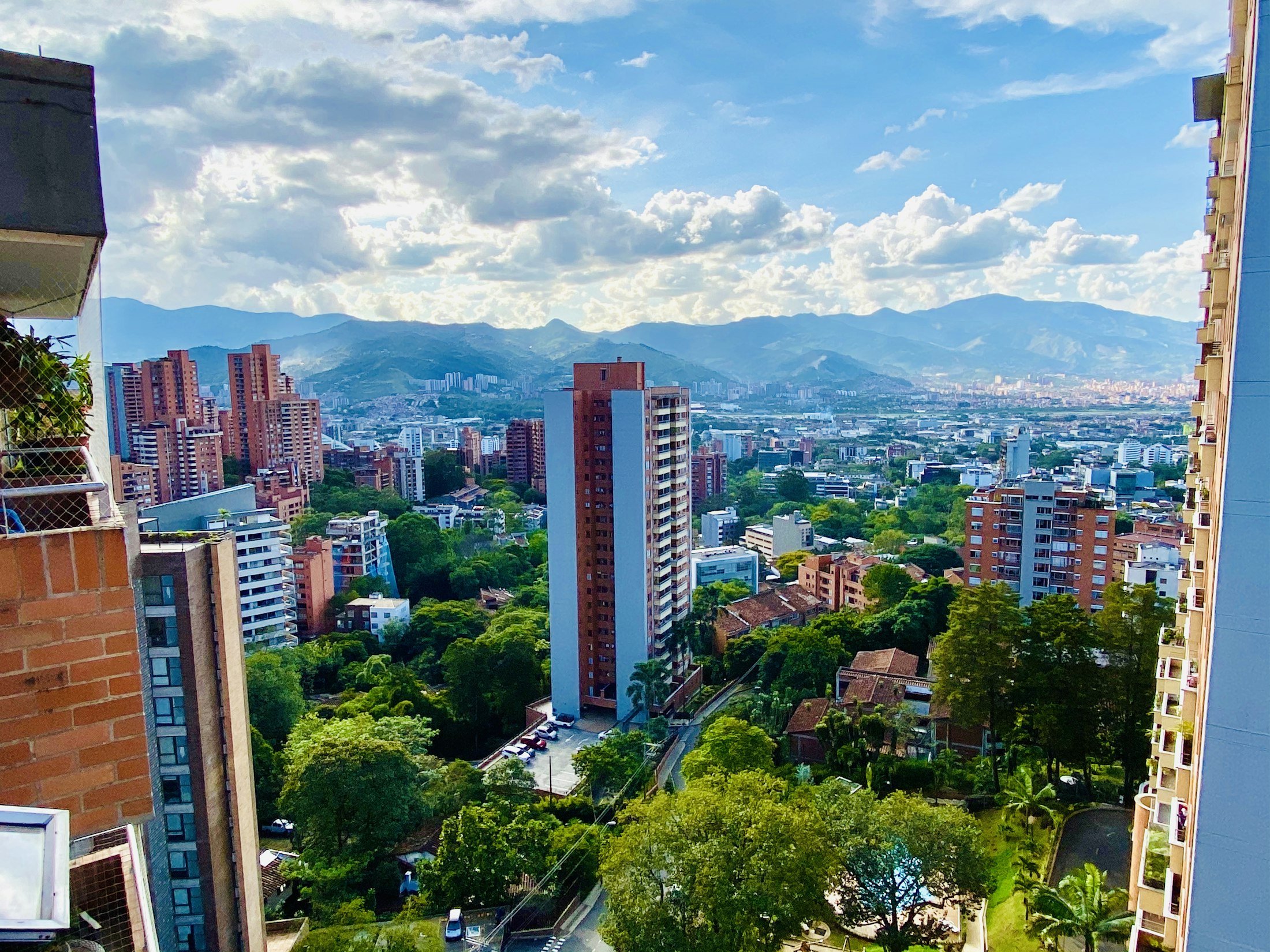
The colectivo lurches past the last apartment towers of San Cristóbal, and within twelve minutes the temperature drops four degrees. Bromeliads cling to telephone poles, cloud fingers probe the valley, and the pavement narrows to a single cracked lane bordered by tree ferns. This is the rural corregimiento of San Sebastián de Palmitas — technically inside Medellín's city limits, yet a world the metro system has never touched. Up here, trout ponds glint between coffee rows, and lunch is an unhurried, wood-smoke affair.
1. Getting to the Veredas: The Colectivo from San Cristóbal
Your journey begins at the small bus bay beside the San Cristóbal church, where battered white colectivos marked 'Palmitas' depart roughly every forty minutes from 6 a.m. The fare is around COP 5,500 — pay the driver in cash, small bills only. There's no schedule posted; regulars simply know. Ask for 'la Y de Palmitas' as your drop-off reference point.
The forty-minute ride climbs from 1,700 metres to nearly 2,300, winding through the vereda of La Volcana before cresting into Palmitas proper. Keep your window down: the transition from urban heat to damp, mossy air is half the experience. You'll share seats with farmers hauling sacks of lulo and bundles of cebolla larga.
Avoid Sundays if possible — the colectivos fill with families heading to fincas and wait times double. Monday through Thursday offers emptier roads and a better chance of snagging the front passenger seat, which grants panoramic views of the Aburrá Valley's western wall without the vertigo-inducing blind curves directly in your sightline.
If you prefer a private ride, apps like InDriver work here, but negotiate the return trip in advance. Cell signal becomes patchy beyond La Volcana, and you don't want to be stranded at a trout farm refreshing your phone. Budget COP 60,000–75,000 each way from El Poblado.
Pro tip: Carry a light rain shell even on clear mornings — Palmitas sits squarely in the cloud-condensation zone, and mist can become drizzle in minutes without warning. Gore-Tex beats umbrellas on narrow muddy trails.
2. Truchas El Ranchito: The Pond-to-Plate Benchmark
Truchas El Ranchito sits roughly two kilometres past the Palmitas schoolhouse on the road toward Vereda La Suiza. There is no Google Maps pin that reliably works — ask any local for 'donde Don Hernán, las truchas' and they'll point you up a gravel spur flanked by guadua bamboo. The operation is family-run, five concrete ponds fed by a creek that originates somewhere in the fog forest above.
You choose your fish alive. A worker nets it, weighs it on a hanging scale — expect 350 to 500 grams — and disappears into a corrugated-tin kitchen. Fifteen minutes later, your trout arrives butterflied, dredged in seasoned flour, and fried in sunflower oil until the skin crackles. The standard accompaniment is patacón, white rice, a wedge of limón, and a small salad of shredded cabbage.
Order the trucha al ajillo if Doña Gloria is cooking — she pounds garlic into a mantequilla sauce that she spoons over the fish at the last second. It's not on any menu board; you simply ask. Pair it with a lulada made from fruit picked that morning on the adjacent slope. The entire meal, including a drink, runs about COP 28,000 per person.
Skip the mojarra if it appears on the chalkboard — it's trucked up from the lowlands and can't compete with what's swimming ten steps from your table. Focus on trout, ask for it 'bien tostadita,' and let the altitude and the eucalyptus-scented breeze handle the rest.
Pro tip: Arrive before noon on weekdays to guarantee your pick of the largest fish. By 1 p.m. on Saturdays, the best trout are already spoken for by families who called ahead.
Stay in Medellín
Top-rated hotels near Medellín
Best locations · Verified reviews · Free cancellation
View deals
Expedia →3. Walking the Fog Forest: Sendero La Suiza to La Aldea
Behind El Ranchito, a footpath marked by a faded yellow blaze enters a remnant of Andean fog forest that most Medellín residents have never seen. The trail to the hamlet of La Aldea is roughly four kilometres one way, undulating between 2,250 and 2,500 metres, and takes about ninety minutes at a moderate pace. Expect mud, stream crossings on mossy stones, and canopy so dense the GPS on your phone may drift.
Birdlife is the headline. Sickle-winged Guans forage in the understorey, and with patience you may spot a Golden-headed Quetzal in the fruiting laurels between June and August. Carry binoculars and move quietly — the forest is narrow enough that noise from the road can flush species deeper into the ravine.
The path is not signposted beyond the first blaze. When you reach a wire cattle gate roughly forty minutes in, bear left along the fence line rather than following the more obvious track downhill to the right, which dead-ends at a private finca. A GPS track downloaded in advance from Wikiloc, searching 'Palmitas La Aldea,' is the most reliable navigation aid.
La Aldea itself is a cluster of six houses, a tienda selling Postobón and crackers, and a view east toward Medellín's skyline that feels cosmically improbable. On clear late-afternoon days the city gleams below a sea of cloud while you stand in sunshine. It's the kind of perspective that reframes an entire trip.
Pro tip:Download the Wikiloc GPX track for 'Sendero Palmitas–La Aldea' before you leave your hotel — offline maps are essential since cell service drops completely once you enter the forest canopy.
4. Coffee at Finca La Meseta: A Micro-Lot Worth the Detour
Finca La Meseta, operated by third-generation grower Carlos Urrea, lies a fifteen-minute walk downhill from the Palmitas church along a concrete path that turns to packed dirt after the water tank. Carlos cultivates Castillo and Caturra varieties between 2,050 and 2,200 metres — unusually high for Antioquia — yielding a cup with pronounced citric acidity and a brown-sugar finish that specialty roasters in Bogotá quietly covet.
Visits are informal but you should call ahead: Carlos's number is posted on a handwritten sign at the Palmitas tienda. He'll walk you through wet processing, sun-drying on raised beds, and hand-sorting, then brew a tinto in a cloth filter over a wood stove. The experience takes about an hour and there's no set fee; a voluntary contribution of COP 20,000–30,000 is appropriate and appreciated.
What distinguishes La Meseta from Medellín's polished coffee-tour circuit is scale: Carlos processes roughly 800 kilograms of parchment per harvest, not eight tonnes. You're tasting a single family's output, not a cooperative blend. Buy a bag of roasted beans if available — he occasionally has 250-gram packs at COP 18,000, though supply is erratic.
Avoid comparing this experience to the Instagram-ready coffee farms near Jardín or Jericó. La Meseta is rougher, more honest, and the coffee is arguably better. Wear closed-toe shoes with grip; the path to the drying beds is steep and slick after rain.
Pro tip:Ask Carlos to show you the 'lote experimental' where he's trialing a Gesha variety at elevation — it won't be ready for commercial sale until 2026, but tasting the cherry straight off the branch is an unforgettable sensory primer.
5. The Túnel de Occidente Overlook: Medellín's Most Underrated Viewpoint
Most drivers blast through the Túnel de Occidente at 80 km/h, oblivious to what sits directly above its eastern portal. A gravel pull-off roughly 200 metres before the tunnel entrance — on the old road, not the highway — opens onto a grassy ledge with an unobstructed panorama of the western cordillera folds. There is no railing, no sign, no selfie stick vendor. Bring your own vertigo tolerance.
The viewpoint is best visited in the late afternoon, between 4 and 5 p.m., when the light rakes across the ridgelines and cloud shadows ripple over the green valleys below. On exceptionally clear days, you can trace the Cauca River's silver thread far to the west. A telephoto lens or 10x42 binoculars transform the experience.
To reach it from Palmitas, walk or drive roughly three kilometres east on the old Medellín–Santa Fe de Antioquia road, past the abandoned toll booth. The gravel spur veers left just before the road dips into the tunnel approach. If you hit concrete barriers, you've gone fifty metres too far — double back.
This is emphatically not a place for large groups or children running freely. The drop is real and unfenced. But for a solo traveller or a quiet pair willing to sit on the grass with a thermos of tinto, it may be the most humbling natural balcony in greater Medellín.
Pro tip:Combine this stop with a return colectivo from Palmitas — ask the driver to let you off at 'la entrada vieja del túnel' and walk the final 200 metres to the overlook before flagging another bus back.
Stay in Medellín
Top-rated hotels near Medellín
Best locations · Verified reviews · Free cancellation
View deals
Expedia →6. Vereda La Volcana: Panela, Pork, and Living Memory
On the descent back toward San Cristóbal, ask your colectivo driver to stop at La Volcana — a vereda strung along a single road where trapiche culture endures in miniature. At least two families still operate wood-fired sugarcane presses, producing panela blocks sold to neighbours and the occasional curious visitor. The smell — caramelised, slightly smoky — announces the operation before you see it.
Wander toward the blue house with the Coca-Cola mural near the school. Señora Amparo sometimes sells chicharrón de cerdo from a covered table on her porch, thick slabs fried in their own fat and served with arepa de maíz pelao. There is no set schedule; this is subsistence commerce, not a restaurant. If the table is out, you're in luck. Expect to pay COP 8,000–12,000 for a generous plate.
La Volcana also holds quiet historical weight. During the early 2000s, these veredas experienced displacement pressures that the city's renewal narrative often glosses over. Residents who remained are candid about that era if you approach with genuine curiosity and respect. Listen more than you ask. Their resilience is not a tourism product — it's context that deepens every trout lunch and coffee tasting you've experienced uphill.
Before leaving, buy a block of panela directly from the trapiche — COP 3,000 for a half-kilo brick. Grate it into hot milk back at your accommodation for a nightcap that tastes like the entire day compressed into a single cup.
Pro tip:Photograph trapiche operations only after asking permission — these are private homes and workplaces. A respectful 'permiso para tomar una foto' goes further than any telephoto lens aimed from the road.
7. Timing, Seasons, and the Art of the Slow Return
The ideal window for a Palmitas excursion is the veranillo between late January and mid-March, when skies clear enough for valley views but the forest remains lush from residual moisture. The second dry spell in July and August also works well and coincides with peak quetzal-sighting season. Avoid October and November — trails become genuinely treacherous and colectivo service grows unreliable.
Plan for a full day, departing San Cristóbal by 8 a.m. and returning by 5 p.m. Trying to compress Palmitas into a half-day strips it of its essential quality: slowness. The trout takes time to fry. The coffee takes time to filter. The cloud forest takes time to reveal its birds. Rushing defeats the purpose entirely.
On the return ride, the colectivo descends into Medellín's warm basin and the city reconstitutes around you — first the brick periphery of San Cristóbal, then the traffic snarl, then the metro's hum. The contrast is the point. You haven't left Medellín all day, but you've visited a place most of its eight million metropolitan residents have never been.
Don't try to build an itinerary around this experience — let it be the itinerary. One vereda day, properly savoured, is worth more than three checked-off comuna tours. That's not a knock on the comunas, which have their own vital stories. It's a reminder that Medellín's edges are as revelatory as its centre.
Pro tip: Carry COP 150,000 in small bills for the entire day — no establishment in the veredas accepts cards, and the nearest ATM is back in San Cristóbal beside the church.
Essential tips
Bring at least COP 150,000 in denominations no larger than COP 20,000. No card terminals exist in Palmitas or the surrounding veredas, and breaking a COP 50,000 note at a tienda is a social imposition.
Wear waterproof hiking shoes with aggressive tread. The trails between Palmitas and La Aldea are clay-based and become skating rinks after rain. Sandals and white sneakers are liabilities, not options.
Download offline maps of the corregimiento of San Sebastián de Palmitas before leaving your hotel. Cell coverage drops to zero or one bar beyond La Volcana, rendering real-time navigation apps useless on the forest trails.
Pack a compact rain jacket and a dry bag for your phone and camera. Fog-forest humidity hovers near 95 percent and condensation alone can fog lenses and dampen electronics within an hour.
Basic Spanish is essential — English is not spoken in the veredas. Learn key phrases: 'trucha al ajillo,' 'una lulada por favor,' and 'a qué hora sale el próximo colectivo' will cover most interactions throughout the day.
Ready to visit Medellín?
Book your hotel, flights, and activities through our Expedia-powered search.


