In This Guide
- 1.Casa Gardeliana: The Shrine That Started Everything
- 2.The Manrique Milongas: Where Grandmothers Lead the Floor
- 3.Calle del Tango and the Gardel Monument Circuit
- 4.Eating in Manrique: Bandeja Paisa with a Bandoneón Soundtrack
- 5.Festival Internacional de Tango: Medellín's Annual Obsession
- 6.The Vinyl Collectors of Carrera 44: Medellín's Hidden Record Row
- 7.Tango Lessons with the Masters of Manrique
On a steep hillside in northeastern Medellín, a scratchy bandoneón recording leaks from a corner bar where men in pressed guayaberas dance cheek to cheek. This is Manrique, the barrio where Carlos Gardel's plane crashed in 1935, and where his ghost never left. Tango took root in these working-class streets with a ferocity Buenos Aires never anticipated — morphing into something distinctly paisa, distinctly raw, and distinctly alive almost ninety years later.
This neighbourhood guide walks you through Manrique's tango geography block by block: the museums preserving Gardel's mythology, the milongas where grandmothers still lead, the corner cantinas pouring aguardiente alongside Argentine malbec, and the street art mapping a musical obsession onto concrete walls. Understanding Manrique means understanding how Medellín adopted an Argentine art form and made it unmistakably Colombian — a story no other neighbourhood on earth can tell.
1. Casa Gardeliana: The Shrine That Started Everything
Begin at Casa Gardeliana, located on Carrera 45 No. 76-50 in the heart of Manrique. This museum-bar hybrid occupies a restored house stuffed with Gardel memorabilia — original vinyl pressings, yellowed newspaper clippings from the 1935 crash, and a life-size bronze of the singer mid-croon. Admission is free, and the curator, often a neighbourhood elder, will narrate the collection with personal family anecdotes.
The ground floor doubles as a functioning cantina where tango plays on loop from a vintage Wurlitzer. You order aguardiente neat here — asking for ice marks you as an outsider. On weekends, couples commandeer the small tile dance floor without invitation, executing precise media lunas between crowded tables.
Upstairs, rotating photo exhibitions trace tango's migration from Buenos Aires port docks to Medellín's textile-worker neighbourhoods. Pay attention to the 1940s images showing factory women dancing together during lunch breaks — this feminist footnote is rarely discussed in mainstream tango history.
Visit on a Saturday afternoon when the energy peaks. The museum hosts live bandoneón performances monthly, usually unannounced. Check their chalkboard out front rather than any website — Casa Gardeliana operates gloriously offline.
Pro tip:Ask the bartender for a 'Gardel doble' — a double aguardiente served in a ceramic cup shaped like Gardel's famous fedora. It's an unlisted house tradition reserved for visitors who show genuine interest in the collection.
2. The Manrique Milongas: Where Grandmothers Lead the Floor
Forget the polished milongas of San Telmo. In Manrique, tango is danced in community halls, garage bars, and sometimes directly on the street at intersections locals have claimed for decades. The most respected weekly milonga happens every Thursday at Salón Málaga, a legendary cantina on Carrera 51 near Parque de Boston, where dancers range from teenagers to octogenarians.
The codigos here differ from Argentine tradition. Women invite men to dance as frequently as the reverse, and the cabeceo — that subtle Buenos Aires head nod — is replaced by a direct tap on the shoulder. You will be asked to dance regardless of your skill level. Accept gracefully, follow rather than lead, and let your partner teach you through movement.
The musical selection at these milongas leans heavily toward tango-canción rather than instrumental pieces. Singers like Gardel, Julio Sosa, and Roberto Goyeneche dominate, but you will also hear Colombian tango singers like Héctor Montoya, virtually unknown outside Antioquia. Request his recordings specifically.
Arrive before 8 PM to secure a seat along the wall. Milongas in Manrique start punctually and the best dancers claim floor space early. Dress respectfully — pressed trousers and closed shoes for men, modest but elegant attire for women. Sneakers will earn you polite but unmistakable disapproval.
Pro tip:Bring a small bottle of aguardiente as a social offering to share at your table. This gesture, called 'poner la botella,' instantly signals respect for local customs and opens conversations with even the most reserved regulars.
Stay in Medellín
Top-rated hotels near Medellín
Best locations · Verified reviews · Free cancellation
View deals
Expedia →3. Calle del Tango and the Gardel Monument Circuit
Walk along the designated Calle del Tango, a stretch of Carrera 45 between Calles 76 and 80 where the city installed interpretive plaques, mosaic sidewalks, and a towering Gardel monument in 2003. The bronze statue depicts him mid-stride, cigarette in hand, and locals maintain a tradition of tucking lit cigarettes between his bronze fingers for good luck.
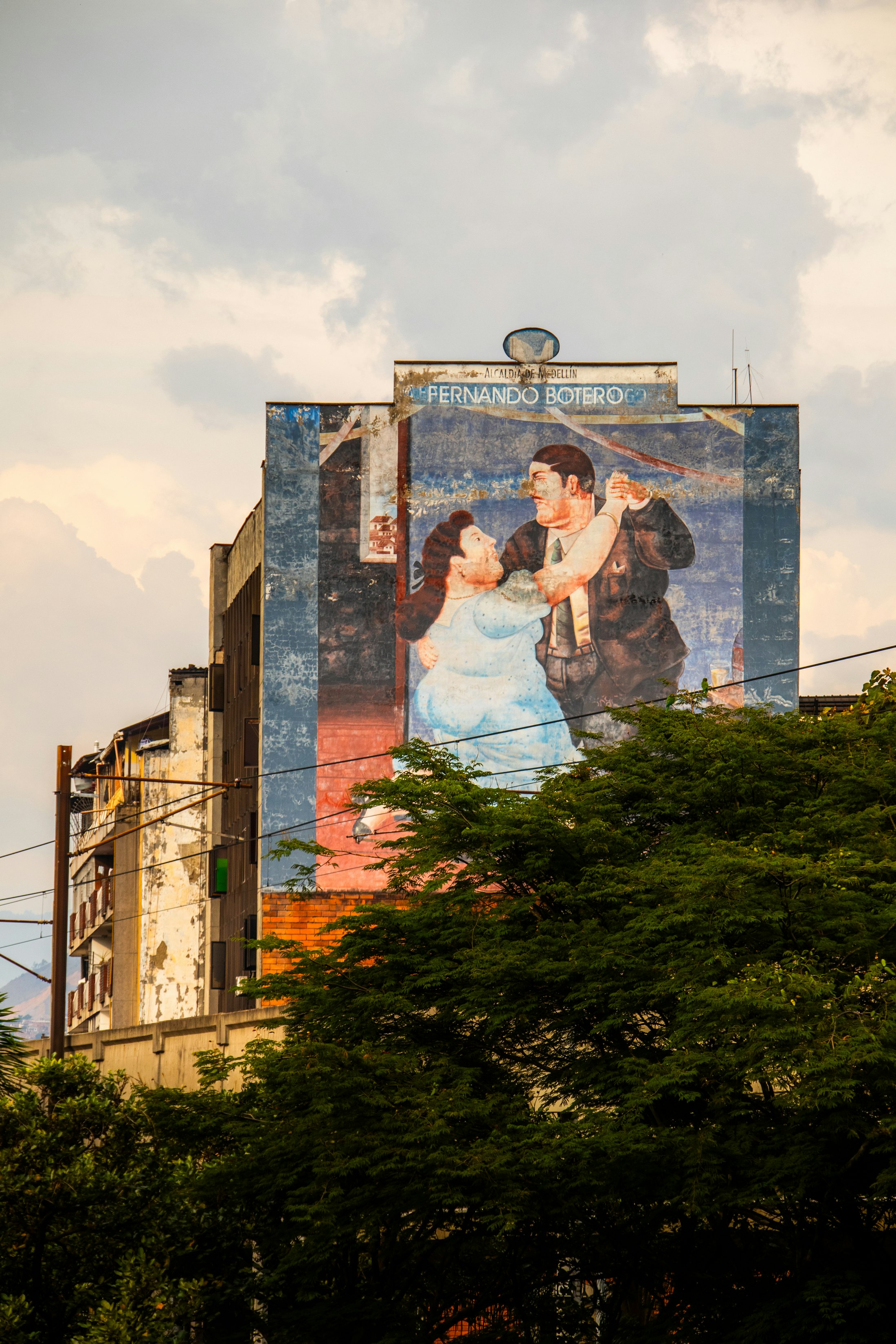
The surrounding blocks contain some of Manrique's best street art dedicated to tango culture. Look for the three-story mural by local artist Chota at Calle 78 and Carrera 44, depicting a couple in mid-ocho against a backdrop of burning airplane wreckage — a haunting visual fusion of romance and the 1935 tragedy that bound Gardel to this city forever.
Street vendors along this corridor sell pirated tango compilations burned onto CDs, handwritten lyric booklets, and Gardel prayer cards that treat him as a folk saint. The prayer cards, typically five hundred pesos each, make extraordinary souvenirs — they blend Catholic iconography with tango mythology in a way unique to Medellín.
This circuit is best walked in late afternoon when golden light hits the western-facing murals and the evening cantina crowd begins filtering onto sidewalks. Avoid midday — the steep terrain and equatorial sun make the walk punishing, and most establishments close between noon and three.
Pro tip:The newspaper kiosk at the corner of Calle 78 and Carrera 45 sells a locally printed pocket map called 'Ruta del Tango' for two thousand pesos. It marks seventeen tango-related landmarks that Google Maps doesn't register.
4. Eating in Manrique: Bandeja Paisa with a Bandoneón Soundtrack
Tango culture in Manrique is inseparable from its food rituals. At Restaurante El Triángulo, on Calle 77 near Carrera 45, you eat a textbook bandeja paisa — red beans, ground beef, chicharrón, fried egg, arepa, avocado, and plantain — while a mounted speaker system plays curated tango sets that the owner has programmed weekly since 1987.
Order the bandeja completa and a cold Club Colombia beer. Skip the menu's concessions to modern tastes like the grilled chicken plate — the regulars quietly judge. The chicharrón here is prepared in-house, fried until the skin shatters audibly, and the beans are cooked overnight with a pork hock that disintegrates into the broth.
For something lighter, walk two blocks south to Panadería y Café Don Julio, a bakery serving buñuelos and pandebono alongside tinto — Colombia's ubiquitous black coffee served searingly hot in a thimble-sized cup. The owner displays framed Gardel photographs alongside family portraits, a visual hierarchy that tells you everything about Manrique's priorities.
Dinner in Manrique is early by Colombian standards. Most cantina kitchens close by 8 PM, shifting focus entirely to drinks and dancing. Plan your eating accordingly — arrive for food by 6:30 PM, then transition to the evening's musical programming with a full stomach.
Pro tip: At El Triángulo, sit at the counter facing the kitchen rather than the dining room tables. Counter regulars receive slightly larger portions, and the cook will occasionally slide you a bonus piece of chicharrón without being asked.
5. Festival Internacional de Tango: Medellín's Annual Obsession
Every June, Medellín hosts the Festival Internacional de Tango, and Manrique becomes its spiritual epicentre. While official stages are set up in Parque de los Deseos and La Alpujarra, the raw, unscripted events happen in Manrique's streets — impromptu milongas, tango karaoke competitions in cantinas, and neighbourhood parades featuring homemade Gardel costumes.
The festival draws dancers and musicians from Buenos Aires, Montevideo, and across Colombia, but the Manrique programming remains fiercely local. Community associations organise their own schedules independently of the city's official programme. Look for photocopied flyers stapled to telephone poles along Carrera 45 — these announce the neighbourhood events that never appear on the festival website.
During festival week, Casa Gardeliana extends its hours until midnight and hosts a legendary tango poetry slam where local poets perform original verses about love, loss, and the barrio. The competition is conducted entirely in parlache — Medellín's street slang — making the tango lyrical tradition feel urgently contemporary rather than nostalgically preserved.
If you cannot visit during the festival, the last Saturday of every month sees a smaller community gathering called 'Gardel Vive' at the Calle del Tango monument. It is less polished but equally passionate, drawing fifty to a hundred dancers and a rotating cast of live musicians who perform for tips and aguardiente.
Pro tip: Book accommodation in Manrique or neighbouring Aranjuez during festival week rather than El Poblado. Several family-run guesthouses along Carrera 44 offer basic rooms for under eighty thousand pesos — ask at Casa Gardeliana for current recommendations.
Stay in Medellín
Top-rated hotels near Medellín
Best locations · Verified reviews · Free cancellation
View deals
Expedia →6. The Vinyl Collectors of Carrera 44: Medellín's Hidden Record Row
Parallel to the main Calle del Tango, a quieter stretch of Carrera 44 between Calles 74 and 78 houses three vinyl shops specialising in tango recordings. The most revered is Discos Gardel, a closet-sized storefront where owner Don Hernán has curated over four thousand tango records since opening in 1972. He files everything by orchestra rather than singer — a Buenos Aires convention he refuses to abandon.
Prices are remarkably low by international collector standards. Original Argentine pressings from the 1950s and 1960s sell for between fifteen and forty thousand pesos. Don Hernán will test any record on a turntable before you buy, and he expects you to listen to the full first track before committing. Rushing this ritual is considered deeply impolite.
Two doors down, a younger collector named Camilo runs a hybrid shop selling restored turntables alongside vinyl. His speciality is Colombian-pressed tango recordings from labels like Discos Fuentes and Sonolux — pressings that Argentine collectors increasingly seek because they feature alternate takes and unique mastering choices unavailable on original Buenos Aires releases.
Bring cash exclusively. None of these shops accept cards, and the nearest ATM is a ten-minute walk downhill on Carrera 45. Budget at least an hour for browsing — the conversations here are as valuable as the recordings, and Don Hernán in particular can narrate the entire social history of Manrique through his inventory.
Pro tip:Ask Don Hernán for his 'selección para principiantes' — a beginner's selection of five essential tango records curated specifically for newcomers. He has been refining this list for decades and charges a bundled price of fifty thousand pesos for all five.
7. Tango Lessons with the Masters of Manrique
If Manrique's milongas intimidate you, seek out Escuela de Tango Manrique on Calle 76 near Carrera 46, a community dance school that has operated from the same converted garage since 1994. Classes run Tuesday and Friday evenings at 6 PM and cost eight thousand pesos per session. The instructors — mostly retired competitive dancers — teach Argentine tango fundamentals with a Medellín accent: looser embrace, sharper footwork, and more rhythmic interpretation.
Private lessons can be arranged through the school's director, Doña Gloria, a former national tango champion who teaches from her living room three blocks away. Her hourly rate is thirty thousand pesos, and she insists on teaching both roles regardless of your gender. Her philosophy — that every dancer must understand both lead and follow — echoes Manrique's egalitarian tango tradition.
The school also hosts a Sunday morning practice session called 'práctica libre' from 10 AM to noon. This is the most forgiving environment for beginners — experienced dancers actively seek out newcomers to mentor, and the atmosphere is collaborative rather than performative. Wear leather-soled shoes if possible; rubber soles catch on the concrete floor.
Avoid booking lessons through Medellín tourism apps, which typically redirect you to upscale studios in El Poblado that teach sanitised, performance-oriented tango. Manrique's instruction is social tango — designed for cantinas and community halls, not stages. The distinction matters enormously to locals.
Pro tip: Doña Gloria keeps a bin of loaner dance shoes in various sizes near her front door. Mention you are visiting from abroad and she will lend you a pair for the lesson at no charge — a kindness she extends because she believes bad shoes ruin good dancers.
Essential tips
Take Metro Line A to Estación Manrique and walk uphill along Carrera 45. The neighbourhood is steep — wear comfortable shoes for daytime exploration and save your dress shoes for evening milongas. Taxis from El Poblado cost roughly twelve thousand pesos.
Manrique operates almost entirely on cash. Withdraw sufficient pesos before arriving — the barrio has limited ATM coverage and none of the cantinas, record shops, or dance schools accept credit cards. Budget eighty to one hundred thousand pesos for a full day.
The neighbourhood's tango rhythm follows a strict daily schedule: museums and shops open from 10 AM to 6 PM, cantina kitchens serve food until 8 PM, and milongas run from 8 PM to midnight Thursday through Saturday. Sundays are quiet except for morning práctica sessions.
Keep your phone discreet and avoid conspicuous camera gear. Manrique is a working-class barrio that welcomes respectful visitors but not spectacle-seekers. Ask permission before photographing dancers — most will enthusiastically agree, but the courtesy matters enormously.
Aguardiente Antioqueño is the default drink in every cantina. Declining it when offered is considered mildly rude. If you dislike anise-flavoured spirits, accept the glass, take a small sip, and set it down — the gesture of acceptance matters more than finishing the pour.
Ready to visit Medellín?
Book your hotel, flights, and activities through our Expedia-powered search.


