In This Guide
- 1.Timing Your Visit: Why May Changes Everything
- 2.The Orquideorama: Architecture That Breathes with the Blooms
- 3.Beyond Cattleyas: The Orchid Species Worth Seeking Out
- 4.The Campesino Aguapanela Ritual: Sugar and Memory
- 5.Lunch at Hatoviejo: Paisa Cuisine After the Garden
- 6.The Butterfly Enclosure and Sensory Garden: Afternoon Recovery
- 7.Evening Walk: Parque Explora and the North Zone After Dark
Step through the wrought-iron gates of Medellín's Jardín Botánico Joaquín Antonio Uribe on a May morning and the air hits you differently — thick with moisture, sweet with decomposing bark mulch, alive with the electric hum of hummingbirds defending territory among cattleya blooms. This is peak orchid season in the City of Eternal Spring, when Colombia's national flower erupts across the garden's ten-hectare canopy in absurd, almost theatrical profusion.
This guide walks you through the botanical garden's May orchid displays, the surrounding rituals that make the experience distinctly paisa, and the agrarian tradition of aguapanela — sugarcane water served by campesino vendors just beyond the garden walls. You'll learn exactly when to arrive, which orchid houses demand your time, where to find the best panela drink in the Norte neighbourhood, and how to layer this visit into a deeper understanding of Medellín's relationship with its rural highlands.
1. Timing Your Visit: Why May Changes Everything
May marks the onset of Medellín's primary rainy season, and it's precisely this moisture surge that triggers mass orchid flowering across the garden's collection of more than 1,000 species. You'll find blooms peaking in the first three weeks of the month, before June's heavier downpours batter delicate petals. Mornings between 7:30 and 9:00 AM offer the best light and the fewest crowds.
The garden opens daily at 9:00 AM, but seasoned visitors know that arriving at the Calle 73 entrance near Universidad metro station by 8:45 gives you a fifteen-minute head start. Staff often open the pedestrian gate early on weekdays. You'll have the Orquideorama — the garden's iconic wooden lattice pavilion — virtually to yourself before school groups arrive around 10:30.
Avoid weekends in May if you can. The Feria de las Flores buildup begins generating local buzz, and Saturday attendance can triple. If weekends are your only option, arrive at opening and head directly to the orchid houses in the garden's northeast quadrant, bypassing the lake and butterfly enclosure entirely.
Rain typically arrives between 2:00 and 4:00 PM in sharp, warm bursts. Bring a compact umbrella rather than a poncho — you'll want your hands free for photography, and the covered walkways between orchid pavilions provide natural shelter every fifty metres.
Pro tip:Download the garden's free app (Jardín Botánico de Medellín) before arriving. It includes an orchid-specific audio tour updated each May with notes on which species are currently in bloom and their exact pavilion locations.
2. The Orquideorama: Architecture That Breathes with the Blooms
The Orquideorama is not merely a greenhouse — it's a living architectural statement. Designed by Plan B Arquitectos and JPRCR Arquitectos, the structure's fourteen interlocking wooden "flower-trees" rise ten metres high, creating a microclimate that mimics the cloud forest conditions orchids demand. In May, the humidity beneath the lattice canopy hovers around 80 percent, and you can feel it settle on your skin within minutes.
You'll find the rarest specimens displayed on elevated moss beds along the pavilion's eastern wall. Look for Dracula vampira, a species native to Colombia's western cordillera, with its dark, almost menacing triangular petals. Beside it, Masdevallia coccinea offers a startling scarlet contrast. The garden's curatorial team rotates these displays weekly during May, so repeat visits genuinely reward.
Beneath the canopy, volunteer guides — many of them retired botany professors from Universidad de Antioquia — station themselves near the central information kiosk. Their tours run informally in Spanish, but several speak English and will happily walk you through pollination mechanics and conservation status of endangered native species.
The light filtering through the wooden lattice creates geometric shadow patterns across the orchid beds, making the Orquideorama one of the most photogenic structures in Medellín. Shoot upward through the lattice around 10:00 AM when sun angle produces the sharpest contrasts against the hexagonal canopy framework.
Pro tip:Ask volunteer guides about the garden's seed bank programme. They'll often take genuinely interested visitors to the propagation lab behind the main pavilion — a space not on any public map — where you can see orchid seedlings in sterile flasks.

Stay in Medellín
Top-rated hotels near Medellín
Best locations · Verified reviews · Free cancellation
View deals
Expedia →3. Beyond Cattleyas: The Orchid Species Worth Seeking Out
Colombia hosts more than 4,200 orchid species — the most of any country on Earth — and the botanical garden's May collection showcases roughly 300 in active bloom. While the Cattleya trianae, Colombia's national flower, draws the most attention with its lavender and magenta lip, you should dedicate time to the less celebrated genera that reveal Colombia's ecological depth.
Head to the shaded northeast orchid house, a modest greenhouse marked simply "Casa de Orquídeas 2" on garden maps. Here you'll encounter miniature Lepanthes species — some with flowers barely five millimetres across — displayed under magnifying stations. These tiny marvels are easy to overlook, but they represent some of the most recent botanical discoveries in Colombian taxonomy, with new species still being identified in Antioquia's highlands.
The Oncidium section, often called "dancing ladies" for their ruffled yellow petals, occupies a sun-dappled corridor connecting the two main orchid houses. In May, these bloom in cascading sprays that attract long-tailed sylph hummingbirds. Position yourself quietly near the corridor's midpoint around 9:30 AM and you'll almost certainly witness feeding behaviour.
For serious orchid enthusiasts, the garden's reference library adjacent to the administration building holds bound copies of Orquideología, the journal of the Colombian Orchid Society founded in Medellín in 1966. Staff will grant access if you ask at the front desk — it's technically public but rarely visited by tourists.
Pro tip:Photograph miniature orchid species using your phone's macro mode with the garden's provided magnifying loupes. Place your phone lens directly against the loupe glass for surprisingly sharp close-ups without specialist equipment.
4. The Campesino Aguapanela Ritual: Sugar and Memory
Exit the garden's northern gate onto Carrera 52 and walk two blocks toward the Carabobo Norte pedestrian corridor. Here, between the fruit vendors and lottery sellers, you'll find Don Hernán — a campesino aguapanelero who has operated his wooden cart at the corner of Calle 73 and Carrera 52 for over twenty years. His aguapanela, made from solid blocks of unrefined panela dissolved in boiling water, tastes like liquid burnt caramel with a mineral backbone.
Aguapanela is not a drink tourists typically seek out, but it is arguably Colombia's most democratic beverage. Every rural family across the Andes prepares it daily — hot in the highlands, cold with lime in the lowlands. In Medellín, the tradition bridges urban and rural identity. Ordering one from a street vendor is a small act of cultural participation that opens conversations locals genuinely appreciate.
Don Hernán serves his hot, in small plastic cups, for 1,500 Colombian pesos — roughly thirty-five US cents. Ask for it "con limón" and he'll squeeze half a lime into the cup, cutting the sweetness with bright citric acid. Pair it with an arepa de chócolo from the adjacent vendor for a mid-morning snack that costs less than a dollar and delivers more cultural texture than any formal restaurant.
The panela itself comes from sugarcane farms in the municipality of Barbosa, ninety minutes north. If Don Hernán is in a talkative mood — and he usually is — ask him about the trapiche, the traditional ox-powered mill where cane juice is boiled into solid blocks. His family has run one for three generations, and his descriptions of the process are vivid, practised, and genuinely moving.
Pro tip:Never ask for aguapanela with refined sugar added — it's a cultural misstep. The entire point is the unrefined panela's complex mineral sweetness. If you find it too sweet, ask for more lime rather than diluting with water.
5. Lunch at Hatoviejo: Paisa Cuisine After the Garden
After the garden and your aguapanela, walk south along Carabobo Norte for ten minutes to Restaurante Hatoviejo at Carrera 49 No. 52-110 in the Maracaibo neighbourhood. This is Medellín's most respected traditional paisa restaurant, operating since 1989, and it serves the bandeja paisa — the region's iconic platter — with a seriousness that borders on devotion.
Order the Bandeja Paisa Tradicional, which arrives as an absurd topography of red beans, ground beef, chicharrón, fried egg, chorizo, arepa, avocado, rice, and sweet plantain. It is enormous and unapologetically caloric. You will not finish it. Accept this in advance and eat slowly, starting with the beans, which are Hatoviejo's quiet masterpiece — slow-cooked overnight with pig trotter for body and depth.
The restaurant's interior recreates a rural finca aesthetic with wooden beams, ceramic tiles, and vintage farming implements on the walls. Request a table in the interior courtyard if available — it's quieter than the street-facing terrace and the natural light is better for photographing that bandeja. Arrive before noon on weekdays to avoid the business lunch crush that fills every seat by 12:30.
Pair your meal with a fresh lulo juice — tart, fragrant, and aggressively Colombian. Skip the beer; it dulls the palate for an afternoon that deserves sensory clarity. Hatoviejo also makes an excellent mazamorra, a fermented corn porridge served cold with milk and panela syrup, which neatly echoes the aguapanela tradition you explored earlier.
Pro tip:Ask your server for the "hogao aparte" — a side of the house tomato-and-onion sofrito served in a small bowl. It's not automatically included but transforms the beans and rice when spooned over generously.
Stay in Medellín
Top-rated hotels near Medellín
Best locations · Verified reviews · Free cancellation
View deals
Expedia →6. The Butterfly Enclosure and Sensory Garden: Afternoon Recovery
Return to the botanical garden after lunch — your entry wristband remains valid all day — and head to the mariposario, the butterfly enclosure in the garden's southern quadrant. In May, the enclosure hosts approximately twenty species of native butterfly, including the electric-blue morpho that has become Medellín's unofficial garden mascot. The warmest hours, between 1:00 and 3:00 PM, coincide with peak butterfly activity.
The enclosure's interior humidity exceeds 85 percent, so remove your camera lens cap and let equipment acclimatise for five minutes before shooting. Condensation ruins more butterfly photographs than poor technique. Stand still near the feeding stations — shallow dishes filled with overripe banana — and morphos will approach within arm's length. Wear a bright yellow or red shirt and they may land on you.
Adjacent to the mariposario, the Jardín Sensorial — a small sensory garden designed for visually impaired visitors — offers one of the botanical garden's most underappreciated experiences. Aromatic herbs, textured bark, and flowering plants are arranged at waist height with braille labels. Close your eyes and navigate by scent: you'll identify lemongrass, mint, and the startling anise fragrance of Colombian fennel.
This section of the garden empties almost entirely after 2:30 PM as school groups depart. The quiet is remarkable for a space in the middle of a city of nearly four million. Find the wooden bench beneath the ceiba tree at the sensory garden's eastern edge and sit. The canopy filters the afternoon light into green cathedral tones that justify the entire visit.
Pro tip:The sensory garden's lemongrass plants are the same variety used by campesino families to make aguapanela de hierbas — a herbal variation of the morning drink. Crush a leaf and smell it to complete the day's aromatic narrative.
7. Evening Walk: Parque Explora and the North Zone After Dark
The botanical garden shares its eastern boundary with Parque Explora, Medellín's interactive science museum, and the two sites together form a cultural corridor that transforms after sundown. Exit the garden through the main gate as it closes at 5:30 PM and cross to the Explora plaza, where the building's red façade catches the last equatorial light in a way that photographers find irresistible.
Walk north along Carrera 52 toward the Universidad metro station. The Zona Norte neighbourhood has undergone significant renewal in the past decade, and its evening street life pulses with informal food vendors, university students, and families. Stop at Versalles, the historic café at Pasaje Junín near the Parque de Bolívar (Carrera 49 No. 53-39), for a late-afternoon tinto — Colombian black coffee served small and sweet.
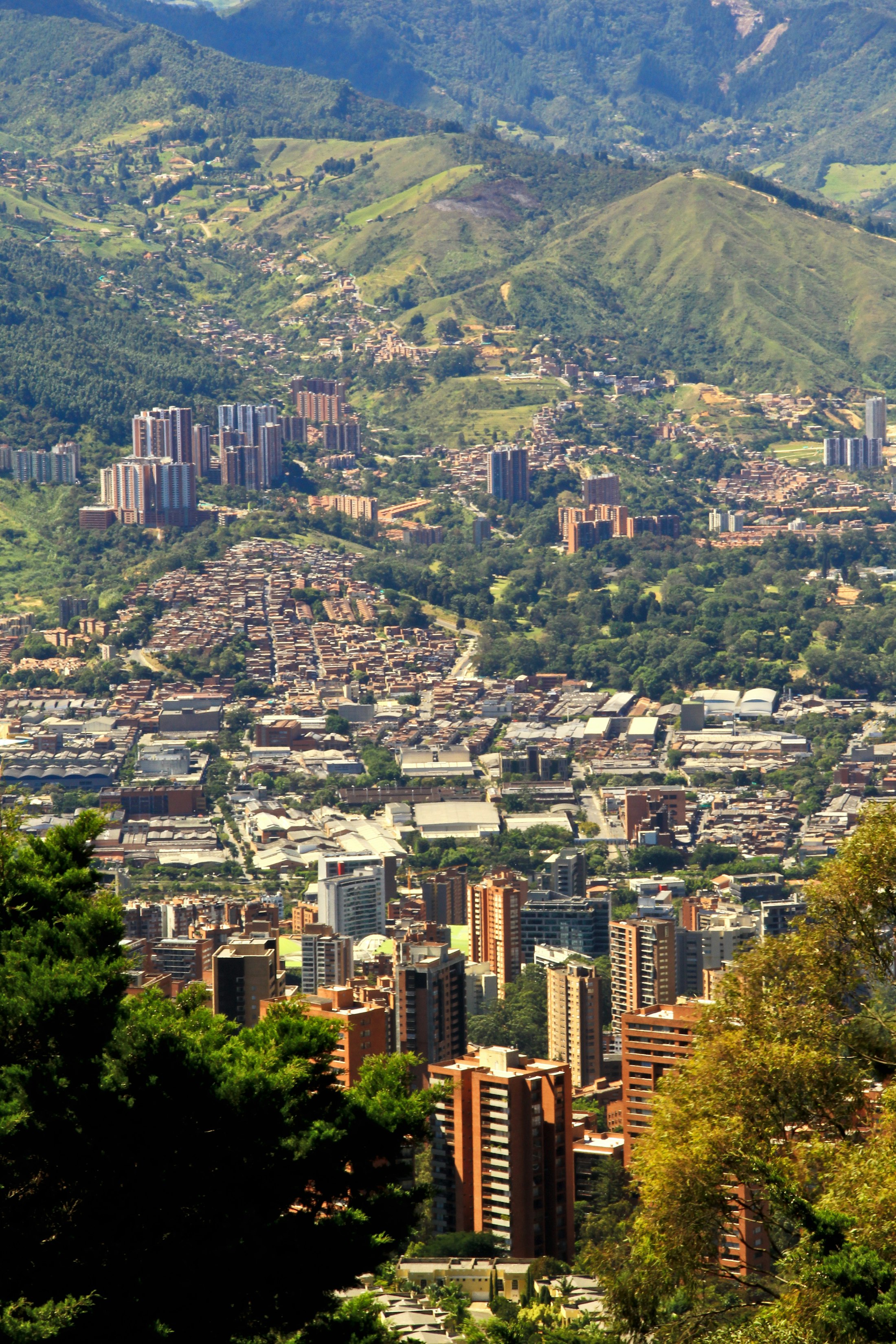
The walk from the garden to Versalles takes roughly twenty-five minutes at a comfortable pace and passes through some of Medellín's most visually layered urban terrain — graffiti murals, colonial façades, and modernist apartment blocks coexisting in the compressed vertical geography of the Aburrá Valley. Keep your phone accessible but discreet; this is a safe corridor but common sense applies after dark.
End your evening at Versalles with a slice of torta de tres leches and reflect on the day's arc — from orchid pavilions to campesino panela carts to the sensory garden's green silence. Medellín rewards visitors who move slowly and pay attention, and May's orchid season provides the perfect temporal frame for that kind of attentiveness.
Pro tip: Versalles closes at 8:00 PM on weekdays. Arrive by 6:30 to secure a window table overlooking the pedestrian passage — the people-watching is exceptional and the café con leche is strong enough to sustain your evening plans.
Essential tips
May afternoon rains in Medellín are nearly guaranteed between 2:00 and 4:00 PM. Carry a compact umbrella and a ziplock bag for electronics. The garden's covered walkways provide shelter, but transitions between pavilions leave you exposed for thirty-second bursts.
Take the Metro to Universidad station (Line A). The botanical garden entrance is a three-minute walk from the platform exit. Avoid taxis to this area — one-way streets and construction create unpredictable delays that the metro eliminates entirely.
Bring a macro lens or clip-on macro attachment for orchid photography. Many species have intricate labellum patterns invisible to the naked eye. The garden permits tripods on weekdays only and prohibits flash photography in all orchid enclosures.
Entry to the botanical garden is free. Carry small bills (2,000 and 5,000 peso notes) for aguapanela vendors and street food — most informal sellers outside the garden cannot process digital payments or break 50,000 peso notes.
Apply insect repellent before entering the orchid houses. The warm, humid enclosures harbour mosquitoes year-round, and May's rains intensify breeding. Choose a DEET-free formula — chemical repellents can damage orchid petals if you brush against displays.
Ready to visit Medellín?
Book your hotel, flights, and activities through our Expedia-powered search.


