In This Guide
- 1.Understanding Cholado: Cali's Export, Medellín's Obsession
- 2.The Walk Up: Carrera 29 and the Staircase Culture
- 3.Cholados Doña Gloria: The Matriarch's Stand
- 4.Parque Biblioteca España and the View That Earns the Climb
- 5.Beyond Cholado: The Full Buenos Aires Food Map
- 6.Casa Kolacho and the Art of Barrio Identity
- 7.Timing Your Visit: Seasons, Safety, and the Right Hours
The MetroCable gondola climbs away from the valley floor, and somewhere between stations Acevedo and Santo Domingo, the noise of downtown Medellín dissolves into cumbia drifting from open doorways and the sharp crack of a machete splitting ice. Buenos Aires is not the barrio tourists stumble into by accident — it is a hilltop neighbourhood earned by steep concrete staircases, where fruit vendors operate with the precision of surgeons and cholado is not a drink but a declaration of identity.
This guide maps the essential stops across Buenos Aires and its surrounding comunas where cholado — that towering, lurid sculpture of shaved ice, tropical fruit, condensed milk, and fruit syrup — reaches its most ambitious expression. You will learn where to eat it, how to order it, and why this neighbourhood's version outperforms the Cali original in sheer theatrical ambition.
1. Understanding Cholado: Cali's Export, Medellín's Obsession
Cholado was born in Cali's barrio San Antonio, a glorified raspado elevated by Pacific Coast fruit abundance. But Medellín's version has mutated into something more maximalist — taller, sweeter, loaded with toppings that would make a Caleño wince. In Buenos Aires, vendors add wafer cookies, gummy bears, and three distinct syrups. Purists may object. The neighbourhood does not care.
The base matters more than the spectacle. Look for vendors who shave their ice by hand from solid blocks rather than using commercial machines. The texture should be feathery, not granular. At Cholados Doña Gloria on Carrera 29 near the Parque Biblioteca España, the ice collapses gently under each spoonful — a sign of proper technique passed through family lines.
The fruit layer separates the amateurs from the artists. Expect lulo, mango, banana, papaya, and maracuyá at minimum. Some vendors in Buenos Aires add guanábana or tree tomato depending on the season. Always ask what arrived from the Plaza Minorista that morning — seasonal fruit is the difference between a cholado and a sugar delivery system.
Avoid ordering cholado after 4 PM on weekends. The best vendors start their blocks of ice and fruit prep before dawn. By late afternoon, you are getting the dregs — softer ice, bruised fruit, and a vendor who is already mentally counting the day's earnings.
Pro tip:Ask for 'sin gomas' (without gummy candies) and 'doble lulo' to get a version closer to the Cali original — tart, bright, and less aggressively sweet than the standard Buenos Aires build.
2. The Walk Up: Carrera 29 and the Staircase Culture
Buenos Aires is vertical. The neighbourhood stacks itself against the northeastern hillside in layers of brick and corrugated metal, connected by staircases so steep they function as informal gyms. Carrera 29 serves as the main artery — a road that winds uphill past tiendas, fruit carts, and evangelical churches whose music competes with reggaeton from passing motorcycles.
Start your walk at the Santo Domingo MetroCable station and descend on foot rather than climbing. This saves your knees and gives you the neighbourhood from top to bottom, with the city panorama always in front of you. The light is best before 10 AM, when the valley haze has not yet thickened and the brick facades glow orange.
Along Carrera 29 near Calle 107, a cluster of informal food stalls operates on weekends. Empanadas here cost 1,500 pesos and are fried in oil that has been seasoned by decades of continuous use. Pair one with a cholado from the adjacent cart — the salt-sweet combination is the neighbourhood's unofficial breakfast.
Do not wear flashy jewelry or pull out expensive camera equipment without awareness of your surroundings. Buenos Aires has transformed dramatically since the early 2000s, but common-sense street smarts remain essential. Walk with a local guide on your first visit — several community-led tour operations now run from the MetroCable station.
Pro tip:Hire a guide through Real City Tours Medellín's community programme, which employs residents from the comuna. They will take you to stalls and viewpoints that Google Maps has never indexed.
Stay in Medellín
Top-rated hotels near Medellín
Best locations · Verified reviews · Free cancellation
View deals
Expedia →3. Cholados Doña Gloria: The Matriarch's Stand
Doña Gloria has operated her cholado cart near the intersection of Carrera 29 and Calle 105B for over fifteen years. Her setup is minimal — a glass case of pre-cut fruit, a block of ice, a machete, and a plastic table covered in condensed milk drips. The cholado she builds is a precise, layered architecture that takes roughly four minutes from order to delivery.
Her signature move is the double-syrup pour: one layer of red fruit syrup midway through the ice, another of mora syrup on top, creating a gradient visible through the clear plastic cup. She finishes with a crown of shaved coconut that most competitors skip because the margins are thin on fresh coconut.
Order the 'especial' — it costs around 8,000 pesos and includes every fruit available that day plus a generous base of condensed milk pooling at the bottom. Eat it with both a spoon and a straw. The straw captures the melted syrup-milk mixture at the base, which is arguably the best part.
Doña Gloria operates Tuesday through Sunday, roughly 9 AM to 3 PM, though she closes when the ice runs out. There is no signage beyond a hand-painted board. If you cannot find her, ask any resident on the block — she is a landmark more reliable than street numbers.
Pro tip: Bring cash in small denominations. Doña Gloria does not accept digital payments, and breaking a 50,000-peso note will earn you a look that could curdle condensed milk.
4. Parque Biblioteca España and the View That Earns the Climb
The Parque Biblioteca España — three black monolithic towers designed by architect Giancarlo Mazzanti — anchors the upper section of Buenos Aires. The building has been closed for structural repairs since 2015, a frustrating bureaucratic saga that locals discuss with resigned humour. Skip the library itself; there is nothing to see inside. But the surrounding terraces remain open, offering the most commanding panorama of the Aburrá Valley available without a helicopter.
On clear mornings, you can see from the Cerro Nutibara in the south to the Bello ridge in the north. Bring a cholado from one of the carts stationed at the library entrance and eat it on the concrete steps facing west. The combination of cold sugar and warm sun at altitude is meditative in a way that no rooftop bar in El Poblado can replicate.
The plaza around the library hosts informal football matches, domino games, and occasionally live music on weekends. Public space functioning exactly as intended. Sit for at least thirty minutes and watch the social choreography — you will learn more about Medellín here than in any museum.
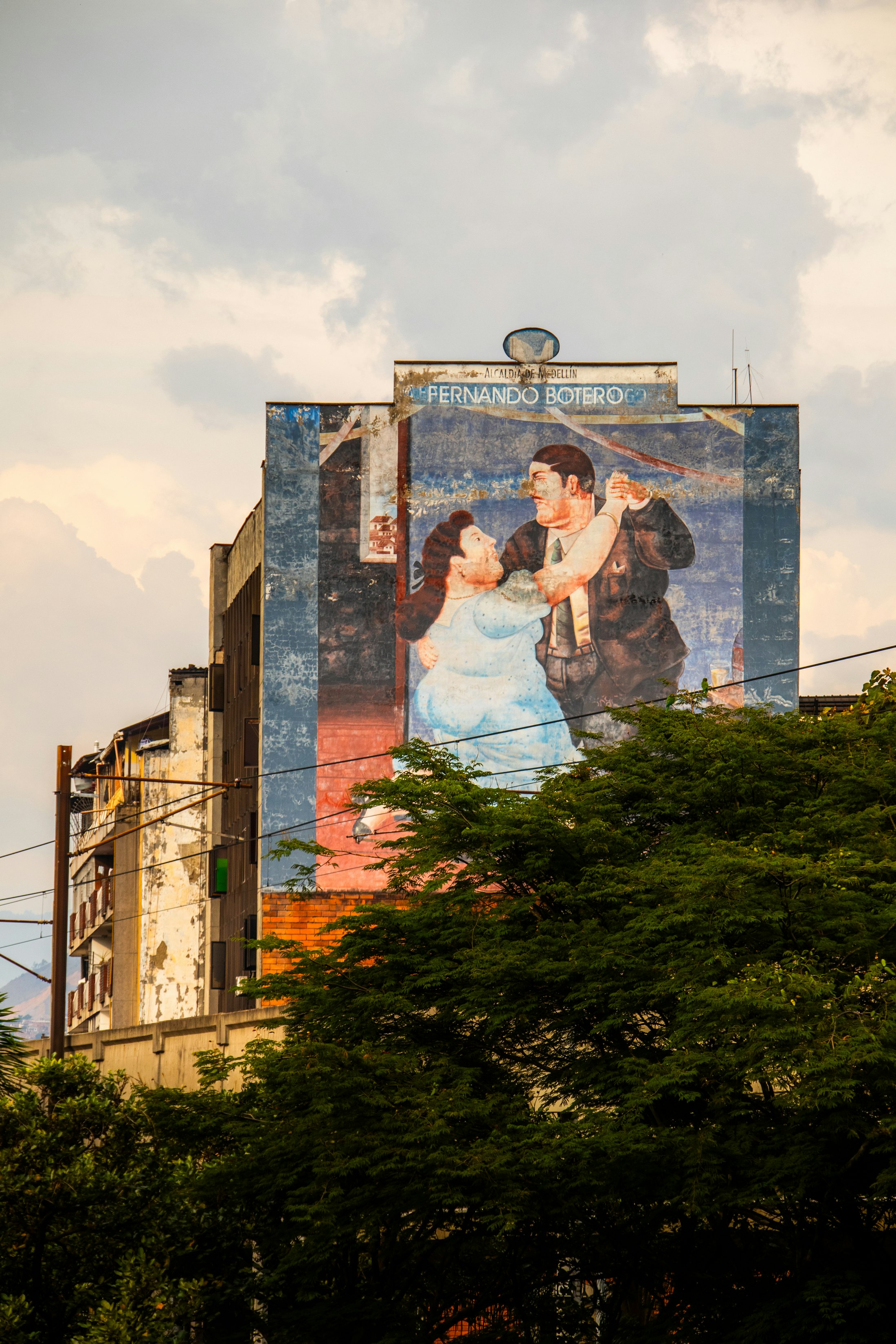
From the library, a footpath descends through residential blocks toward the Metrocable station. Along this path, look for the murals commissioned by the Casa Kolacho collective — street art that documents the barrio's transformation from conflict zone to cultural landmark.
Pro tip: Visit the library terraces on a Wednesday morning when school groups are absent and the plaza is quiet enough to hear the cable cars humming overhead — the most atmospheric window of the week.
5. Beyond Cholado: The Full Buenos Aires Food Map
Cholado dominates the narrative, but Buenos Aires feeds its residents on a broader menu worth exploring. On Calle 106 near the community health centre, a woman known only as La Mona serves bandeja paisa from a ground-floor kitchen — her chicharrón is dry-rubbed with cumin and fried until it shatters. Portions are scaled for labourers, not tourists. Come hungry or share.
For breakfast, look for the arepa stands that cluster near the MetroCable exit between 6 and 9 AM. The arepa de chócolo here is made from fresh corn ground that morning, griddled until the edges caramelise, and served with a slab of quesito that melts into the surface. At 2,000 pesos, it is the best value meal in Medellín.
Jugo de borojó — a thick, pulpy juice from a Chocó fruit considered an aphrodisiac — appears at several stands along Carrera 29. The flavour is earthy, tannic, and polarising. Order it once for the experience. Vendors often mix it with honey and powdered maca.
On Friday evenings, several tiendas on Calle 107 set out plastic chairs and sell aguardiente by the shot alongside micheladas made with Poker beer and lime. Joining a table of regulars — with respectful curiosity and a willingness to toast — is the fastest way to understand Buenos Aires on its own terms.
Pro tip:La Mona's kitchen has no formal hours. She cooks when she has ingredients and stops when the pot is empty. Arrive before noon on any day except Monday, when she rests.
Stay in Medellín
Top-rated hotels near Medellín
Best locations · Verified reviews · Free cancellation
View deals
Expedia →6. Casa Kolacho and the Art of Barrio Identity
Casa Kolacho began as a hip-hop collective in 2003, born from the same generation that survived the neighbourhood's most violent years. Today it operates as a cultural centre, graffiti tour organiser, and de facto embassy for Buenos Aires' creative identity. Their office sits near the MetroCable station, and their guided graffiti tours run most days for around 30,000 pesos per person.
The tour covers roughly two kilometres of murals, each accompanied by stories of displacement, resilience, and reinvention that the artwork encodes. Guides are neighbourhood residents, and their narration is unsentimental and direct. This is not poverty tourism — it is community-curated storytelling with spray paint as the medium.
One mural near the Parque Biblioteca depicts a massive cholado cup overflowing with fruit, painted by artist Chota. It has become an unofficial symbol of Buenos Aires — commerce, sweetness, and survival compressed into a single image. Ask your guide about its backstory.
After the tour, stop at Casa Kolacho's small shop for screen-printed t-shirts and zines produced by local artists. Proceeds fund youth workshops in the barrio — one of the few souvenir purchases in Medellín where your money stays entirely within the community that created the product.
Pro tip: Book the Casa Kolacho tour directly through their Instagram page (@casakolacho) rather than through third-party platforms. The full fee goes to the collective, and you will often get smaller group sizes.
7. Timing Your Visit: Seasons, Safety, and the Right Hours
Medellín's eternal spring means Buenos Aires is visitable year-round, but December through February brings the clearest skies and the best valley views from the hilltop. For a quieter experience with full vendor availability, visit on a Saturday morning before 11 AM.
Rain arrives almost daily between April and May, usually in sharp afternoon downpours. Carry a compact umbrella and plan your cholado consumption for the morning hours. Wet staircases become genuinely hazardous — the concrete steps lack handrails in many sections, and motorcycle traffic does not slow for weather.
Safety has improved enormously since the MetroCable's 2004 inauguration, which connected Buenos Aires to the city's transit system and, symbolically, to its economy. Petty theft still occurs, particularly near the cable car stations during peak hours. Keep your phone in a front pocket, carry minimal cash, and stay on populated routes.
For photography, the golden hour light between 5:30 and 6:15 PM transforms the brick hillside into something extraordinary. But do not linger after dark unless you are with a local. The neighbourhood's nightlife is real but internal — it operates on trust networks that a visitor cannot navigate alone on a first visit.
Pro tip: The MetroCable is free with a loaded Cívica card on Sundays and holidays — the same transit card used for buses and the Metro. Load it at any Metro station before heading uphill.
Essential tips
Take Metro Line A to Acevedo station, then transfer to the MetroCable Line K toward Santo Domingo. The ride takes twelve minutes and costs the same as a standard Metro fare — roughly 2,950 pesos with a Cívica card.
Bring cash in denominations of 10,000 pesos or smaller. Most vendors, including cholado carts and empanada stands, do not accept cards or digital wallets. The nearest ATM is at Acevedo station, not in the barrio itself.
Wear shoes with actual grip. The neighbourhood is built on steep gradients and polished concrete stairs. Sandals and fashion sneakers are a liability, especially after afternoon rain slicks the surfaces.
Download offline maps of Comuna 1 and 2 before visiting. Mobile signal weakens in parts of the hillside, and street numbering is inconsistent. Screenshot vendor locations shared on Instagram rather than relying on Google Maps pins.
Basic Spanish transforms this visit. Vendors and residents engage warmly with visitors who try, even poorly. Learn 'regáleme un cholado especial' — the polite local phrasing that replaces 'deme' and signals you have done your homework.
Ready to visit Medellín?
Book your hotel, flights, and activities through our Expedia-powered search.


