In This Guide
- 1.Ban Xang Khong: Orienting Yourself in the Paper Village
- 2.The Mulberry Bark Process: What You're Actually Watching
- 3.Ceremonial Paper and Temple Commissions for Pi Mai
- 4.Eating and Drinking Near the Village
- 5.Sand Stupas and Water Blessings: The Pi Mai Rituals You Shouldn't Miss
- 6.What to Buy and How to Pack Saa Paper Home
- 7.Timing Your Visit: The Three-Day Sweet Spot
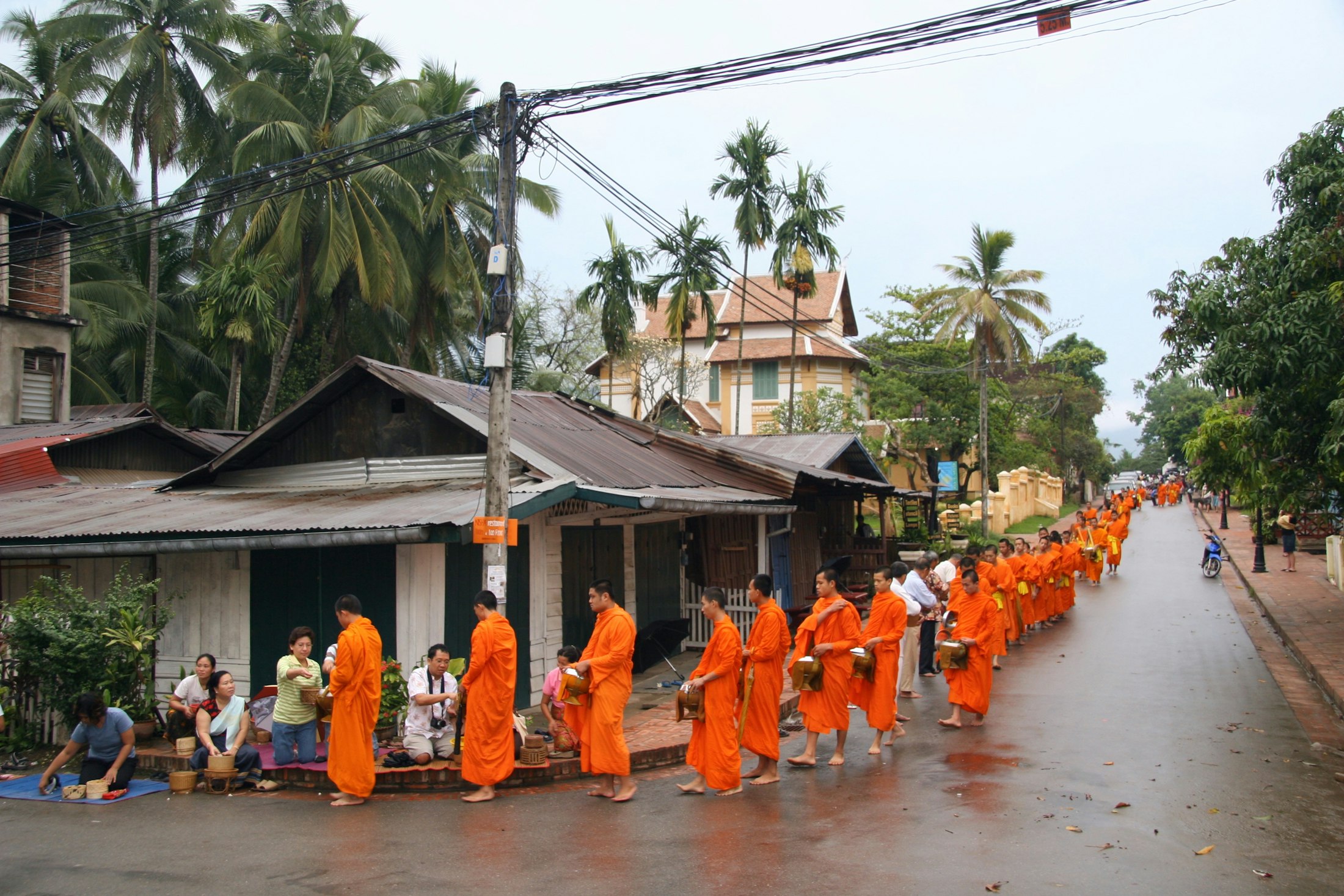
In a quiet bend of the Mekong, upstream from Luang Prabang's gilded temples, the village of Ban Xang Khong smells of wet mulberry bark and sticky rice steaming over charcoal. It is mid-April's eve, and every household is deep in preparation — not just for Pi Mai Lao, the Laotian New Year, but for the annual surge in demand for saa paper: the delicate, sun-dried sheets that will wrap temple offerings, line parade floats, and adorn altars across the old royal capital.
This guide takes you inside the rarely documented days before Luang Prabang's famous water festival, when the paper-making artisans of Ban Xang Khong shift into overdrive. You will learn where to watch bark being boiled and beaten, which families welcome visitors into their drying yards, and how to time your visit so you experience the creative frenzy rather than the tourist-facing calm. It is a story of craft, ritual, and impeccable timing that most visitors to Laos never see.
1. Ban Xang Khong: Orienting Yourself in the Paper Village
Ban Xang Khong sits roughly four kilometres east of the Luang Prabang peninsula, hugging the north bank of the Mekong. You can reach it by bicycle in twenty minutes from the Night Market, following the river road past Wat Xieng Thong. The village has no formal entrance gate — look for the hand-painted sign near the first cluster of wooden stilt houses and a tangle of mulberry saplings lining the footpath.
Start at the workshop of Ms. Douangdeuane, whose family compound sits at the village's western edge, directly opposite a small spirit house shaded by frangipani. Her operation is the largest in the village, employing a dozen women during peak Pi Mai preparation. She sells finished paper but also lets visitors observe every production stage, from bark stripping to the final sun-bleach on bamboo frames.
The village is compact — you can walk its single main lane end to end in fifteen minutes. But rushing defeats the purpose. The rhythm here is dictated by boiling times and drying cycles, and the most interesting conversations happen while waiting for a fresh sheet to set. Bring water, wear a hat, and leave your expectations of a curated workshop experience behind.
In the days before Pi Mai, roughly April 10 to 13, the village transforms. Extra vats of lye bubble behind houses, teenagers help stretch frames, and monks from nearby Wat Pa Phon Phao arrive to commission ceremonial sheets. This is the window you want. After the 14th, the village empties for the festival itself.
Pro tip: Arrive before 8 a.m. to see the bark-boiling stage, which starts at dawn and finishes by mid-morning. By noon, most families shift to drying and decorating — visually lovely, but the raw, steamy process is far more compelling to photograph.
2. The Mulberry Bark Process: What You're Actually Watching
Saa paper begins with the inner bark of the paper mulberry tree, Broussonetia papyrifera, which grows abundantly in the hills surrounding Luang Prabang. Artisans harvest young branches — ideally two years' growth — and strip the bark in long ribbons. You will see these pale, fibrous strips soaking in large metal drums behind nearly every house, softening before the next stage.
The soaked bark goes into an alkaline bath, traditionally wood ash lye, and boils for two to three hours. Ms. Sengkham's workshop on the eastern end of the village lane still uses a wood-fired hearth for this step, and the acrid, vegetal steam is unmistakable. She is one of the few artisans who will explain the chemistry in detail if you ask — her daughter translates into competent English.
Once softened, the bark is rinsed and beaten on flat stones with wooden mallets until it becomes a pulpy slurry. This is the most physically demanding step, and it is almost always done by women. The rhythmic thwacking carries across the village like a collective heartbeat. You are welcome to try a few strokes, but be warned — the technique is harder than it looks, and the women will laugh warmly at your attempts.
The slurry is then suspended in water and poured over framed screens made of fine mesh stretched on bamboo. Artisans tilt and rock the frame to distribute fibres evenly, then set the screen in direct sunlight. A single sheet takes roughly ninety minutes to dry in April's heat. Watching the translucent sheet tighten and whiten on the frame is quietly mesmerising.
Pro tip:Ask to see the 'reject pile' — sheets with uneven thickness or tears. These offcuts cost almost nothing and make beautiful, imperfect wrapping paper or journal covers. Ms. Sengkham sells them for around 5,000 kip per sheet.
Stay in Luang Prabang
Top-rated hotels near Luang Prabang
Best locations · Verified reviews · Free cancellation
View deals
Expedia →3. Ceremonial Paper and Temple Commissions for Pi Mai
Not all saa paper is equal. In the lead-up to Pi Mai, artisans produce a specific grade called saa kham — thicker sheets embedded with marigold petals, frangipani blossoms, or gold leaf. These are commissioned by temples for wrapping Buddha images during the ritual bathing ceremony, one of Pi Mai's most sacred acts. You will recognise saa kham by its creamy hue and the visible flowers pressed into its surface.
Visit Wat Pa Phon Phao, the forest monastery on the hill south of the village, to understand where this paper ends up. Inside the sim, monks prepare neat stacks of saa kham sheets alongside beeswax candles and jasmine garlands. The abbot, Ajahn Khamla, has commissioned paper from Ban Xang Khong for over two decades and occasionally allows respectful visitors to observe the wrapping preparations during morning hours.
Back in the village, the ceremonial paper production happens in a separate area of Ms. Douangdeuane's compound. Her eldest daughter, Keo, handles the petal-embedding process, pressing flowers into the wet pulp with a practised flick of the wrist. She takes custom orders — if you commission a set of sheets with specific botanicals, allow two full drying days before collection.
Avoid asking artisans to sell ceremonial sheets already earmarked for temple use. These are identifiable by small pencil marks on the frame edges. Instead, ask for saa kham made to the same specification but without a temple commission. The quality is identical, and you sidestep an awkward cultural misstep.
Pro tip: If you want to photograph the petal-embedding process, offer to buy a sheet first. It reframes the dynamic from extraction to exchange, and the artisans become noticeably more relaxed and generous with their time.
4. Eating and Drinking Near the Village
After a morning in the workshops, cross back toward town and stop at Khaiphaen, a social enterprise restaurant at 100 Sisavangvong Road in the old quarter. Named after the Mekong river weed snack, it serves beautifully composed Lao dishes — order the crispy khaiphaen with jaew bong, a spicy buffalo-skin chilli paste that is punchy and addictive. The flavours reset your palate after a morning of smoky, lye-scented air.
Closer to the village, a nameless noodle stall operates from a blue tarpaulin at the junction where the river road meets Ban Xang Khong's lane. The owner, an elderly woman everyone calls Mae Tui, serves feu — Lao-style pho — only in the mornings. Her broth, heavy on star anise and charred ginger, costs 15,000 kip and comes with a plate of raw greens you assemble yourself.
For afternoon refreshment, cycle five minutes west to Saffron Coffee, a Lao-owned roastery on the river road near Wat Aham. Their cold brew, made from Bolaven Plateau beans, is the best iced coffee in the area. The terrace overlooks the Mekong, and the breeze off the water makes lingering irresistible.
Avoid eating at the tourist-oriented buffets near the Night Market during Pi Mai week — prices triple and quality drops. Instead, follow locals to the temporary food stalls that pop up along Khem Khong Road, where grilled chicken, sticky rice, and tam mak hoong are served on banana leaves for a fraction of the cost.
Pro tip:Mae Tui's noodle stall closes by 10 a.m. sharp and does not operate on wan sin — Buddhist observance days, which fall roughly every week. Check a Lao lunar calendar or ask your guesthouse before heading out.
5. Sand Stupas and Water Blessings: The Pi Mai Rituals You Shouldn't Miss
On the morning of April 14, the first official day of Pi Mai Lao, families across Luang Prabang construct small sand stupas — pha sat — in temple courtyards. The finest examples appear at Wat Xieng Thong, where monks and laypeople build elaborate mounds decorated with pennants and flowers. You should arrive by 7 a.m. to watch the construction; by nine, the courtyards are crowded and the intimate atmosphere dissolves.
The ritual bathing of Buddha images, called song nam phra, begins mid-morning. Devotees pour scented water — infused with dok kham, the golden shower flower — over statues carried in procession through the streets. This is the spiritual heart of Pi Mai, distinct from the raucous water fights that dominate the afternoon. Position yourself near Wat Mai Suwannaphumaham on Sisavangvong Road for the most photogenic procession.
By early afternoon, the water festival shifts from sacred to celebratory. Pickup trucks loaded with barrels cruise the streets, and no pedestrian is spared a drenching. If you want to participate without destroying your camera gear, stash electronics in a dry bag and wear quick-dry clothing. The main battleground runs the length of Sisavangvong Road from the Royal Palace Museum to Wat Xieng Thong.
The connection to Ban Xang Khong becomes visible in the floats and temple decorations: saa paper banners flutter from bamboo poles, ceremonial sheets wrap freshly bathed Buddhas, and paper flowers crafted by the village women adorn every wat entrance. Knowing where these objects were made — having seen the hands that shaped them — transforms Pi Mai from spectacle into something personal.
Pro tip:Carry a small bottle of nam som — orange blossom water — to pour respectfully on the wrists of elders you meet. This traditional gesture earns genuine warmth and sometimes an invitation to join a family's private baci ceremony.
Stay in Luang Prabang
Top-rated hotels near Luang Prabang
Best locations · Verified reviews · Free cancellation
View deals
Expedia →6. What to Buy and How to Pack Saa Paper Home
The best purchases are made directly from village artisans, not from Luang Prabang's tourist shops, which mark up prices by 200 to 400 percent. A standard A3 sheet of plain saa costs around 10,000 kip at the source; a petal-embedded saa kham sheet runs 20,000 to 30,000 kip depending on complexity. Ms. Douangdeuane's compound accepts cash only — bring small bills in kip, as change is always scarce.
For gifts, consider the saa paper notebooks bound with mulberry-bark thread. Keo produces these in batches of twenty and prices them at 40,000 kip each — a fraction of what identical items fetch at the Ock Pop Tok boutique in town. She also makes paper lanterns designed for Pi Mai, though these are fragile and challenging to transport.
Packing saa paper requires care. Roll sheets loosely around a cardboard tube — you can usually scavenge one from a textile shop on Sisavangvong Road — and secure with a rubber band. Place the tube inside your checked luggage surrounded by clothing. Do not fold the paper; creases in saa are permanent. For lanterns, nest them inside each other and wrap in a sarong.
If you want a curated selection without the village visit, Ock Pop Tok's Living Crafts Centre on the Mekong riverbank near Ban Saylom stocks a decent range. But the premium you pay funds the centre's artisan training programmes, so it is not an unreasonable trade-off. Their saa paper gift sets, wrapped in banana leaf, make elegant souvenirs.
Pro tip:Ask Keo for 'unfinished' sheets — paper pulled from the frame slightly early, leaving soft, feathered edges. These are not sold to temples and are considered less desirable locally, but Western buyers find them beautiful. She charges the same as standard sheets.
7. Timing Your Visit: The Three-Day Sweet Spot
The ideal window for experiencing Pi Mai preparation in Ban Xang Khong is April 10 to 12 — three days before the official start of the festival. During this period, production peaks, the village buzzes with purpose, and artisans are busy but not yet distracted by family celebrations. You see the craft at full intensity without competing with the festival crowds that descend on the old town from the 13th onward.
Flights into Luang Prabang International Airport fill quickly in early April. Book at least six weeks ahead, particularly on Bangkok Airways from Suvarnabhumi or Lao Airlines from Vientiane. A quieter option is the slow boat from Huay Xai on the Thai border — two days on the Mekong, arriving in Luang Prabang relaxed and already acclimatised to river-town pace.
Accommodation prices surge during Pi Mai week, often doubling. Guesthouses in Ban Wat Sene and Ban Xieng Mouane offer better value than the peninsula's boutique hotels and keep you closer to the river road leading to Ban Xang Khong. Book directly by phone or email — third-party platforms frequently show inflated Pi Mai rates that guesthouse owners do not control.
On April 13, the village largely shuts down for baci ceremonies and family gatherings. This is not a day for visiting workshops. Use it instead to explore the quieter temples on the peninsula's northern tip — Wat Pha Baht Tai and Wat Siphoutthabath — before the water fights commandeer every street the following morning.
Pro tip: If your dates are fixed to Pi Mai itself, visit Ban Xang Khong on the afternoon of April 15, the final festival day. Families are winding down, workshops reopen informally, and you may catch artisans making their own celebratory paper decorations — a relaxed, candid scene.
Essential tips
Carry a waterproof dry bag from April 13 onward — even a short walk through Luang Prabang's old quarter during Pi Mai will leave you and your belongings soaked. A 10-litre roll-top bag from the Night Market costs around 50,000 kip.
Rent a bicycle from Luang Prabang's old quarter for 30,000 to 50,000 kip per day. The flat river road to Ban Xang Khong is the easiest route in town, and cycling gives you the freedom to stop at riverside stalls and temples en route.
Dress modestly when visiting village workshops and temples — cover shoulders and knees. Artisans in Ban Xang Khong are conservative, and arriving in sleeveless tops or shorts can subtly limit your welcome, even if no one says so directly.
Pi Mai dates shift slightly each year based on the traditional Lao calendar. Confirm exact dates with the Luang Prabang Tourism Office on Sisavangvong Road or check the Lao government gazette published in late March.
ATMs in Luang Prabang dispense kip and sometimes Thai baht. Withdraw cash before Pi Mai week — machines frequently run empty during the holiday. Village artisans, food stalls, and tuk-tuk drivers accept only cash.
Ready to visit Luang Prabang?
Book your hotel, flights, and activities through our Expedia-powered search.