In This Guide
The courtyard behind the pale-green walls of the Conjunto Folklórico Nacional de Cuba fills with drum smoke and bodies every Saturday afternoon, and by three o'clock there is no pretending you are merely a spectator. The batá drummers lock into a rhythm that vibrates through the concrete, sweat pools in the hollows of collarbones, and someone pulls you into a circle where the orishas are being summoned through movement. This is Vedado's Saturday rumba — raw, sacred, and completely unscripted.
This guide breaks down everything you need to know to experience Havana's most electrifying weekly cultural event during the sweltering peak of May. We cover when to arrive, what to wear, how the ceremony unfolds, where to eat and drink before and after, and the etiquette that separates respectful visitors from oblivious tourists. If you only attend one live music event in Havana, make it this one.
1. The Venue: Conjunto Folklórico Nacional de Cuba
The Saturday rumba takes place in the open-air courtyard of the Conjunto Folklórico Nacional de Cuba, located at Calle 4 No. 103 between Calzada and Quinta in Vedado. The institution was founded in 1962 to preserve Afro-Cuban dance and music traditions, and its weathered rehearsal space doubles as the city's most authentic weekly performance venue.
Arrive no later than 2:30 p.m. if you want a shaded spot along the perimeter wall. By three o'clock the courtyard is shoulder-to-shoulder, and the only shade left is what your neighbour's body provides. The event officially runs from 3 p.m. to around 5 p.m., though the energy often spills past six.
Entry is typically 5 CUP for Cubans and around 200 CUP for foreigners, though pricing fluctuates. Pay at the gate and hold onto your stub — occasionally staff check tickets mid-event. There is no reserved seating, no VIP section, no bottle service. Hierarchy here is determined solely by how well you move.
The courtyard has no roof, which in May means direct equatorial sun for at least the first hour. Concrete walls trap heat and amplify sound. This is by design — rumba was born in solares and tenement courtyards, and the architecture here preserves that claustrophobic, communal intensity.
Pro tip: Stand near the northwest corner where the drummers set up — you will feel the low-end vibration of the iyá drum in your chest, and this is where the most skilled dancers gravitate first.
2. Understanding the Three Forms of Rumba
The performance cycles through three distinct rumba styles: yambú, guaguancó, and columbia. Yambú is the oldest and slowest, danced by couples who never touch. Watch for the gentle hip sway and the deliberate, almost fragile footwork — it represents the movement of elderly bodies carrying wisdom.
Guaguancó is the one that ignites the crowd. It is a flirtation dance built around the vacunao — a pelvic thrust from the male dancer that the female must block or deflect. The crowd roars at every successful dodge. This is not choreography; it is improvised seduction and resistance played at full volume.
Columbia is solo, male-dominated, and ferocious. Dancers compete against each other and against the drums, executing acrobatic footwork that borders on impossible. In May's heat, columbia solos become endurance tests — you will see dancers collapse into the arms of friends, grinning and drenched.
Knowing these forms transforms you from a confused bystander into an engaged participant. When the quinto drum shifts its pattern, you will recognise the transition and understand why the crowd's energy changes. This knowledge is the difference between watching and witnessing.
Pro tip:During guaguancó, watch the female dancer's hands — she uses her skirt or palms to block the vacunao. The subtlety of the defense is where the real artistry lives, not in the male's thrust.
Stay in Havana
Top-rated hotels near Havana
Best locations · Verified reviews · Free cancellation
View deals
Expedia →3. Pre-Rumba Fuel at Café Madrigal
Line your stomach before the courtyard swallows you whole. Café Madrigal, at Calle 2 No. 502 between 17 and 19 in Vedado, occupies a crumbling Art Deco mansion and serves strong mojitos alongside small plates. It opens at noon on Saturdays, giving you a civilised runway before the chaos.
Order the croquetas de jamón and a limonada con hierba buena if you want to stay hydrated. The mojitos here are generous — two will loosen your inhibitions enough for the dance floor, three will guarantee sunstroke in that courtyard. Calibrate accordingly.
The café attracts a mixed crowd of young Havana creatives, filmmakers, and the occasional well-informed tourist. Décor includes original movie posters and mismatched furniture that somehow coheres into elegance. The owner, Rafael, is a filmmaker himself and occasionally screens shorts on weekend evenings.
Walk from Madrigal to the Conjunto Folklórico — it is roughly twelve minutes on foot through Vedado's leafy grid streets. This walk is part of the ritual. You will pass crumbling mansions, hear rehearsal music leaking from windows, and feel the temperature climb as afternoon sun bakes the pavement.
Pro tip: Ask the bartender at Madrigal for a plastic cup of ice water to carry with you — there is no reliable water source inside the Conjunto courtyard, and vendors sell warm refrescos at best.
4. What to Wear and What to Leave Behind
Dress for function, not fashion. In May, Havana's humidity hovers near 80 percent, and the courtyard's concrete amplifies the heat. Wear light cotton or linen — a loose-fitting guayabera works perfectly. Women often wear flowing skirts, which double as props if you are pulled into a guaguancó circle.
Leave your expensive camera at the hotel. Phone photography is tolerated but pulling out a DSLR with a telephoto lens marks you instantly and disrupts the intimacy of the space. Dancers do not want to feel documented; they want to feel witnessed. A subtle phone video from the edge is acceptable.
Wear shoes you can move in — leather sandals or low-top sneakers with thin soles that let you feel the ground. Flip-flops are a liability when the dancing tightens into close quarters. You will be stepped on, and you need to be able to pivot.
Bring a small towel or bandana. This is not affectation — it is survival gear. You will sweat through every layer within twenty minutes. Cuban regulars carry handkerchiefs as standard equipment, tucking them into waistbands between uses. A dry face also helps you see clearly when the columbia solos demand your full attention.
Pro tip: Tuck 500-1000 CUP in small bills into your front pocket for tips, drinks, and the occasional fruit vendor who appears near the entrance selling sliced mango with lime.
5. Etiquette Inside the Circle
The most important rule is simple: do not enter the dance circle unless invited. The rumba circle is sacred space, governed by unspoken codes that predate tourism by centuries. Stand at the edge, move your shoulders, clap on the clave — this signals willingness without presumption. An experienced dancer will catch your eye and gesture you in when the moment is right.
When you are invited, commit fully. Half-hearted movement is more disrespectful than clumsy enthusiasm. Nobody expects technical mastery from a visitor. They expect honesty — real sweat, real joy, real surrender to the drum. If you hold back, you insult the invitation.
Do not clap randomly. The clave rhythm — that syncopated five-stroke pattern underlying everything — is the heartbeat. Listen for it, lock into it, and clap only on those beats. Wrong clapping disrupts the polyrhythm and draws irritated glances from musicians who depend on audience participation to fuel the groove.
After the event, linger. The drummers often sit on the steps cooling down, and this is when genuine conversation happens. Many speak some English and are generous with explanations about the orishas, the drum traditions, and the specific toques you heard. A respectful question and a cold beer go far.
Pro tip: If a dancer ties a coloured cloth around your wrist during the ceremony, accept it graciously — it represents a blessing associated with a specific orisha and is a genuine honour, not a sales tactic.
Stay in Havana
Top-rated hotels near Havana
Best locations · Verified reviews · Free cancellation
View deals
Expedia →6. Post-Rumba Cool-Down at El Cocinero
After two hours of courtyard percussion, your ears will ring and your shirt will be translucent with sweat. Walk fifteen minutes east to El Cocinero, housed in a converted cooking-oil factory at Calle 26 between 11 and 13 in Vedado. The rooftop terrace catches the late-afternoon breeze that the Conjunto courtyard denied you.
Order the pulpo a la parrilla and a cold Cristal beer. The octopus is charred properly and arrives with a mojo criollo that cuts through the lingering heat exhaustion. Avoid the overpriced cocktail menu — after the rumba, your body needs water, electrolytes, and simplicity.
El Cocinero shares a building with Fábrica de Arte Cubano, Havana's multi-level art-and-music complex, which opens later on Saturday nights. If you have energy remaining after the rumba, this is where the evening continues. But there is no shame in calling it — the Saturday rumba takes more from you physically than most people expect.
The rooftop crowd skews younger and more international than the rumba audience, which creates an interesting decompression — you process what you experienced among people who probably were not there. This contrast sharpens your memory. Write notes on your phone before the details dissolve into the general blur of a Havana Saturday.
Pro tip:Request a table on the east side of El Cocinero's rooftop for the best sunset angle — the light turns Vedado's water towers and antennae into a burnt-orange silhouette that photographs beautifully.
7. Why May Is the Most Intense Month
May sits at the threshold of Havana's rainy season, which means humidity peaks but the daily downpours have not yet become reliable enough to cool anything down. Afternoon temperatures regularly reach 33°C with a heat index above 40°C. The courtyard becomes a convection oven, and the rumba responds — tempos feel faster, dancers push harder, and the entire event carries an urgency that cooler months lack.
This is also low tourist season. The winter charter crowds have gone home, and summer family travellers have not yet arrived. The ratio of Cubans to foreigners at the Saturday rumba in May tips heavily local, which transforms the energy. You are a guest in someone's living tradition, not a consumer at a cultural product.
May hosts several Afro-Cuban religious observances that intensify the spiritual dimension of the rumba. Drummers may dedicate specific toques to Elegguá or Changó, and you will notice more participants wearing beaded eleke necklaces in the colours of their patron orishas. The line between performance and ceremony blurs.
Rain is possible but rarely lasts more than thirty minutes. If a downpour hits mid-rumba, the crowd compresses under the courtyard's narrow overhang, the drummers protect their skins with plastic bags, and the whole thing restarts with doubled intensity once the sun breaks through. These rain-interrupted rumbas are legendary.
Pro tip: Pack a lightweight rain shell in your bag — not for warmth, but to protect your phone and cash during those sudden May squalls that can drench the courtyard in ninety seconds flat.
Essential tips
Drink at least a litre of water before arriving. The courtyard has no shade and no water fountain. Dehydration is the most common reason visitors leave early, and leaving early means missing the columbia solos that close the show.
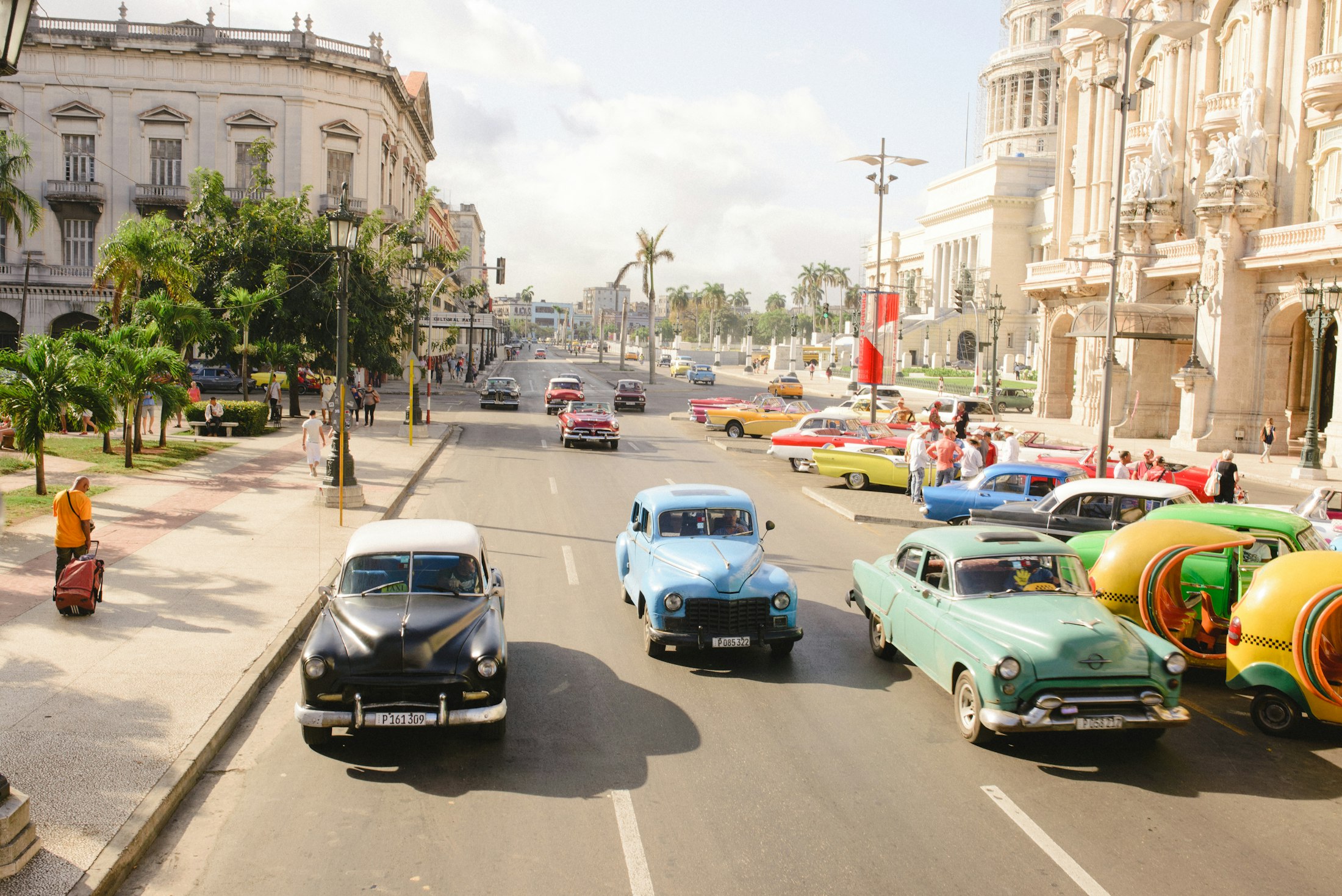
Negotiate taxi fares before getting in — a ride from Old Havana to the Conjunto should cost 500-800 CUP. Almendrones (shared classic cars) along Línea Avenue cost far less and drop you within three blocks.
Listen to Los Muñequitos de Matanzas or Yoruba Andabo recordings before your trip to familiarise yourself with rumba structure. Recognising the clave pattern in advance will deepen your experience immeasurably.
Apply reef-safe SPF 50 sunscreen thirty minutes before arrival and reapply after the first hour. The courtyard offers zero shade during peak afternoon sun, and sunburn sets in fast at Havana's latitude in May.
Download offline maps of Vedado before Saturday — mobile data is unreliable in Cuba, and you will want to navigate between Café Madrigal, the Conjunto, and El Cocinero without burning through expensive ETECSA credit.
Ready to visit Havana?
Book your hotel, flights, and activities through our Expedia-powered search.