In This Guide
- 1.The Green Market at Gruž: Where Dubrovnik Feeds Itself
- 2.Oyster Boats from Ston and the Mali Ston Connection
- 3.Coffee Culture on Lapadska Obala
- 4.The Habsburg Villas and Botanical Garden of Gruž
- 5.Dinner at Gruž: Where Locals Eat After Dark
- 6.The Ferry Terminal and the Art of Going Somewhere Else
- 7.Sunday Morning Mass and the Church of St. Nicholas
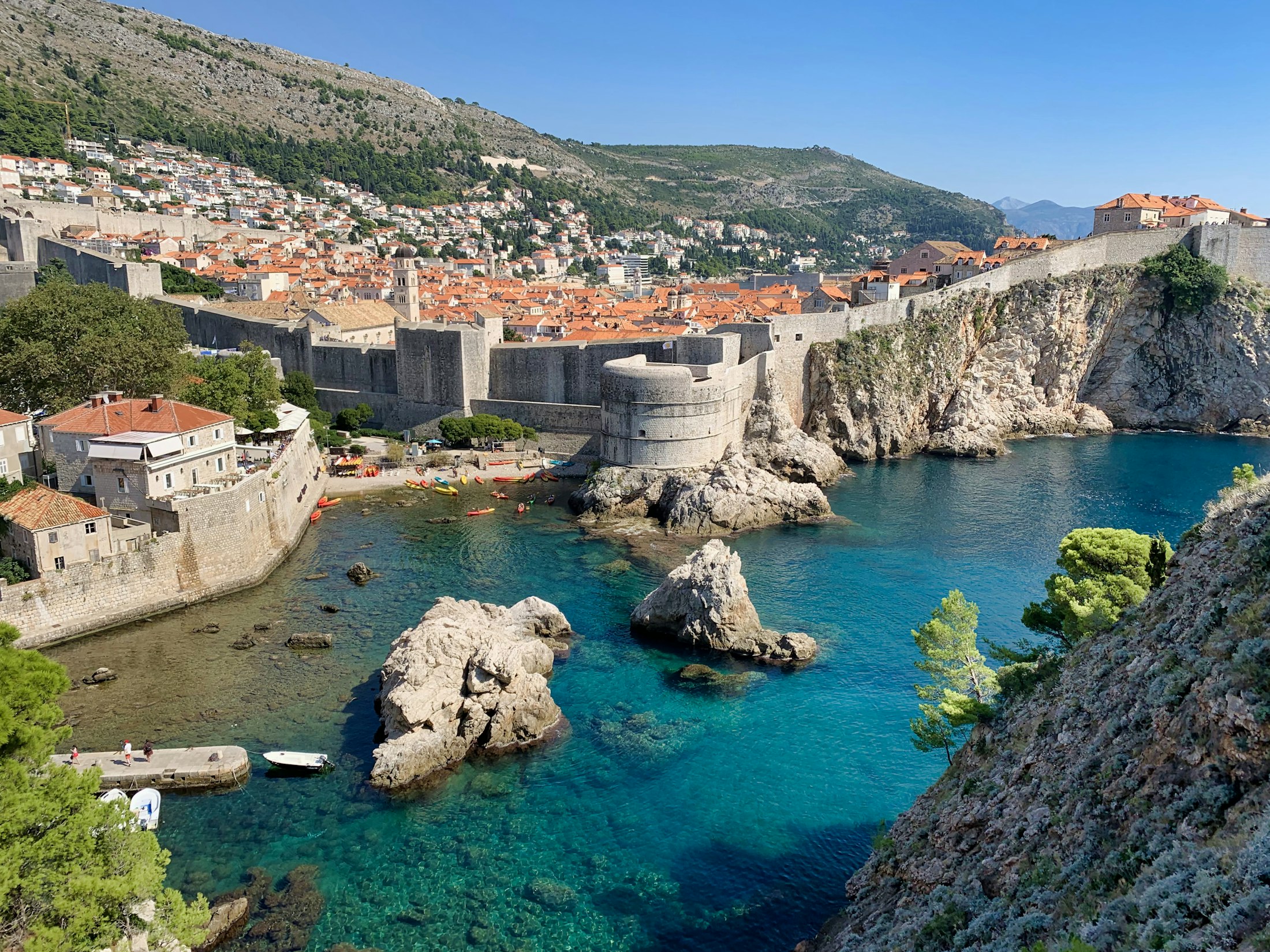
Before the cruise ships sound their horns and the limestone walls of the Old Town begin radiating heat, Gruž is already awake. At half past five, the harbour smells of diesel and brine. Fishermen unload crates of bream onto wet concrete while a man in rubber boots hoses down the deck of a wooden oyster boat just returned from Ston. This is Dubrovnik before it becomes Dubrovnik — raw, unhurried, and stubbornly local.
This guide maps the neighbourhood that most visitors see only through a bus window en route to Pile Gate. Gruž is where Dubrovnik residents actually live, shop, argue over coffee, and eat seafood that never sees a tourist menu. From its covered green market to its crumbling Habsburg-era villas, this is the city's working heart — and understanding it changes how you understand everything else about Dubrovnik.
1. The Green Market at Gruž: Where Dubrovnik Feeds Itself
Gruška tržnica, the open-air market on Obala Stjepana Radića, operates daily but peaks on weekend mornings. Stalls run by farmers from the Konavle valley sell misshapen tomatoes, bundles of wild asparagus in spring, and small jars of bitter orange marmalade that you won't find in the Old Town. The concrete halls smell of dried figs and smoked ham.
Arrive before seven-thirty on a Saturday if you want the best stone fruit and the chance to actually speak with vendors. By nine, the tour groups from the port terminal across the road begin filtering through, and the atmosphere shifts from neighbourhood ritual to curiosity stop. The earlier you come, the more Croatian you'll hear.
Look for the elderly women selling bunches of lavender, capers preserved in coarse sea salt, and small wheels of paški sir — the hard sheep's cheese from Pag island. These aren't artisanal affectations; they're pantry staples. Buy a quarter wheel and a loaf of bread from the bakery at the market's eastern edge for the best cheap breakfast in the city.
Avoid the stalls closest to the cruise terminal entrance — these tend to mark up prices and stock imported produce dressed up as local. Walk deeper into the market, past the fish counters, where regulars shop and nobody speaks English unless you ask nicely.
Pro tip:The fish section opens earliest — by 6 AM the day's catch is laid out on ice. Ask for škarpina (scorpionfish) if you're planning to cook; it's the base of Dubrovnik's iconic brudet stew.
2. Oyster Boats from Ston and the Mali Ston Connection
Gruž harbour is the terminus for the flat-bottomed boats that ferry oysters and mussels from the shellfish beds of Mali Ston Bay, roughly sixty kilometres northwest. These aren't tourist vessels — they're working craft operated by families who have farmed bivalves in the same inlet for generations. The boats dock near the eastern quay, usually arriving before dawn.
If you're lucky and polite, the oystermen will crack one open for you right on the dock. The Dubrovnik oyster — known locally as kamenica — is smaller and brinnier than its French cousins, with a mineral finish that tastes unmistakably of the Adriatic. No lemon needed, though they'll offer it. A dozen costs a fraction of what you'd pay at a white-tablecloth restaurant in the Old Town.
For a proper sit-down oyster experience in Gruž itself, head to Konoba Ribar on Obala Stjepana Radića 30. It's a no-frills harbourside spot where the shellfish arrive the same morning they're served. Order the oysters raw and the black risotto with cuttlefish ink — the rice should be loose, almost soupy, which is the correct Dalmatian preparation.
The peak oyster season runs from November through April, following the old European rule about months containing the letter R. Summer oysters are safe but thinner and less complex. If you visit in March, you'll hit the annual Mali Ston oyster festival — worth the day trip from Gruž by local bus.
Pro tip:Ask at the harbour for 'svježe kamenice' (fresh oysters) — occasionally a fisherman will sell you a bag of a dozen for around 50 kuna directly from the boat, no middleman, no restaurant markup.
Stay in Dubrovnik
Top-rated hotels near Dubrovnik
Best locations · Verified reviews · Free cancellation
View deals
Expedia →3. Coffee Culture on Lapadska Obala
Dubrovnik's real coffee scene doesn't happen on the Stradun — it happens in Gruž and neighbouring Lapad, where residents settle into harbourside cafés with the seriousness of people for whom coffee is a constitutional right. Walk west along Lapadska Obala toward the peninsula and you'll pass a string of low-key cafés where espresso costs twelve kuna and nobody rushes you.
Café Bar Poco Loco, tucked on the corner near the Gruž post office, is a reliable local haunt. The interior is unremarkable — plastic chairs, a television showing Croatian football — but the macchiato is pulled properly and the crowd is entirely neighbourhood. Order a 'bijela kava' if you want something closer to a latte, or a straight espresso and a glass of water, the Dalmatian default.
Coffee in Croatia is not a transaction; it's a social contract. You'll notice tables of retirees occupying the same seats at the same hour every morning, newspapers spread flat, conversation cycling through weather, politics, and the price of fish. Joining this ritual, even silently, is one of the most honest ways to experience the city.
Avoid ordering cappuccino after eleven — it marks you immediately. And never, under any circumstances, ask for oat milk. Gruž hasn't gotten there yet, and frankly it doesn't intend to.
Pro tip: If you want the best view with your morning coffee, grab a seat at the small terrace of Café Gulić on the harbour promenade — the angle looks straight across to the Elafiti Islands as the morning light hits.
4. The Habsburg Villas and Botanical Garden of Gruž
Most visitors don't realise that Gruž contains some of Dubrovnik's finest residential architecture outside the walls. During the Austro-Hungarian period, wealthy merchants built ornate summer villas along the harbour slope, many of which survive in various states of graceful decay. Walk uphill along Ulica Mata Vodopića to see carved stone balconies draped in bougainvillea and shuttered windows that haven't opened in decades.
The Trsteno Arboretum gets all the guidebook attention, but the small botanical garden tucked behind the Gruž market — formally part of the University of Dubrovnik's research program — is a quiet revelation. Mediterranean species, labelled in Latin, grow in terraced beds overlooking the harbour. Entry is free and it's almost always empty.
Several of the Habsburg-era villas have been converted into small guesthouses, offering an alternative to the Old Town hotel scene that is both quieter and significantly cheaper. The architecture alone — high ceilings, terrazzo floors, wrought-iron railings — justifies the stay. Look for properties on Ulica Don Frana Bulića for the best harbour views.
This part of Gruž rewards slow walking. The streets are steep, the signage is poor, and the reward is stumbling onto a crumbling chapel or a courtyard where someone has strung laundry between two Renaissance-era columns. Bring decent shoes and a willingness to get mildly lost.
Pro tip:Visit the botanical garden on a weekday morning — the caretaker is often there and happy to discuss the collection in English. The 500-year-old Oriental plane tree near the rear wall is the garden's quiet masterpiece.
5. Dinner at Gruž: Where Locals Eat After Dark
The evening dining scene in Gruž is the antidote to the Old Town's prix fixe tourist menus. Start at Taverna Otto, located at Nikole Tesle 8, a ten-minute walk from the harbour. Otto is a family-run operation with a handwritten daily menu that depends entirely on what the boats brought in. The grilled catch of the day, served whole with Swiss chard and potatoes boiled in seawater, is the correct order.
For something more casual, Pantarul on Kralja Tomislava 1 has earned a reputation as one of Dubrovnik's most inventive kitchens while remaining firmly rooted in Dalmatian ingredients. Chef Ana Grgić's tuna steak with sesame crust and wasabi mash shouldn't work in this context, but it does. Reserve two days ahead for a terrace table; walk-ins often wait an hour.
Avoid eating directly on the Gruž harbour promenade after dark — the restaurants closest to the cruise port have learned to charge accordingly, and the quality doesn't match. Walk two blocks inland and the prices drop by a third while the cooking improves dramatically. This is a reliable rule throughout Dubrovnik, but it's especially true in Gruž.
Finish with a digestif at the small wine bar attached to Konoba Ribar. Ask for a glass of prošek — the Dalmatian dessert wine that is not prosecco, a distinction locals will explain with considerable passion. The good stuff tastes like liquid raisins and dried apricot, and it costs almost nothing.
Pro tip:At Taverna Otto, ask if they have pašticada on the menu — this slow-braised beef in a prune and wine sauce is Dalmatia's most underrated dish, and Otto's version is among the best on the coast.
Stay in Dubrovnik
Top-rated hotels near Dubrovnik
Best locations · Verified reviews · Free cancellation
View deals
Expedia →6. The Ferry Terminal and the Art of Going Somewhere Else
Gruž's ferry terminal is Dubrovnik's gateway to the Adriatic islands, and understanding its rhythms turns a neighbourhood visit into the start of something larger. Jadrolinija ferries depart from here to Šipan, Lopud, and Koločep — the three inhabited Elafiti Islands — multiple times daily. The morning sailing at 9:15 is the one locals take, and the crossing to Lopud takes under an hour.
Buy your ticket at the Jadrolinija office inside the terminal building, not from resellers on the promenade who add a surcharge. A return fare to Lopud costs roughly fifty kuna. Bring cash — the machines are unreliable, and the office windows close thirty minutes before departure. There's a small newsstand inside that sells passable coffee if you need to wait.
The terminal itself is brutalist concrete from the Yugoslav era, functional and unlovely, but the view from the upper deck waiting area at dawn is extraordinarily beautiful — the harbour laid out below, the Elafiti rising from morning haze, fishing boats threading between the ferries. It's the kind of view that earns no likes on social media because it requires being somewhere unglamorous at an inconvenient hour.
If the islands don't call, the terminal is also the starting point for the coastal ferry south to Bari, Italy, and north to Split via Korčula and Hvar. Standing on this dock with a ticket in your hand, you feel the gravitational pull of the entire Adriatic. Gruž is not just a neighbourhood — it's a departure point in every sense.
Pro tip:The Tuesday and Thursday 6:30 AM ferry to Šipan is the emptiest crossing of the week. Bring breakfast from the Gruž market, sit on the upper deck, and you'll have the Adriatic essentially to yourself.
7. Sunday Morning Mass and the Church of St. Nicholas
The Church of St. Nicholas — Crkva Svetog Nikole — sits above the harbour on a small rise, its modest bell tower barely visible between apartment blocks. Sunday mass at eight in the morning draws a congregation of elderly women in dark dresses and fishermen who've cleaned up just enough. The church dates to the fifteenth century but was rebuilt after the 1667 earthquake, and the interior is cool, dim, and unadorned.
You don't need to be religious to find value here. The church functions as a social anchor for a neighbourhood that is quietly ageing — younger Croatians increasingly leave for Zagreb or Germany, and the pews hold that demographic truth with gentle clarity. Sitting in the back row, listening to hymns sung in Croatian, you understand something about Gruž that no restaurant visit can teach.
After mass, the small square outside fills with parishioners exchanging greetings and gossip. This is one of the few remaining communal moments in a neighbourhood that is slowly being reshaped by tourism infrastructure. A bakery on the adjacent street sells warm burek — phyllo pastry filled with cheese or meat — and the post-mass crowd queues there with practiced efficiency.
Respect the space: dress modestly, silence your phone entirely, and avoid photographing parishioners. You're a guest in someone's spiritual home. If someone offers you coffee afterward, accept. It means you've been noticed and not found wanting.
Pro tip: The burek from Pekara Gruž, the small bakery two doors down from the church on Ulica od Batale, is best eaten within five minutes of purchase — the cheese filling goes from molten to rubbery fast.
Essential tips
Dubrovnik city buses 1A and 1B run from Pile Gate to Gruž every fifteen minutes. The ride takes eight minutes and costs fifteen kuna. Buy tickets at a kiosk, not on the bus, to avoid a surcharge.
Croatia adopted the euro in January 2023. Older locals and some market vendors may still reference kuna prices out of habit. Card payment is accepted at restaurants but bring cash for the green market and harbour-side purchases.
Gruž is a morning neighbourhood. The market winds down by noon, the harbour is busiest before eight, and the best light for photography falls between six and seven-thirty AM. Plan your visit accordingly and save afternoons for the Old Town.
Cruise ship days — typically Tuesday through Thursday in high season — transform Gruž's harbour promenade into a bottleneck. Check the Dubrovnik port authority website for ship schedules and visit on off-days for the authentic experience.
The streets behind the harbour climb steeply and are surfaced with polished stone that becomes treacherous when wet. Wear rubber-soled shoes with grip, especially if exploring the Habsburg villa neighbourhood or walking to St. Nicholas church.
Ready to visit Dubrovnik?
Book your hotel, flights, and activities through our Expedia-powered search.


