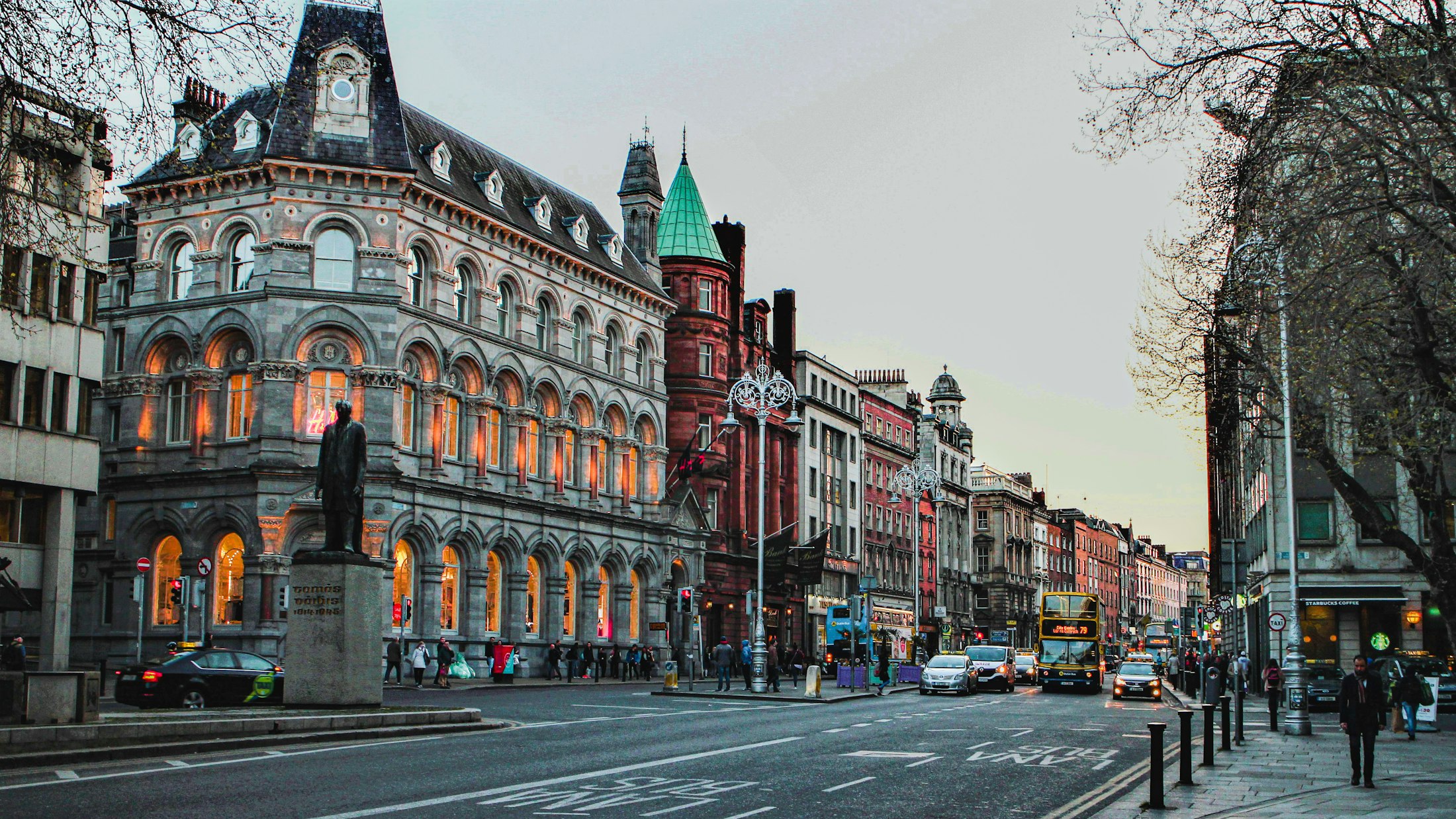
In This Guide
- 1.The Bealtaine Fire Festival at Smithfield Square
- 2.The Cobblestone: Where the Session Never Died
- 3.Dublin Whiskey District: The New Guard on Manor Street
- 4.Late-Night Eating: Oxmantown and L. Mulligan Grocer
- 5.Dice Bar and Stoneybatter's Underground Gig Circuit
- 6.The Glimmerman and New Neighbourhood Cocktail Culture
- 7.Phoenix Park at Twilight: The Pre-Festival Walk
The smell of turf smoke and toasted barley drifts through Manor Street as a thirty-foot bonfire crackles in Stoneybatter's Smithfield Square, sending embers spiralling past the old Jameson chimney stack. It is Bealtaine — the ancient Celtic festival marking summer's arrival on the first of May — and Dublin's most fiercely independent neighbourhood has reclaimed it with pagan theatre, open-air music sessions, and a late-night energy that makes Temple Bar feel like an airport lounge.
This guide walks you through Stoneybatter after sundown during Bealtaine season and beyond, covering the fire festival itself, the new wave of whiskey bars rewriting Dublin's drinking culture, the neighbourhood's best late-night kitchens, and the lesser-known corners where locals actually spend their evenings. If you want to understand how Dublin's northside is evolving without losing its soul, Stoneybatter at night is your primary text.
1. The Bealtaine Fire Festival at Smithfield Square
Every year around May 1st, Smithfield Square transforms into a ritual ground. The Bealtaine Fire Festival — organised by a collective of local artists and community groups — features a towering ceremonial bonfire, fire spinners, drummers, and spoken-word performances drawn from pre-Christian Irish mythology. It is free, unsponsored, and deliberately uncommercial. You show up, you stand close enough to feel the heat on your face, and you understand why this neighbourhood resists gentrification so vocally.
Arrive by 8:30 p.m. to secure a spot near the fire circle. The lighting ceremony typically begins at 9:15 p.m. and the crowd swells fast — easily two thousand people spilling across the cobblestones. Street food vendors line the northern edge of the square, but the real move is eating beforehand and coming with nothing but a flask of tea or something stronger.
The performances shift throughout the night: expect aerial silk acts, bodhrán circles, and at least one spectacularly unhinged poetry reading. After the main fire dies down around 11 p.m., the crowd fragments into the surrounding pubs. Follow the noise down Manor Street and you will find the afterparty organically assembled across four or five venues.
Smithfield Square sits at the eastern edge of Stoneybatter, a two-minute walk from the Luas Red Line stop at Smithfield. The festival typically runs on the weekend closest to May 1st, though dates shift annually — check Dublin City Council's events page or the Stoneybatter Dublin 7 community social channels for confirmation.
Pro tip:Bring a blanket and claim a spot on the stepped seating along the square's western edge — it gives you elevation above the crowd and a cinematic view of the fire lighting against the Jameson Distillery facade.
2. The Cobblestone: Where the Session Never Died
Before you touch a single new whiskey bar, you pay your respects at The Cobblestone on King Street North. This is not a tourist trad pub — it is a living archive of Irish traditional music, fiercely protected by locals who fought a very public battle against developers trying to build a hotel over it in 2021. The front bar hosts nightly sessions; the back room stages ticketed gigs featuring musicians who play for the room, not the Instagram reel.
On Bealtaine weekend, The Cobblestone runs extended sessions that often last past 1 a.m. You will hear uilleann pipes, concertinas, fiddles, and the kind of unaccompanied sean-nós singing that stops conversations dead. There is no cover charge for the front bar sessions, but arrive before 9 p.m. or you will be standing in the doorway, craning your neck past a forest of pint glasses.
The drink here is a pint of Smithwick's or a Paddy whiskey neat — ordering a cocktail would be like requesting Wi-Fi at a wake. The pub's interior is deliberately unpolished: mismatched chairs, low ceilings stained amber, and walls covered in gig posters dating back decades. That is the point.
The Cobblestone sits at 77 King Street North, a five-minute walk northwest of Smithfield Square. If you are coming from the fire festival, follow the sound of a fiddle and the trail of people carrying bodily warmth from the bonfire into the snug.
Pro tip:Check The Cobblestone's social media for their midweek Listening Sessions on Wednesday nights — smaller crowds, deeper musicianship, and a chance to sit within arm's reach of players you would pay festival prices to see elsewhere.
Stay in Dublin
Top-rated hotels near Dublin
Best locations · Verified reviews · Free cancellation
View deals
Expedia →3. Dublin Whiskey District: The New Guard on Manor Street
Stoneybatter sits within Dublin's self-designated Whiskey District, and the last two years have delivered a cluster of tasting rooms and bars that treat Irish whiskey with the reverence previously reserved for Scottish single malts. Start at Dublin Liberties Distillery's tasting room on Mill Street, just south of the neighbourhood boundary, where you can sample cask-strength expressions unavailable in retail. Then head north into Stoneybatter proper.
On Manor Street, newer establishments like the bar programme at Brasserie Sixty6's sister operations have pushed cocktail culture into bonded whiskey territory. But the real discovery is the smaller, independently operated whiskey bars tucked into the residential streets off Aughrim Street — places with eight stools, forty bottles, and a bartender who will talk you through the difference between pot still and single malt without a hint of condescension.
You should order a tasting flight that includes a Teeling Single Pot Still, a Writers' Tears Copper Pot, and whatever single cask expression the bar has acquired privately. Many of these smaller venues rotate their selections monthly, sourcing from micro-distilleries in Waterford, Donegal, and West Cork that most visitors have never encountered.
Avoid the trap of ordering whiskey cocktails at these bars — the Old Fashioned trend reached Dublin five years ago and has been competently executed everywhere since. What you cannot get elsewhere is a bartender pouring a fifteen-year bonded expression from a distillery that produces eight hundred bottles a year. Drink it neat, with a single drop of water if you must.
Pro tip:Ask any whiskey bar in the neighbourhood for their 'distillery liaison' picks — these are bottles purchased directly from small producers before wider distribution, often at cask strength and frequently unavailable even a month later.
4. Late-Night Eating: Oxmantown and L. Mulligan Grocer
Stoneybatter's late-night food scene is compact but remarkably precise. Oxmantown on Mary's Lane operates as a daytime café but its evening pop-up collaborations — often announced only via Instagram stories — have become essential. During Bealtaine week, expect special seatings with guest chefs working with Irish foraged ingredients: wild garlic, sea beet, and fermented dairy that tastes like something between labneh and a religious experience.
L. Mulligan Grocer at 18 Stoneybatter is the neighbourhood's anchor for serious food-and-drink pairing. The menu rotates seasonally, but you want the beef shin croquettes and whatever Irish farmhouse cheese plate they are running. The beer list skews toward Irish craft — Whiplash, DOT Brew, Rascals — but the whiskey selection is quietly one of the best in Dublin, shelved behind the bar without fanfare.
For something faster after the bonfire, hit Sova Vegan Butcher on Pleasant Street, just southeast of the main strip. Their seitan kebab with house-made hot sauce has no business being as satisfying as it is at midnight. It is a ten-minute walk from Smithfield Square and stays open late on festival weekends.
If you are still moving after 1 a.m., the late-night chipper culture remains intact. Stoneybatter's local takeaways — particularly those along Manor Street — serve battered sausages and curry chips with the kind of institutional confidence that suggests they have been feeding post-session crowds since before the Celtic Tiger.
Pro tip: At L. Mulligan Grocer, ask for the off-menu whiskey and cheese pairing — the staff will match a single pot still pour with a washed-rind cheese from Durrus or Milleens that amplifies both flavours dramatically.
5. Dice Bar and Stoneybatter's Underground Gig Circuit
Dice Bar on Queen Street has operated as Dublin's most reliable underground venue for over a decade, and Bealtaine season reliably coincides with a stacked programme of noise, post-punk, and experimental electronic acts. The venue is tiny — capacity hovers around eighty — and the sound system punches absurdly above its weight. Cover charges rarely exceed ten euros. You check the lineup, you show up early, and you accept that you will leave with ringing ears and a sense that Dublin's music scene is significantly more alive than its international reputation suggests.
Beyond Dice Bar, Stoneybatter's gig circuit operates semi-formally. House shows in the Victorian terraces off Arbour Hill are announced through WhatsApp groups and word of mouth. If you spend an evening at The Cobblestone or L. Mulligan Grocer and mention you are interested in live music, someone will invariably point you toward whatever is happening that night in a sitting room on Kirwan Street or a converted garage off Viking Road.
The crowd at these events is mixed — visual artists, software engineers, retired trade unionists, and college students sharing the same cramped spaces. Stoneybatter's demographic resists easy categorisation, which is precisely what makes its nightlife feel genuine rather than curated.
Dice Bar is at 79 Queen Street, a short walk south from Manor Street. On Bealtaine weekend, expect the bar to run special late-night DJ sets after the headlining act, often continuing until close to 2:30 a.m.
Pro tip: Follow @DiceBarDublin on Instagram for last-minute gig announcements — their best bookings tend to be confirmed only days in advance, and the shows that sell out fastest are the ones with the least promotional lead time.
Stay in Dublin
Top-rated hotels near Dublin
Best locations · Verified reviews · Free cancellation
View deals
Expedia →6. The Glimmerman and New Neighbourhood Cocktail Culture
Named after the inspectors who once enforced Dublin's gas rationing, The Glimmerman on Stoneybatter's main road represents the neighbourhood's emerging cocktail identity — serious drinks in an unpretentious room. The back bar is stocked with Irish spirits almost exclusively, and the cocktail list leans into native botanicals: hawthorn berry, blackthorn, elderflower, and bog myrtle. You order the house sour, made with Dingle gin and a shrub that changes seasonally.
What separates The Glimmerman from Dublin's southside cocktail bars is intention. There are no exposed filament bulbs, no reclaimed-wood affectations. The room looks like a neighbourhood pub that happens to employ bartenders who trained at Dead Rabbit in New York and came home. The result is technical excellence delivered with the casual warmth of someone pouring you a drink in their kitchen.
During Bealtaine, The Glimmerman typically runs a limited-edition cocktail incorporating ingredients foraged from the Phoenix Park, which borders Stoneybatter to the west. Previous years have featured a woodruff and single malt highball that tasted like walking through a forest floor after rain. Ask what is current — the menu is chalked on a board and updated without announcement.
The bar is at 38 Stoneybatter, midway along the main strip between The Cobblestone and L. Mulligan Grocer. It opens at 5 p.m. on weekdays and 2 p.m. on weekends. Arrive before 10 p.m. on Bealtaine Saturday or prepare to queue.
Pro tip: Request a seat at the bar rather than a table — the bartenders at The Glimmerman are conversational and will build you an off-menu drink based on your flavour preferences, often pulling bottles from their personal collection beneath the counter.
7. Phoenix Park at Twilight: The Pre-Festival Walk
Before the fire is lit, the best way to calibrate your evening is a twilight walk through the eastern end of Phoenix Park. Enter through the Stoneybatter gate on Infirmary Road and follow the path toward the Magazine Fort, the eighteenth-century military structure that sits on a hill overlooking the city. At dusk during Bealtaine week, the light across the park is extraordinary — low, amber, and theatrical in a way that explains why ancient Irish festivals were built around celestial timing.
The fallow deer herd grazes near the Fifteen Acres, and in the half-light of late April and early May, you can stand within thirty metres of them. This is not a zoo encounter — the herd has roamed freely here since the seventeenth century, and their indifference to your presence feels earned rather than trained.
The walk from the Stoneybatter gate to the Magazine Fort and back takes roughly forty minutes at a contemplative pace. Time it so you exit the park at sunset, which during Bealtaine falls around 8:45 p.m., giving you exactly the right buffer to reach Smithfield Square for the fire lighting ceremony.
Bring a flask. Irish evenings in early May are deceptively cold once the sun drops, and the wind off the Liffey corridor cuts through the park with purpose. A measure of pot still whiskey — purchased from any of the neighbourhood's off-licences — served at body temperature from a hip flask is the correct preparation.
Pro tip: The Magazine Fort hilltop offers the best elevated view of the Dublin skyline at sunset — position yourself on the southeastern slope for a clear sightline to the Poolbeg chimneys and the Wicklow Mountains beyond.
Essential tips
Stoneybatter is entirely walkable from Dublin city centre — it is a fifteen-minute walk from O'Connell Street via Church Street. Skip taxis on Bealtaine weekend as road closures around Smithfield make driving counterproductive.
Early May in Dublin averages twelve days of rain. Bring a proper waterproof layer, not an umbrella — wind renders umbrellas useless on exposed Smithfield Square, and you will block sightlines for the people behind you.
Most Stoneybatter pubs and bars accept cards, but the smaller whiskey bars and late-night takeaways occasionally run cash-only. Carry at least forty euros in notes. The nearest ATM cluster is on Church Street at the Four Courts Luas stop.
Dublin's last call is typically 11:30 p.m. on weeknights and 12:30 a.m. on weekends, with thirty minutes of drinking-up time. Late bars like Dice Bar operate under special exemptions and serve until 2:30 a.m. — but check individual closing times during festival periods.
Join the Stoneybatter Dublin 7 Facebook group before your trip — locals post real-time updates on pop-up events, temporary bar openings, and last-minute Bealtaine programme changes that never appear on official tourism channels.
Ready to visit Dublin?
Book your hotel, flights, and activities through our Expedia-powered search.


