In This Guide
- 1.The Glimmerman: Where Stoneybatter Starts the Night
- 2.L. Mulligan Grocer: The Pub That Changed Dublin's Palate
- 3.Pigeon House Wine Bar: Natural Pours, No Pretension
- 4.Dice Bar: Punk Spirit on Benburb Street
- 5.Slice Late-Night: Pizza by the Cut Until Closing Time
- 6.Kavanagh's: The Heritage Anchor of Manor Street
- 7.The Late Walk: Phoenix Park's Chesterfield Avenue After Midnight
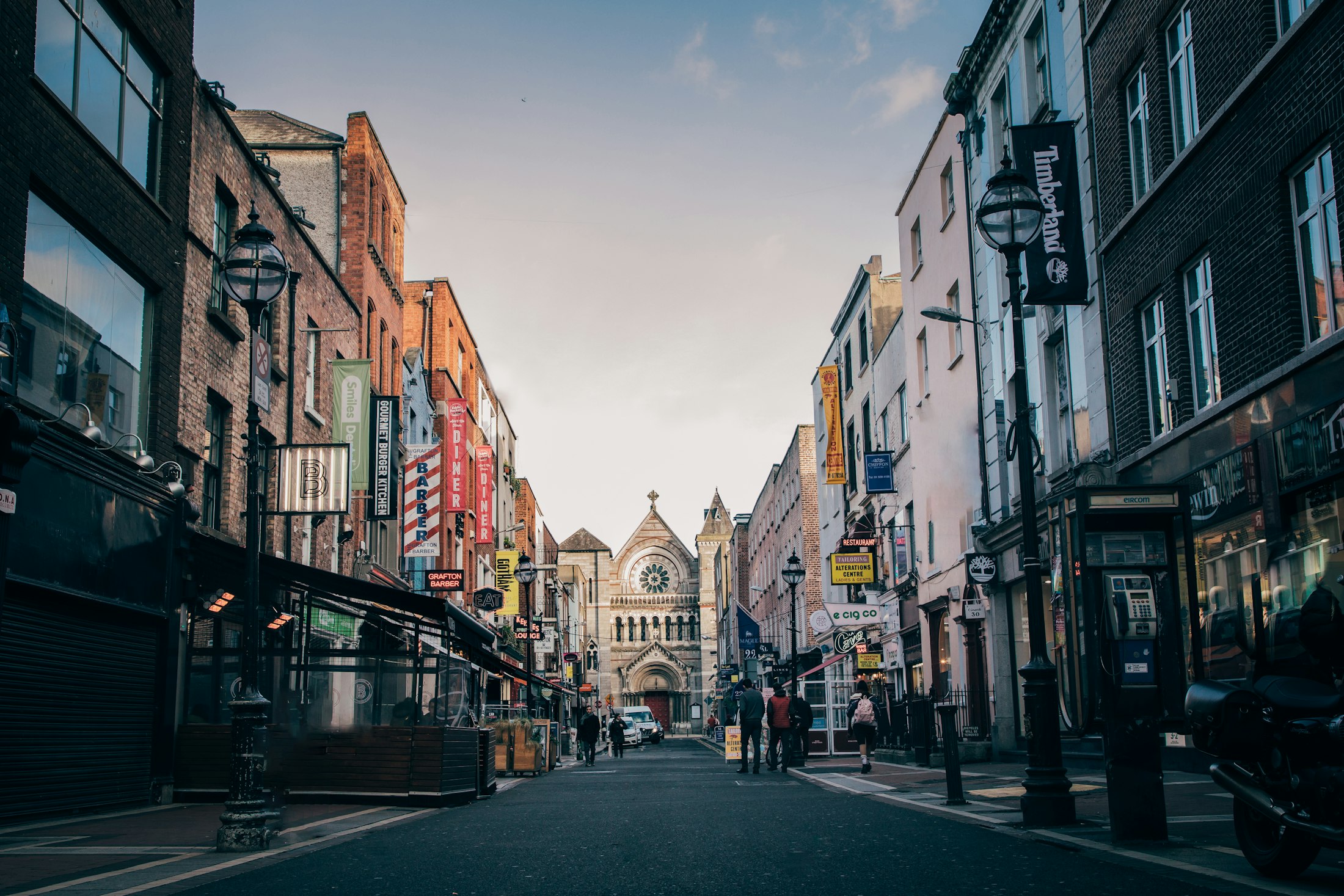
The last light catches the redbrick terraces of Manor Street as a busker outside Kavanagh's uncases a battered bouzouki. Stoneybatter — Dublin's oldest village, a tight grid of Victorian artisan cottages northwest of the Liffey — has been pouring pints since before the neighbouring Phoenix Park had railings. Yet after dark in 2024, the quarter hums with a different frequency: natural wine by the glass, miso-spiked bar snacks, and comedy nights in rooms that once hosted rebel meetings.
This after-dark guide maps Stoneybatter's evolving nightlife block by block, from heritage pubs that haven't changed a tap handle in decades to the new-generation wine bars and late-night kitchens rewriting Dublin's going-out culture. Whether you're plotting a full pub crawl along Manor Street or hunting a single perfect nightcap, these seven stops will show you a neighbourhood confident enough to honour its past while pouring something entirely new.
1. The Glimmerman: Where Stoneybatter Starts the Night
Your evening should begin where the neighbourhood begins its own — at The Glimmerman on Stoneybatter Road. Named for the gas-company inspectors who once patrolled these streets checking for illegal taps, the pub opened in 2016 inside a converted retail unit and immediately felt like it had been there for decades. Dark wood, tiled floors, and a backroom that fills fast after eight.
The craft beer selection rotates weekly, but you'll almost always find something from Whiplash or Ballykilcavan among the twelve taps. Order a half-pint first; you have a long night ahead. The toasted sandwiches — particularly the ham and Gruyère on sourdough — are engineered to line stomachs for what follows.
Midweek is the sweet spot. Mondays bring a trad session that starts gently and builds to something raucous by ten. Thursdays see a pub quiz that regulars take with borderline-professional seriousness. Weekends draw spillover crowds from the city centre, and the backroom can hit capacity before nine.
Avoid the pavement tables if you want conversation — Manor Street traffic doesn't relent until late. Instead, claim the snug-style booth nearest the bar, where the acoustics somehow swallow the road noise and amplify the session players behind you.
Pro tip: Arrive before 7:30 on Monday for the trad session to guarantee a seat in the back room — regulars commandeer the best spots by eight, and standing room fills fast.
2. L. Mulligan Grocer: The Pub That Changed Dublin's Palate
L. Mulligan Grocer at 18 Stoneybatter Road is the establishment that first put this postcode on the foodie radar. A former Victorian grocery turned gastropub, it pioneered the craft-beer-and-serious-food model in Dublin back in 2010, years before the concept became standard. The interiors — original shelving, terrazzo floor, faded signage — remain gloriously unrenovated in the right places.
After dark, the upstairs dining room shifts into a more intimate register. The menu changes frequently but gravitates toward rich, confident plates: think bone-marrow croquettes, dry-aged beef with café de Paris butter, and a brown-bread ice cream that has achieved near-mythic local status. Pair with a pint of Galway Bay's Of Foam and Fury if it's on.
The whiskey list deserves your time. Staff will walk you through two dozen Irish pot-still options, including limited Midleton releases you won't find in Temple Bar tourist traps. Ask for the Redbreast 15 cask-strength if it's still behind the counter — they don't always list it on the menu.
One caveat: the ground-floor bar doesn't take dinner reservations, and weekend waits can stretch past forty minutes. Book the upstairs room via their website for Friday or Saturday, or come on a Wednesday when the neighbourhood exhales and you can actually hear your dining companion.
Pro tip: Request a seat at the upstairs window table for two — it overlooks the street below and catches the last of the evening light in summer, making it arguably the most romantic perch in Stoneybatter.
Stay in Dublin
Top-rated hotels near Dublin
Best locations · Verified reviews · Free cancellation
View deals
Expedia →3. Pigeon House Wine Bar: Natural Pours, No Pretension
Tucked into a narrow unit on Manor Street, Pigeon House is the kind of wine bar that Dublin lacked for years — serious about what's in the glass, utterly relaxed about everything else. The room is small, maybe thirty seats, with a concrete bar top and shelves of bottles arranged by mood rather than region. Owners Sarah and Oisín source almost exclusively from small organic and biodynamic producers.
Order a glass of something from the "Crunchy" column on the chalkboard — their shorthand for chillable, low-intervention reds that suit Stoneybatter's unhurried pace. A recent standout was a Côtes du Rhône from Domaine des Music Papilles that tasted like crushed granite and cherry stems. Pair it with the board of Irish charcuterie from Gubbeen and Fingal Ferguson.
The atmosphere shifts noticeably around ten o'clock, when the playlist tilts from ambient jazz toward heavier funk and soul. Friday nights occasionally feature a DJ in the corner — no decks, just a laptop and impeccable taste — turning the narrow room into something resembling a Parisian cave à vin's closing hour.
Don't overlook the bottle shop at the entrance. If nothing on the by-the-glass list excites you, point at any bottle on the shelf and they'll open it for a modest corkage fee. It's the kind of policy that rewards curiosity and keeps regulars coming back to explore.
Pro tip:Ask staff for their current 'house pour' — an unlisted, high-value bottle they open for regulars at a reduced glass price. It's never on the board but always worth drinking.
4. Dice Bar: Punk Spirit on Benburb Street
Dice Bar on Queen Street — technically at Stoneybatter's southern edge near Smithfield — has been Dublin's indie institution since 2000. The room is unapologetically compact, the lighting permanently set to crimson, and the walls plastered with gig posters dating back two decades. If Stoneybatter's newer spots are polished copper, Dice is the raw iron underneath.
The drinks menu is deliberately uncomplicated: well-kept pints of Guinness, a short cocktail list that doesn't try to reinvent anything, and cans of local craft beer from outfits like Hopfully and YellowBelly. Prices remain noticeably lower than the city centre — a pint here costs roughly what a half costs on Grafton Street.
Dice programmes live music and DJ sets most nights, leaning toward garage rock, post-punk, and leftfield electronic. The Sunday afternoon session — often experimental or acoustic — is a hidden gem that locals guard jealously. Check their Instagram for lineup announcements; nothing goes on Ticketmaster.
The crowd is a genuine mix: tattoo artists from the shops on Capel Street, film students from nearby Grangegorman, and the odd chef unwinding after service. There's no table service, no reserved seating, and no VIP anything. You queue at the bar like everyone else, and the democracy of it is the whole point.
Pro tip: Sunday sessions start at four and wrap by eight, making them perfect for a pre-dinner detour — arrive early, grab the bench seat under the front window, and let the afternoon unspool.
5. Slice Late-Night: Pizza by the Cut Until Closing Time
When hunger strikes at eleven — and in Stoneybatter it will — Slice on Manor Street is the neighbourhood's pressure valve. This is not sit-down-with-a-candle pizza; it's Roman-style al taglio served from sheet trays behind glass, cut with scissors, and weighed on a scale. The dough ferments for seventy-two hours, yielding a crackle-topped, cloud-soft base that justifies the walk from any pub on this list.
The potato and rosemary slice is the undisputed signature — a controversially carb-on-carb proposition that somehow transcends its own absurdity. Follow it with the Nduja and honey if you want heat, or the simple margherita if you want proof that restraint can be a flex.
Slice stays open until at least midnight on weekends, later when the mood takes them. The queue often snakes out the door after pub closing time, but it moves quickly. Skip the Coca-Cola and grab a can of San Pellegrino Limonata — it cuts through the olive oil better and costs the same.
A few stools line the window counter inside, but most people eat standing on the pavement, which becomes its own social theatre. On warm nights, half of Stoneybatter's after-dark crowd converges here, paper trays in hand, trading notes on the night's best pints and worst pub-quiz answers.
Pro tip:Order the day's special slice if it involves burrata — the kitchen adds it post-oven so it melts just enough to pool into the crust's air pockets without drowning the base.
Stay in Dublin
Top-rated hotels near Dublin
Best locations · Verified reviews · Free cancellation
View deals
Expedia →6. Kavanagh's: The Heritage Anchor of Manor Street
No Stoneybatter night is complete without a round at Kavanagh's — not the famous Gravediggers in Glasnevin, but the less-documented Kavanagh's pub on Aughrim Street, a cornerstone local whose origins trace to the late nineteenth century. The frontage is painted a deep teal that photographs beautifully after rain, but the real draw is inside: a single narrow room, brass taps, and a barman who remembers faces.
Guinness here is exemplary. The pour follows the full two-part ritual without rushing, and the temperature hovers at that precise cool-but-not-cold threshold. If you've been drinking wine and craft lager all evening, this stout will feel like a full stop at the end of a long, rewarding sentence.
Conversation is the entertainment. There's no TV, no music on weeknights, and phone scrolling draws quiet judgment. You'll talk to the person beside you or you'll sit comfortably in silence — both are acceptable currencies. On Saturdays a small trad group sets up in the corner, unannounced and unpaid, simply because they always have.
Last orders come at half eleven, enforced with polite finality. Don't push it. Finish your pint, thank the barman by name if you caught it, and step into the Stoneybatter night with the warm certainty that some things in Dublin still refuse to be anything other than exactly what they are.
Pro tip:Order a small Paddy whiskey alongside your Guinness — the classic Dublin 'half and half' combination — and let the barman pour it. No ice, no water, no discussion.
7. The Late Walk: Phoenix Park's Chesterfield Avenue After Midnight
Stoneybatter's proximity to Phoenix Park means your night can end with something no other Dublin neighbourhood offers: a midnight walk through one of Europe's largest enclosed urban parks. Enter via the North Circular Road gate, a ten-minute stroll from Manor Street, and you're immediately under a canopy of ancient chestnuts and limes that muffle the city entirely.
Chesterfield Avenue stretches nearly four kilometres through the park's centre, lit by heritage lampposts that cast a warm sodium glow. The road is essentially deserted after eleven; you may share it only with a fox or, if you're lucky, a small herd of fallow deer grazing near the Magazine Fort. Keep your voice low and your phone pocketed — the darkness is the point.
The Papal Cross, visible as a pale monolith against the sky, makes a logical turnaround marker. From there, the return walk takes about twenty minutes at an easy pace. The air temperature drops noticeably inside the park even in summer, so carry a light layer if you left the pub in shirtsleeves.
This isn't a shortcut home — it's a deliberate act of decompression. After several hours of pubs, wine bars, and pavement pizza, the silence of the park recalibrates everything. You'll arrive back at your door in Stoneybatter feeling like you've been somewhere far more remote than a fifteen-minute walk from the Liffey.
Pro tip: The Parkgate Street entrance closes at 11 p.m. but the North Circular Road pedestrian gate stays accessible later — confirm seasonal hours on the OPW website before setting out.
Essential tips
Stoneybatter is a fifteen-minute walk from Smithfield Luas stop (Red Line). The entire neighbourhood is best navigated on foot — Manor Street and Aughrim Street form a compact loop you can cover in under ten minutes between stops.
Budget roughly €50–70 per person for a full evening of three to four drinks and a late-night pizza. Card payment is universal, but a few of the older pubs appreciate — and occasionally require — cash for smaller rounds.
Mobile signal can be patchy inside Stoneybatter's thick-walled Victorian pubs. Download offline maps before heading out and share your plans with friends in advance rather than relying on real-time coordination.
Dublin rain is a certainty, not a possibility. Carry a packable waterproof jacket — not an umbrella, which is useless in the wind tunnels between Stoneybatter's terraced streets — and wear shoes that can handle wet pavement.
Most Stoneybatter pubs call last orders at 11:30 p.m. on weeknights, with Thursday-to-Saturday extensions to 12:30 a.m. Start your crawl no later than 7 p.m. to give each stop the time it deserves.
Ready to visit Dublin?
Book your hotel, flights, and activities through our Expedia-powered search.