In This Guide
- 1.Reffen Street Food Market: Where to Start and What to Skip
- 2.CopenHot: Floating Saunas and Harbour Plunges
- 3.La Banchina: Natural Wine on a Working Wharf
- 4.Broaden & Build: Live-Fire Cooking in a Former Shipyard Hall
- 5.The Warehouse District Walk: Street Art, Studios, and Solitude
- 6.Baghaven: The World-Class Brewery You Haven't Heard Of
- 7.Sunset at the Bunker: Refshaleøen's Secret Golden Hour Spot
The harbour ferry deposits you at a crumbling concrete quay where a decommissioned shipyard has become Copenhagen's most compelling urban frontier. Refshaleøen — a man-made island built from rubble and ambition — smells of hickory smoke, sea salt, and fermenting ambition. Cranes still punctuate the skyline, but now they tower over sauna barges, natural wine bars, and some of the most inventive kitchens in Scandinavia. This is not the Copenhagen of Strøget shopping bags and Little Mermaid selfies.
This guide maps the essential experiences across Refshaleøen's sprawling post-industrial landscape, from floating saunas with harbour plunges to open-fire restaurants operating out of former welding halls. These are the places that justify the trek to the city's eastern edge — and the reasons this former no-go zone has become the most talked-about neighbourhood among Copenhagen locals who'd rather you didn't know about it.
1. Reffen Street Food Market: Where to Start and What to Skip
Reffen (Refshalevej 167A) is the obvious entry point to the island, and it earns its reputation as Northern Europe's largest street food market. Open from late April through September, it sprawls across a waterfront lot with roughly fifty food stalls, most housed in repurposed shipping containers. Arrive before noon on weekdays to avoid the weekend crush that can make ordering feel like a contact sport.
Head directly to Gasoline Grill's outpost for their smash burger — thin-patty, American-style, absurdly good for something cooked in a steel box by the harbour. The duck fat fries at Poké Bro are another reliable hit. Skip the generic pad thai stalls near the entrance; they exist in every European food market and taste identical.
The real appeal of Reffen is its waterfront seating. Grab your food, find a bench facing the harbour, and watch container ships slide past Trekroner Fortress. On clear evenings, the light here is almost aggressively Scandinavian — golden, low, and seemingly endless.
Beer drinkers should locate Mikkeller's container bar near the market's southern edge. Their rotating tap list leans experimental — expect sour ales and barrel-aged stouts rather than pilsners. A half-litre hovers around 75 DKK, which by Copenhagen standards qualifies as a bargain.
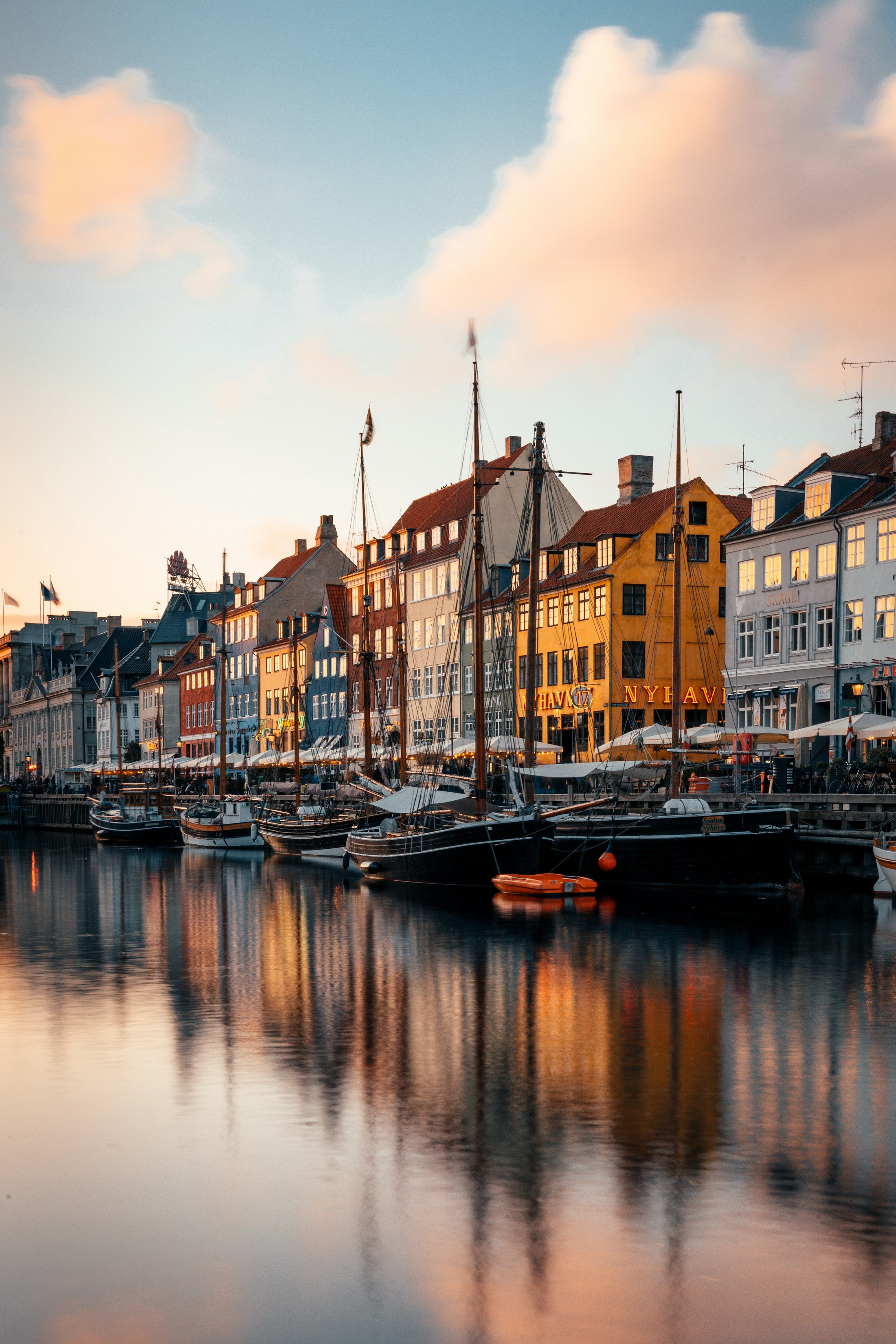
Pro tip:Arrive by harbour bus 991 or 992 from Nyhavn — it's faster than cycling and the approach by water gives you the full industrial skyline reveal that Refshaleøen deserves.
2. CopenHot: Floating Saunas and Harbour Plunges
CopenHot (Refshalevej 325) operates a fleet of wood-fired floating saunas moored along Refshaleøen's northern quay. You book a two-hour session for up to eight people on a private boat — cedar-clad, stove-heated, with a ladder descending directly into the harbour's startlingly clean water. The temperature contrast between an 80°C sauna and 12°C seawater in October is the kind of thing that recalibrates your entire nervous system.
The boats are genuinely beautiful objects. Each is hand-built with Scandinavian timber and anchored to allow unobstructed views across the harbour toward the Opera House and Amager. You control the heat by feeding the stove yourself. Bring your own drinks and snacks — most regulars pack a cooler with canned natural wine and smørrebrød from Torvehallerne.
Bookings fill fast, especially Friday and Saturday evenings from May through September. Reserve at least two weeks ahead for weekend slots. Midweek mornings are the insider window — fewer boats on the water, sharper light, and a stillness that feels impossible this close to a capital city.
CopenHot also maintains a communal hot tub area on the quayside, available without advance booking for around 100 DKK per person. It lacks the privacy of the boats but offers a lower-commitment introduction. Changing facilities are basic — think plywood partitions, not marble.
Pro tip:Book the 'sunrise sauna' slot starting at 7:00 AM on weekdays — you'll have the harbour almost entirely to yourselves, and the early light hitting the water is extraordinary for photographs.
Stay in Copenhagen
Top-rated hotels near Copenhagen
Best locations · Verified reviews · Free cancellation
View deals
Expedia →3. La Banchina: Natural Wine on a Working Wharf
On the adjacent Holmen waterfront but spiritually inseparable from Refshaleøen, La Banchina (Refshalevej 141) is a tiny wine bar and swimming spot built into a former naval warehouse. The concept is disarmingly simple: natural wines by the glass, seasonal small plates, and a wooden swimming platform extending into the harbour. In summer, half the clientele is in swimwear.
The wine list rotates constantly and skews toward small-production European bottles — orange wines from Friuli, pétillant naturels from the Loire, volcanic reds from Sicily. Staff are knowledgeable without being precious; tell them what you like and trust the recommendation. Glasses start around 85 DKK. The food — cured fish on sourdough, seasonal vegetables with labneh — is deliberately understated.
Winter transforms La Banchina entirely. The outdoor sauna opens (free with any purchase), and the mood shifts from breezy Mediterranean to something more deliberately hygge. You'll find Copenhageners wrapped in wool blankets, clutching glasses of Beaujolais, alternating between the sauna and the cold harbour. Honestly, it's the most genuine expression of Danish bathing culture you'll encounter without joining a locals-only swimming club — and more interesting than Christiania at this point.
Arrive by late afternoon on weekdays to secure a waterside seat. Weekend afternoons from June through August often involve a wait, and the space is too small for a reservation system.
Pro tip:Ask for whatever just arrived that week — La Banchina's most interesting bottles never make the printed list and are poured until they're gone, often within days.
4. Broaden & Build: Live-Fire Cooking in a Former Shipyard Hall
Broaden & Build (Refshalevej 163A) occupies a cavernous former industrial space where the dominant feature is a custom-built open hearth the size of a small car. Chef Kamilla Seidler's menu is built entirely around fire — wood, embers, and smoke — applied to Nordic ingredients with a precision that belies the primal cooking method. The technique is rigorous, not rusticity for show.
The tasting menu (typically seven courses, around 1,200 DKK) might include whole root vegetables buried in embers for hours, smoked oysters from Limfjorden, or lamb shoulder slow-cooked over birch. Each dish arrives with a visible relationship to flame. The beverage pairing leans into low-intervention wines and house-made ferments that mirror the kitchen's elemental approach.
Concrete floors, exposed steel beams, and the persistent warmth of the open hearth create an atmosphere that feels ceremonial without being theatrical. Tables are communal-adjacent — close enough to your neighbours that conversation drifts, which is intentional. Dinner here runs three hours minimum. Don't fight it.
Reservations are essential, particularly Thursday through Saturday. Book through their website at least ten days in advance. Vegetarian options exist but require advance notice. If the full tasting menu exceeds your budget, the bar menu offers smaller fire-cooked plates à la carte — the smoked bone marrow with pickled onion alone justifies the visit.
Pro tip: Request a seat near the open hearth — the heat is substantial but watching the kitchen work the fire at close range transforms dinner into something closer to live performance.
5. The Warehouse District Walk: Street Art, Studios, and Solitude
South of Reffen, the paved roads dissolve into gravel tracks winding between derelict warehouses and active artist studios. Refshaleøen at its most unvarnished. No signage, no curation, just post-industrial landscape slowly being claimed by creatives and small enterprises. Walk south along Refshalevej past the food market and keep going until the crowds thin completely.
The street art here is exceptional and constantly evolving. Large-scale murals cover entire warehouse facades — works by Danish and international artists commissioned during annual painting events. Unlike curated street art districts in other cities, these pieces feel embedded in their surroundings. The crumbling concrete and salt-streaked metal provide surfaces that formal galleries cannot replicate.
Several working studios welcome visitors informally. Ceramic workshops, furniture makers, and a small boat-building cooperative occupy ground-floor spaces in the old B&W shipyard buildings. There's no official open-studio programme — you simply knock if a door is open. Most artists relocated specifically to escape the formality of central Copenhagen's gallery scene.
Allow ninety minutes for a proper wander. Wear sturdy shoes — the terrain includes broken asphalt, puddles of indeterminate depth, and the occasional rail track. The walk terminates naturally at the island's southern tip, where a wild swimming spot offers harbour views toward Amager and the Øresund Bridge.
Pro tip:The decommissioned B&W Hallerne building at the island's centre hosts irregular events — concerts, markets, exhibitions. Check Copenhagen-based listings site AOK for upcoming programming before your visit.
Stay in Copenhagen
Top-rated hotels near Copenhagen
Best locations · Verified reviews · Free cancellation
View deals
Expedia →6. Baghaven: The World-Class Brewery You Haven't Heard Of
Behind an unmarked door in a former torpedo warehouse, Baghaven (Refshalevej 200) is Mikkeller's barrel-ageing and spontaneous fermentation project. This is where some of the most ambitious beer in Europe is quietly being made, using wild yeast captured from the harbour air and aged in oak barrels for up to three years. The taproom is minimal — a counter, a dozen stools, and a view into the barrel room.
The draft list typically features six to eight beers, none of which you'll find elsewhere. Expect lambic-style spontaneous ales, fruited sours aged on Danish cherries or sea buckthorn, and experimental blends that challenge the boundary between beer and wine. Pours are small (typically 150ml) and priced accordingly — 60 to 120 DKK — because these are sipping beers, not session beers.
The staff are deeply knowledgeable. Ask about the solera blends or whatever is newest from the barrel. The atmosphere is contemplative rather than social — this is not a place for a rowdy night out. Think of it as a tasting room that happens to serve beer instead of wine. Thursdays and Fridays are the most reliable opening days; check their Instagram for current hours.
Pair your visit with a walk along the quay immediately outside, where fishing boats still dock and cormorants dry their wings on abandoned pilings. The juxtaposition of an ambitious fermentation project and a working waterfront captures everything that makes Refshaleøen worth the ferry ride.
Pro tip:Ask if any 'straight barrel' pours are available — these single-cask releases bypass blending entirely and offer the purest expression of Baghaven's wild fermentation programme. They sell out within hours of tapping.
7. Sunset at the Bunker: Refshaleøen's Secret Golden Hour Spot
At the island's northeastern edge, a decommissioned military bunker sits partially buried in a grass-covered mound overlooking the Øresund strait. No address, no signage — locals navigate by landmark, turning right past the CopenHot complex and following the gravel path until the terrain rises. The concrete structure is accessible by scrambling up a short slope, and the rooftop offers an unobstructed 270-degree panorama.
From this vantage point, sunset paints the harbour in sequences of amber and deep rose. The Opera House glows to the west, the wind turbines of Middelgrunden spin on the northern horizon, and the Swedish coastline is faintly visible across the strait. In midsummer, golden hour stretches past 10 PM.
Bring a blanket, a bottle of something good, and a portable speaker at a respectful volume. On warm evenings, you'll share the bunker with a handful of others — mostly locals who treat this spot as a communal living room. The etiquette is unspoken but consistent: keep voices conversational, carry out your rubbish, and make room for newcomers.
The walk back to the harbour bus stop takes about fifteen minutes in fading light. The path is unlit, so a phone torch is useful after dark. Alternatively, cycling the flat route back to central Copenhagen takes roughly twenty minutes — the illuminated waterfront is worth seeing from two wheels at midnight.
Pro tip:Visit on a weekday evening in late June or early July when the sun sets after 10 PM — you'll catch the longest golden hour of the year with a fraction of the weekend foot traffic.
Essential tips
Take harbour bus 991 or 992 from Nyhavn or Nordre Toldbod — it runs every 10-20 minutes and accepts standard Rejsekort travel cards. The journey takes seven minutes and beats any land route for both speed and scenery.
If cycling, follow the dedicated harbour bike path from Nyhavn via Holmen. The ride is flat and takes fifteen minutes. Lock your bike thoroughly — Refshaleøen's isolated spots make opportunistic theft more common than in central Copenhagen.
Denmark is effectively cashless. Every venue on Refshaleøen accepts Visa, Mastercard, and MobilePay. Don't bother carrying kroner — several stalls actively prefer card payments and some refuse cash entirely.
Refshaleøen is exposed and windswept. Even in summer, harbour breezes drop the felt temperature by 5-8°C after sunset. Pack a windproof layer regardless of the forecast — the island has almost no indoor shelter outside restaurants.
Reffen and several venues operate seasonally (May-September). Winter visits are rewarding but require advance research — check individual opening hours, as several spots shift to weekend-only schedules from October through March.
Ready to visit Copenhagen?
Book your hotel, flights, and activities through our Expedia-powered search.


