In This Guide
- 1.The Saturday Laiki Agora on Troon Street
- 2.Coffee and Bougatsa at Mystikó on Demesticha Street
- 3.The Backstreet Walk to Filopappou's Western Slope
- 4.Lunch at Oikonomou: The Taverna That Hasn't Changed
- 5.Afternoon Drift Through Plateia Merkouri and the Side Streets
- 6.Evening Wine and Meze at Oinopoleion on Veikou
- 7.Late Night at a Neighbourhood Kafeneio
On a Saturday morning in May, the steep streets of Ano Petralona smell like strawberries and thyme. Vendors stack crates of Argolida cherries beside bundles of wild oregano, grandmothers wheel trolleys over cracked pavement, and a man in a flat cap pours olive oil samples from unlabelled bottles into tiny paper cups. The laiki agora — Athens's roving open-air market — lands here weekly, and it transforms this hillside neighbourhood into something that feels less like a European capital and more like a provincial village with excellent public transport.
This guide maps a single, unhurried May day through Ano Petralona — from the Saturday market's earliest stalls to the last glass of bulk retsina poured well after midnight. You'll learn exactly where to eat, what to buy, and which backstreets reward a detour. It matters because while lower Petralona and neighbouring Koukaki absorb most tourist attention, Ano Petralona remains a genuinely residential Athenian quarter where the rhythms of daily life haven't been curated for Instagram, and where a fifteen-euro afternoon can feel like the best money you've spent in Greece.
1. The Saturday Laiki Agora on Troon Street
The market sets up before seven along Troon Street, stretching roughly from Plateia Merkouri toward the Filopappou Hill end of the neighbourhood. By 8:30 a.m. in May, the light is already warm and the best produce is going fast. Arrive early if you want the fat Megara artichokes or the first-pick Laconian apricots — they vanish by mid-morning.
You'll find stalls selling nothing but eggs and honey beside others piled with misshapen tomatoes that taste the way tomatoes are supposed to taste. One regular vendor — look for the blue canopy near the intersection with Kallirrois — sells homemade spoon sweets: sour cherry, bergamot, quince. A jar costs three to four euros and makes a far better souvenir than anything in Plaka.
The non-food stalls are worth browsing too. Cheap cotton tablecloths, wooden kitchen tools, and the occasional box of vintage enamelware appear between the vegetable crates. Bargaining isn't expected but rounding down is tolerated, especially late in the morning when vendors prefer to sell rather than pack.
By noon the market disassembles with startling speed. Municipal trucks sweep through, and within an hour Troon Street is just a quiet residential road again. Time your visit between 8 and 11 a.m. for the sweet spot of full selection and manageable crowds.
Pro tip:Bring your own reusable bags — vendors provide flimsy plastic ones that split on the walk home. A sturdy tote and a separate bag for eggs will save you grief on Petralona's steep inclines.
2. Coffee and Bougatsa at Mystikó on Demesticha Street
After the market, walk five minutes uphill to Mystikó (Demesticha 18, Ano Petralona), a corner café that does one thing exceptionally well: proper Greek coffee brewed on hot sand, served with a square of semolina bougatsa dusted in cinnamon. The combination costs under five euros and constitutes one of the finest breakfasts in Athens.
The interior is minimal — marble tables, a few mismatched chairs, a cabinet of homemade pastries that changes daily. In May, the sidewalk tables catch a breeze from Filopappou and the shade from a massive jasmine vine that blooms aggressively through the month. Sit outside. You'll smell the flowers before you see them.
Order your coffee 'metrio' — medium sweet — unless you genuinely enjoy the tooth-aching intensity of 'glyko.' The bougatsa here uses a custard that leans savoury, with less sugar than the Thessaloniki-style versions, which means it pairs better with the coffee's bitterness. If bougatsa is finished, the tiropita is a reliable backup.
Mystikó isn't on any tourist list and doesn't need to be. The clientele is almost entirely local — retired couples reading Ta Nea, young parents with strollers, the occasional student with a laptop. Service is unhurried. Don't fight it.
Pro tip:Ask for a glass of cold water ('ena nero, parakalo') alongside your Greek coffee — it's standard practice and cleanses the palate between sips of the thick, sediment-rich brew.
Stay in Athens
Top-rated hotels near Athens
Best locations · Verified reviews · Free cancellation
View deals
Expedia →3. The Backstreet Walk to Filopappou's Western Slope
Most visitors approach Filopappou Hill from the Acropolis side. You should do the opposite. From Ano Petralona, follow Veikou Street south until you reach the unmarked trailhead near the intersection with Paramythias. A dirt path climbs through Aleppo pines and wild poppies directly to the Philopappos Monument, and in May you'll likely have it to yourself.
The western slope is quieter, shadier, and more fragrant than the eastern tourist approach. Wildflowers peak in early May — expect red poppies, yellow crown daisies, and the occasional pale asphodel. The scent of pine resin in the morning heat is almost disorienting. Wear shoes with some grip; the path is rocky in places.
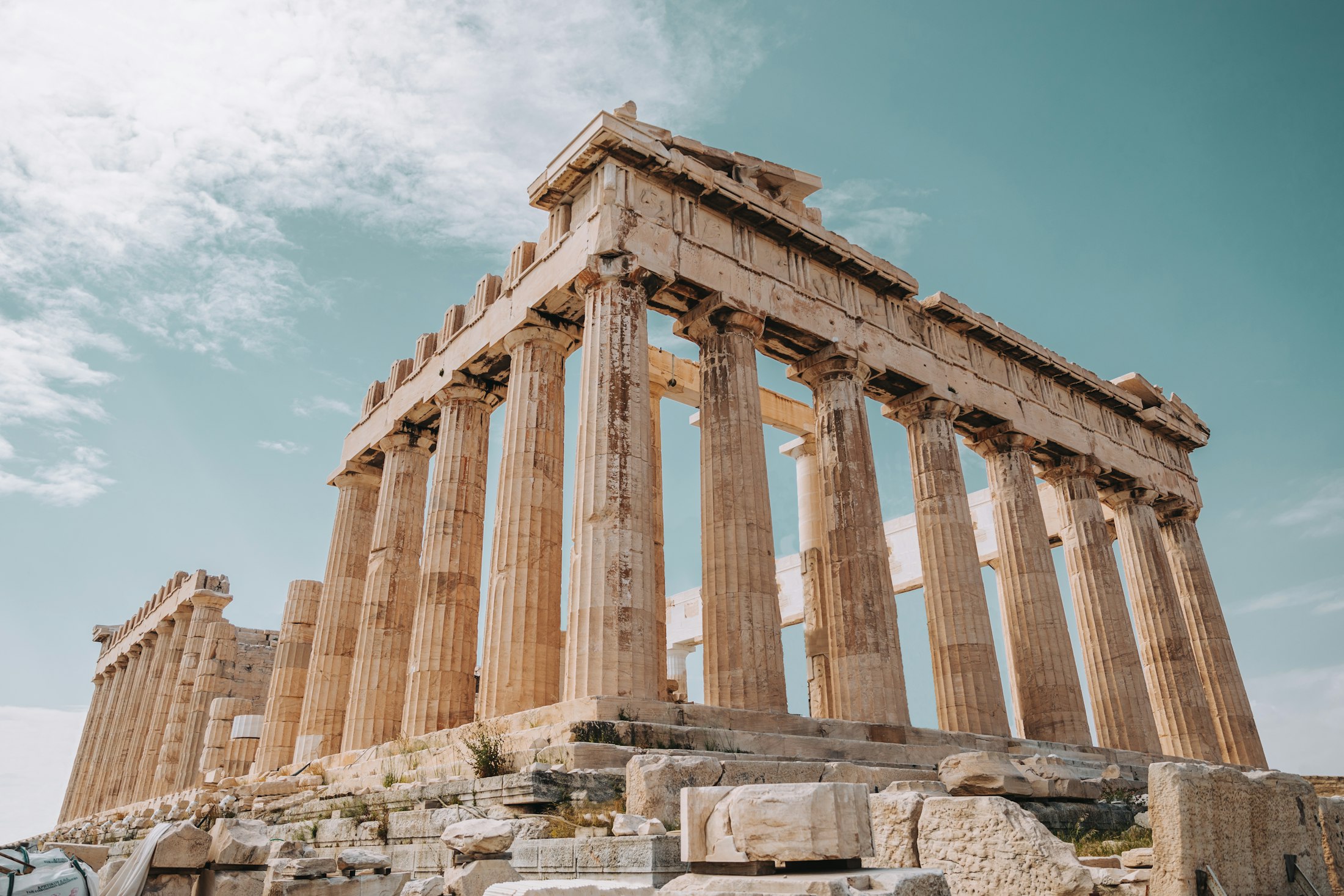
At the top, the Philopappos Monument frames the Parthenon in a way that no other vantage point in Athens quite matches. The light in May is clear but not yet bleached by summer haze, making late morning ideal for photographs. You'll see the Saronic Gulf on a good day.
Descend the same way you came up — the western path deposits you back into Ano Petralona's residential streets within fifteen minutes, perfectly positioned for a pre-lunch drink. The whole loop takes about an hour if you stop to admire views, which you will.
Pro tip:Carry a small bottle of water and wear a hat — even in May the exposed summit gets hot by 11 a.m. There's no shade at the monument itself, and no vendors on this side of the hill.
4. Lunch at Oikonomou: The Taverna That Hasn't Changed
Taverna Oikonomou (Troon 41 & Kidantidou, Ano Petralona) is the neighbourhood's anchor, a family-run taverna operating since the 1960s with a handwritten menu, paper tablecloths, and barrel wine served in tin carafes. It opens for lunch around 1 p.m. and fills immediately. Saturday after the market is its busiest service — get there by 1:15 or expect to wait.
The kitchen runs on a mayirefta model — pre-cooked dishes simmered since morning and served at room temperature or just warm. In May, order the fresh broad beans in tomato sauce (koukia), the baked giant beans (gigantes), and whatever fish is chalked on the board. The portions are enormous and meant for sharing.
Bulk retsina here is divisive but authentic — resinous, cold, and slightly cloudy. If you can't stomach it, ask for the house red, which is a straightforward, unpretentious Agiorgitiko. Either way, a carafe costs roughly three euros. Wine is not a luxury in this taverna; it's a staple, poured the way water might be elsewhere.
The bill for two, including wine, typically lands between twenty and twenty-eight euros. Pay in cash — cards are accepted reluctantly and slowly. Leave a euro or two on the table as a tip; anything more will look odd. This is not a place that performs hospitality. It simply is hospitable.
Pro tip:Walk to the kitchen and point at what looks good — the staff expect it, and it's the fastest way to navigate a menu that may not be translated. The pastitsio, when available, is outstanding.
5. Afternoon Drift Through Plateia Merkouri and the Side Streets
Plateia Merkouri — named for actress and politician Melina Merkouri — is Ano Petralona's de facto living room. After lunch, claim a bench under the plane trees and watch the neighbourhood's Saturday afternoon ritual: children on scooters, elderly men arguing over tavli boards, dogs sleeping in the shade with the confidence of animals who have never been shooed away.
The streets radiating from the plateia reward aimless walking. Alkyonis Street has a cluster of small workshops — a guitar luthier, a ceramicist, a woman who restores vintage radios. None of these are tourist attractions; they're working studios. Peek in if doors are open, but don't expect a sales pitch.
May is when Ano Petralona's jacaranda and bougainvillea hit peak bloom simultaneously. The combination of purple and magenta against neoclassical ochre walls is genuinely photogenic, and you'll find it on nearly every block between Merkouri and the hill. Late afternoon light — around 5 to 6 p.m. — is best.
For a mid-afternoon pick-me-up, stop at Kayak (Porinou 2, near the square) for a freddo espresso. It's a small, modern café that serves as the neighbourhood's unofficial co-working space. The freddo here is properly shaken, frothy, and cold — essential fuel for the evening ahead.
Pro tip:If you see a periptero (kiosk) selling Lacta chocolate or Molto croissants, grab one without irony — they're part of the Greek afternoon ritual and pair surprisingly well with a strong freddo.
Stay in Athens
Top-rated hotels near Athens
Best locations · Verified reviews · Free cancellation
View deals
Expedia →6. Evening Wine and Meze at Oinopoleion on Veikou
As the sun drops behind Filopappou, Ano Petralona shifts into its evening register. Oinopoleion (Veikou 63) is part wine shop, part meze bar, and entirely the kind of place where a quick glass turns into three hours. The selection leans toward small-batch Greek producers — Domaine Sigalas from Santorini, Tetramythos from the Peloponnese — and the staff know every bottle personally.
Order a glass of Assyrtiko and a plate of the smoked pork with pickled peppers. Follow it with the taramosalata, which is made in-house with a proportion of roe that renders supermarket versions inedible by comparison. Everything is portioned for grazing, not gorging. Two people can eat and drink well for thirty to forty euros.
The crowd is mixed — young couples, middle-aged architects, the occasional off-duty chef from a Psyri restaurant unwinding somewhere nobody will recognise them. Conversation volume rises as the evening deepens, but it never becomes rowdy. This is neighbourhood drinking at its most civilised.
In May, the pavement tables stay comfortable until well past 10 p.m. The air cools gradually, jasmine intensifies, and the hill above you goes dark except for the floodlit Parthenon floating in the middle distance. It is, without exaggeration, one of the finest places in Athens to drink wine on a warm evening.
Pro tip:Ask the staff to recommend a natural Greek wine you haven't tried — they rotate obscure bottles from small island producers that you won't find outside Athens, let alone outside Greece.
7. Late Night at a Neighbourhood Kafeneio
After Oinopoleion, resist the urge to taxi to Monastiraki or Gazi. Instead, walk deeper into Ano Petralona's residential core and find one of the handful of old-school kafeneia still open past 11 p.m. These are not cocktail bars — they serve Greek coffee, cheap beer, tsipouro, and little else. The furniture is old. The TV plays football or news at low volume.
The kafeneio near the corner of Troon and Kefallinias — it has no sign, just a lit doorway and three pavement tables — is the kind of place where your presence as a foreigner will be noted, acknowledged with a nod, and then ignored. Order a tsipouro with ice and a small plate of whatever accompanies it — usually a few olives and a slice of cheese.
This is where Ano Petralona's day completes its arc. The market vendors who sold you cherries at 8 a.m. may be sitting two tables over. The rhythms of the neighbourhood are circular, not linear, and a Saturday that began with produce ends with spirits distilled from the same land that grew it.
You'll walk home through streets that smell of night-blooming jasmine and cooling asphalt. The Parthenon glows above the roofline. May in Athens is not yet hot enough for the city to feel oppressive and not cool enough to need a jacket. It is, simply, the right month to be here.
Pro tip: Tsipouro is deceptively strong — around 40% ABV. Sip slowly, eat the accompanying meze, and drink water between rounds. Two small carafes is a sensible maximum for most people.
Essential tips
Take Metro Line 2 to Petralona station, then walk uphill for 10 minutes. Avoid driving — parking in Ano Petralona's narrow streets on a Saturday market morning is genuinely impossible.
Carry cash in small denominations. Many tavernas, kafeneia, and all market vendors prefer it. ATMs exist on Veikou Street but charge fees for non-Greek cards. Withdraw from a Eurobank or Alpha Bank branch instead.
Wear comfortable walking shoes with grip. Ano Petralona is built on a hillside with uneven pavements, marble steps, and cobblestones that become slippery when wet. Sandals are fine for tavernas but not for the Filopappou path.
May temperatures range from 17°C to 27°C. Mornings are fresh enough for a light layer; afternoons can feel summery. Bring sunscreen for the hill walk and a light jacket for after-dark taverna tables.
Learn 'efcharistó' (thank you) and 'ena krasí, parakalo' (one wine, please). English is widely understood but rarely the first language here. A few Greek words earn disproportionate goodwill, especially in the older kafeneia.
Ready to visit Athens?
Book your hotel, flights, and activities through our Expedia-powered search.


